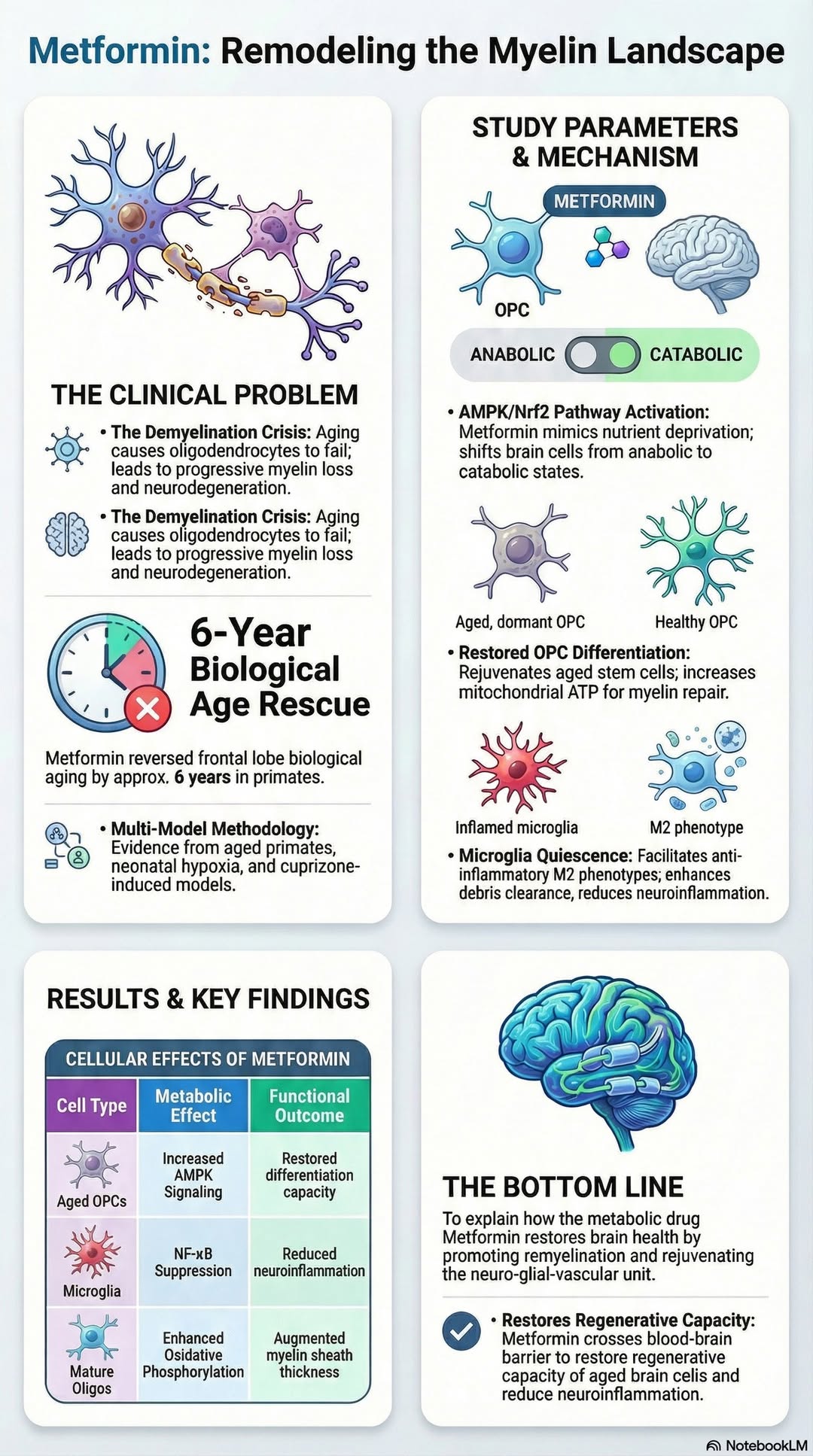
Metformin protects the brains of monkeys as they age.
Previous posts on this study:
Shared summary of research on metformin and the aging primate brain, describing preservation of myelin 'wiring'. Louis links four prior posts on the study.
Metformin protects the brains of monkeys as they age.
Previous posts on this study:
The Myelin Architect: How a 60-Year-Old Diabetes Drug Rewires the Aging Brain
Think of the aging brain not as a fading light, but as a house with fraying electrical insulation. In our youth, the "wiring" of our neurons—the axons—is snugly wrapped in a fatty sheath called myelin, ensuring that electrical signals zip across the brain with lightning precision. As we age, this insulation thins and cracks. Signals leak, processing speeds crater, and the once-vibrant neural network begins to short-circuit.
For decades, the search for a "re-wiring" treatment has been stalled by a stagnant clinical landscape. However, we are currently witnessing a paradigm collapse in neurology. Researchers are moving away from treating isolated symptoms and toward a "neurometabolic" understanding of the brain—the idea that cognitive decline is essentially a failure of cellular energy and maintenance. At the forefront of this shift is metformin, a first-line diabetes drug that is proving to be much more than a blood-sugar stabilizer. It is emerging as a powerful geroprotective agent that "remodels the myelin landscape," effectively rejuvenating the very insulation of the mind.
1. Turning Back the Biological Clock by 6 Years
The most compelling evidence for this metabolic rejuvenation comes from a landmark study on aged male cynomolgus monkeys—primates that share significant biological proximity to humans. In these aging primates, metformin didn’t just slow decline; it appeared to reverse the calendar.
By preserving the thickness and structural integrity of the myelin sheath, the drug prevented the characteristic brain atrophy that defines the twilight years. The data was startling: metformin treatment rescued the biological age of the frontal lobe by approximately 6 years. This suggests that the drug "exerts geroprotective effects" not by masking deficits, but by fundamentally altering the structural degradation of the white matter. In the world of longevity research, where we struggle to move the needle by months, a six-year biological reprieve represents a massive leap forward.
2. Rejuvenating "Exhausted" Stem Cells
The brain possesses its own internal repair crew: Oligodendrocyte Progenitor Cells (OPCs). These are the stem cells of the white matter, tasked with creating fresh myelin. In the aging brain, however, these cells become "exhausted" or senescent. They lose their ability to differentiate and stop responding to the chemical signals that tell them to start repairing.
Metformin breaks this cellular stalemate. It doesn't just protect the old cells; it restores their regenerative potential. Recent findings reveal a fascinating mechanism: metformin increases the expression of N-methyl-D-aspartate (NMDA) receptors on aging OPCs. These receptors are the "ears" of the cell; by restoring them, metformin allows aged stem cells to once again "hear" the pro-differentiation signals they had long ignored. By activating the AMP-activated protein kinase (AMPK) pathway, the drug provides the bioenergetic fuel necessary for these rejuvenated cells to mature and resume their role as the brain's insulation experts.
3. A "Fasting Mimetic" for White Matter
The link between nutrition and brain repair is one of the most provocative areas of longevity science. We know that fasting and calorie restriction can trigger remyelination, but few can maintain such a rigorous lifestyle. Metformin offers a pharmaceutical workaround, acting as a "fasting mimetic" that triggers a metabolic shift from an anabolic (building) state to a catabolic (recycling) state.
By activating the Nrf2 pathway, metformin induces a state of cellular stress adaptation across the entire neuro-glial-vascular unit. Crucially, Nrf2 activation isn't localized to the brain; researchers have detected this "survival signaling" across multiple tissues in primates, suggesting a systemic geroprotective effect. This transcriptional factor acts as a central hub for anti-oxidative defenses, protecting the neural landscape from the oxidative stress that turns healthy white matter into a wasteland of cellular debris.
4. Taming the Brain's Cleanup Crew
When myelin breaks down, it leaves behind debris that is toxic to the neural environment. The brain’s resident immune cells, microglia, are supposed to clean this up. But in an aging or injured brain, microglia often get stuck in a "pro-inflammatory M1 phenotype"—a state of chronic aggression that causes more damage than it repairs.
Metformin facilitates a crucial shift to the "anti-inflammatory M2 phenotype," effectively transforming these cells from arsonists into healers. This shift is mediated through the Nrf2/HO-1/NF-κB pathway; specifically, the upregulation of heme oxygenase-1 (HO-1) helps reduce microglial infiltration and oxidative stress. By inducing "autophagy flux"—a cellular self-cleaning process—metformin allows microglia to clear myelin debris with surgical efficiency. As the research indicates:
"Metformin... indirectly promotes myelin integrity by amplifying microglia quiescence. This creates a low-inflammatory environment to allow proper OPC maturation and myelin synthesis."
5. From Treatment to Prevention
One of the most profound insights from recent research involves the "metabolic flexibility" metformin provides. In a study of young adult mice, metformin was found to shift the bioenergetics of the brain's cells in a highly specific manner: it suppresses oxidative phosphorylation and enhances glycolysis in OPCs (the stem cells), while doing the opposite in mature oligodendrocytes.
This suggests that metformin’s benefits aren't just for the elderly. The drug improves the differentiation and metabolism of even young, healthy oligodendrocytes, pointing toward its potential as a preventive intervention. However, there is a catch: timing is everything. Data from multiple sclerosis models show that metformin is significantly more effective when used as "preconditioning" or administered at the very moment of injury. Waiting for symptoms to manifest before starting treatment often results in reduced inflammation without the necessary structural repair. The future of cognitive health, then, may depend on metabolic interventions that begin decades before the first sign of memory loss.
6. Redefining the Neurological Map
The potential to repurpose a ubiquitous, inexpensive drug like metformin represents a seismic shift in how we approach the aging mind. By focusing on the biological processes that maintain the "myelin landscape," we move closer to a world where "old age" is no longer synonymous with "neurological decay."
There is, of course, "fine print." Long-term metformin use is known to cause Vitamin B12 deficiency, a condition that can itself mimic neurological decline. This highlights the "neurometabolic" reality: to save the brain, we must meticulously manage the body's systemic metabolism. Supplementation and monitoring aren't just secondary concerns; they are vital components of the therapy.
Ultimately, these findings lead us to a radical question about the future of medicine: What if we stopped classifying drugs by the disease they treat, and started classifying them by the biological processes—like myelination, vascular integrity, or autophagy—they influence? If we can master the metabolic pathways that govern our neural insulation, we may find that the "short-circuits" of aging were never an inevitability, but a problem of maintenance we finally have the tools to fix.
Louis shares a New Scientist report on observational analysis of the Diabetes Prevention Program randomized trial and its follow-up, suggesting metformin may cut dementia risk by more than half. It aligns with monkey data on slower brain aging. The finding is not conclusive and the mechanism is unclear.
Louis notes that metformin may slow brain aging, citing a small randomized monkey trial from an earlier post and a ScienceAlert article on other studies linking the drug to slower brain aging and longer lifespan.
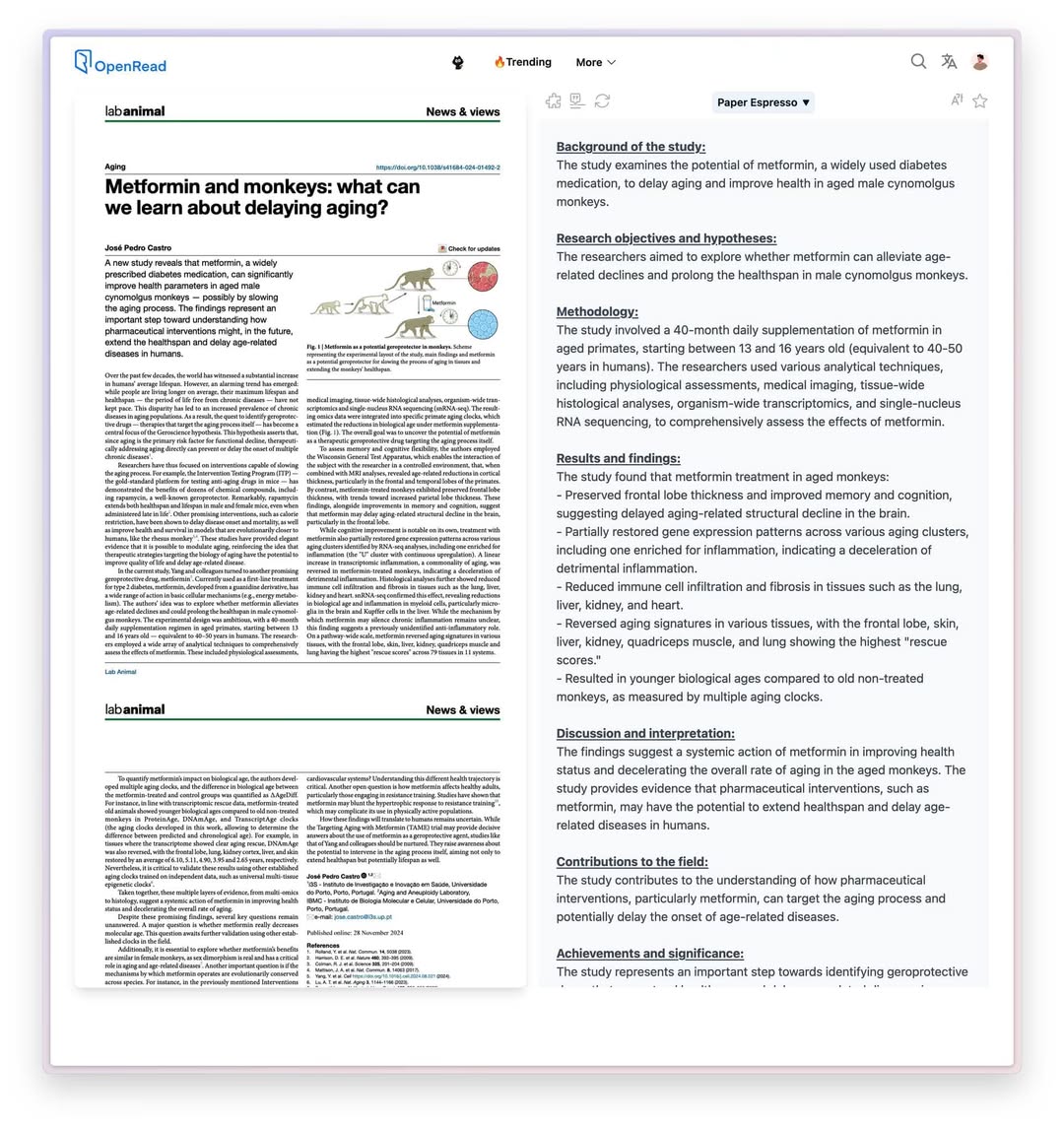
Louis shares a review reporting that metformin significantly improved health parameters in aged male cynomolgus monkeys, possibly by slowing aging, as a step toward understanding drug-based healthspan extension.
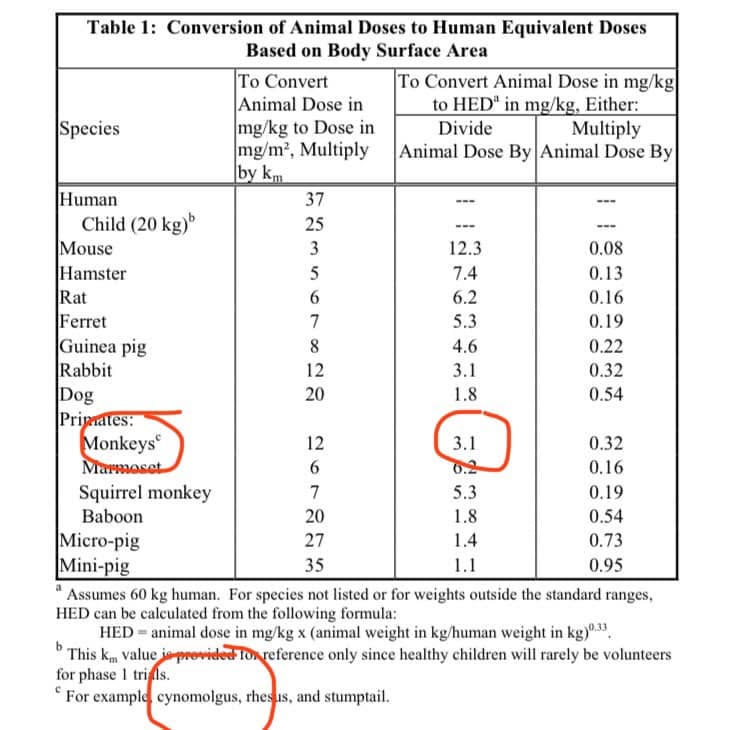
Louis calculates that the cynomolgus monkey aging study used 20 mg/kg metformin daily for 40 months. Using the FDA allometric scaling factor of 3.1, this is about 6.45 mg/kg, or roughly 450 mg for a 70 kg person, about a quarter of the 2 g typical diabetic dose.
Louis flags a Cell study, covered by Nature, in which male monkeys on daily metformin for over three years showed slower age-related brain decline, enhanced cognition and preserved liver function. Their neuronal activity resembled monkeys about six years younger (around 18 human years). The study was small, and human benefit is unproven.
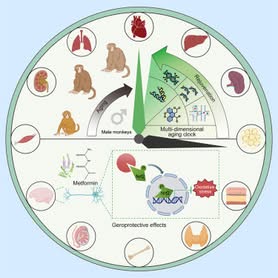
Louis reposts the Cell paper abstract on a 40-month trial of metformin in adult male cynomolgus monkeys. Metformin slowed pan-tissue aging clocks, notably about a 6-year regression in brain aging, preserved brain structure and improved cognition, partly through Nrf2 activation in neurons. Only males were studied.