Metformin might dramatically reduce the risk of developing dementia.
A randomised study that followed people for more than 20 years found that metformin seems to cut the risk of developing dementia by more than half.
Link that bypasses the paywall:
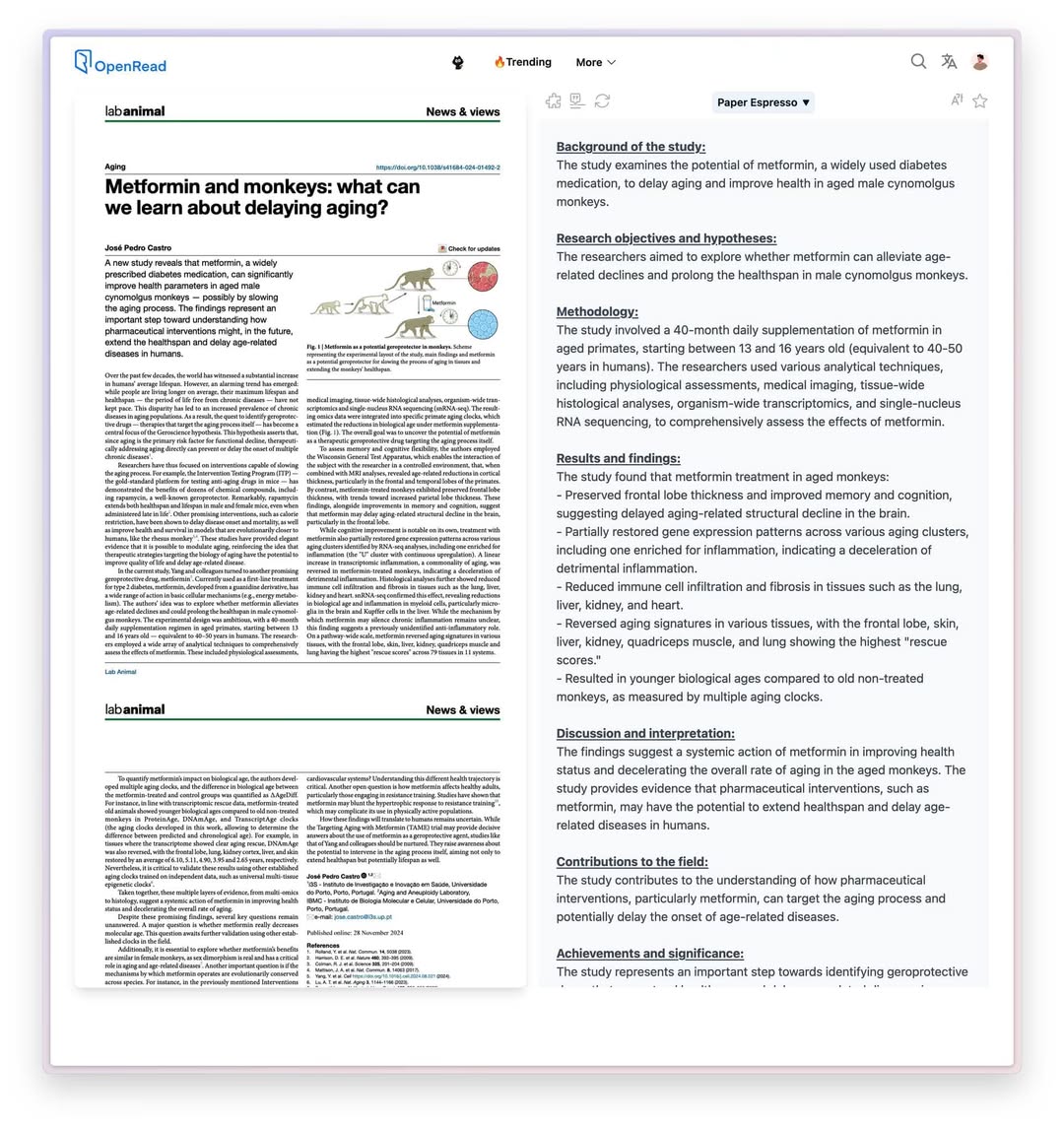
archive.isArchived web pagearchive.isThe new study highlights a promising connection between brain aging and metformin. It is consistent with a previous randomized trial in monkeys, which appeared to show that metformin slowed aging of the brain in the animals:
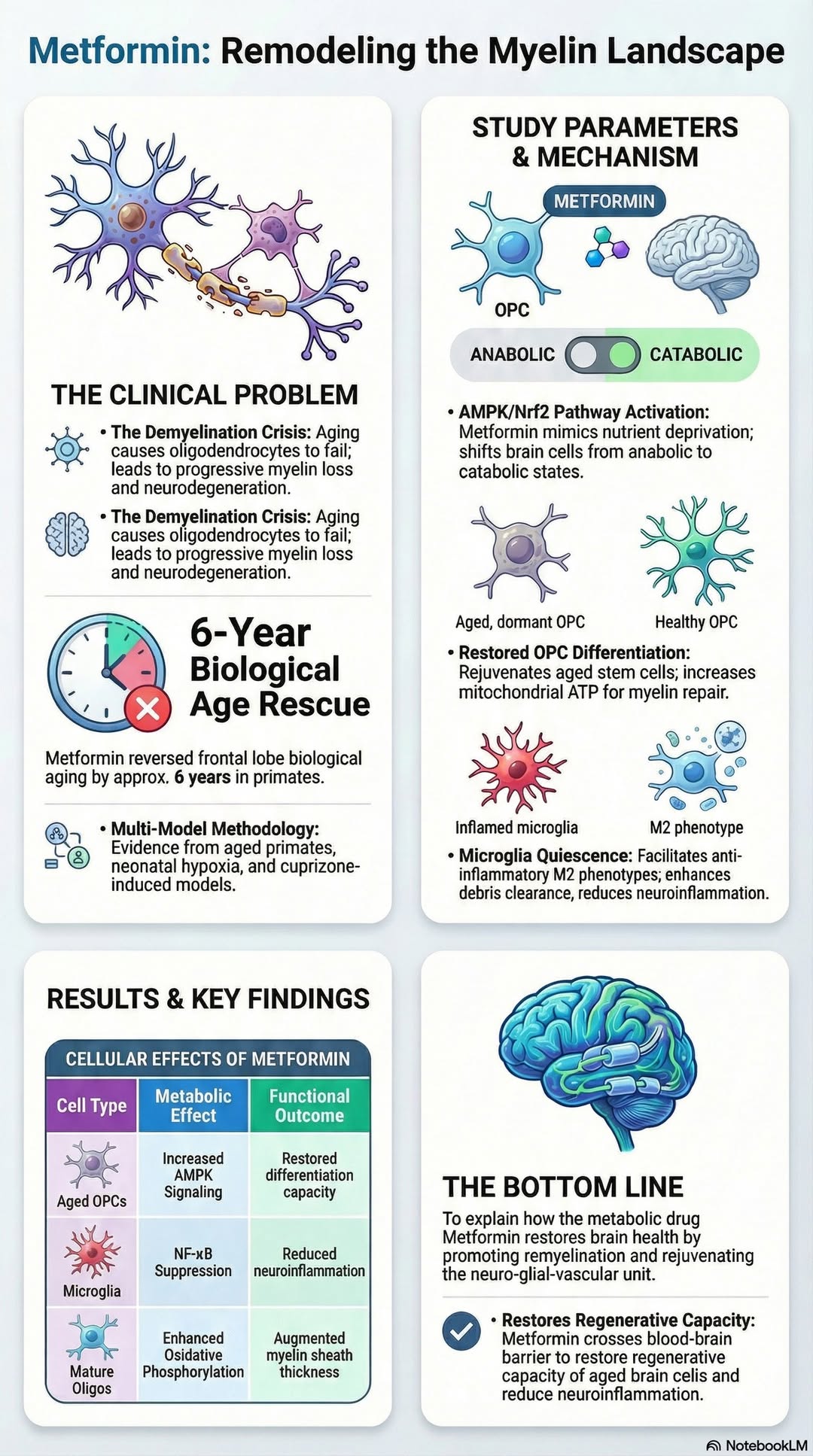
↪ Metformin slowed brain aging in monkeys, with neurons resembling those 6 years younger
↪ Metformin protected the brains of aging monkeys, per a myelin-focused study summary
This offers “the available best evidence, short of a long-term randomised clinical trial, that metformin may decrease the risk of dementia”, says José Luchsinger at Columbia University in New York. However, the finding isn’t conclusive and the potential mechanism behind it is unclear.
This finding is uniquely compelling because it stems from an observational analysis of a long-term randomized controlled trial: the Diabetes Prevention Program (DPP) and its follow-up, the Diabetes Prevention Program Outcomes Study (DPPOS).
In the initial phase, which lasted for an official randomized period of 3.2 years, participants at high risk for diabetes were strictly assigned to lifestyle changes, metformin, or a placebo. Because participants were randomized at the outset, this data strips away many of the confounders (like healthy user bias) common in standard observational studies, where other factors can mask medication effects. It also benefits from standardized tracking and a clear timeline of cause and effect spanning more than two decades.
However, interpreting the dementia data requires caution due to the transition between the two study phases. After the initial 3.2 years, the study became open-label; the physical placebo was discontinued, and participants learned which group they were in. Over the next 20+ years of follow-up, many individuals in the former placebo group naturally developed diabetes and were prescribed real metformin by their doctors, which blurred the lines of comparison.
The study integrated advanced standardized frameworks—specifically the National Alzheimer's Coordinating Center Uniform Data Set (NACC-UDSv3)—to carefully evaluate and adjudicate cases of mild cognitive impairment and dementia across the surviving cohort. By following these original participants for an average of 23 years, researchers were able to track the true, long-term impact of decades of metformin exposure.
The results of this specific study revealed that participants who were originally randomized to the metformin group had a 60% to 62% lower odds of developing adjudicated dementia compared to both the placebo and intensive lifestyle intervention groups.
Furthermore, the data showed that those in the metformin arm maintained modestly better longitudinal memory performance over time.
While researchers emphasize that these findings are still not a replacement for a prospective, multi-year clinical trial designed entirely around dementia prevention, this milestone publication provides powerful, real-world evidence backing metformin's role as a potential neuroprotective agent in humans.
Looking beyond brain health, earlier publications analyzing the broader, 21-year DPPOS dataset revealed a mixed impact on other chronic illnesses:
Metformin and intensive lifestyle interventions successfully maintained a long-term reduction in the development of type 2 diabetes (by 17% and 24%, respectively) and significantly protected against microvascular complications like eye and kidney disease for those who successfully avoided full diabetes onset.
On the other hand, metformin showed minimal impact on cancer risk and did not significantly lower the risk of major cardiovascular events like heart attacks or strokes. This might be because real-world access to modern blood pressure and cholesterol medications flattened those disparities across all study groups.
Quoted:
To clarify the situation, Luchsinger and his colleagues have followed up with people who took part in a clinical trial of metformin in the 1990s called the Diabetes Prevention Program (DPP). The trial showed that metformin was effective at preventing type 2 diabetes in people at risk of the condition. Since 2002, the participants have been followed by the DPP Outcomes Study.
This involved comparing 1483 people who, in the 1990s, were given either metformin, a lifestyle intervention to reduce the risk of type 2 diabetes (which included a low-fat diet and regular exercise) or a placebo. The participants did multiple cognitive tests, beginning in 2009, then an intensive battery of such tests more than a decade later.
The team found that the people who had started taking metformin in the 1990s had a significantly lower chance of dementia later in life: just 1.9 per cent of those given metformin developed dementia, compared with 4.2 per cent of those given the lifestyle intervention and 3.5 per cent of those given a placebo. The metformin group also showed significantly better memory performance.
Luchsinger flags that the participants weren’t initially recruited with the aim of studying dementia, so some of them could have had early signs of the condition or cognitive impairment at the start of the trial. What’s more, only 48 people developed dementia in the entire study.
Nevertheless, it adds to the evidence that metformin has a protective effect, says Miia Kivipelto at the Karolinska Institute in Sweden. It is rare and valuable to have the chance to follow participants over so many decades, she says.
A 2023 study of more than 210,000 people with type 2 diabetes also suggests that the reduction in risk of dementia is more pronounced among those who stay on metformin for longer. “One trial can answer some questions, but then if you put together evidence from different studies, then we really start to see the pattern more clearly,” says Kivipelto.
He is now running a randomised controlled trial called Metformin in Alzheimer’s Dementia Prevention, which is following participants for 18 months to see if the drug reduces the risk of Alzheimer’s disease, the most common form of dementia. Luchsinger hopes to report the results by the end of the year.
Meanwhile, Kivipelto is leading a study called MET-FINGER to find out if lifestyle changes alone, or a combination of lifestyle changes and metformin, can reduce the risk of dementia. Results are expected in 2028.
#metforminHD #dementiaHD #brainHD #agingHD #longevityHD #monkeysHD