HD-OPM Archive
Topics › Brain health & dementia

Sildenafil users had lower Alzheimer's risk in real-world data and neuron experiments

Louis Nervegna · Mar 08, 2026 · ♥ 7 reactions · 3 comments · original Facebook post
Brain health & dementiaHormones, women's & men's health
AI summary & key facts

Observational insurance-claims analysis plus patient iPSC-derived neuron experiments suggest sildenafil (a PDE5 inhibitor) is a candidate repurposed drug for Alzheimer's. The authors say randomized trials are needed to confirm causal effects.

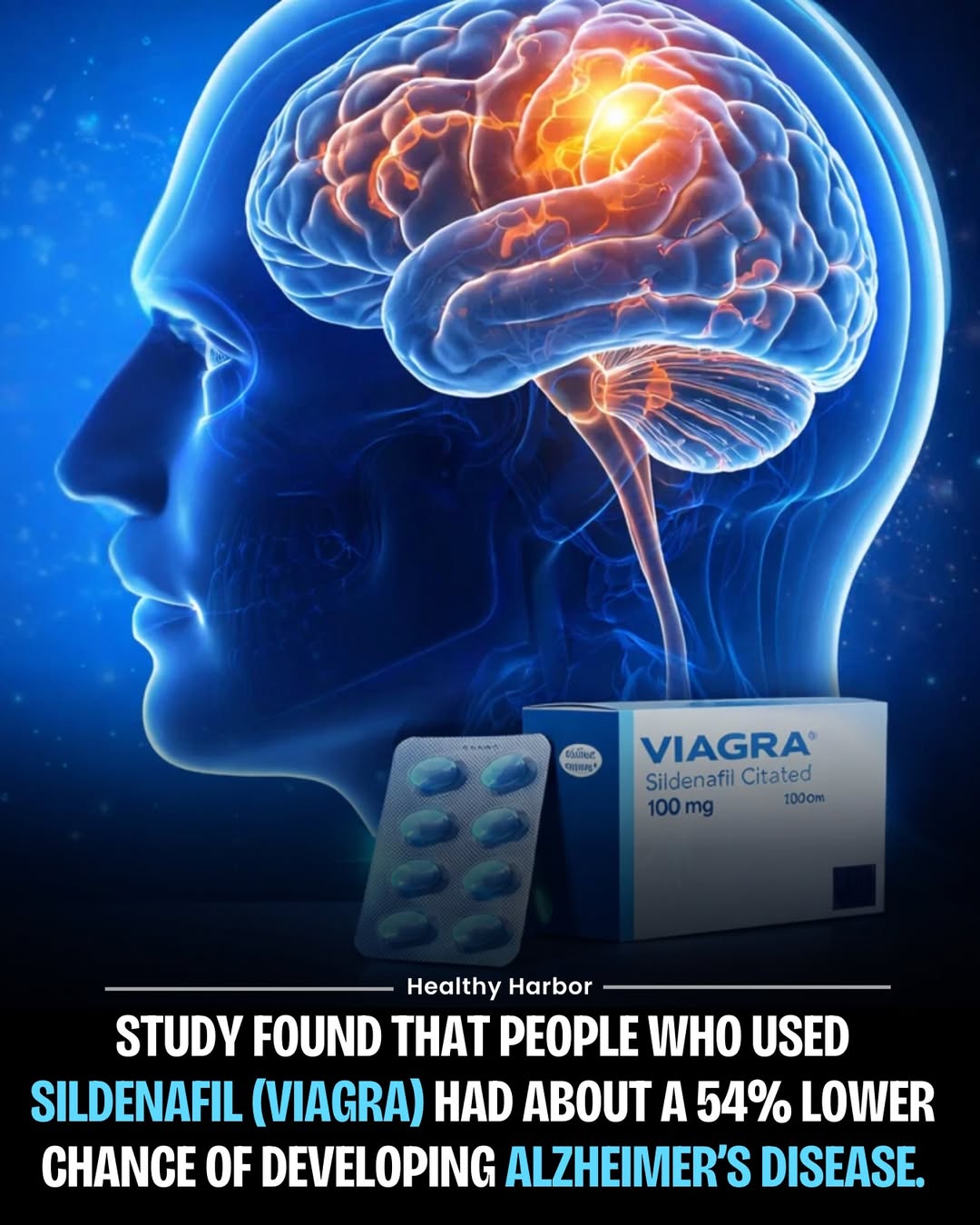
Men who use viagra seem to be at considerably lower risk of developing Alzheimer’s.

Laboratory experiments have provided plausible mechanisms for why this might be true.

Link to full study:

Paper · J Alzheimers Dis · 2024Sildenafil as a Candidate Drug for Alzheimer's Disease: Real-World Patient Data Observation and Mechanistic Observations from Patient-Induced Pluripotent Stem Cell-Derived Neurons.Conclusion: These real-world patient data validation and mechanistic observations from patient iPSC-derived neurons further suggested that sildenafil is a potential repurposable drug for AD. Yet, randomized clinical trials are warranted to validate the causal treatment effects of sildenafil in AD.pmc.ncbi.nlm.nih.gov


#viagraHD #alzheimersHD #pde5HD

Research cited

Alzheimer’s disease (AD) is a progressive neurodegenerative disorder that urgently requires effective treatments. A 2024 study published in the Journal of Alzheimer’s Disease investigated the potential of sildenafil, a phosphodiesterase-5 (PDE5) inhibitor commonly used for other medical conditions, as a candidate drug for AD. Researchers analyzed real-world patient data from large healthcare databases, including MarketScan® Medicare Supplemental and Clinformatics®. After adjusting for factors such as age, sex, race, and comorbidities, the study found that individuals using sildenafil had a significantly lower likelihood of developing Alzheimer’s disease compared to patients using other medications such as bumetanide, furosemide, spironolactone, and nifedipine. For example, sildenafil use was associated with a 54% reduced incidence of AD in the MarketScan® database and a 30% reduced prevalence in the Clinformatics® database.

To further explore how sildenafil might affect Alzheimer’s disease, the researchers conducted laboratory experiments using neurons derived from patient-induced pluripotent stem cells (iPSCs), including cells from both familial and sporadic AD cases. The results showed that sildenafil reduced tau hyperphosphorylation—an important pathological feature of Alzheimer’s disease—in a dose-dependent manner. Additionally, RNA-sequencing analysis revealed that sildenafil influences genes and biological pathways associated with AD progression. These findings suggest that sildenafil may have protective effects against Alzheimer’s disease and could potentially be repurposed as a treatment. However, the authors emphasize that randomized clinical trials are still needed to confirm its safety and effectiveness for treating AD.

PMID: 38427489

No photo description available.
← newer: MIND diet cut Alzheimer's risk 53% in strict followers, 35% older: TOGETHER metformin trial retracted; COVID-OUT and ACTIV-6 st →