Extra virgin olive oil modestly lowered Lp(a) in a small 4 week randomized trial, recently published:
Paper · Nutrients · 2025Effects of High-Phenolic Extra Virgin Olive Oil (EVOO) on the Lipid Profile of Patients with Hyperlipidemia: A Randomized Clinical Trial.Conclusion: EVOO consumption significantly improved the lipid profile of hyperlipidemic patients. Higher-phenolic EVOO at lower dosages appears to be more effective in improving the lipid profile than lower-phenolic EVOO in higher dosages.pmc.ncbi.nlm.nih.gov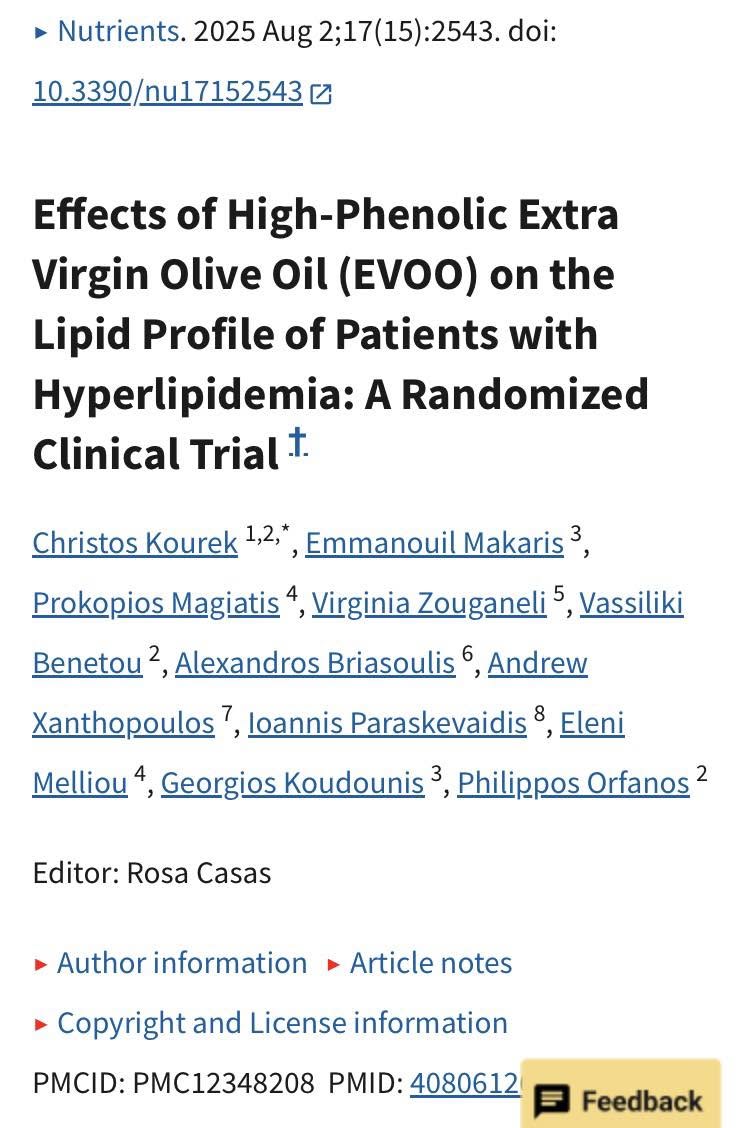
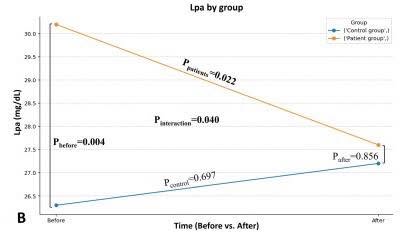
Lp(a) decreased from a baseline of 30.2 mg/dL to a value of 27.6 mg/dL, representing a statistically-significant reduction of about 9%.
There were also improvements in other aspects of the lipid profile.
Quoted:
“The present study aimed to assess the effects of two types of EVOO with different polyphenol content and dosages on the lipid profile of hyperlipidemic patients. Methods: In this single-blind, randomized clinical trial, 50 hyperlipidemic patients were randomized to receive either a higher-dose, lower-phenolic EVOO (414 mg/kg phenols, 20 g/day) or a lower-dose, higher-phenolic EVOO (1021 mg/kg phenols, 8 g/day), for a period of 4 weeks.”
“The higher-phenolic, lower-dose EVOO group showed a more favorable change in total blood cholesterol (p = 0.045) compared to the lower-phenolic, higher-dose group. EVOO intake [of either type] was associated with a significant increase in HDL (p < 0.001) and reduction in Lp(a) (p = 0.040) among hyperlipidemic patients in comparison to healthy individuals.”
“EVOO consumption [of either type] significantly improved the lipid profile of hyperlipidemic patients. Higher-phenolic EVOO at lower dosages appears to be more effective in improving the lipid profile than lower-phenolic EVOO in higher dosages.”