The protein number printed on your supplement tub may be costing you money for zero extra muscle.
Dr. Stuart Phillips has spent over three decades at McMaster University studying protein and muscle. He is one of the most cited researchers in sports nutrition in the world.
His team pooled 74 randomised controlled trials involving nearly 2,700 people. The question was simple: at what point does eating more protein stop building more muscle?
But then the data produced a clear and uncomfortable answer for the supplement industry.
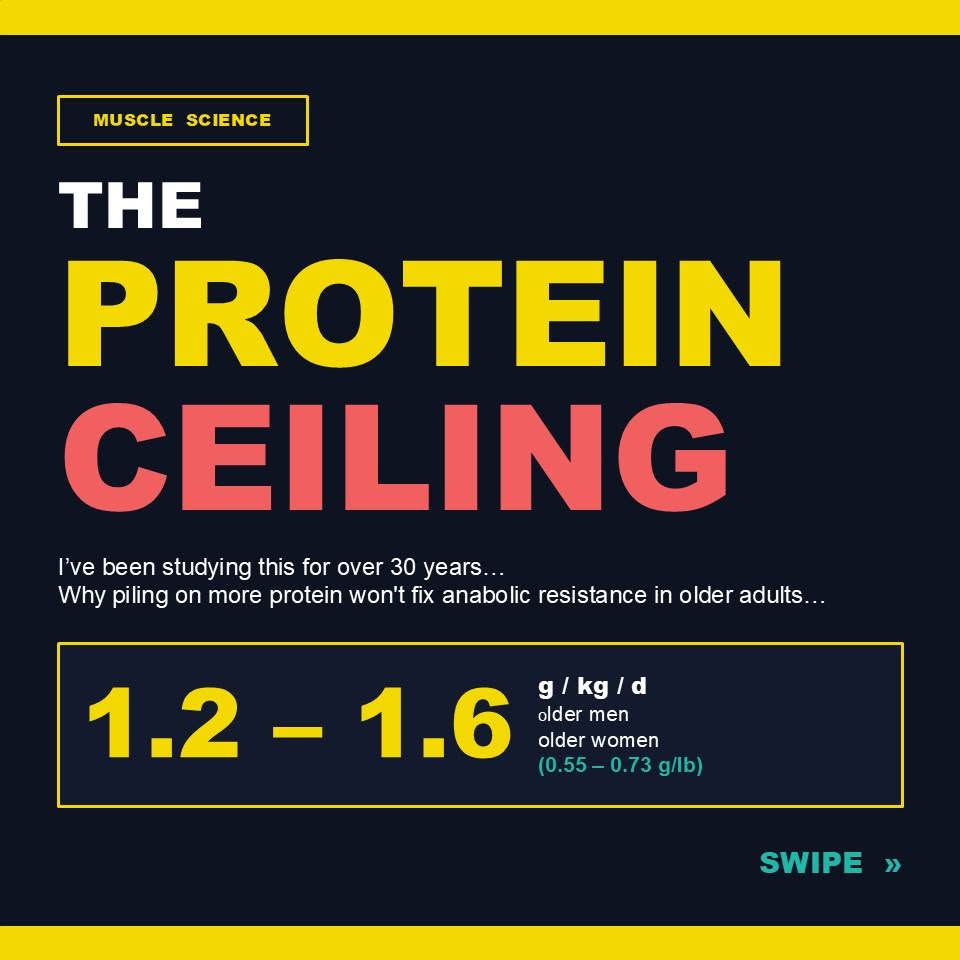
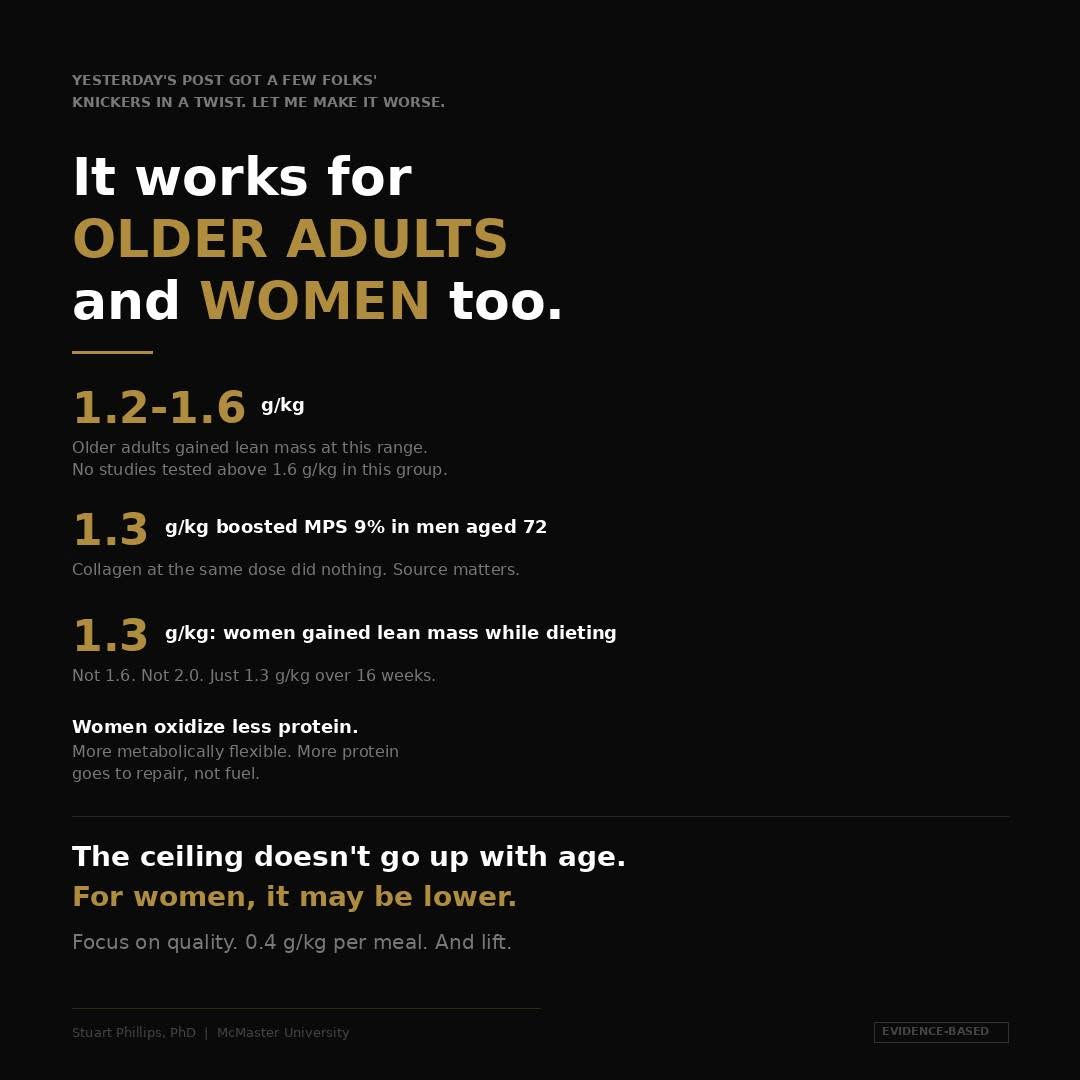
The ceiling is 1.6 grams of protein per kilogram of bodyweight per day. Once you hit that number while doing resistance training, consuming more protein produces no additional gains in muscle mass, strength, or function. None.
The finding was published in the British Journal of Sports Medicine and has since been confirmed by multiple independent meta-analyses. The 2025 to 2030 United States Dietary Guidelines, released in January 2026, formally adopted a recommended range of 1.2 to 1.6 grams per kilogram per day for active adults.
For context, the bodybuilding community has long promoted targets of 2.5 to 3 grams per kilogram. For a 90 kilogram person, that means consuming up to 270 grams of protein daily instead of the 144 grams that the research says is sufficient. That is roughly 126 extra grams of protein every single day, representing hundreds of extra calories, significant digestive load, and a noticeably larger grocery bill.
The global protein supplement market was valued at over 25 billion dollars in 2024. Brands routinely promote higher intake as the path to better results. The science says otherwise.
Phillips wrote in January 2026 that 2025 was the year protein jumped the shark, arguing the science has not changed but the marketing has spiralled far beyond what the evidence supports.
Stanford University nutrition researcher Christopher Gardner echoed that view in March 2026, stating that protein has become one of the single most heavily marketed products he has ever seen.
What no one is asking yet is whether the gyms, coaches, and supplement brands that have built businesses on the 1 gram per pound rule will quietly update their advice or continue to ignore the data.