HD-OPM Archive
Hashtags

#proteinsummary

42 posts

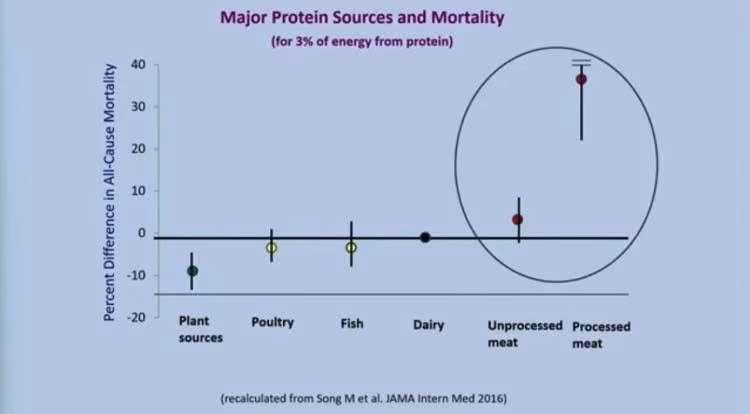
Protein type matters more than restriction: whole-food plant protein beats processed meat

Nov 12, 2026 · Louis Nervegna ♥ 18 · 💬 38 Protein

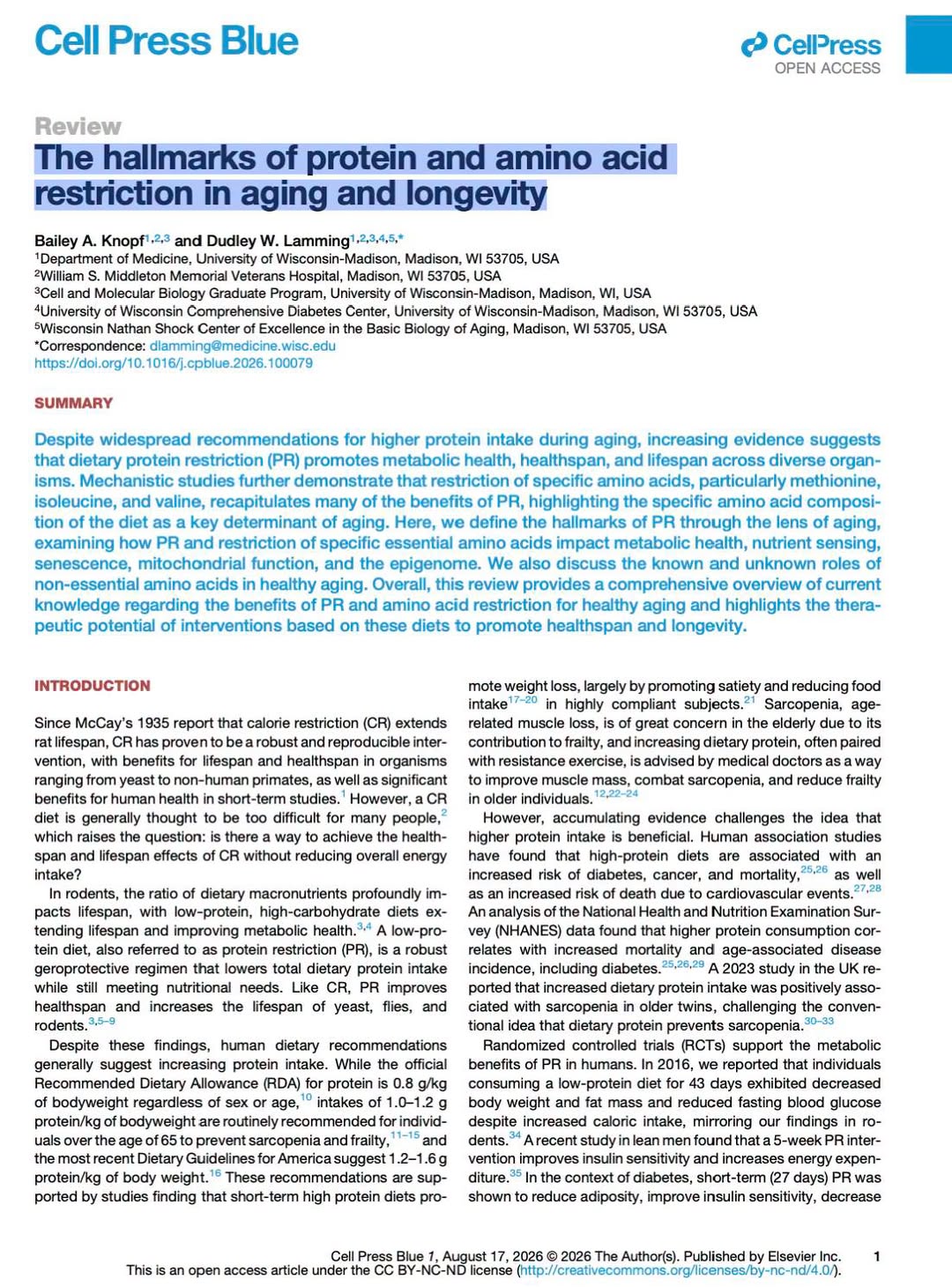
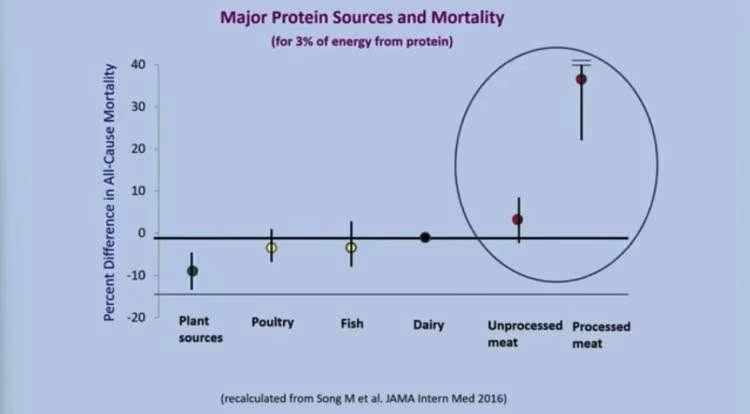
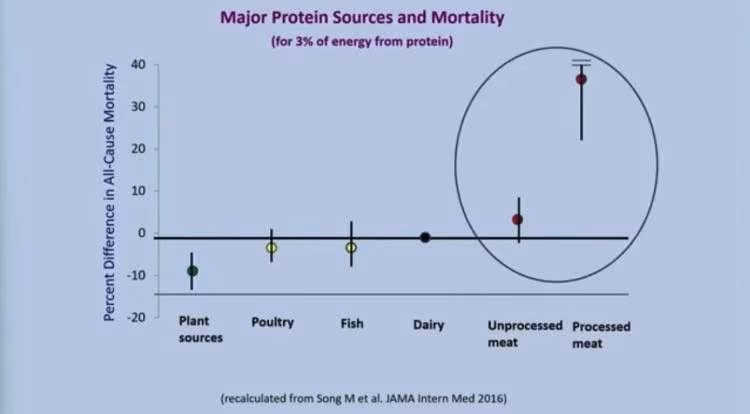
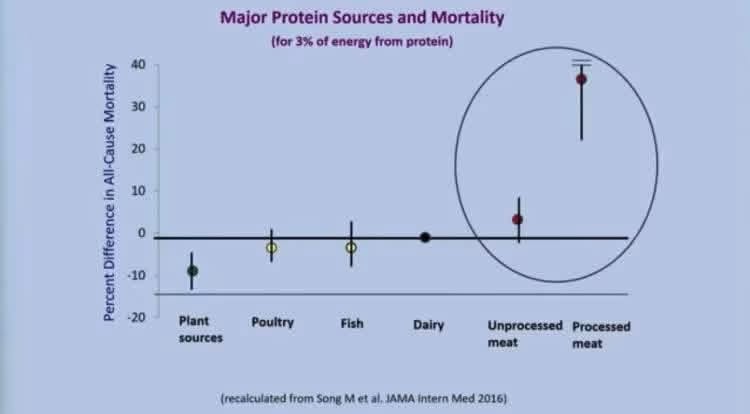
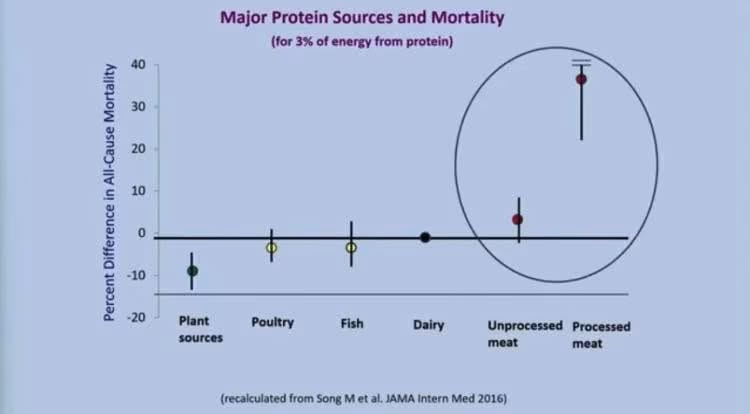
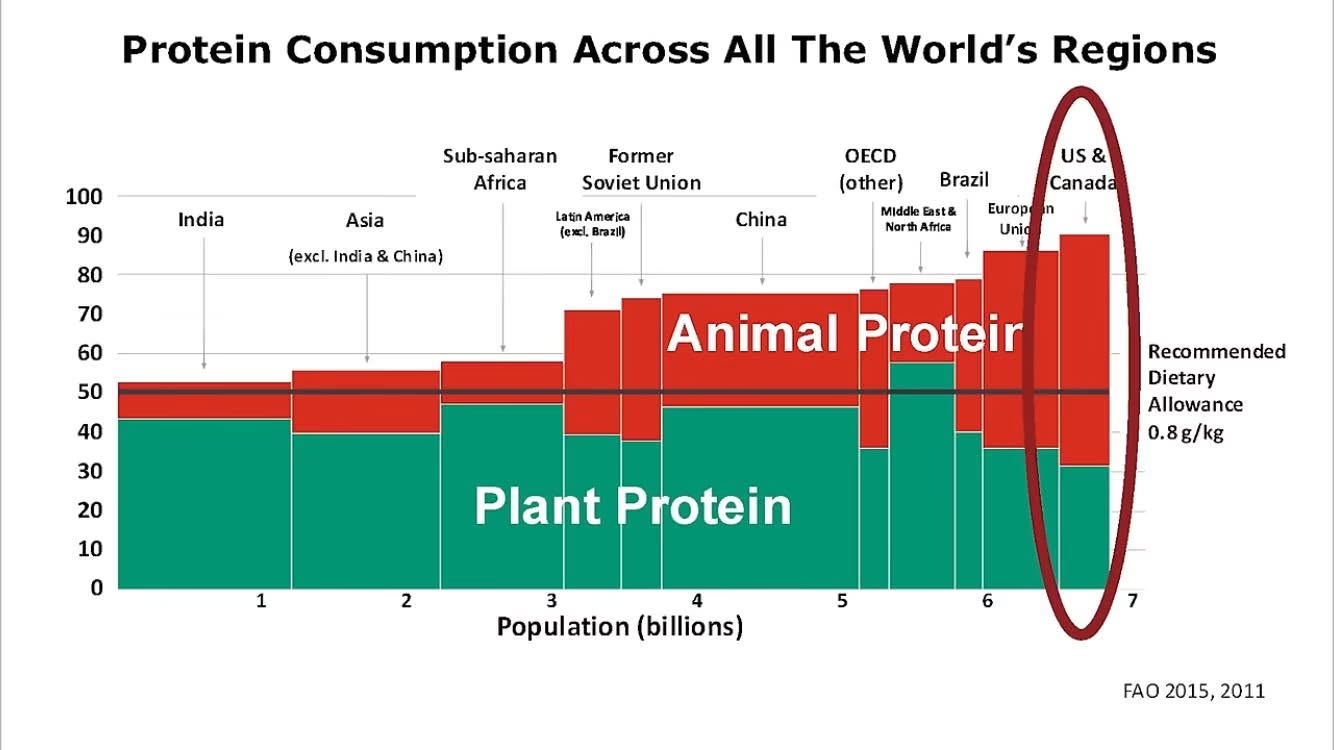
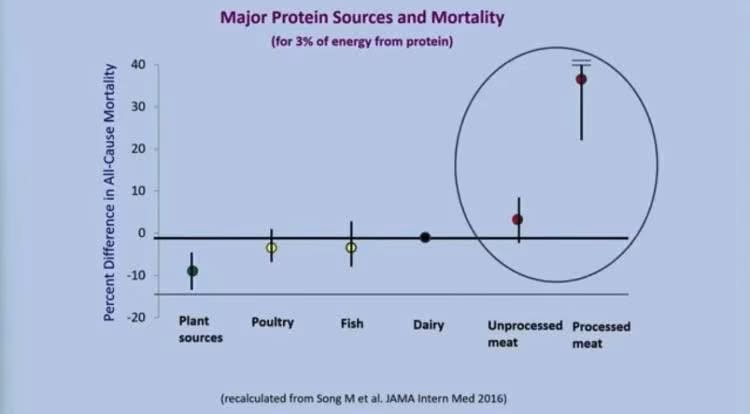
Louis argues against the 'protein craze': there is no good evidence protein restriction slows human aging, but long-term data show whole-food plant protein beats animal protein, especially processed and red meat. Among animal sources, seafood, poultry and fermented dairy have the lowest mortality and processed meat is worst. Plant protein's lower isoleucine, valine and methionine may explain part of it.
36 RCTs: extra protein did not boost strength or muscle in healthy adults over 65

Oct 20, 2025 · Louis Nervegna ♥ 11 · 💬 11 Protein

Louis argues that US adults over 65 already eat over 1.2 g/kg/day of protein and summarizes a 2018 AJCN meta-analysis of 36 RCTs in nonfrail older adults. Added protein did not improve grip or leg strength, walking speed, chair rise or muscle mass, with or without resistance exercise, while exercise itself helped; frail people may differ.

Nurses' Health Study: plant but not animal protein linked to lower frailty in older women

Aug 31, 2024 · Louis Nervegna ♥ 10 · 💬 10 ↩ 3 Protein

Louis cites a 2022 Nurses' Health Study analysis in older women: higher plant protein intake was associated with lower frailty risk, but animal and dairy protein were not. Substituting 5% of energy from plant protein for animal, dairy or non-dairy animal protein was linked to 38%, 32% and 42% lower frailty risk respectively.

Harvard: swapping red and processed meat for beans, nuts, fish or poultry cuts heart risk

Apr 11, 2025 · Louis Nervegna ♥ 13 · 💬 7 Protein

Louis quotes the Harvard Nutrition Source: protein source matters more than quantity. Even small regular amounts of red meat, especially processed, are linked to higher heart disease, stroke and mortality, while replacing them with beans, soy, nuts, fish or poultry appears to lower risk, partly because plant proteins are more unsaturated and cholesterol-free.

Midlife plant protein raised odds of healthy aging 22-58% per 3% of calories (NHS)

Aug 31, 2024 · Louis Nervegna ♥ 6 · 💬 15 ↩ 7 Protein

Louis summarizes a Nurses' Health Study analysis of midlife protein and later-life health. Total and animal protein were unfavorably associated with chronic disease, while plant and dairy protein were favorable. Replacing 3% of energy with plant protein (from fats, carbs, animal or dairy protein) raised odds of healthy aging by 22-58%, and the protein came mainly from food rather than supplements.

Six converging evidence lines favor plant protein over red and processed meat

Aug 27, 2026 · Louis Nervegna ♥ 11 · 💬 4 Protein

Louis shares an Ageproof article by group member Mert Erogul MD arguing that genetics, IGF-1 biomarkers, rodent experiments, amino-acid decomposition, short-term human trials and epidemiology converge: methionine, isoleucine and valine, not leucine or total protein, are implicated. Favoring whole-food plant protein over red and processed meat likely extends lifespan.

Six lines of evidence favor whole-food plant protein over red and processed meat

Nov 12, 2026 · Louis Nervegna ♥ 12 · 💬 3 ↩ 1 Protein

Louis recommends an article by group member Mert Erogul MD on protein and aging. It argues six lines of evidence converge: growth-signaling genetics, IGF-1 biomarker data, rodent protein restriction through FGF21 and mTORC1, the roles of methionine, isoleucine and valine, short-term human trials, and epidemiology showing source matters more than amount. Plant protein from whole foods is favored.

Stuart Phillips preprint: muscle benefit of protein still caps at 1.6 g/kg

Oct 08, 2026 · Louis Nervegna ♥ 8 · 💬 1 Protein

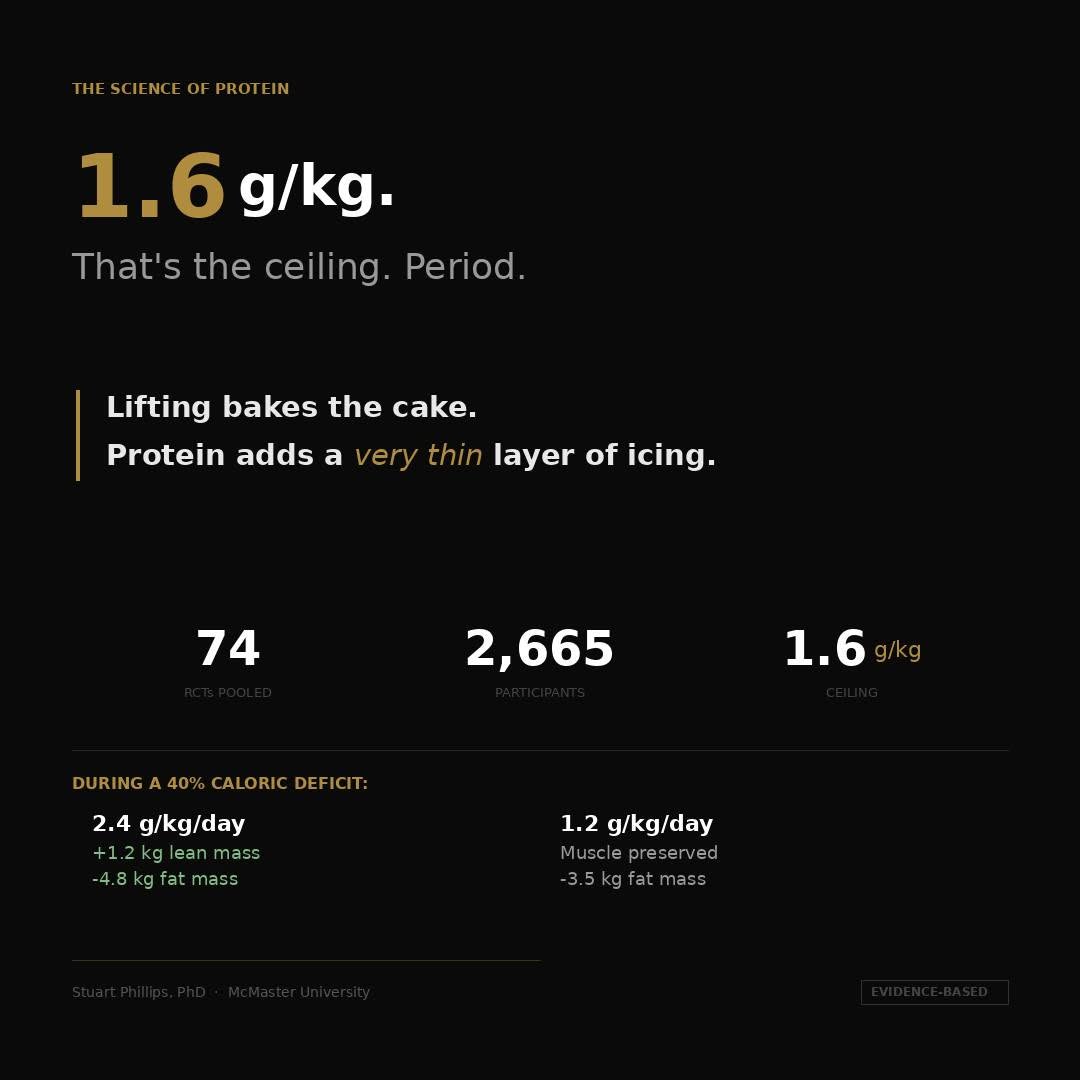
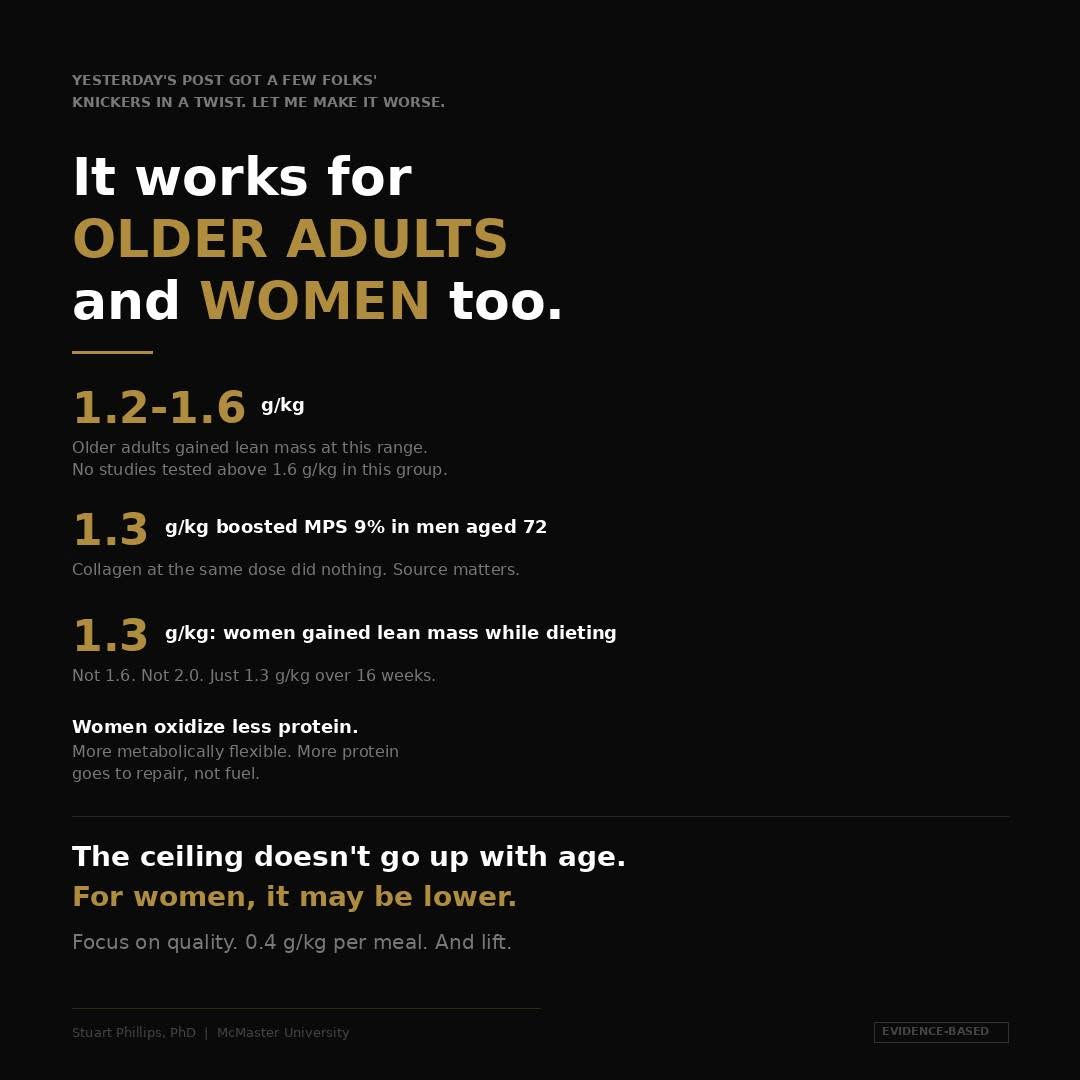
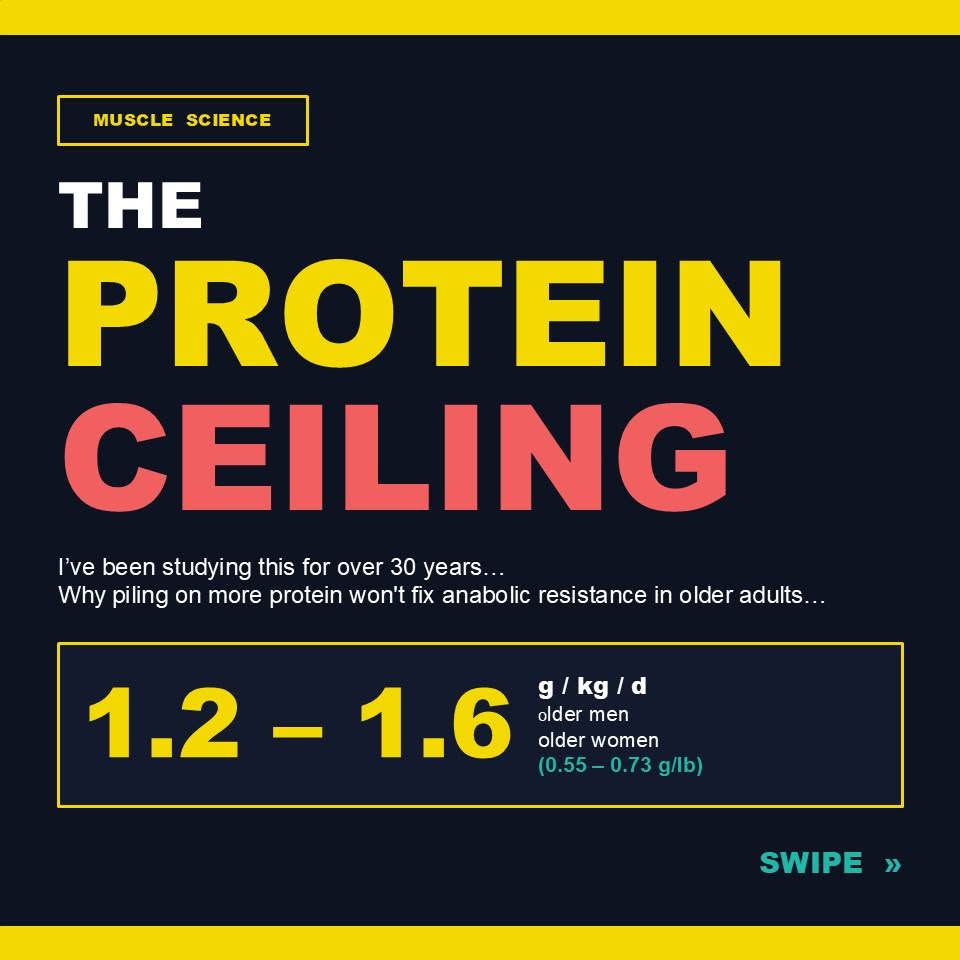
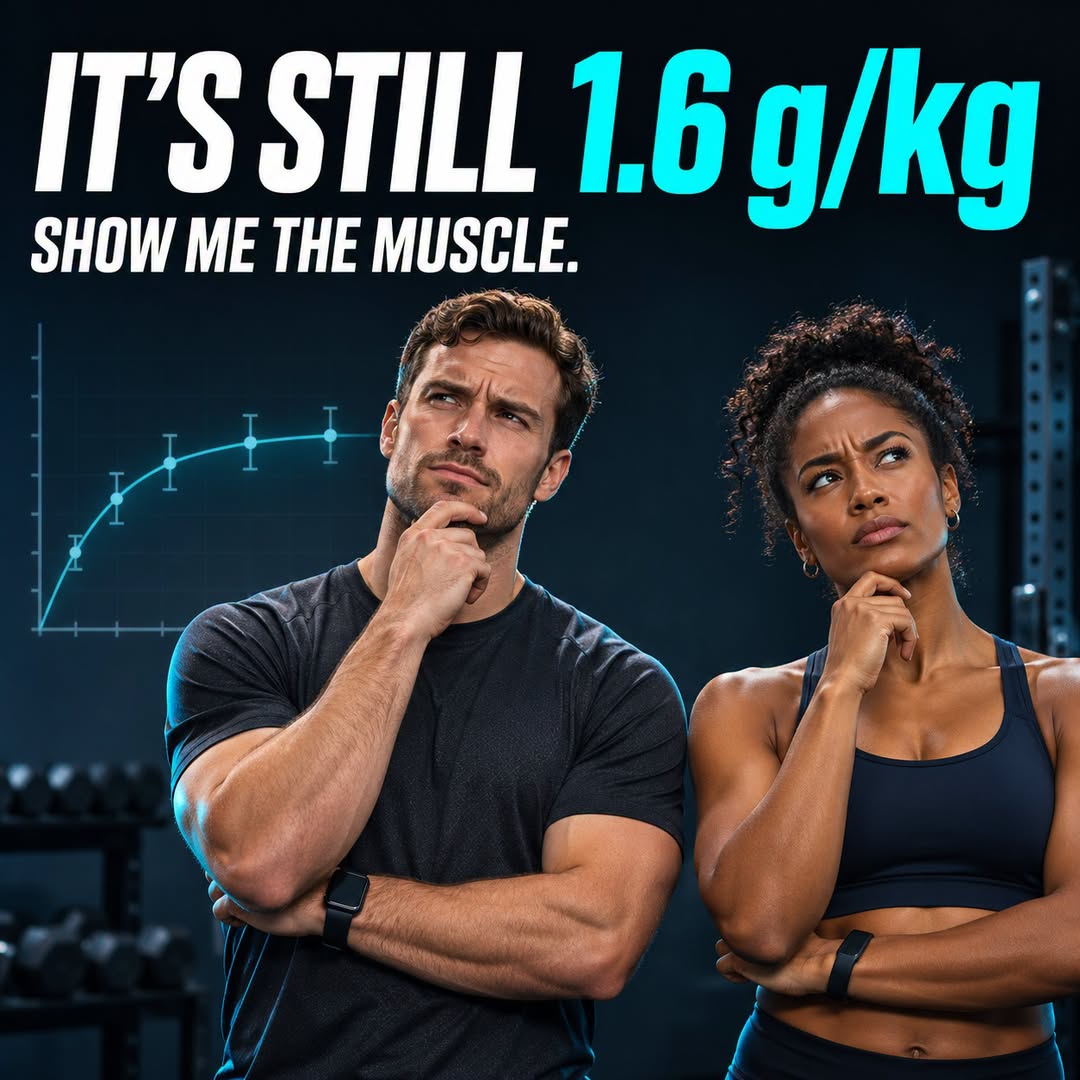
Phillips posted a new, not peer-reviewed preprint reviewing the evidence and concluding that the muscle-related benefit of protein still tops out at about 1.6 g/kg per day, and only in people doing resistance training. He argues that most trials report lean mass, about half of which is not muscle, and that women's needs are not different from men's.

Protein benefits for muscle plateau near 1.2 g/kg, with no proven gain beyond 1.5-1.6 g/kg

Dec 19, 2025 · Louis Nervegna ♥ 8 · 💬 1 Protein

Louis summarizes what he sees as the preponderance of evidence: extra protein without resistance training has no proven muscle-strength benefit, and with resistance exercise most benefit is reached around 1.2 g/kg/day. He links a Simon Hill podcast discussing randomized trials and meta-analyses (Morton et al., Tagawa et al.) and a list of earlier group posts.

Whole-food plant protein beats animal protein for long-term outcomes in Harvard cohorts

Mar 30, 2026 · Louis Nervegna ♥ 11 ↩ 2 Protein

Louis summarizes 30-year follow-up in the Harvard Nurses' Health Study and Health Professionals Follow-up Study: whole-food plant protein is associated with better outcomes, especially for heart disease. The benefit depends on the animal protein type: plant protein is only slightly better than fish, poultry and fermented dairy but clearly better than red and processed meat.

Protein type matters more than amount: processed meat worst, plant protein most protective

Jun 05, 2026 · Louis Nervegna ♥ 4 Protein

Louis reshares his summary of protein intake and mortality in nearly 300,000 people followed over 30 years in the Nurses' Health Studies and Health Professionals Follow-up Study. Plant protein was protective, fish and poultry slightly so, dairy and eggs neutral, while unprocessed red meat modestly and processed meat very strongly raised mortality.

Stuart Phillips: 1.6 g/kg/day protein remains sufficient for people who resistance train

Nov 06, 2026 · Louis Nervegna ♥ 5 Protein

Louis shares a response from protein researcher Stuart Phillips defending the 1.6 g/kg/day recommendation after a critique. He argues it is a sufficiency with a margin, not a cliff, and that head-to-head trials of 1.6 versus up to 3.2 g/kg/day found no significant lean-mass advantage, while three studies cited for more benefit used weak muscle measures.

Extra protein cannot be stored: the body burns it for energy or converts it to fat

Nov 12, 2026 · Louis Nervegna ♥ 1 Protein

Louis shares a clip of Stanford's Christopher Gardner explaining that unlike fat, the body has no dedicated storage for excess dietary protein. Surplus amino acids are broken down and used for energy, with carbon skeletons possibly becoming glucose or fat. Adequate protein matters, but more is not automatically better.