Research in preventive cardiology is increasingly focused on getting to the bottom of exactly what causes residual risk.
Inflammation seems to be a big part of it.
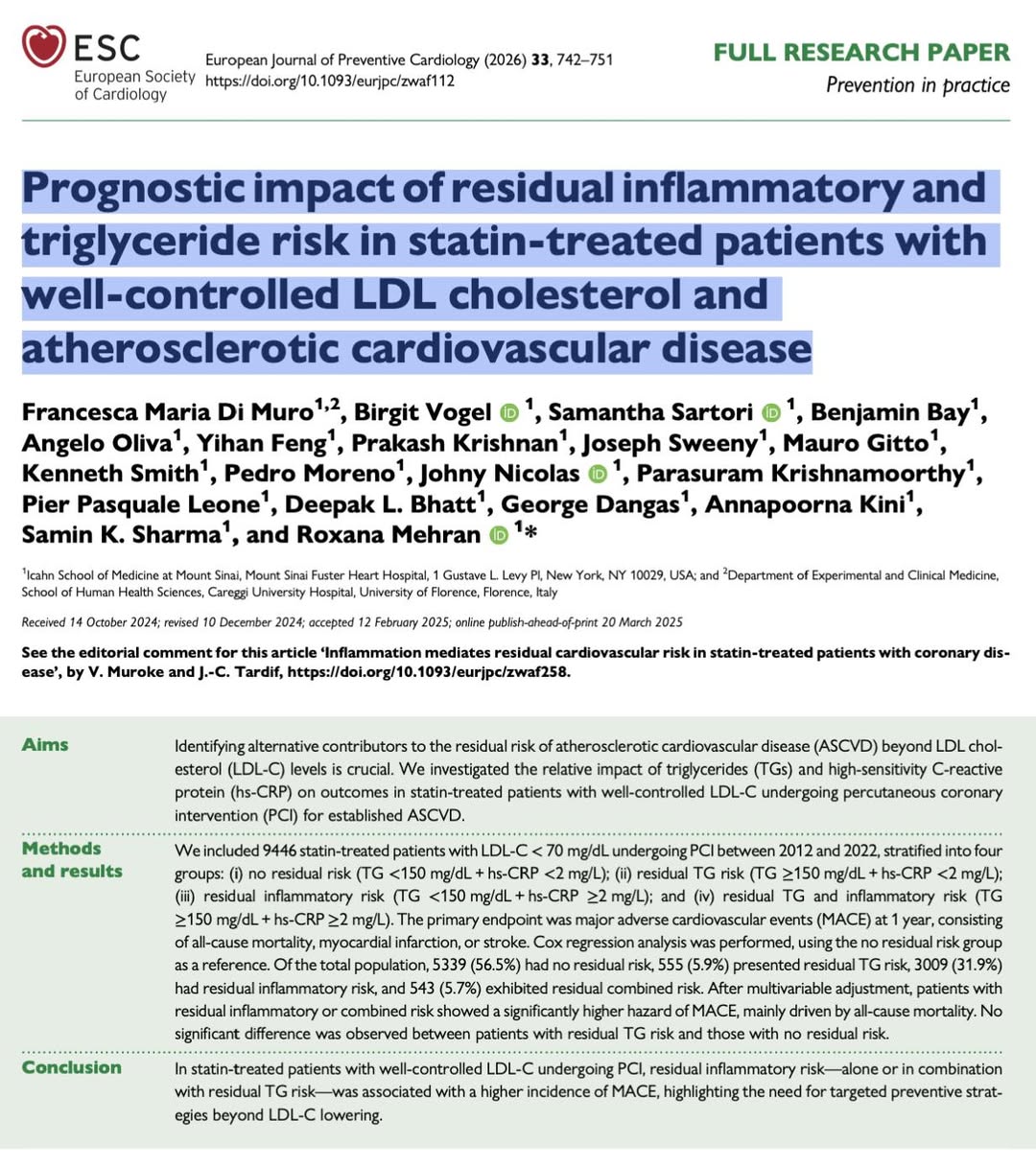
A shared study summary: among more than 9,400 statin-treated PCI patients with LDL under 70 mg/dL, elevated hs-CRP (2 mg/L or more) carried about 1.8x higher MACE risk, whereas elevated triglycerides alone showed no significant increase. Louis frames inflammation as a major driver of residual risk.
Research in preventive cardiology is increasingly focused on getting to the bottom of exactly what causes residual risk.
Inflammation seems to be a big part of it.
🫀🔥 LDL is controlled. Statins are optimized.�And yet… patients still have events.
This study addresses one of the most important unanswered questions in cardiology:
👉 What really drives residual cardiovascular risk?📊 In >9,400 statin-treated patients with LDL <70 mg/dL undergoing PCI:
Patients were stratified by:
Triglycerides (TG ≥150 mg/dL)
Inflammation (hs-CRP ≥2 mg/L)💡 The result is striking:
👉 Inflammation—not triglycerides—drives risk
Residual inflammatory risk → ~1.8x higher MACE
Combined TG + inflammation → ~1.9x higher MACE
Residual TG risk alone → NO significant increase⚠️ And what’s driving this?
👉 Mostly all-cause mortality
Not subtle. Not marginal.
👉 Clinically meaningful.🧠 Let’s be clear:
We’ve spent decades optimizing:
✔ LDL
✔ Lipid profiles
✔ Cholesterol targetsBut this study shows:
👉 You can win the lipid battle… and still lose the war
🔥 Because atherosclerosis is not just lipid-driven.
👉 It’s an inflammatory disease🎯 Clinical implication
Risk stratification cannot stop at LDL.
We need to integrate:
hs-CRP
Inflammatory burden
Systemic biology🚀 Paradigm shift
From:
❌ “How low is LDL?”
➡️ to
✅ “How active is the disease?”🧠 Bottom line
Lowering LDL is necessary.
👉 But it is NOT sufficient.If inflammation persists:
👉 Risk persists.
⚡ The future of prevention?
Not just lipid control.
👉 Inflammation-guided precision cardiology.
Louis shares a Frontiers in Cardiovascular Medicine review linking visceral adipose tissue to residual cardiovascular risk via chronic inflammation. It discusses GLP-1 receptor agonists as promising therapies.
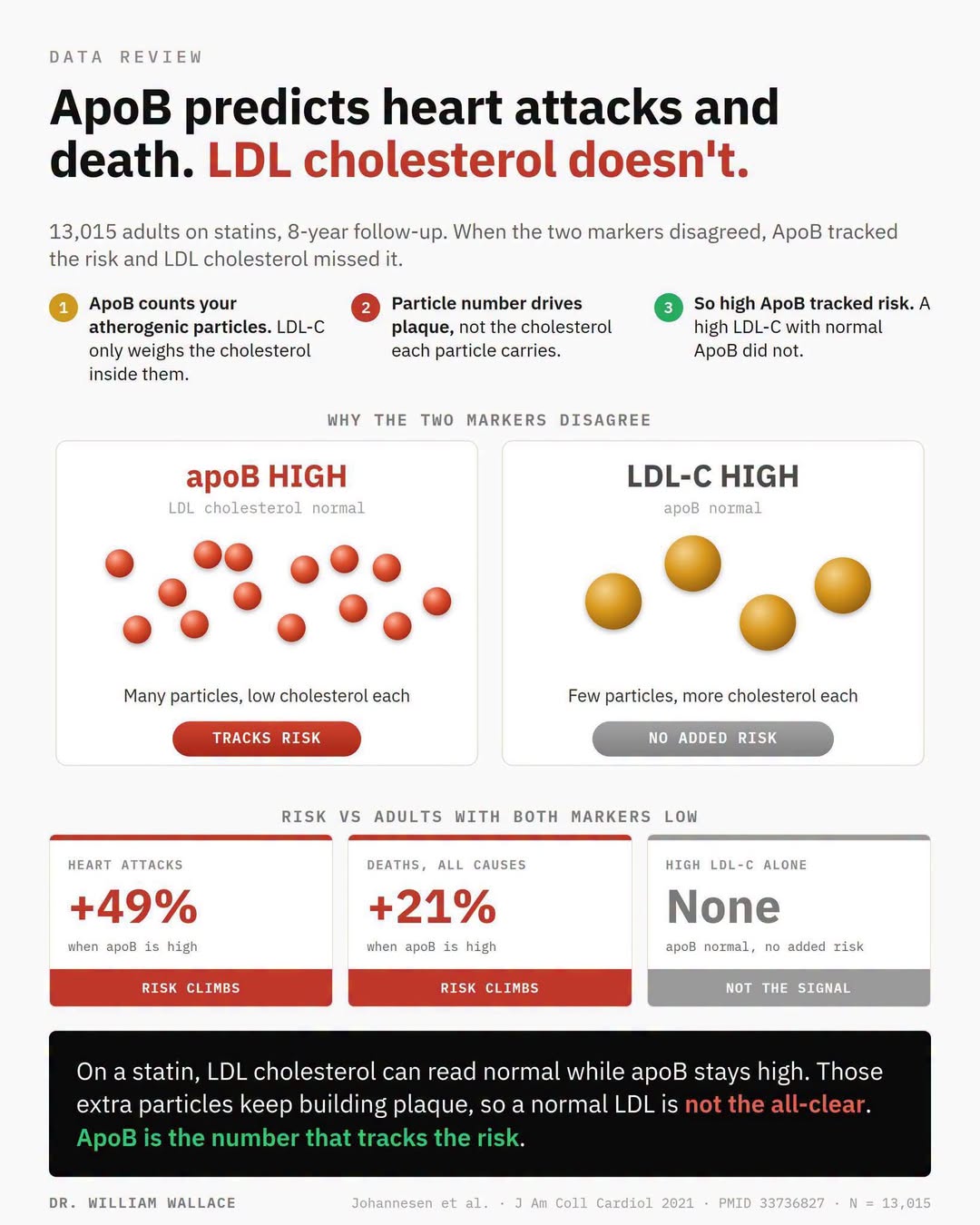
In Copenhagen General Population Study participants on statins (n=13,015, median 8 years), high apoB with normal LDL-C had 49% higher MI rate and 21% higher mortality. High LDL-C with normal apoB showed no excess risk; non-HDL-C behaved like apoB.
Louis counters the idea that driving LDL to zero makes heart attack and stroke risk vanish. Risk keeps falling as LDL goes lower, but every randomized trial still shows substantial residual risk, which is a major research focus.
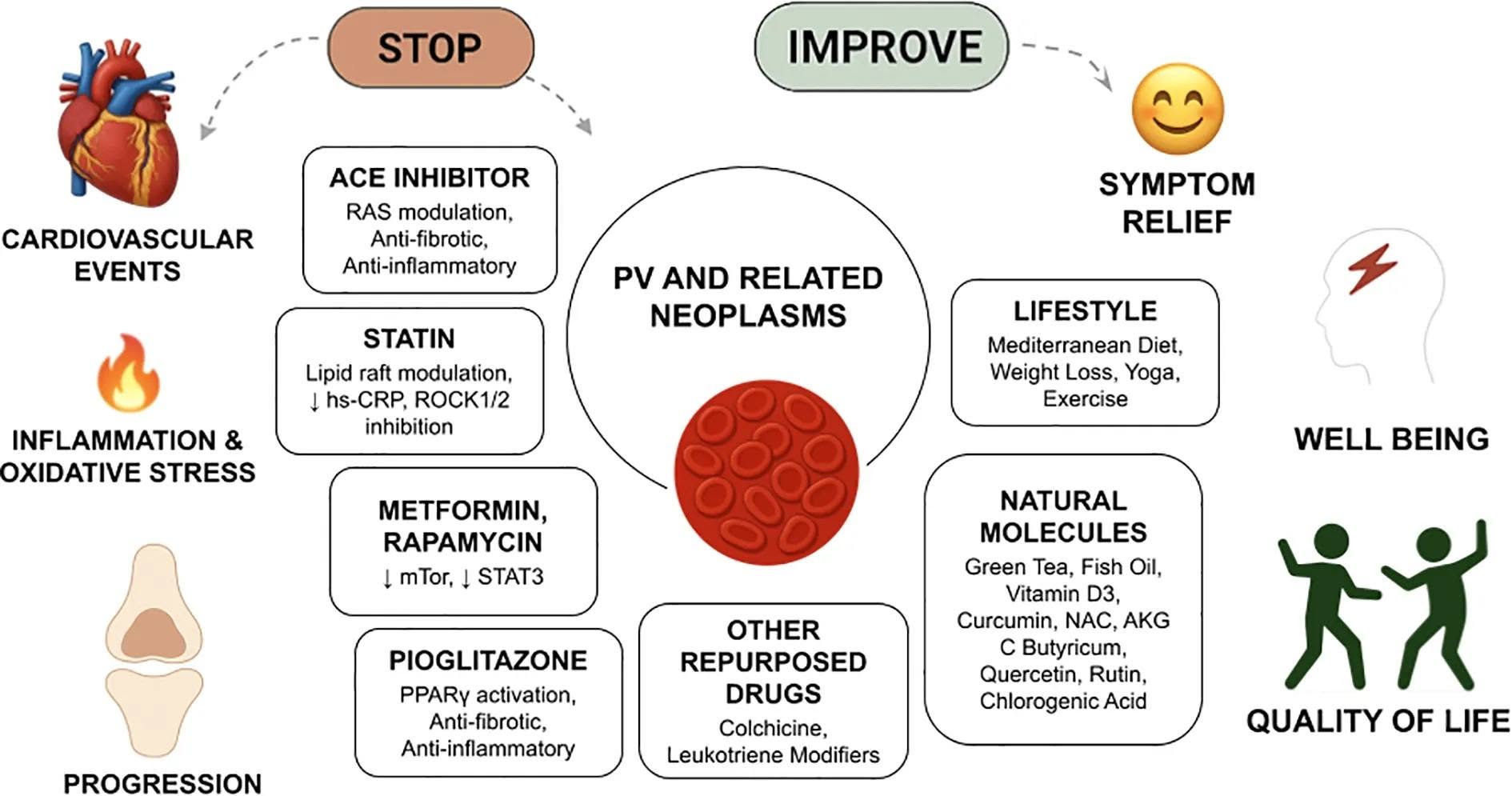
The admin announces a March 2026 Frontiers in Hematology paper with Dr Hasselbalch after five years of research. It analyses how cardiovascular drugs, supplements and lifestyle can be used in polycythemia vera and related blood disorders, and the links between cardiovascular disease, chronic inflammation and blood stem cell mutations.
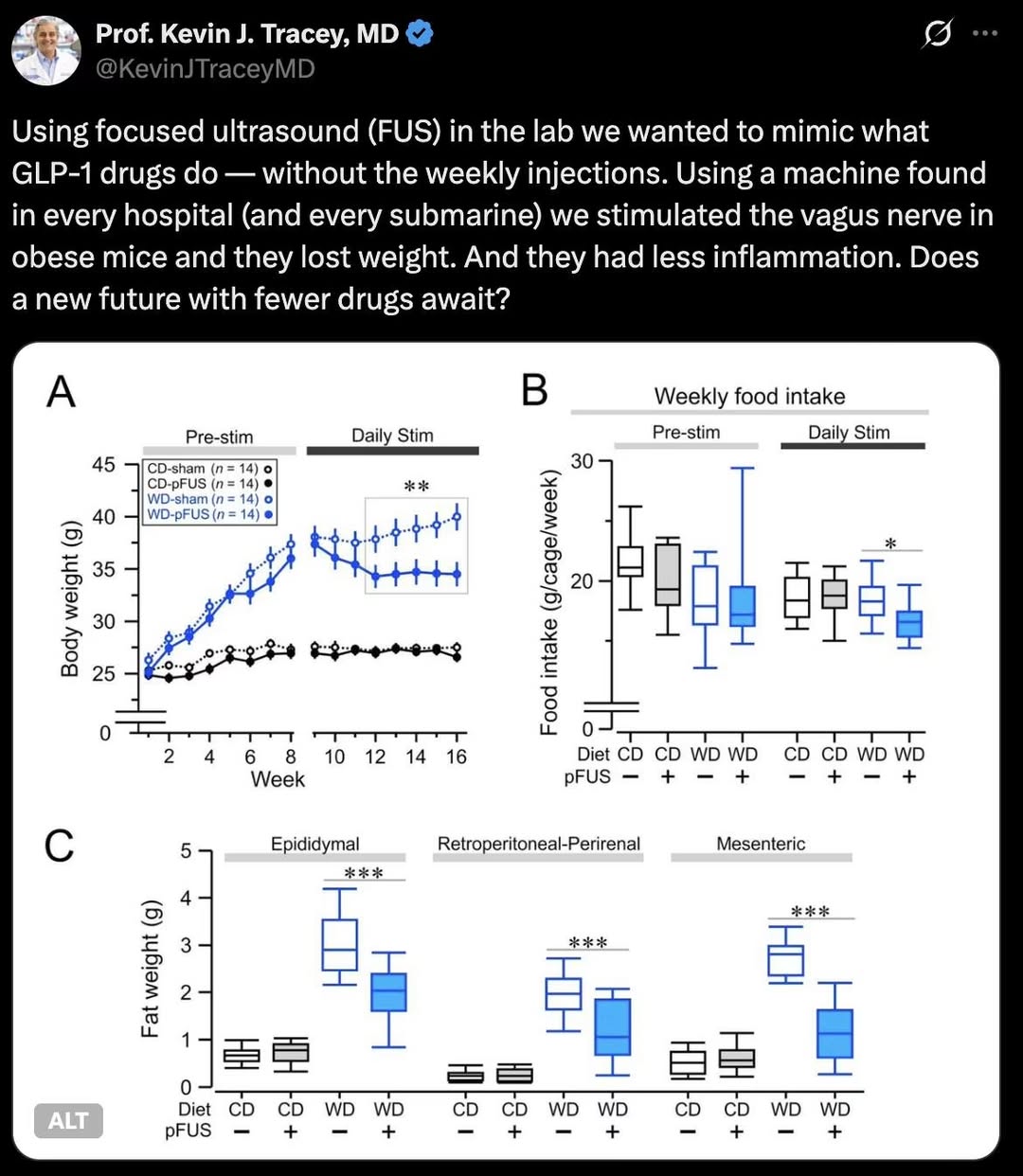
Brief share of a Scientific Reports paper described as fascinating new research: ultrasound used in mice to counter obesity and inflammation. Animal data only; no numbers in the post.
Reports a large national study of more than 3,800 Americans aged 70+, in which shingles-vaccinated people showed slower biological aging, lower chronic inflammation and slower aging-related changes in gene activity. This suggests the vaccine may calm 'inflammaging', the low-grade inflammation tied to heart disease, frailty and cognitive decline.