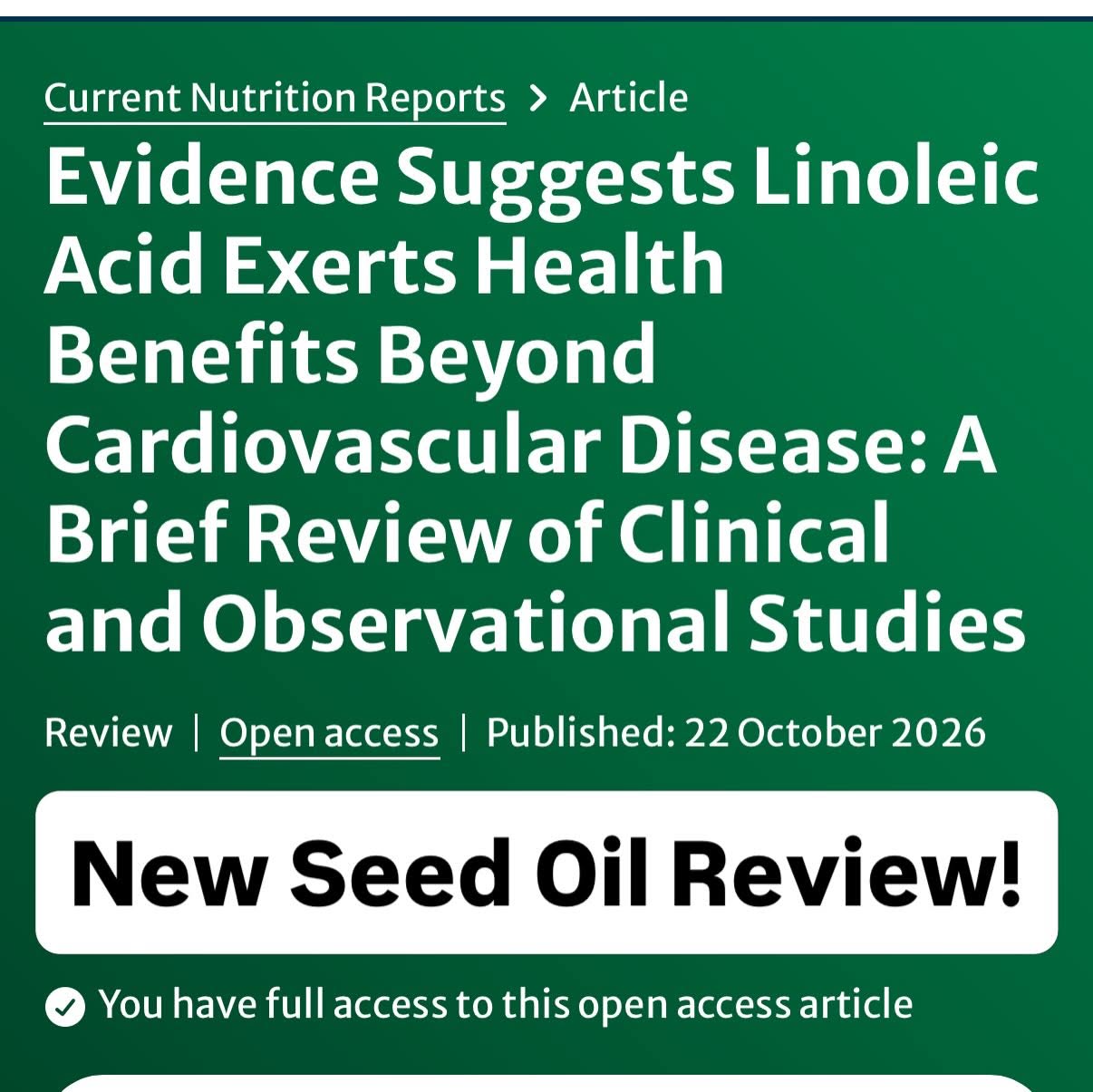
“A 2017 meta-analysis examined the effect of increasing dietary LA [omega 6] intake on blood levels of inflammatory markers. The analysis included 30 randomized controlled trials with 1,377 participants. The researchers found no significant effect of higher LA [omega 6] on any of the tested inflammatory markers.”
Reference: ↪ 30 RCTs show higher linoleic acid intake does not raise inflammatory markers
“Additionally, a 2019 study assessed the relationship between circulating and tissue levels of LA [omega 6] and AA [arachadonic acid] and incident cardiovascular disease in a pooled global analysis [30 large prospective cohort studies], finding that higher levels of LA [omega 6] and possibly AA were associated with a lower risk of major cardiovascular events.”
Reference:
Paper · Circulation · 2019Biomarkers of Dietary Omega-6 Fatty Acids and Incident Cardiovascular Disease and Mortality.Conclusion: In pooled global analyses, higher in vivo circulating and tissue levels of LA and possibly AA were associated with lower risk of major cardiovascular events. These results support a favorable role for LA in CVD prevention.pmc.ncbi.nlm.nih.gov“Furthermore, a 2022 systematic review evaluated the clinical evidence regarding omega-6 fatty acids’ effects on various diseases and concluded that omega-6 fatty acids have beneficial effects on cancers, blood lipoprotein profiles, diabetes, renal disease, muscle function, and glaucoma, without provoking an inflammatory response.”
Reference:
Paper · Food Sci Biotechnol · 2022Recent insights into dietary ω-6 fatty acid health implications using a systematic review.The American Heart Association suggests that consuming ω-6 fatty acids (5-10% of total energy) can prevent cardiovascular disease by improving lipoprotein profiles. However, some studies warn of deleterious effects of these due to eicosanoid biosynthesis. We explored the five years for clinical evidence of ω-6 fatty acids on several diseases including inflammation, cancer, cardiovascular disease, and metabolic…pmc.ncbi.nlm.nih.gov“More recently, a prospective observational study published in 2024 explored the relationship between LA and non-LA omega-6 polyunsaturated fatty acids and total and cause-specific mortality. This prospective, observational, biomarker-based study analyzed data from over 250,000 individuals in the UK Biobank. Using various statistical models, they estimated the risk of death from all causes, cardiovascular disease, cancer, and other causes based on plasma levels of LA and non-LA omega-6 fatty acids (total omega-6 fatty acids minus LA).
The researchers reported that higher plasma LA [omega 6] was associated with 17% lower risk of total mortality, a 13% lower risk of cardiovascular disease-related death, a 19% lower risk of death from cancer, and an 18% lower risk of death from all other causes.”
Reference:
PaperScienceDirect articlesciencedirect.com“A new study, published in June 2025, aimed to explore the hypothesis that LA [omega 6] or AA [arachadonic acid] are pro-inflammatory by examining the cross-sectional association between red blood cell (RBC) membrane levels of LA and AA and 10 different biomarkers that represent inflammation in a large, community-based sample. Participants were recruited from several cohorts of the Framingham Heart Study, with a total of 2,777 participants from the Framingham Offspring and Framingham Omni cohorts.
Researchers found a significant inverse association between RBC LA levels and five of the 10 inflammatory markers. Overall, no inflammatory markers were identified as being positively and significantly associated with RBC LA after controlling for the effects of AA and the Omega-3 Index on these biomarkers.
A similar pattern was observed for RBC AA levels. There were significant inverse relationships between RBC AA levels and four markers, with no inflammatory biomarkers showing a positive and significant association with RBC AA after accounting for LA and the Omega-3 Index.
Lastly, the researchers examined the relationship between the Omega-3 Index and all markers and discovered that eight out of ten inflammatory markers had a significant inverse association.
The authors concludes that these results do not support the hypothesis that omega-6 fats, LA or AA, are pro-inflammatory. Interestingly, they found the opposite to be more likely true, as they observed a significant and inverse association between RBC LA and AA and several major markers of inflammation. Furthermore, none of the tested omega-6 polyunsaturated fatty acids showed a significant and positive association with any of the inflammatory biomarkers tested.”
Reference: ↪ Higher red blood cell omega-6 linked to lower inflammation markers in Framingham Offspring
—————-
#omega6HD #linoleicacidHD #inflammationHD #inflammation6HD #seedoilsHD #arachadonicacidHD #polyunsaturatedfatHD