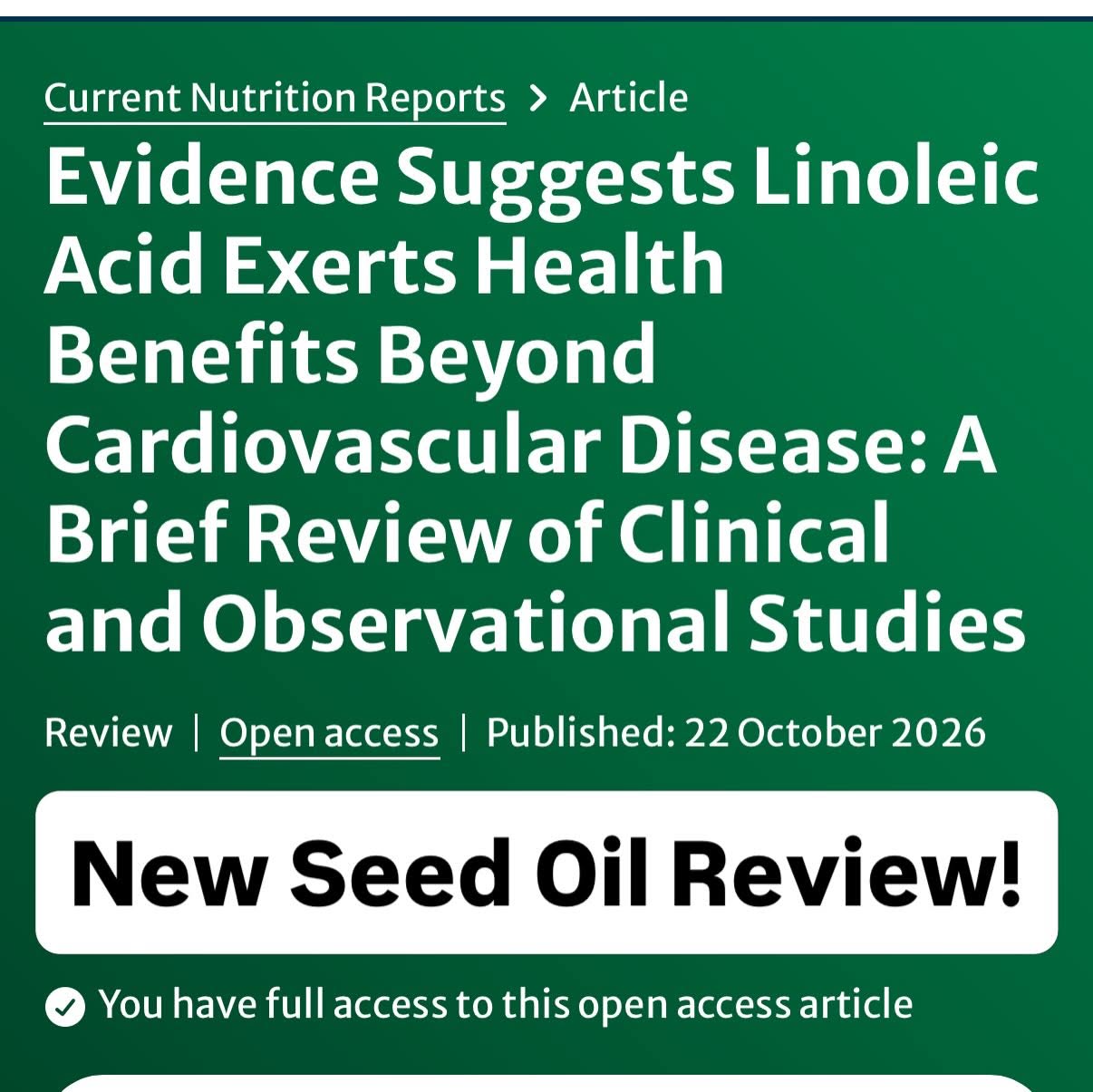
Add it to the 30+ other studies showing that omega 6 fats do not increase markers of inflammation in humans: ↪ 30 RCTs show higher linoleic acid intake does not raise inflammatory markers.
They also don’t increase oxidized LDL. This video has a nice explanation.
And they reduce liver fat, as well as improve insulin sensitivity.
#seedoilsHD #omega6HD #inflammation6HD #linoleicacidHD #inflammationHD #soybeanoilHD #arachadonicacidHD #liverfatHD #oxidizedldlHD #omega6oxidationHD #omega6liverfatHD
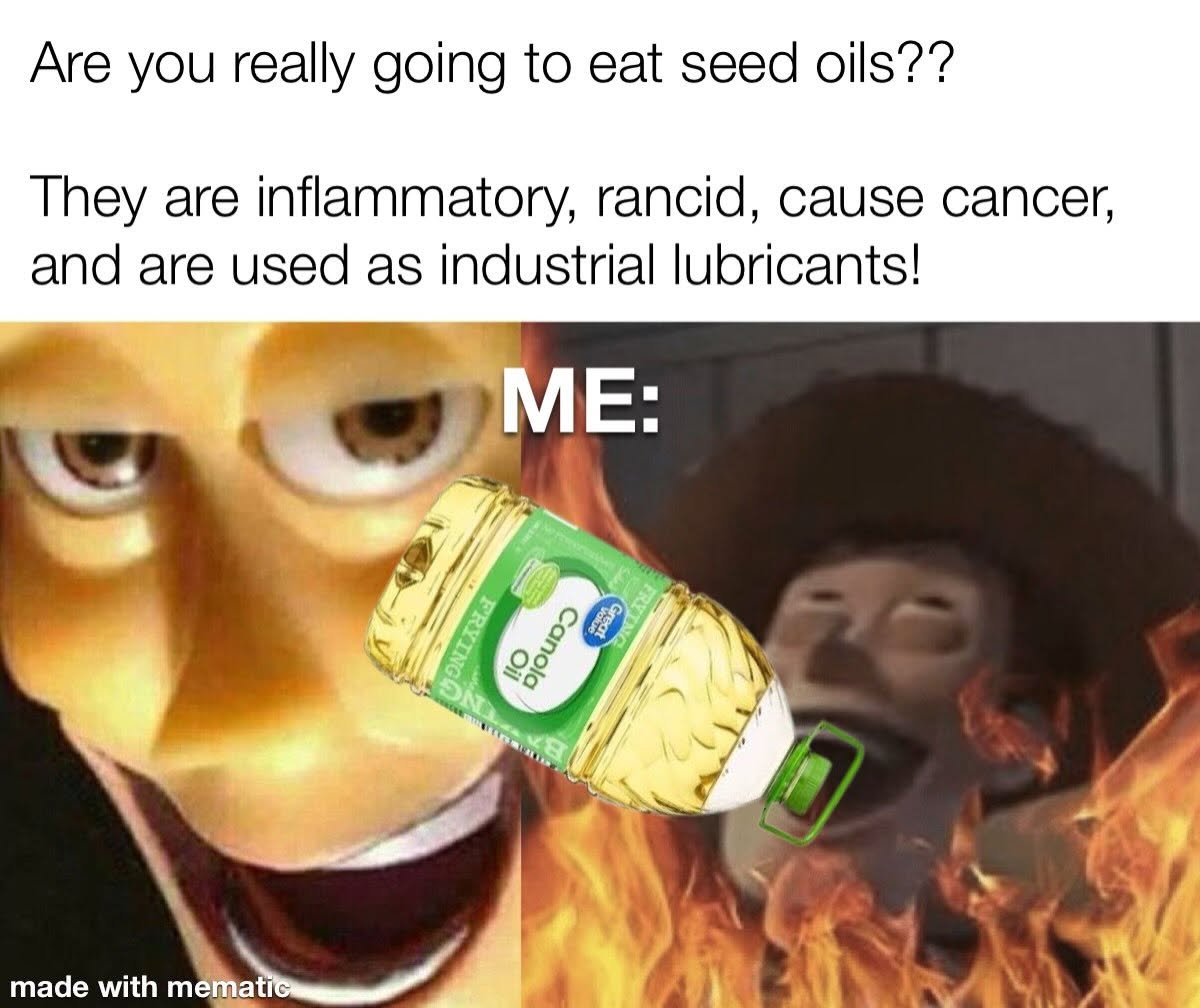
You’ve been lied to about seed oils…
They aren’t inflammatory 🤷🏻♂️
Yep, I said it. On their own, seed oils are NOT inflammatory. If you eat a ton of them and gain body fat, inflammation can go up, but that’s because excess body fat is pro-inflammatory, not because seed oils are uniquely harmful.
When you actually compare them calorie-for-calorie with saturated fat, seed oils are neutral or slightly beneficial for inflammation. They also reduce liver fat compared to saturated fat (PMID: 28752873, 22492369).
“But what about oxidized LDL?!” This is one of the biggest anti-seed oil talking points… and the data doesn’t support it. A recent human trial (PMID: 41695083) gave people ~30g/day of soybean oil and measured inflammatory markers and oxLDL. Result?
- No increase in inflammatory markers (IL-6 actually trended DOWN)
- No increase in oxLDL
- Decrease in arachidonic acid (AA), a precursor to inflammatory compounds
That last point is especially ironic since critics claim seed oils increase inflammation via AA. In humans, we see the opposite. Here’s what they miss about oxLDL:
LDL doesn’t oxidize much in the bloodstream—it’s cleared quickly and protected by antioxidants. Oxidation happens mainly AFTER LDL enters the artery wall, where it can stick around for weeks. So what determines oxLDL?
LDL levels in the blood, which means…
More saturated fat → higher LDL → more LDL enters artery wall → more oxLDL
More PUFA (seed oils) → lower LDL → less entry → less oxLDL
This is basic lipidology.
DATA > feelings
If you’re sick of nutrition BS, comment ‘REPS’ and I’ll DM you info on my monthly research review where we cut throught the noise and break down what actually matters from the data and how to apply it
#seedoils #ldl #highcholester #