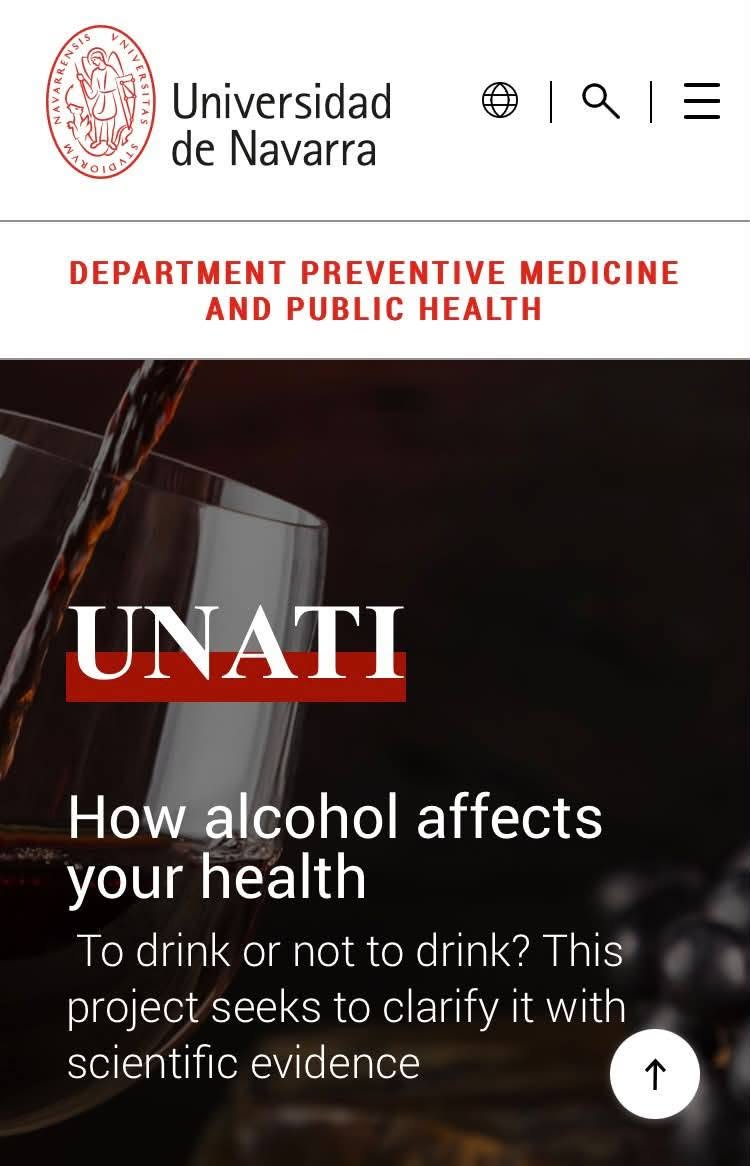
The UNATI Trial - Alcohol & CVD
(University of Navarra Alumni Trialist Initiative)
We are finally seeing a large long-running randomized controlled trial that is directly testing alcohol (red wine) verses cardiovascular disease.
Details of the trial can be found here:
clinicaltrials.govClinicalTrials.govclinicaltrials.govLink to an advertisement video for the trial:
 ▶Video · YouTube · Brut AmericaA study in Spain wants you to drink wine every day for four years for science.Watch more Brut America videos:m.youtube.com
The official website for the trial can be found in this post:
↪ UNATI: 10,000-person randomized trial of moderate red wine vs reducing alcohol
The study involves 10,000 people, and is running for 5 years. It will also report on secondary endpoints of cancer and all-cause mortality.
They are testing alcohol in this trial as if it were a medication.
One group is randomized to consume a set dose of wine each day, and the other group is randomized to consume an alcohol-free alternative. Everything else is the same between the two groups. Wine is the only variable.
The trial is being run in the same style as the famous PREDIMED trial that tested a traditional Mediterranean diet vs CVD. In fact, it is being run by the same principle investigator as PREDIMED.
Given the people involved, this should be a very high quality trial.
It will finally give us the truth on mild-to-moderate alcohol consumption and health, whatever that may be.
Quoted:
“Randomized controlled trials are needed to ensure that potential benefits or harms from alcohol consumption are adequately assessed, Martínez-González said. He and his colleagues at the University of Navarra received funding for such a study earlier this year. The study is recruiting physicians ages 50 to 75, who will be randomized to moderate drinking or abstention groups. Both groups will receive free beverages—red wine or an alcohol-free alternative—during the five-year study.”
“So, should we remove wine from the Mediterranean diet?” he asked. “Yes, definitely for those under 35 years.” But for older adults, it’s more complicated. He and his colleagues, and other researchers, have found that the Mediterranean diet loses up to 23.5% of its protective effect if wine is removed.”