Alcohol is one of the most argued-over topics in heart health. For decades, large studies of ordinary people found that those who drank lightly or moderately had fewer heart attacks and strokes than those who never drank. More recently, a wave of headlines has said that no amount of alcohol is safe. Both claims have some evidence behind them, and they are measuring different things: the heart-disease studies mostly look at cardiovascular events, while the "no safe level" message is driven largely by cancer.
The short answer from the group's posts is that heavy drinking is clearly harmful to the heart, that low intake (up to about one drink a day for women and two for men) has not been shown to raise heart-disease risk and may lower it in observational studies, and that none of this has been proven in a long randomized trial.23 Meanwhile, even small amounts probably raise the risk of some cancers, especially breast cancer.511 Louis Nervegna, one of the group's admins, repeatedly frames the whole subject as "if you choose to drink", not as a reason to start.1213
This summary walks through what the evidence shows, why scientists disagree, and what the admins suggest in practice. It is a summary of the group's posts, not medical advice. Anyone with heart disease, liver disease, a history of alcohol problems or on medication should discuss alcohol with their own doctor.
What counts as a drink
Researchers and guidelines count "drinks" by the amount of pure alcohol. One standard serving is 14 g of pure alcohol, which is about 12 oz of beer, 5 oz of wine or 1.5 oz of distilled spirits.14 The European Society of Cardiology (ESC) statement on diet describes "one unit a day" as about half of that serving.14 Louis also notes that 5 g of alcohol is about a third of a serving, for example a third of a glass of red wine.15
The common upper limits cited across the group are 1 drink a day for women and 2 for men.1016 The Mediterranean-diet do's and don'ts that Gokhan Can shared likewise permit "up to one glass per day for women, two for men" of red wine as an optional part of the diet, and advise avoiding alcohol entirely with a history of alcohol abuse or certain medical conditions.17
What the large cohort studies and guidelines say
The observational evidence
Louis quotes Harvard's Nutrition Source: more than 100 prospective studies show an inverse association between light-to-moderate drinking and heart attack, ischemic (clot-caused) stroke, peripheral vascular disease, sudden cardiac death and death from cardiovascular causes, corresponding to a 25-40% reduction in risk.1 The same source says the pattern holds in men and women, in people with diabetes or high blood pressure, and in older adults, and that more than 4 drinks a day can raise the risk of hypertension, abnormal heart rhythms, stroke, heart attack and death.1 Harvard epidemiologists quoted in the post consider the relationship "almost certainly" cause and effect, a view the post itself describes as contested.1
The shape of this relationship is often called a J-shaped curve. Heavy drinkers have high risk, non-drinkers have moderate risk, and light-to-moderate drinkers (1 to 2 drinks a day) have the lowest risk.18
The AHA and National Academies reviews
In 2025 the American Heart Association (AHA) published a scientific statement on alcohol and cardiovascular disease in Circulation. Its summary, quoted by Louis, reads that the available evidence "suggests no risk to possible risk reduction when alcohol is consumed in low amounts (such as no more than 1 to 2 drinks a day) in regard to coronary artery disease, stroke, sudden death, and possibly heart failure". It adds that "heavier alcohol consumption such as binge drinking or consuming on average 3 or more drinks/d is consistently associated with worse outcomes in every cardiovascular disease entity studied".219 The statement's abstract also notes that most research on the topic is observational and therefore prone to bias and confounding.2
The National Academies of Sciences, Engineering, and Medicine (NASEM) published its own review of alcohol and health in JAMA on September 30, 2025. It graded evidence with the US Preventive Services Task Force framework and found no high-certainty conclusions for low-dose alcohol and specific outcomes. It did reach three moderate-certainty conclusions: moderate drinking is associated with lower all-cause mortality, with lower cardiovascular mortality, and with a higher risk of breast cancer in women.6 "Moderate certainty" means the size or even direction of the effect could change as more evidence arrives.6
The ESC/EAPC dietary statement similarly said that one unit of alcohol a day (half a serving) may contribute to reduced cardiovascular risk without an unfavorable risk profile.14 The American Society for Preventive Cardiology's diet summary says that, for those who drink, the maximum is 1 drink a day for women and 2 for men.10
How the main reviews quoted in the group compare12614:
| Review | Low intake | Higher intake and harms |
|---|---|---|
| AHA scientific statement (2025) | "No risk to possible risk reduction" at no more than 1 to 2 drinks a day for coronary disease, stroke, sudden death and possibly heart failure | 3 or more drinks a day on average, or binge drinking, consistently linked to worse outcomes |
| NASEM review (JAMA, 2025) | Moderate certainty: moderate drinking linked to lower all-cause and cardiovascular mortality | Moderate certainty: higher breast cancer risk in women |
| Harvard Nutrition Source | 25-40% lower cardiovascular risk across more than 100 prospective studies | More than 4 drinks a day can raise the risk of hypertension, abnormal rhythms, stroke, heart attack and death |
| ESC/EAPC dietary statement | One unit a day (half a serving) may contribute to reduced cardiovascular risk | Not covered in the posts |
The PREDIMED wine analysis
PREDIMED was a large randomized trial in which people at risk of heart disease ate a traditional Mediterranean diet or an AHA-style diet. Louis notes that the Mediterranean diet lowered cardiovascular disease by about 30% in this primary prevention setting, and that the Mediterranean diet in this trial included red wine.20
A follow-up looked at wine specifically, using a urinary marker (tartaric acid) that is unique to wine. Louis calls this the most accurate way of tracking alcohol intake ever used in a long-term study. People whose levels reflected mild-to-moderate wine consumption had significantly lower rates of heart attack, stroke, heart failure and cardiovascular mortality over 9 years, with a hazard ratio of 0.5 compared with no wine.4 That is a 50% relative risk reduction, which is large for this field.4
It is important to read this carefully. The randomization in PREDIMED was to diet, not to wine, so the wine comparison is an observational analysis inside a trial. Louis himself emphasizes the word "possible", writes that this is "not proven" and that alcohol has become a topic of active debate in cardiology.4 He also says his own habit of a glass of red wine several days a week rests on this PREDIMED data, and describes it as a personal view rather than proof of benefit.21
Show data
| Hazard ratio (log scale) | 95% CI | |
|---|---|---|
| PREDIMED follow-up, mild-to-moderate wine by urinary biomarker (9 years) | 0.5 | – |
| Brazilian study of habitual red wine drinkers (5.5 years) | 0.21 | – |
Louis argues that four large randomized Mediterranean-diet trials, which included mild red wine, show wine is safe for the heart in that dietary context.3 The Lyon Diet Heart Study, one of those trials, randomized more than 600 heart-attack survivors; with mild-to-moderate red wine encouraged as part of the Mediterranean-style diet, cardiac events and deaths were far lower than with an AHA diet, and the trial stopped early.23 Because the whole diet changed at once, these trials cannot isolate the effect of wine.
Miguel Martinez-Gonzalez, the PREDIMED principal investigator, is quoted as saying wine should "definitely" be removed from the Mediterranean diet for people under 35, while for older adults it is more complicated: he and others have found the Mediterranean diet loses up to 23.5% of its protective effect if wine is removed.820
Other findings the group has shared
- Red wine and calcium scores. A 2018 Brazilian study of 200 long-term habitual red wine drinkers and 154 abstainers followed for 5.5 years found drinkers had higher coronary calcium (CAC) scores but fewer events: a major-event rate of 0.2 versus 1.5 per 100 person-years, and a 79% reduction after adjustment (HR 0.21). The summary lists limitations including male-only participants and residual confounding.22
- Cholesterol. Louis states that many studies, including a newly reported one, show alcohol does not raise LDL and may lower it by a very small amount. No study details are given in the post.24
- Blood sugar. A meta-analysis of 14 intervention studies found alcohol did not change estimated insulin sensitivity or fasting glucose overall, but lowered HbA1c (standardized mean difference -0.62) and fasting insulin (-0.19). The authors note small, short studies, and effects on insulin sensitivity that appeared in women but not men.25
- Dementia. In an observational autopsy cohort of 586 people, a lifestyle that included about 1 drink a day for women or 2 for men was associated with protection from cognitive decline; Louis notes light-to-moderate alcohol was protective in this study.26
- Whole-diet scores. The Alternative Healthy Eating Index lists moderate alcohol as one of its four central tenets, and a Nurses' Health Study analysis in women over 60 found moderate alcohol was one component independently associated with lower frailty.2728
Show data
| Standardized mean difference | 95% CI | |
|---|---|---|
| HbA1c | −0.62 | −1.01 to −0.23 |
| Fasting insulin | −0.19 | −0.35 to −0.02 |
| Fasting glucose | 0.07 | −0.11 to 0.24 |
| Estimated insulin sensitivity | 0.08 | −0.09 to 0.24 |
The case against: cancer, harm at higher doses and the "no safe level" message
Cancer
The strongest counterweight is cancer. A Harvard Chan School commentary shared by Louis, written by researchers with a combined 60 years of alcohol research, says even modest consumption likely raises the risk of certain diseases such as breast and esophageal cancer, and heavy drinking is unequivocally harmful.11 The same piece says randomized trials show alcohol raises sex hormone levels and observational studies show a higher risk of hormone-sensitive breast cancers, which together make the breast cancer link "highly persuasive".11
Louis shared a Walter Willett clip stating that wine, beer and spirits all raised breast cancer risk at under one drink a day, replicated in over 100 studies, with roughly the same risk per drink for each type.5 Louis adds one point he says the clip omits: in the Harvard Nurses' Health Study the excess breast cancer risk disappeared with higher folate intake or folic acid supplementation.5 Harvard's folate review says higher folate intake appeared to blunt the increased breast cancer risk in women having more than one drink a day, and that alcohol interferes with folate metabolism. It also warns that a high-dose 1,000 mcg folic acid trial in people with prior polyps found no protection and more advanced polyps, so "a little is good, too much may be bad".29
Some of the group's posts take a more reassuring line on wine specifically. Louis shared a Frontiers in Nutrition meta-analysis of 76 studies that found no association between wine and any type of cancer and a protective trend for several cancers, and a post on the same paper (counted there as 73 studies and over 4.3 million participants) concluding that moderate wine was not linked to higher overall cancer risk, defined as up to one drink a day for women and two for men.1630 He cautions that this is observational data that cannot prove wine is harmless, and that official limits should still be followed.16 These wine-only results sit uneasily beside the Willett clip's statement that no category of alcohol is safer, and the posts do not reconcile them.
Louis's own summary is that the cancer increase at mild intake is small, that the same studies show a large decrease in cardiovascular risk, and that "it is the whole picture that really matters".3 Louis also argues the old US limits of 1 drink a day for women and 2 for men were chosen because non-cardiovascular risks, especially breast cancer, begin to rise significantly beyond them, and that going over probably cancels any possible cardiovascular benefit.9 Only 40.6% of US adults recognize the alcohol-cancer link, per a population study Louis shared.31
Heavy drinking and the heart
At higher intake the picture is not disputed. The AHA statement and Harvard's Nutrition Source both describe worse outcomes at 3 or more drinks a day and more than 4 drinks a day respectively.12 A post on atrial fibrillation lists alcohol among the lifestyle stressors, with hypertension, visceral fat, inflammation and poor sleep, that remodel the thin atrial wall and set the stage for AF.32 The 2025 AHA/ACC blood pressure guideline summary names alcohol intake as one of the major lifestyle drivers of elevated blood pressure.33 Louis adds that, aside from smoking and heavy drinking, obesity is the biggest driver of premature death in large cohorts, which places heavy drinking among the leading causes.34
How the body handles alcohol
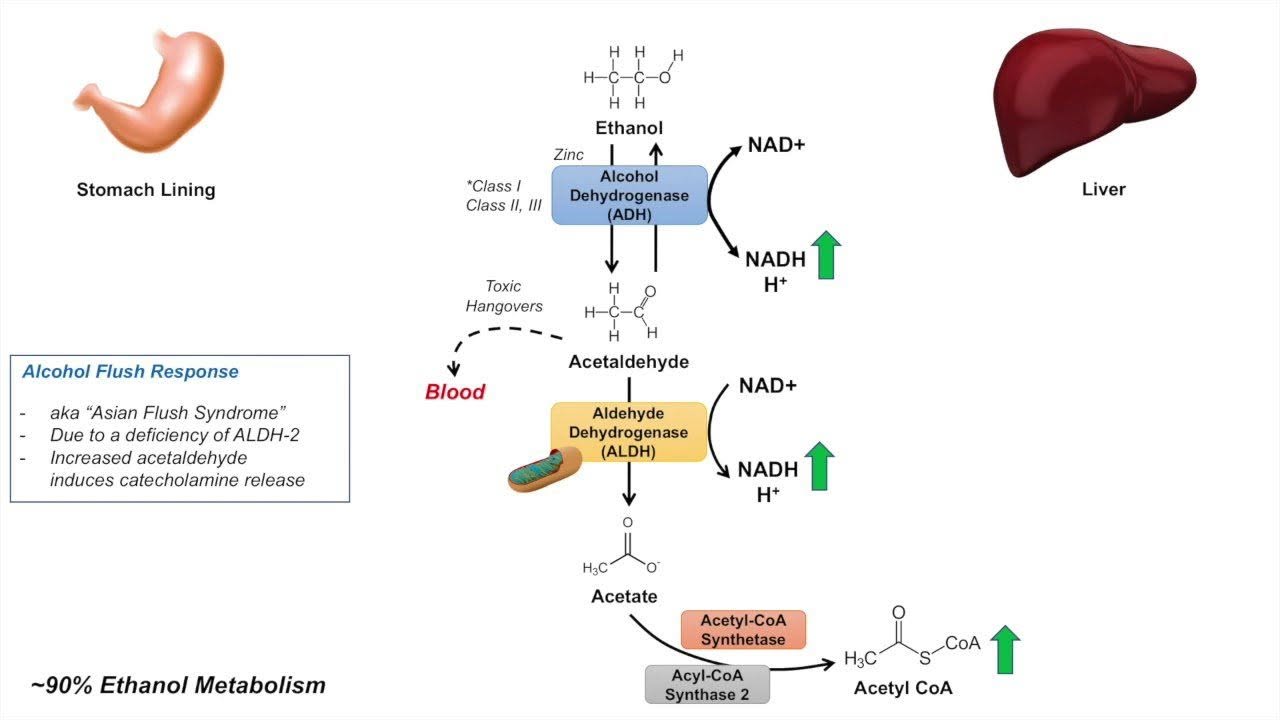
An infographic Louis shared explains that over 90% of ethanol is processed in the liver. The enzyme ADH converts it to acetaldehyde, described as 10 to 30 times more toxic than ethanol, and ALDH2 then detoxifies acetaldehyde to acetate.1235 The post says 30 to 50% of East Asians have ALDH2 deficiency, with flushing and higher cancer risk, and that chronic drinking promotes fatty liver and depletes NAD and glutathione.12 Louis's advice alongside this: if you drink, keep to small amounts.12
Mendelian randomization and the "no safe level" claim
Mendelian randomization (MR) uses genetic variants as a natural experiment. In alcohol research, variants such as ALDH2 that make drinking unpleasant act as a stand-in for lifelong lower intake. A Harvard-authored 2020 critique in the European Journal of Epidemiology by Mukamal, Stampfer and Rimm, summarized in the group, notes that MR studies often show a straight line (any alcohol raises risk) rather than a J-shaped curve.18 The authors are skeptical: they argue the key assumptions are hard to satisfy, including that the gene must meaningfully change behavior, affect the heart only through alcohol, and not be tied to ethnicity or lifestyle.18
Louis adds his own arguments. No gene forces anyone to drink; people free of a flushing variant may still abstain, and MR gives a lifetime average that cannot tell a daily glass with dinner from weekend bingeing.36 He also says MR is fundamentally observational and cannot definitively prove causality, which only randomized trials can do.36 These are one side's critiques, and the posts do not include a rebuttal from MR researchers, so the question remains open. Louis also recommends a Chris Masterjohn video arguing the "no safe level" claim is wrong.37
Why a randomized trial matters: UNATI
Because the evidence is observational, the group has put weight on a large randomized trial that Louis describes as under way. UNATI (University of Navarra Alumni Trialist Initiative), led by Martinez-Gonzalez, is registered as NCT06338215.8 According to the research plan quoted in the group, it will follow about 10,000 people (men 50 to 70, women 55 to 75) who drink 3 to 40 drinks a week for about 4 years. One arm is counseled to reduce alcohol; the other to drink in moderation (fewer than 7 drinks a week for women and 14 for men, prioritizing red wine, with meals). Outcomes include mortality, cardiovascular disease, cancer, cirrhosis, diabetes and dementia.7
Other posts describe the trial as a 5-year study in which people (recruiting physicians aged 50 to 75, in one account) are randomized to a set daily dose of wine or an alcohol-free alternative, with cancer and all-cause mortality as secondary endpoints.82038 The accounts differ slightly (about 4 years in the research plan, 5 years elsewhere), and no results are reported yet. Louis argues that a trial of this kind "is the only way to learn the truth", and that results should settle whether mild red wine prevents heart disease.338 The Harvard-affiliated authors of the Chan School commentary likewise say we will not truly know until gold-standard experiments are done.11
What this means for you
These points reflect the group's posts and are not individual medical advice.
- Heavy or binge drinking is harmful for the heart. The AHA statement links 3 or more drinks a day on average, and binge drinking, with worse outcomes in every cardiovascular disease studied.2
- If you drink, stay within 1 drink a day (women) and 2 (men). Louis says these limits are the ones where non-cardiovascular risks, especially cancer, start to rise, and criticized the new US guidelines for dropping numeric limits in favor of "limit alcoholic beverages".9
- Alcohol is optional. Louis's wording throughout is "if you choose to consume alcohol", and his own position is a glass of red wine several days a week.1221 Gokhan's Mediterranean-diet guide calls red wine optional and advises abstaining with a history of alcohol abuse or certain medical conditions.17
- If you do drink, wine with meals fits the traditional pattern. Harvard epidemiologists quoted by Louis think red wine is probably the best choice for those who drink lightly to moderately, and the Keys-style Mediterranean diet summary places wine in moderation, usually with meals.1339 That is an opinion, not a trial result.
- Women who drink should think about breast cancer and folate. Louis suggests that paying attention to folate intake may matter if you drink, based on the Nurses' Health Study.529
- Alcohol is only one lifestyle factor. An eight-factor study of 276,132 veterans linked "alcohol limits" together with physical activity, never smoking, good sleep and other habits to an 87% lower mortality for having all eight versus none, and the Nurses' Health Study found five lifestyle factors, including alcohol, were tied to 82% lower heart disease.1540 Both are observational. The diet trials that reversed plaque all limited large amounts of alcohol.4142
- Discuss alcohol with your doctor. Because alcohol is listed among the drivers of atrial fibrillation and elevated blood pressure, anyone with those conditions, heart disease, liver problems or regular medication may want to raise it at their next appointment.3233
Frequently asked questions
Is red wine better than other alcohol for the heart?
Harvard epidemiologists quoted by Louis think red wine is probably best for those who choose to drink, and the PREDIMED wine biomarker analysis supports a possible benefit for mild-to-moderate wine.413 For breast cancer, however, the Willett clip says wine, beer and spirits carry roughly the same risk per drink.5 The evidence for wine being uniquely protective is observational.
Is the "no safe level of alcohol" claim true?
The posts present it as an oversimplification, not a settled fact. The Harvard Chan authors say the data do not justify sweeping statements about moderate drinking while agreeing that heavy drinking is unequivocally harmful and that modest intake probably raises breast and esophageal cancer risk.11 NASEM reached moderate-certainty (not high-certainty) conclusions in both directions.6
If I do not drink, should I start for my heart?
None of the posts says so. The evidence is observational, the best test (UNATI) has not reported, and the cancer link exists even at low doses.57 Louis describes wine as an optional choice, not a prescription.12
Can weight-loss drugs help people who want to cut back?
One recent trial reported that adults with alcohol-use disorder given weekly low-dose semaglutide for nine weeks drank less and reported fewer cravings than those on placebo, though larger long-term trials are needed.43 A shared magazine story describes similar anecdotes, but semaglutide is not approved for addiction and the evidence so far is case-based.44