HD-OPM Archive
Hashtags

#wine

17 posts

CORDIOPREV: Mediterranean diet shrank carotid plaque and cut recurrent events about 25%

Mar 28, 2024 · Louis Nervegna ♥ 17 · 💬 13 ↩ 27 Mediterranean, DASH, MIND & plant-forward diets

Louis summarizes CORDIOPREV, an RCT of 1002 coronary patients comparing a Mediterranean diet rich in extra virgin olive oil with a low-fat diet. The Mediterranean diet reduced carotid intima-media thickness at 5 and 7 years while the low-fat diet showed no change, and also lowered carotid plaque height. He also cites roughly 25% fewer recurrent major cardiovascular events over 7 years, with benefits seen despite statin treatment and mean LDL-C below 90.

Meta-analysis of 4.3 million: moderate wine not linked to higher overall cancer risk

Jan 05, 2025 · Louis Nervegna ♥ 15 · 💬 17 ↩ 3 Alcohol, smoking & vaping

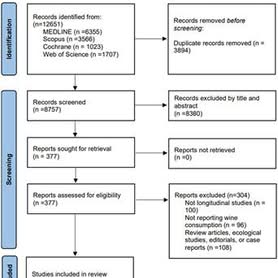
Louis shares Dr. Brian Lawenda's post on a Frontiers in Nutrition meta-analysis of 73 studies, covering over 4.3 million participants, that found moderate wine consumption (up to one drink/day for women, two for men) was not associated with increased overall cancer risk and might lower some cancer types. The post questions treating wine like beer and spirits.

Harvard: 100+ cohorts show 25-40% lower CVD risk with light-to-moderate alcohol

Dec 03, 2023 · Louis Nervegna ♥ 6 · 💬 22 ↩ 7 Alcohol, smoking & vaping

Louis quotes Harvard's Nutrition Source: more than 100 prospective studies show light-to-moderate drinking is linked to a 25-40% lower risk of heart attack, ischemic stroke, peripheral vascular disease, sudden cardiac death and CVD death, and Harvard epidemiologists consider it almost certainly causal. Above 4 drinks a day, risks of hypertension, arrhythmia, stroke, heart attack and death rise. An NIH-funded alcohol trial was stopped. This view is contested and observational.

Upcoming RCT will test red wine vs CVD; Louis explains why he drinks mild red wine

Jun 10, 2025 · Louis Nervegna ♥ 17 · 💬 7 Alcohol, smoking & vaping

Louis announces a planned 5-year randomized trial of red wine and cardiovascular disease, run in PREDIMED style by the same principal investigator, with cancer and all-cause mortality as secondary endpoints. Meanwhile he drinks red wine several days a week, citing PREDIMED data where a biomarker of mild-to-moderate wine intake was linked to 50% lower risk. This is a personal view, not proof of benefit.

New 5-year RCT from the PREDIMED lead investigator will test red wine versus CVD

Dec 12, 2023 · Louis Nervegna ♥ 8 · 💬 3 ↩ 7 Alcohol, smoking & vaping

Louis describes a funded randomized trial at the University of Navarra led by PREDIMED's principal investigator, which will randomize physicians aged 50-75 to moderate red wine or an alcohol-free alternative for five years, with cancer and all-cause mortality as secondary endpoints. He reviews PREDIMED's finding of 30% lower CVD with a Mediterranean diet including wine, and that the Mediterranean diet loses up to 23.5% of its protective effect without wine, per Martinez-Gonzalez. Results are not yet available.

Meta-analysis of 76 studies finds no link between wine drinking and cancer risk

Dec 03, 2023 · Louis Nervegna ♥ 3 · 💬 5 ↩ 3 Alcohol, smoking & vaping

Louis highlights a Frontiers in Nutrition systematic review and meta-analysis of 76 epidemiological studies, which found no association between wine consumption and any cancer and a protective trend for pancreatic, skin, lung, brain and overall cancer. He cautions that observational data cannot prove wine is harmless, and advises staying within guidelines of at most 2 drinks a day for men and 1 for women.

CORDIOPREV: Mediterranean diet reversed carotid plaque and cut recurrent events ~25%

Apr 13, 2025 · Louis Nervegna ♥ 14 Plaque, CAC & CT angiography

Louis summarizes the 2021 CORDIOPREV RCT in patients with prior heart attack or stroke on standard medical care: a Mediterranean diet rich in olive oil, nuts and fish reduced carotid thickness at 5 and 7 years, unlike a low-fat diet, and reduced maximum plaque height. Recurrent major cardiovascular events were roughly 25% lower, even though participants were already on statins and other drugs.