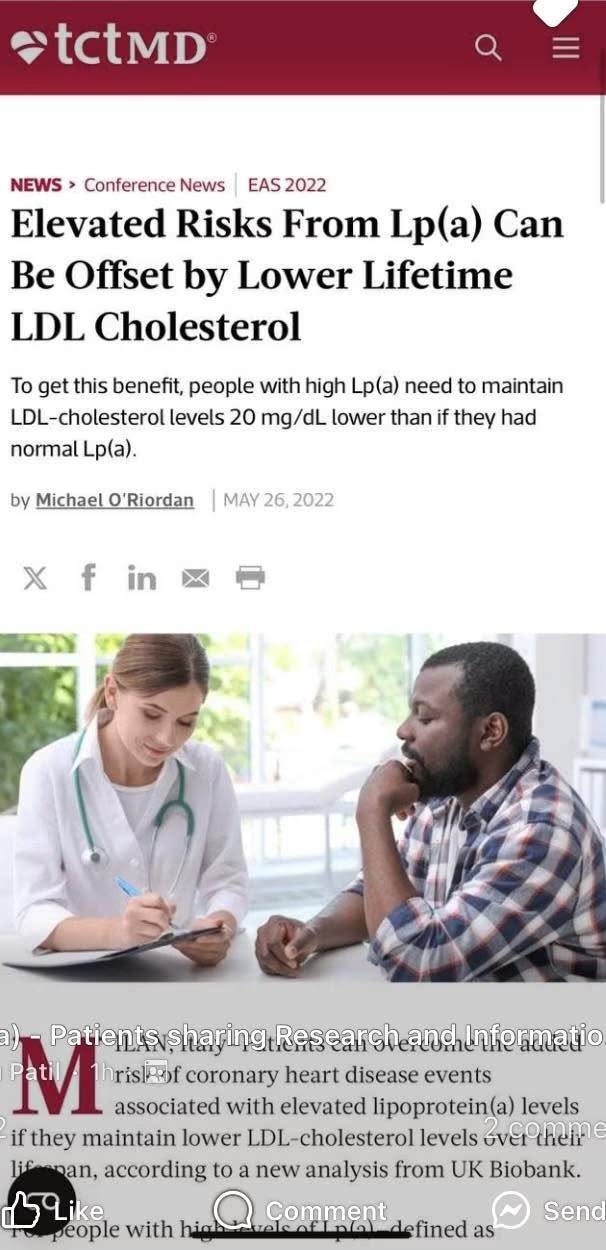
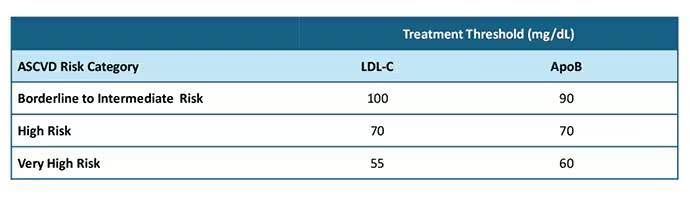
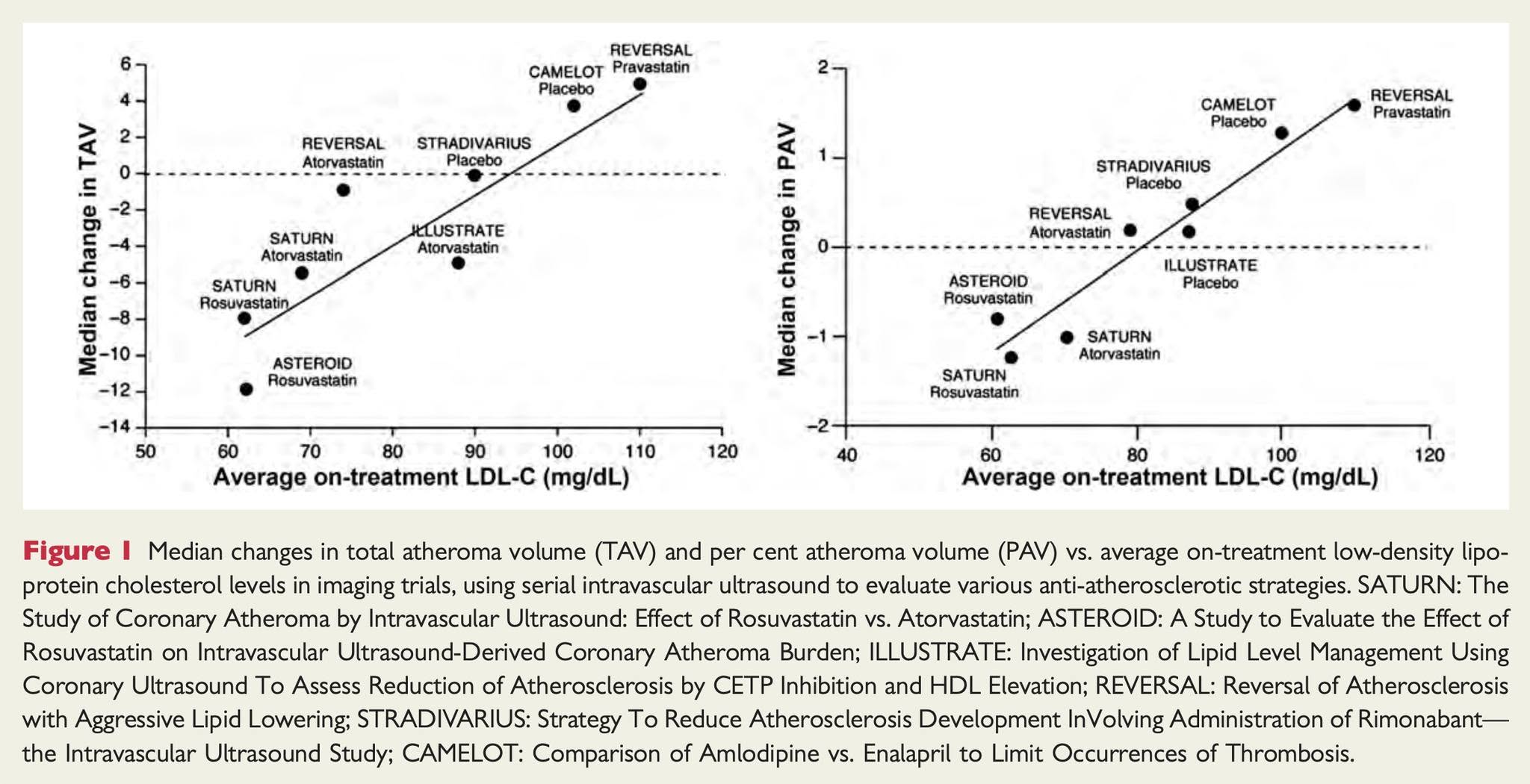
Why does very low LDL cholesterol (LDL-C) seem to be protective against high Lp(a) ?
Quoted:
“This is part of why getting your blood level of LDL cholesterol (LDL-C) low helps to cancel a lot of the risk from high Lp(a). There is less total LDL cholesterol to get stuck inside your arteries, even if a lot of that LDL cholesterol is still coming from Lp(a).”
As a side note:
This might be a contributing factor to why the HORIZON trial failed. Once LDL cholesterol (LDL-C) is forced low enough, there might just not be enough available to cause major damage, even if it is carried by a large number of Lp(a) particles.
#horizonHD
Lp(a) carries LDL cholesterol
The LDL cholesterol you see on your lab report (or more precisely your LDL-C) is a measure of all the LDL cholesterol in your blood, including that which is carried by Lp(a).
Lp(a) is a lipoprotein particle, and the cargo that it transports in the blood is LDL cholesterol.
Lp(a) lipoprotein particles carry LDL cholesterol, in the same way that LDL lipoprotein particles carry LDL cholesterol. These liporotein particles are similar, in this sense of what they carry.
You can think of the lipoprotein particles as “boats”, and the cholesterol as the “cargo” that the boats carry. In this case, the boats are different [Lp(a) lipoproteins vs LDL lipoproteins], but the cargo that they carry is the same [LDL cholesterol].
So your blood level of LDL cholesterol (more precisely LDL-C) actually reflects the number of Lp(a) particles that you have in your blood in addition to the number of LDL particles that you have in your blood. In people with very high Lp(a), a significant portion of their blood level of LDL cholesterol on their lab report actually comes from Lp(a) particles and not just from LDL particles.
One of the reasons that Lp(a) appears dangerous is because it deposits LDL cholesterol inside the walls of your arteries. The apo(a) protein on the Lp(a) particle makes it particularly sticky inside the artery wall. The apo(a) protein is also prothrombotic and makes blood clots form more easily.
This might be a major reason why getting your blood level of LDL cholesterol (LDL-C) low helps to cancel a lot of the risk from high Lp(a). There is less total LDL cholesterol to get stuck inside your arteries, even if a lot of that LDL cholesterol is still coming from Lp(a).
Note on a technical point:
I am colloquially describing the cholesterol inside an Lp(a) liporotein as “LDL cholesterol” or “LDL-C” for short. Technically, what this really means is that the cholesterol inside of an Lp(a) liporoptein is structurally identical to the cholesterol inside of an LDL lipoprotein. I am therefore referring to both as “LDL cholesterol” or “LDL-C”. This is the same convention used on a standard lab report that shows LDL cholesterol (LDL-C).
#lpaHD #ldlHD #ldlcHD #lpaldlHD