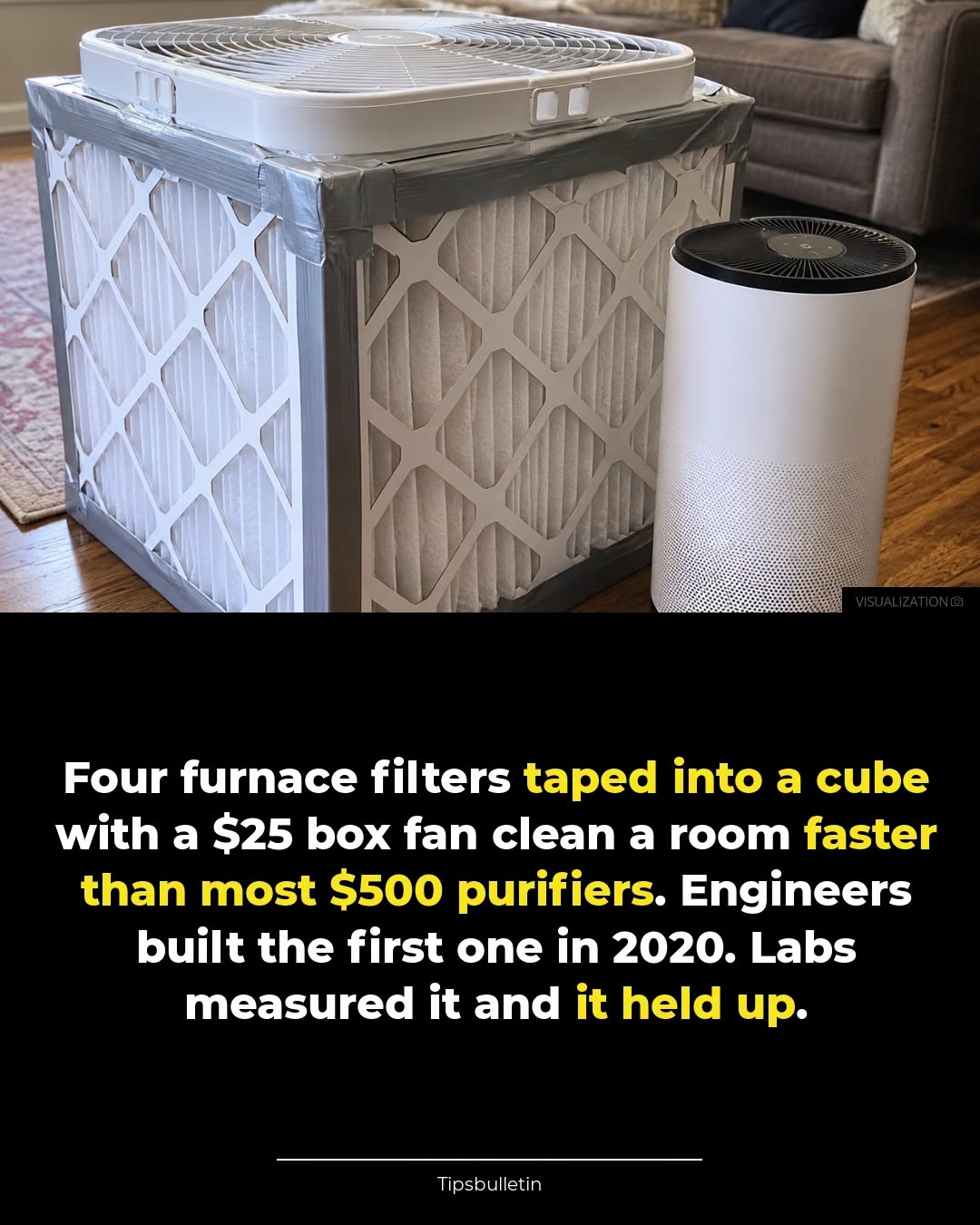
This works better for air purification than commercial models that cost 10x the price.
#airqualityHD #airpurifierHD
Aerosol scientists built this in their own living rooms before they published anything.
In August 2020, engineer Richard Corsi and filter manufacturer Jim Rosenthal taped four MERV 13 furnace filters into a cube, capped the top with cardboard, and set a 20-inch box fan on it blowing outward. The whole build ran about $60 to $90, most of that the filters, and it took roughly fifteen minutes with a roll of duct tape. They published the plans for free instead of patenting anything, and the design picked up their names: the Corsi-Rosenthal Box. Corsi was an engineering dean and Rosenthal ran a filter plant in Texas, which is why the thing came out both cheap and technically correct.
Then the laboratories got hold of it. A team at UC Davis published measurements in Aerosol Science and Technology in 2022 showing clean air delivery rates in the hundreds of cubic feet per minute, well past what most consumer HEPA units move at the same noise level and at a fraction of the price. The reason is surface area, not magic. Four filters hand the fan roughly four times the media to pull air through, so the resistance each square foot has to fight drops sharply, and a cheap box fan that would stall against one filter moves serious volume through four. A four-sided cube also runs quieter for the same amount of clean air, because the fan never strains against a solid wall of media.
The furnace filter was never designed for any of this. It exists to keep dust off a blower wheel and a heat exchanger, which is exactly why the cheapest fiberglass panels barely clean your air at all. Wrap four MERV 13 versions around a fan and that same $12 rectangle turns into the highest-volume air cleaner in the house, which is why schools, workshops, and wildfire-smoke regions built them by the thousand.
Two build details decide whether it works. Use MERV 13, not the MERV 8 panel sitting by the register, or you are mostly just stirring the room around. And tape a cardboard shroud over the fan face so air cannot curl back around the blade tips, a change that costs about a dollar and adds measurable capacity. Swap the filters when they gray over, roughly once a year in ordinary indoor air and much sooner during smoke season. [QO9NU]