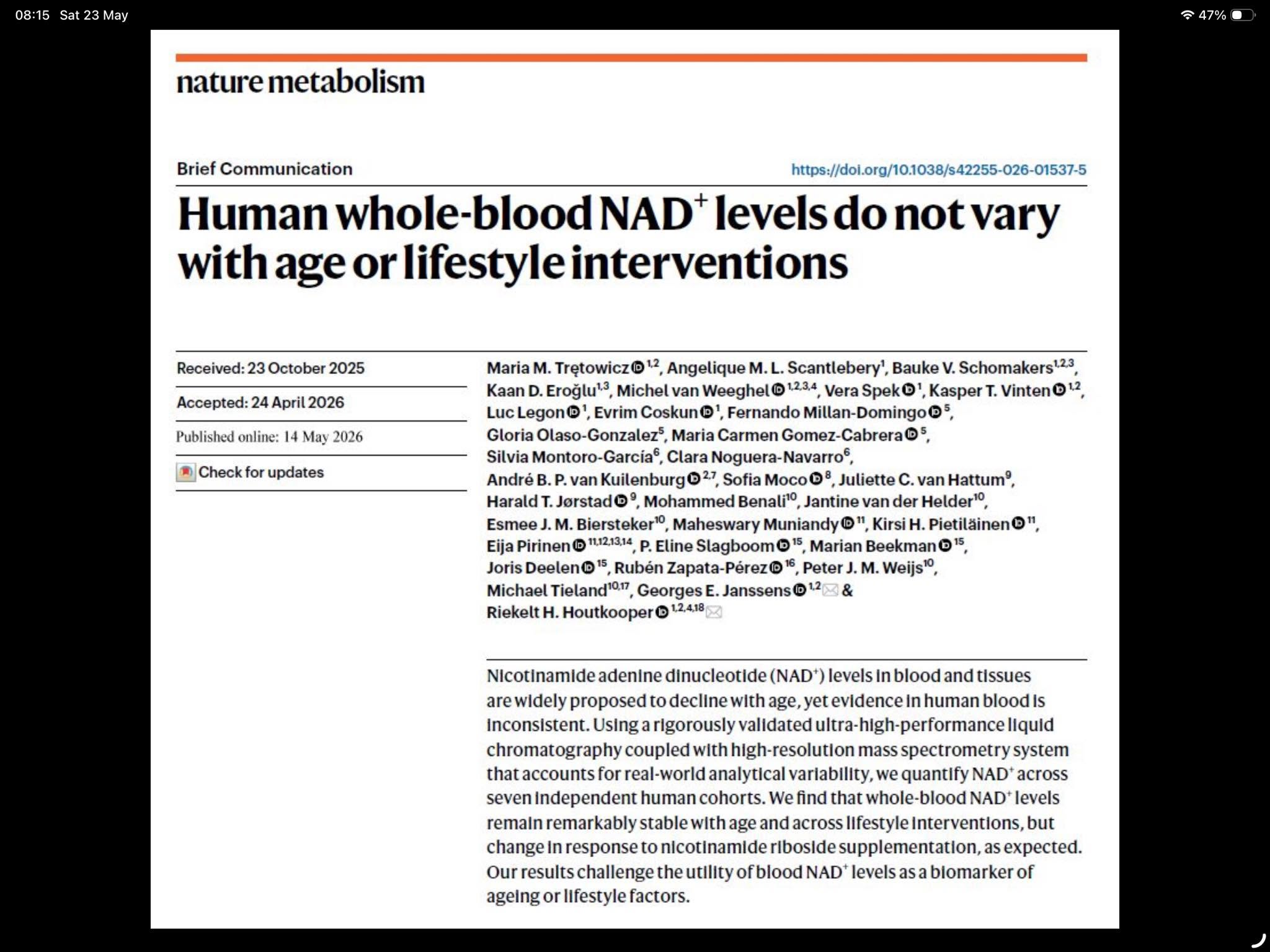
Contrary to what you may have heard, blood levels of NAD do not decline with age.
Your blood level of NAD mainly reflects your recent intake of vitamin B3, and very little else.
It is a useless biomarker. The companies selling this blood test are scamming you.
(Tissue and organ levels of NAD are a different story. This is where there might actually be a benefit. However, there is currently no commercial test that can measure NAD levels in your tissues or organs.)
#nadHD #nrHD #nmnHD #niacinHD #nicotinamideHD #vitaminb3HD
Another reality check for the commercial longevity industry.
A new study in Nature Metabolism finds that whole-blood NAD⁺ levels remain remarkably stable with age across seven independent human cohorts.
NAD⁺ precursors such as NR and NMN can increase circulating NAD⁺ levels. But despite years of enthusiasm and aggressive marketing, there is still no convincing clinical evidence that these supplements slow human ageing, extend lifespan, or broadly improve healthspan.
Changing a biomarker is not the same as improving health.
Promoting expensive supplements as anti-ageing interventions before demonstrating meaningful clinical benefits is marketing ahead of science.
We need rigorous human trials, not more hype.