As Charles Brenner has said for years, it is tissue levels of NAD that seem to matter.
Not blood levels.
Blood levels don’t seem to tell you anything useful, except how much vitamin B3 that you recently took (which you already know).
#nadHD #charlesbrennerHD #nmnHD #nrHD #niacinHD #nicotinamideHD #vitaminb3HD
For years, the longevity industry has aggressively marketed the idea that NAD+ levels inevitably decline with age and that boosting NAD+ is a key to slowing aging.
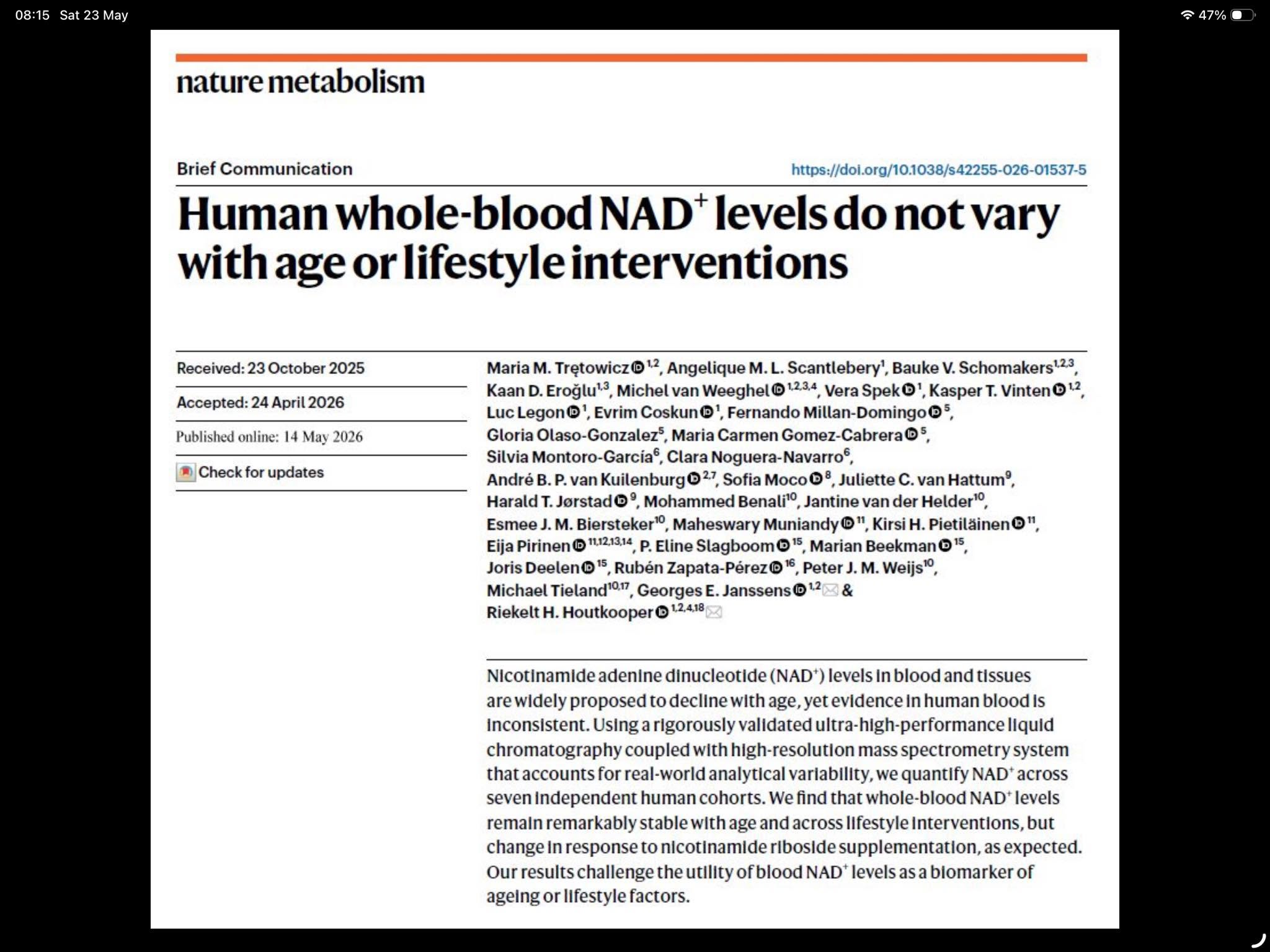
Now a new paper in Nature Metabolism challenges one of the central assumptions behind this commercial narrative:
“Human whole-blood NAD+ levels do not vary with age or lifestyle interventions.”
The study analyzed multiple independent human cohorts using rigorous mass spectrometry methods and found that:
- Whole-blood NAD+ levels remain remarkably stable with aging
- Exercise and lifestyle interventions did not significantly alter blood NAD+
- Blood NAD+ may not be a reliable biomarker of biological aging
Yes, nicotinamide riboside supplementation increased NAD+ levels — as expected — but that alone does not prove meaningful clinical benefits, longevity effects, or rejuvenation.
This is an important reminder that:
- Mechanistic hypotheses are not clinical evidence
- Biomarker manipulation is not synonymous with health improvement
- Commercial enthusiasm often races far ahead of human data
The longevity field urgently needs:
- rigorous human trials
- clinically meaningful endpoints
- less hype and more scientific humility
Aging biology is extraordinarily complex. There are no magic molecules.
#Longevity #Aging #NAD #Science #EvidenceBasedMedicine #Metabolism #HealthyAging