HD-OPM Archive
Hashtags

#breakfast

6 posts

8-hour time-restricted eating improved glucose control in prediabetes, early or late

Sep 11, 2024 · Louis Nervegna ♥ 13 · 💬 8 Fasting & meal timing

Louis shares a randomized crossover trial presented at EASD showing that restricting eating to eight hours a day improved time in normal glucose range and reduced glucose fluctuations in adults at risk of type 2 diabetes. Timing of the window (early or late) made no extra difference, and benefits appeared within three days. The authors attribute it to the 16-hour fast, not timing or calorie change.

Satchin Panda: wait 2 hours after waking to eat; finish dinner 3 hours before sleep

Mar 20, 2024 · Louis Nervegna ♥ 13 · 💬 8 Fasting & meal timing

Louis summarizes meal-timing advice from circadian researcher Satchin Panda for glucose control. Delay breakfast at least two hours after waking because the pancreas regulates insulin poorly then, and eat the last large meal at least 3 hours before sleep since melatonin begins rising about 3 hours before bedtime and inhibits insulin secretion. This is expert advice from a podcast clip rather than a cited trial.

Delaying breakfast to midday lowered post-meal glucose in type 2 diabetes (crossover RCT)

Dec 27, 2024 · Louis Nervegna ♥ 10 · 💬 8 Fasting & meal timing

A small randomized crossover trial found delaying breakfast from about 07:00 to mid-morning or midday lowered the 2-hour postprandial glucose response in people with type 2 diabetes. A 20-minute walk after breakfast had only a small effect. Louis notes this suggests morning fasting is acceptable in the short term for people with poor glycemic control.

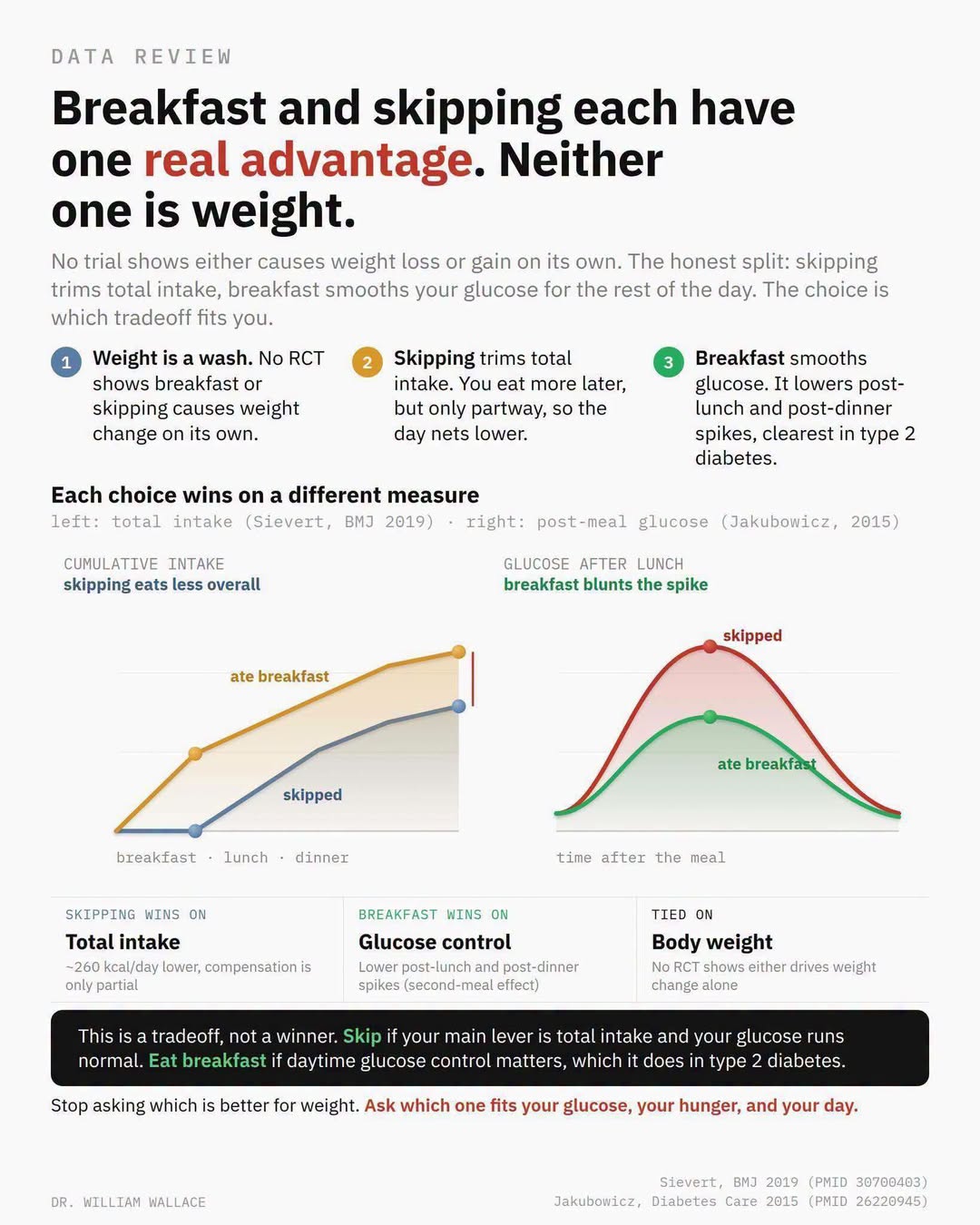
RCTs show skipping breakfast does not cause weight gain and cuts about 260 calories a day

Oct 29, 2026 · Louis Nervegna ♥ 9 · 💬 1 Fasting & meal timing

Observational studies link skipping breakfast to weight gain, but a 2019 BMJ review pooling 13 randomized trials found no evidence that eating breakfast aids weight loss or that skipping it causes weight gain. Breakfast skippers ate about 260 fewer calories per day overall. The possible downside is poorer glycemic control later in the day in people with diabetes or prediabetes.