Observational studies have associated skipping breakfast with weight gain.
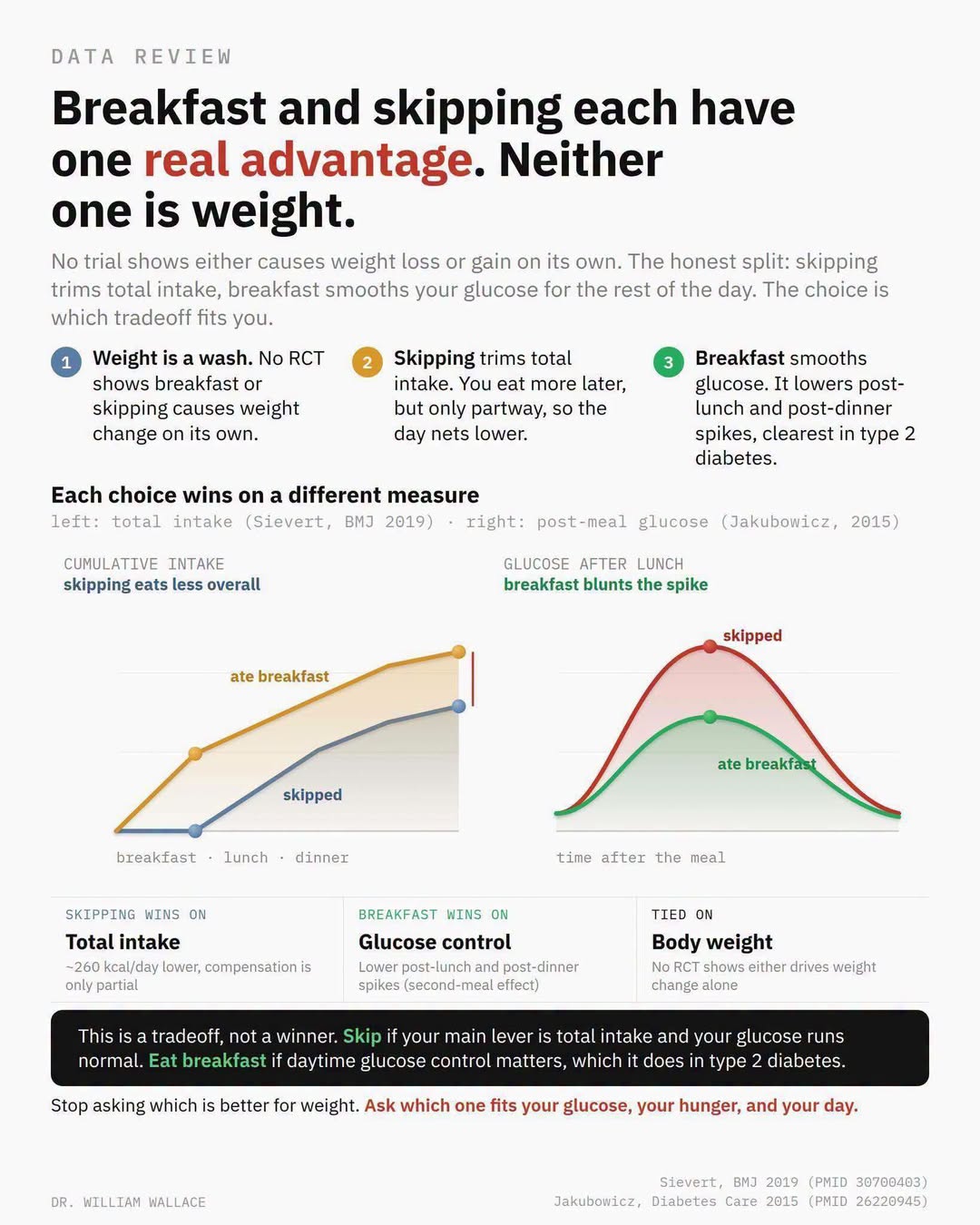
But when you look only at randomized controlled trials, weight gain from skipping breakfast does not occur.
In fact, people who skip breakfast in RCT’s consume 260 less calories on average than people who do not.
The downside to skipping breakfast might be a decrease in glycemic control later in the day, if you are diabetic or prediabetic.
Link to journal article:
PaperThe BMJ articlebmj.com
#breakfastHD #fastingHD #treHD #glucoseHD #diabetesHD #prediabetesHD
Skipping breakfast didn't make people gain weight.
A 2019 review in The BMJ pooled 13 randomized trials. It found no evidence that eating breakfast helps people lose weight, and no evidence that skipping it causes weight gain.
People who skipped breakfast did eat somewhat more at lunch and dinner, but only partly made up the difference. Their total intake for the day came out lower, by roughly 260 calories a day in those trials. Newer reviews have found the same direction.
Breakfast has its own advantage, though. In a randomized trial in people with type 2 diabetes, skipping breakfast led to higher blood sugar and a weaker insulin response after both lunch and dinner, compared with days that started with breakfast. The first meal of the day helps the body handle the meals that follow. This effect is clearest in people with type 2 diabetes.
What this means for you: if your blood sugar is normal and you want to eat less overall, skipping breakfast is a reasonable choice, and there is no evidence it makes you overeat. If you have type 2 diabetes or prediabetes, eating breakfast helps keep blood sugar steadier through the day. For most people, how much and what you eat across the whole day matters far more than when you start.