HD-OPM Archive
Hashtags

#exercisedownsides

7 posts

Master@Heart: higher wearable-measured training load linked to more coronary plaque

Mar 06, 2026 · Louis Nervegna ♥ 28 · 💬 27 ↩ 3 Exercise & fitness

Louis argues intense exercise, especially high intensity plus high volume, carries risks as well as benefits, citing a Circulation 2026 Master@Heart analysis of wearable training load and coronary atherosclerosis in middle-aged and older athletes versus active controls. He notes the net benefit of exercise remains large but the plaque signal can no longer be ignored.


ACC/ESC consensus statement on abnormal cardiovascular findings in masters athletes

Apr 06, 2026 · Louis Nervegna ♥ 10 · 💬 14 ↩ 1 Exercise & fitness

Louis highlights a new joint EAPC/ESC and ACC clinical consensus statement offering guidance for long-term high-volume exercisers over 35-40, covering atrial fibrillation, arrhythmias, coronary atherosclerosis, aortic dilatation, myocardial fibrosis and exercise-induced arrhythmogenic cardiomyopathy. Notes that very high exercise volumes over years may have cardiovascular downsides.

Extreme endurance exercise may accelerate plaque, but effect on events is uncertain

Jun 19, 2026 · Louis Nervegna ♥ 8 · 💬 6 Exercise & fitness

Louis notes that while exercise is clearly beneficial, lifelong high-volume endurance athletes showed more plaque, including non-calcified and mixed plaque, than later starters and lightly active controls. A follow-up suggests plaque tracks with exercise duration more than intensity, and overall mortality still appears lower even at extreme levels.

VO2 max is a ratio, and chasing it can mislead about heart health

Jul 19, 2026 · Louis Nervegna ♥ 13 · 💬 1 Exercise & fitness

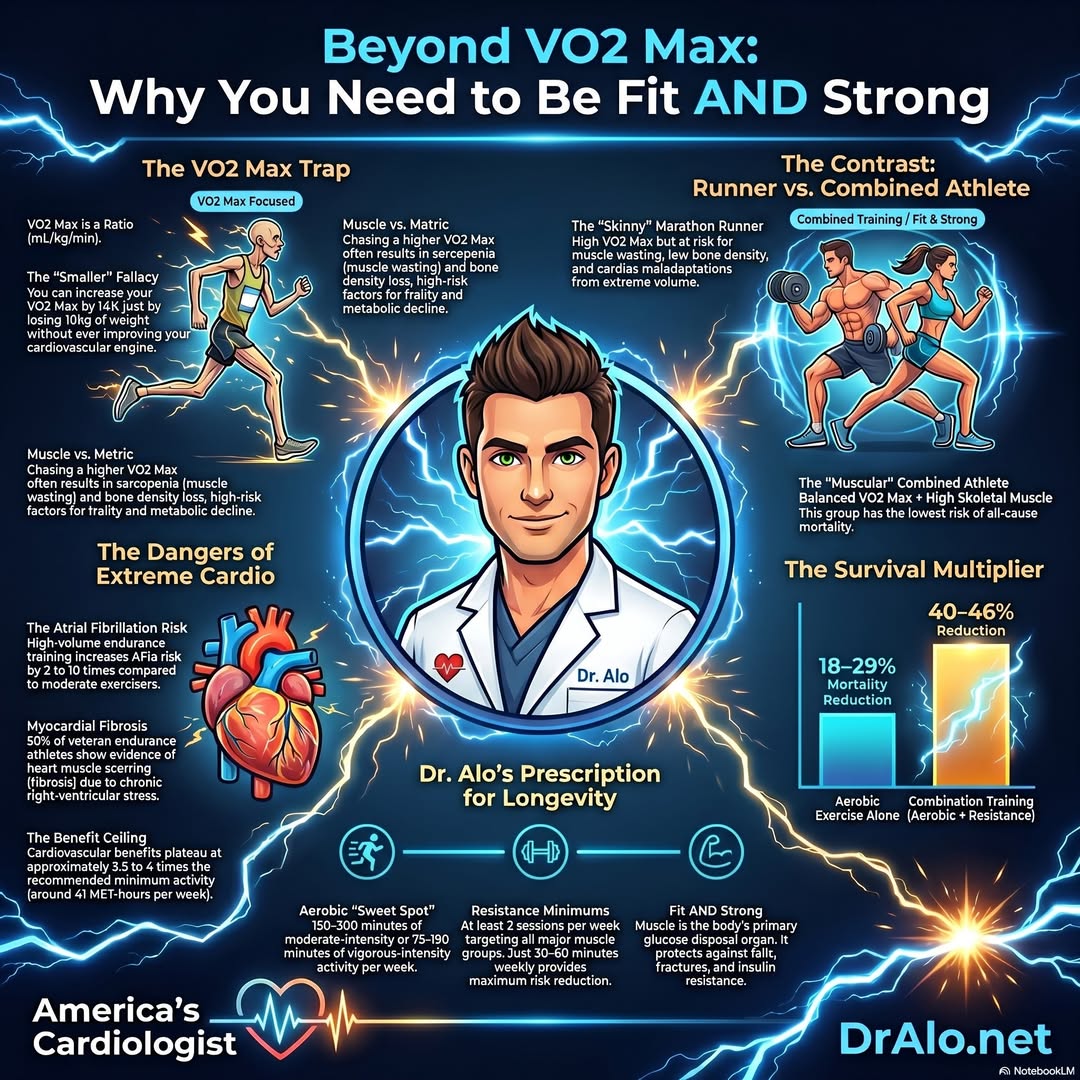
Louis agrees with a critique of influencers who treat VO2 max as the key heart-health metric. VO2 max is oxygen consumption divided by body weight, so it can rise through weight loss without real fitness gain. He also notes AHA and ACC statements recognizing high-volume intense exercise can have downsides.

After a marathon, troponin and NT-proBNP spike but look like normal physiology

Jun 10, 2026 · Louis Nervegna ♥ 5 · 💬 2 Exercise & fitness

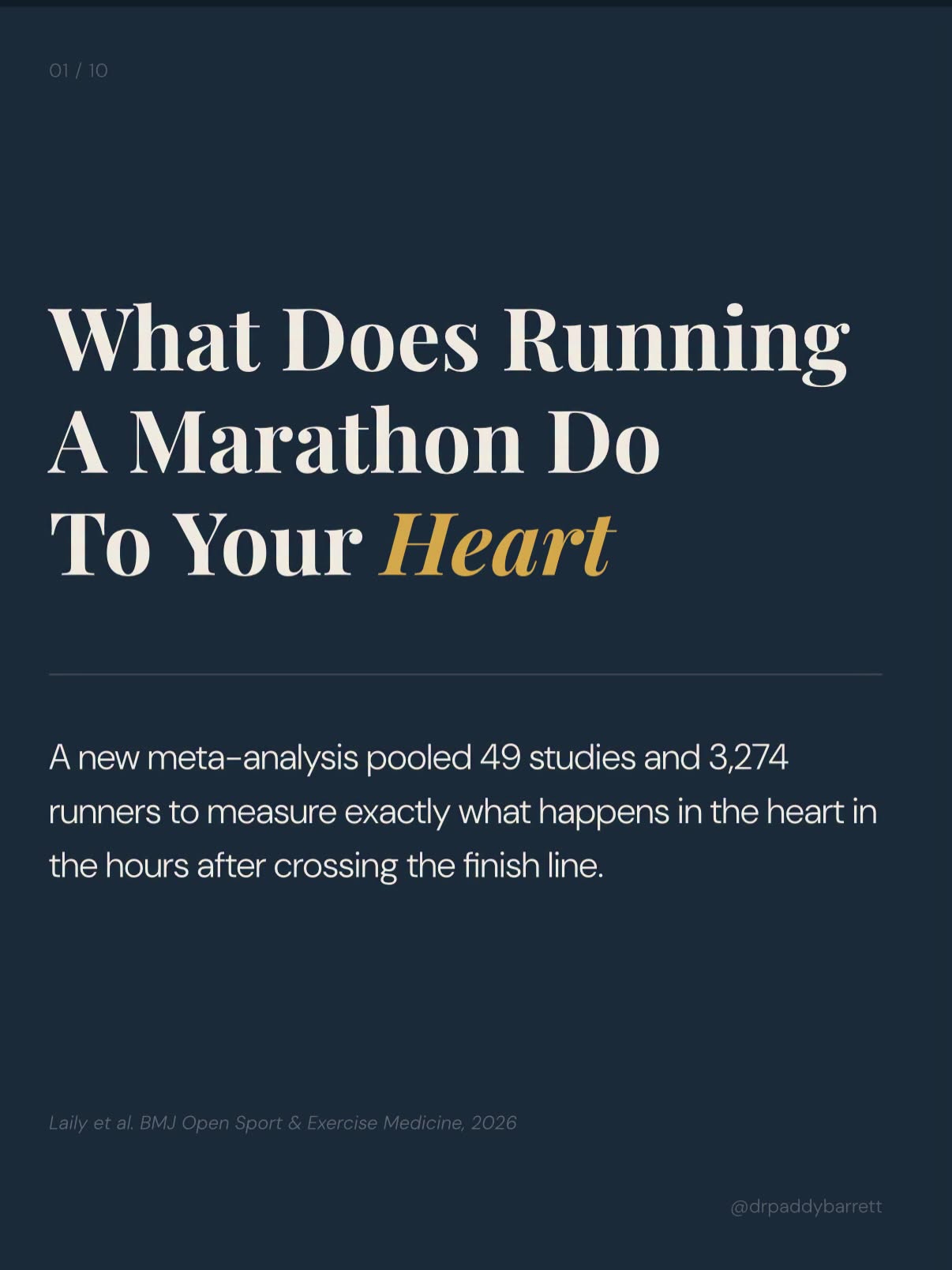
Louis shares a 2026 meta-analysis of 49 studies and 3,274 runners showing cardiac strain markers surged after marathons, often past diagnostic thresholds, while heart chambers changed shape. Changes were modest, MRI showed no clear structural injury, and the authors consider them normal responses, though long-term effects of repeated marathons are unknown.