HD-OPM Archive
Topics › Exercise & fitness

After a marathon, troponin and NT-proBNP spike but look like normal physiology

Louis Nervegna · Jun 10, 2026 · ♥ 5 reactions · 2 comments · original Facebook post
Exercise & fitnessHeart attack, stroke & procedures
AI summary & key facts

Louis shares a 2026 meta-analysis of 49 studies and 3,274 runners showing cardiac strain markers surged after marathons, often past diagnostic thresholds, while heart chambers changed shape. Changes were modest, MRI showed no clear structural injury, and the authors consider them normal responses, though long-term effects of repeated marathons are unknown.

#exerciseHD #exercisedownsidesHD

Research cited

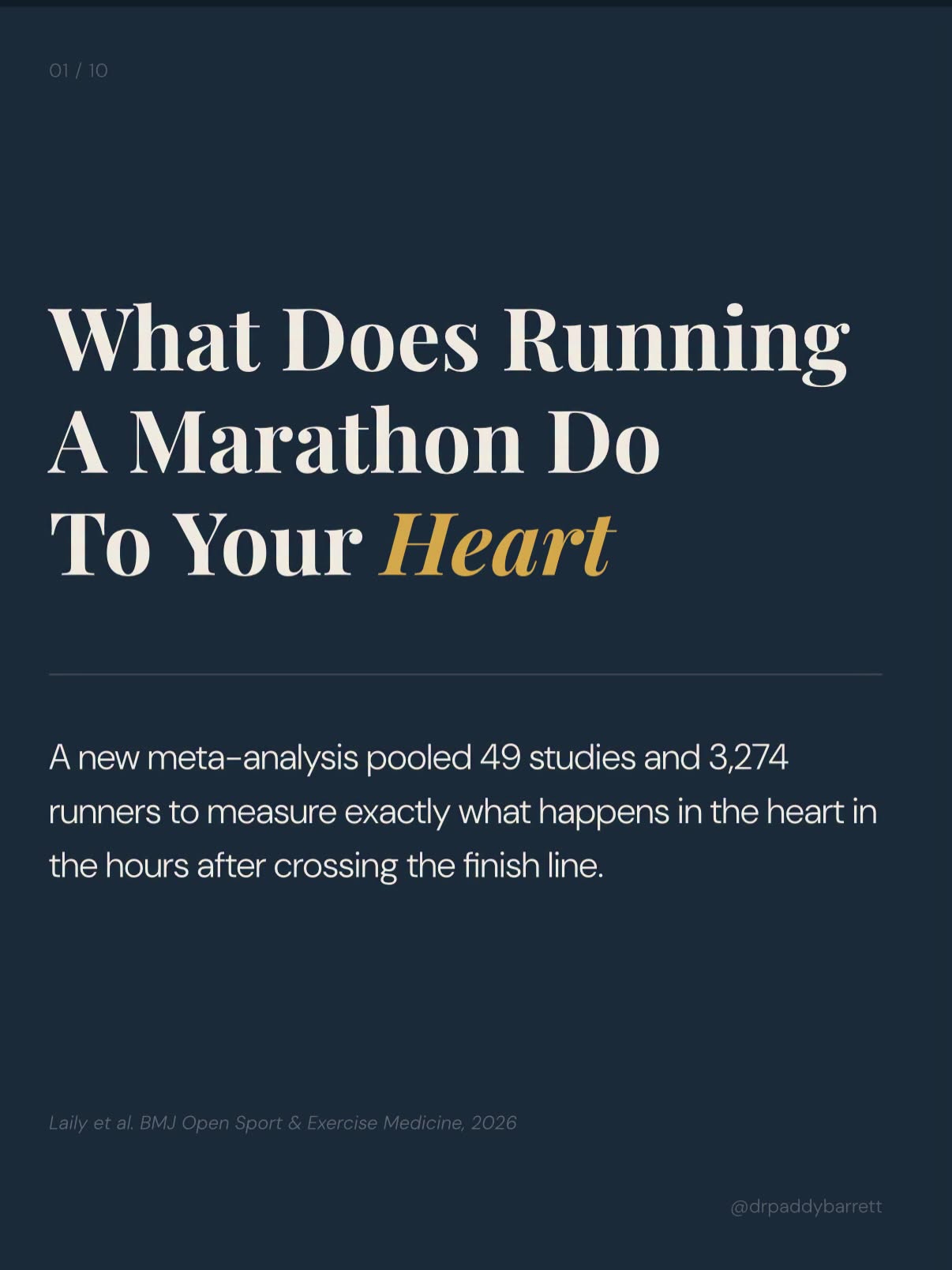
What actually happens to your heart when you run a marathon?

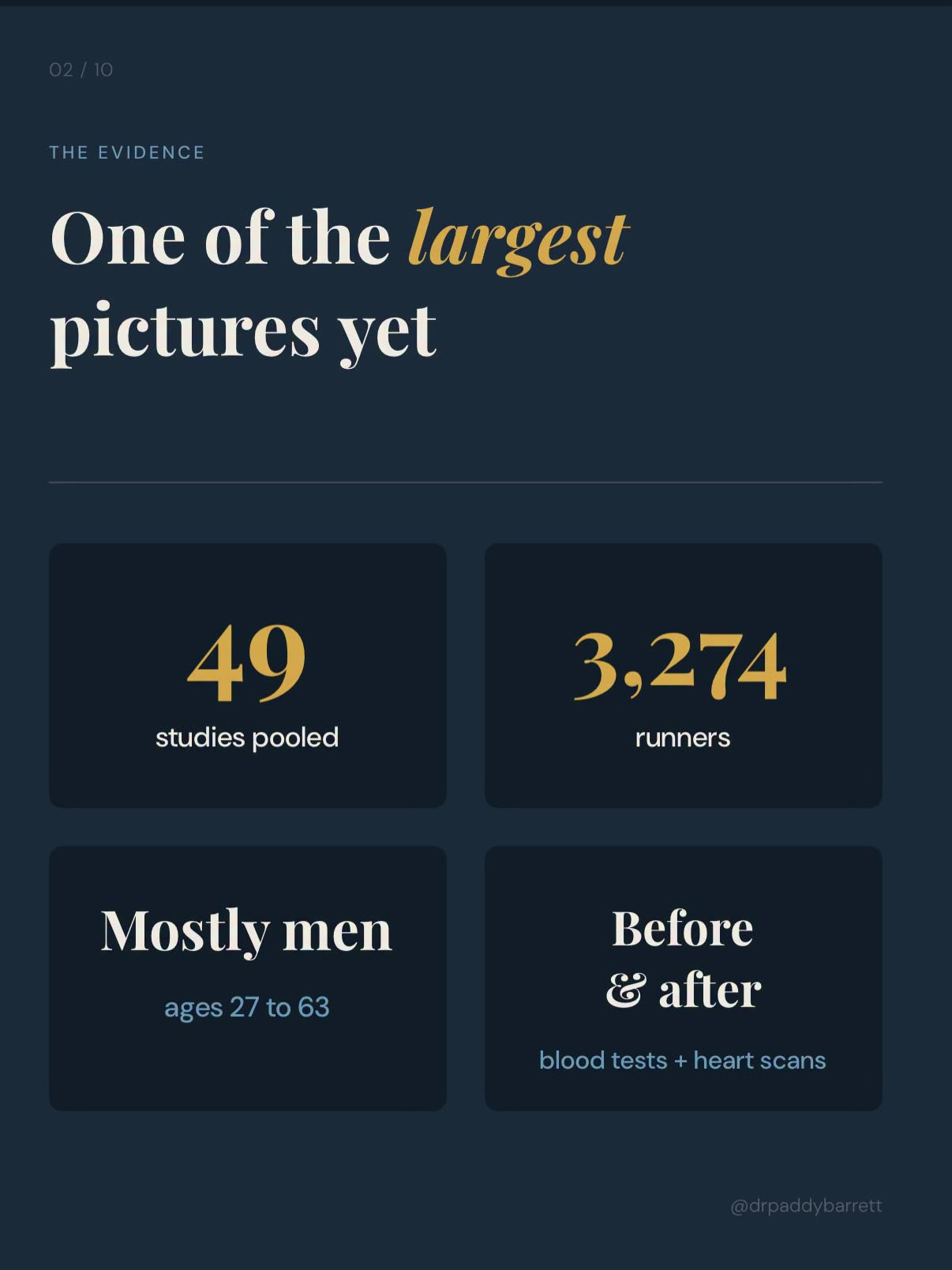
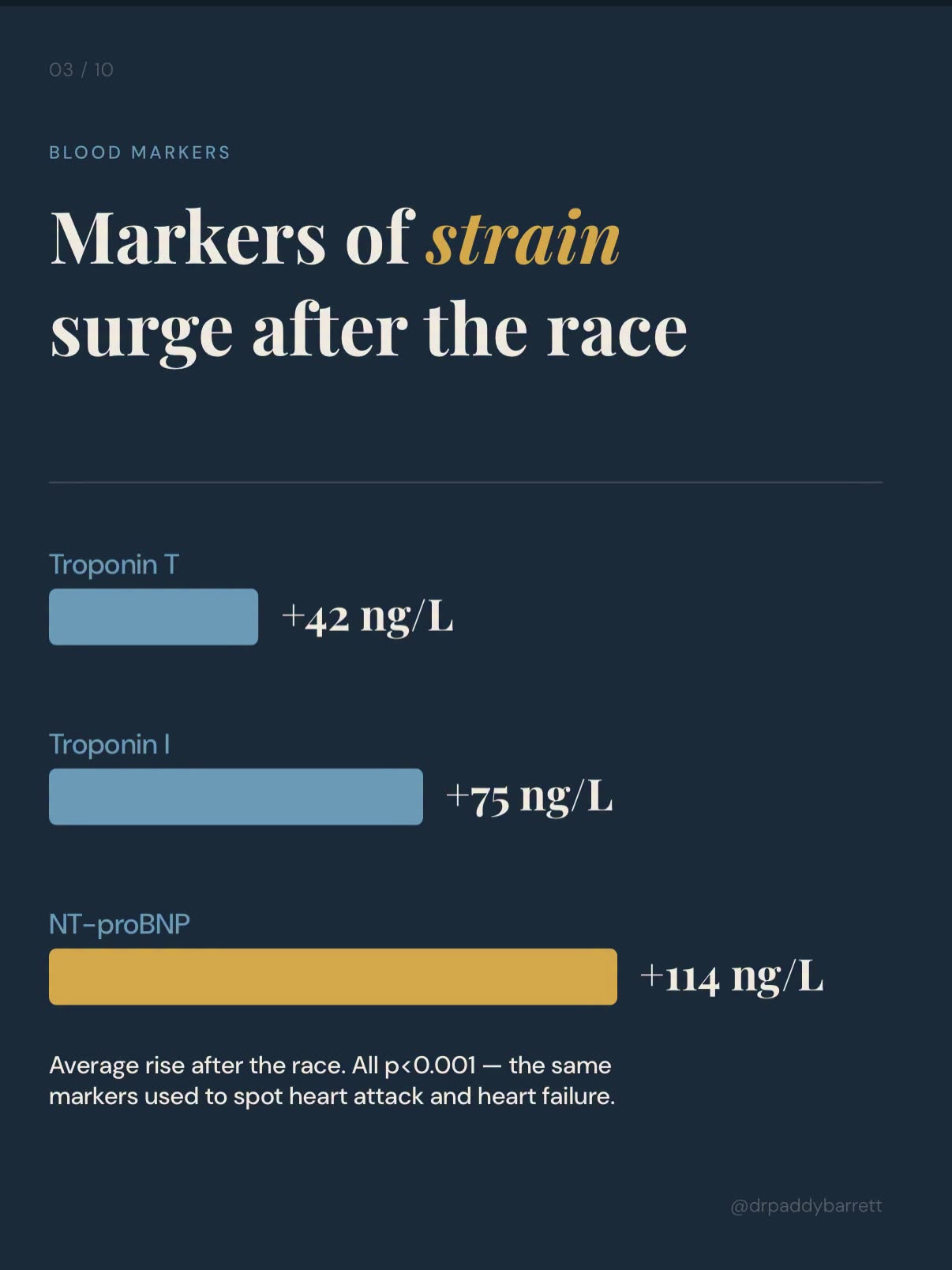
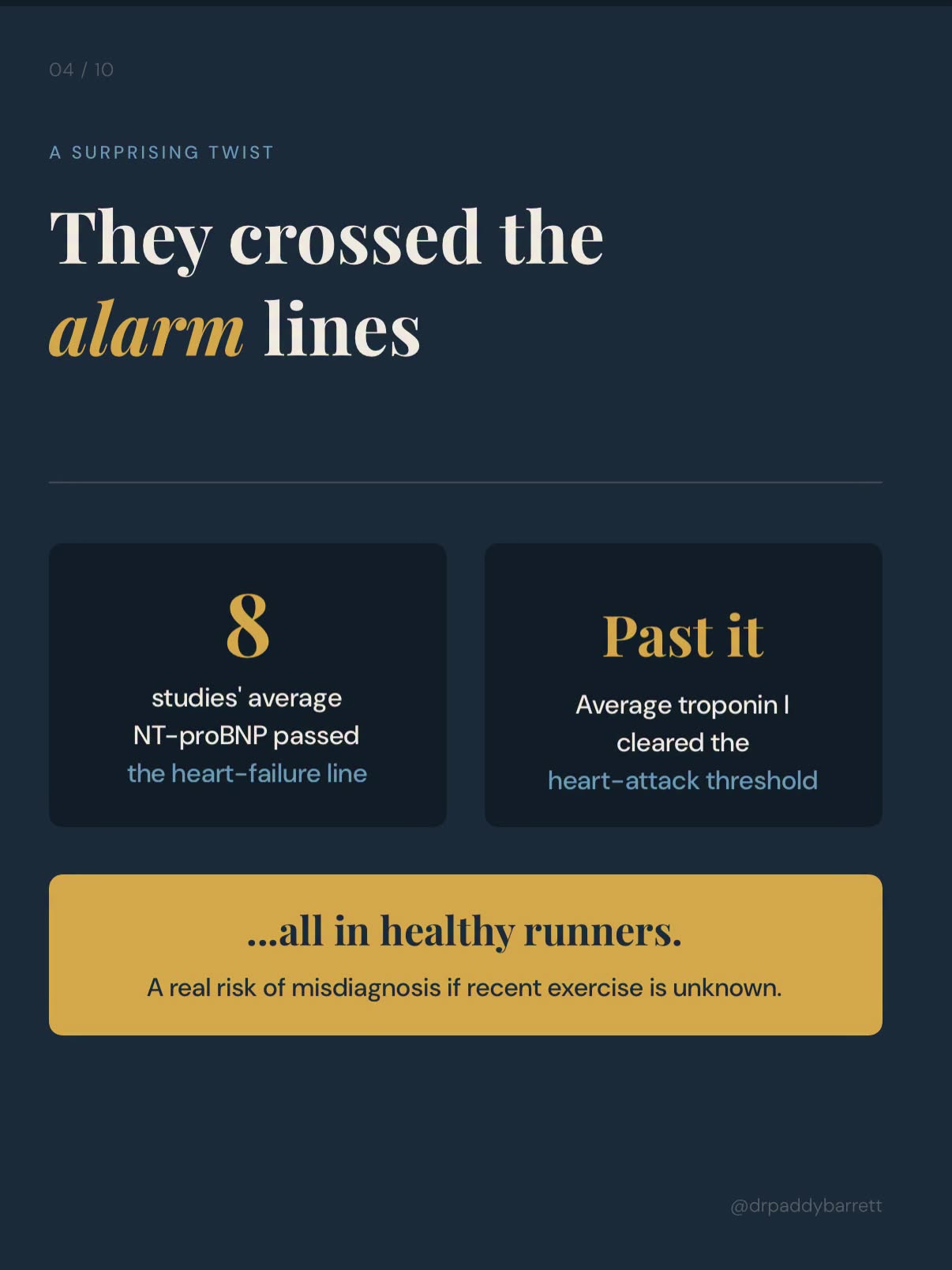
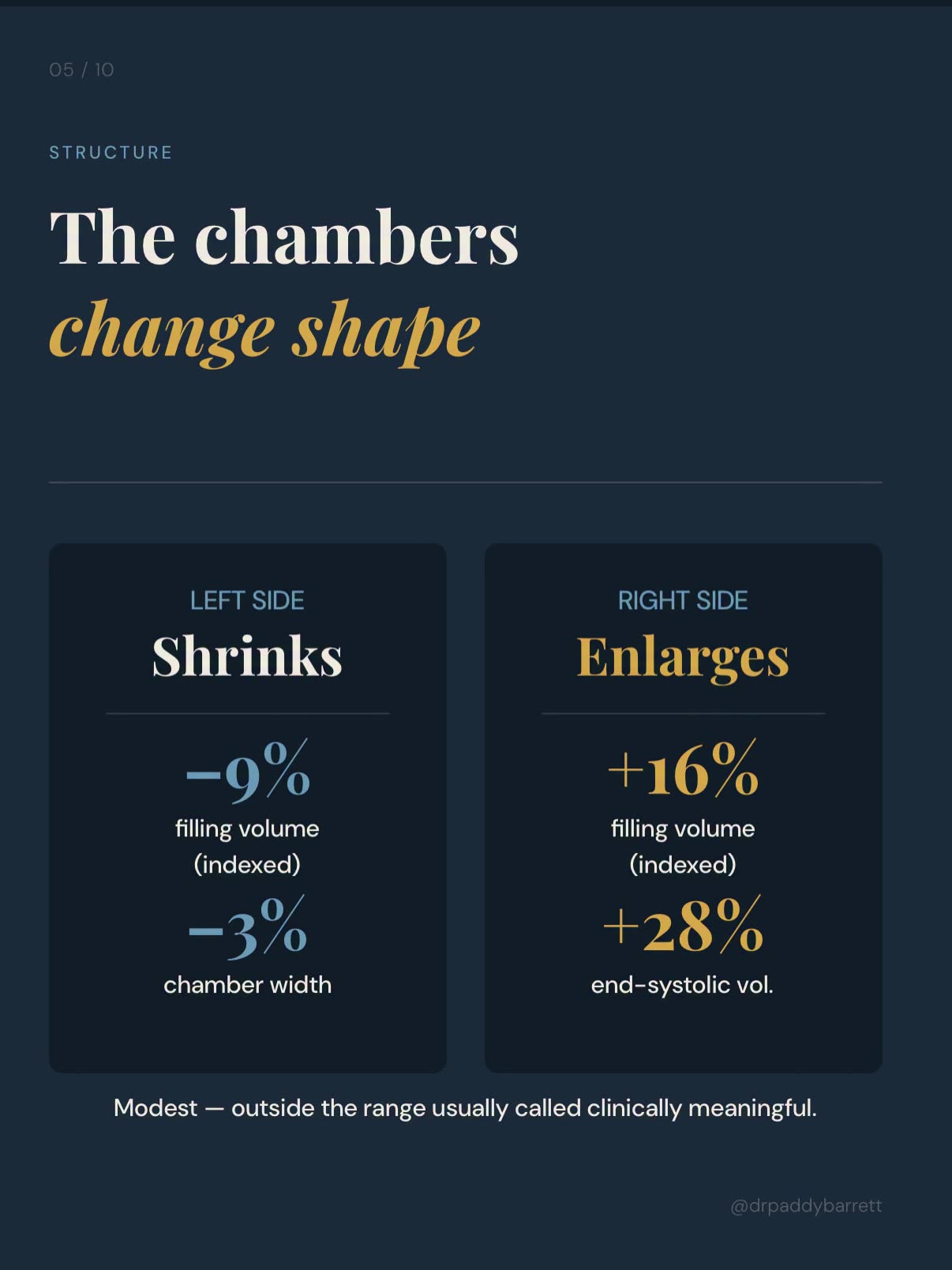
A new meta-analysis pooled 49 studies and 3,274 runners to find out. In the hours after the finish line, blood markers of cardiac strain — troponin and NT-proBNP — surged, often past the very thresholds used to flag heart attack and heart failure. The heart’s chambers shifted shape too: the left side shrank slightly, the right enlarged, and the filling pattern changed.

But here’s the reassuring part: the changes were modest, MRI scans showed no clear structural injury, and the responses largely tracked with age, sex, fitness and finish time. The authors conclude these are most likely normal physiological responses to a hard effort — though whether repeated marathons matter long-term is still unknown.

The takeaway: a “high” troponin after a race isn’t automatically alarming — but it can be misread in a clinic that doesn’t know you just ran 42 km.

Save this & share it with someone who should know. 📚 Laily I, et al. Acute effects of marathon running on the heart: a systematic review and meta-analysis. BMJ Open Sport & Exercise Medicine 2026;12:e003201

No photo description available.No photo description available.No photo description available.No photo description available.No photo description available.
← newer: Vegetable intake correlates with slower epigenetic aging, asolder: Vitamin K2 MK-7 at 360 mcg slowed calcification and improved →