🚨 Every fitness influencer is telling you to chase VO2 max like it is the holy grail of heart health. They are wrong. The data shows that blindly optimizing for VO2 max can actually mask serious cardiovascular risk hiding right underneath the surface.
And no, VO2 max is not just a simple fitness score.
Here is what the science actually says.
🫀 What Is VO2 Max, and Why Has It Become an Idol?
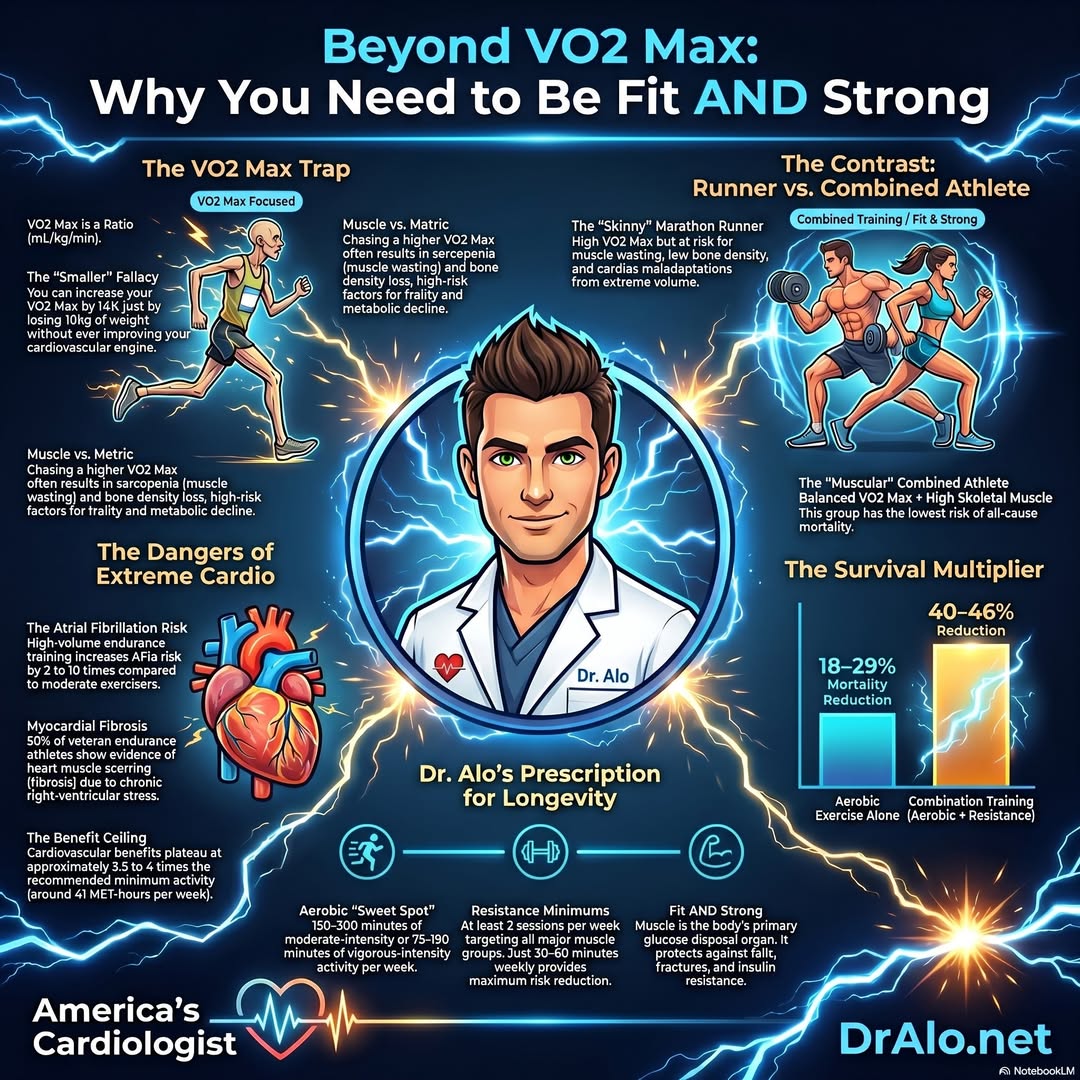
VO2 max measures the maximum volume of oxygen your body can consume during peak exercise. It is expressed in milliliters of oxygen per kilogram of body weight per minute.
That last part matters more than anyone is telling you.
It became popular because higher VO2 max scores correlate with lower cardiovascular mortality in observational studies. That correlation is real. But correlation is not a prescription. And the obsession with chasing this single number has created a dangerous blind spot in how people think about heart health.
🔬 The Dirty Math Secret Nobody Talks About
VO2 max is a ratio. Not a raw number. Not a direct measure of your heart's power output.
The formula is oxygen consumed divided by body weight.
That means two things can raise your VO2 max without improving your actual cardiovascular fitness at all:
. Losing body weight while keeping oxygen consumption flat.
. Becoming extremely lean through methods that wreck your metabolic health.
This is not a technicality. This is a fundamental flaw in how the fitness world uses this metric.
A person can have an elite VO2 max score and still carry dangerous visceral fat, elevated ApoB, insulin resistance, and arterial inflammation. The number looks great. The cardiovascular risk is real.
🩺 The Marathoner's Paradox
I am a cardiologist. I have seen this pattern in my clinic more times than I can count.
Elite endurance athletes. Marathoners. Triathletes. People whose VO2 max scores would make any trainer jealous.
And some of them walk into my office with:
. Atrial fibrillation from years of high-volume training stress on the atria.
. Coronary artery calcium scores that look nothing like what you would expect from someone logging 60 to 80 miles per week.
. Poor body composition with low muscle mass and high visceral fat hidden by a low total body weight.
That is the real story. Optimizing for VO2 max alone does not protect you from cardiovascular disease. It just makes you better at one specific physiological metric.
⚠️ The Dose-Response Curve Nobody Wants to Talk About
Exercise has a dose-response relationship with cardiovascular benefit. More is better. Until it is not.
The research shows that moderate aerobic exercise reduces cardiovascular mortality significantly. The benefit continues as volume increases. But the curve flattens and in some studies reverses at extreme training volumes.
💓 Here is what the data shows:
✅ 150 minutes per week of moderate aerobic activity: cardiovascular mortality risk drops substantially.
✅ 300 minutes per week: additional benefit continues.
❌ Extreme endurance training at competitive volumes: atrial fibrillation risk climbs. Right ventricular remodeling appears. Myocardial fibrosis shows up on cardiac MRI in a subset of long-term extreme endurance athletes.
The question is no longer whether exercise is good for you. The question is whether you are using the right metric to guide your training, and whether you have crossed from therapeutic into harmful territory.
🔬 What You Should Actually Optimize For
Here is the framework I use with my patients:
✅ Cardiorespiratory fitness measured by functional capacity, not just a VO2 max ratio.
✅ Muscle mass and strength. Grip strength alone predicts cardiovascular mortality independently of VO2 max.
✅ Body composition including visceral fat, not just body weight.
✅ Metabolic markers. Fasting glucose, insulin, triglycerides, ApoB.
✅ Heart rate variability and recovery metrics as a proxy for autonomic health.
✅ Training volume that sits in the optimal zone, roughly 150 to 450 minutes per week of combined moderate and vigorous activity, not a number chased for its own sake.
❌ VO2 max alone will not save you.
❌ A high VO2 max score will not save you.
❌ Extreme endurance training volume will not save you.
The tools with the strongest data are unsexy, free, and require your participation.
🧍 Patient Scenario
A patient who trains 5 days per week, prioritizes resistance training twice per week, keeps aerobic volume at 200 to 300 minutes weekly, monitors metabolic markers annually, and maintains muscle mass into their 60s can reduce cardiovascular mortality risk by a meaningful margin and preserve functional independence well into their 80s.
A patient who runs 70 miles per week, chases a VO2 max number, neglects resistance training, and develops atrial fibrillation at 52 is a story I have watched unfold in real time.
That is the difference between optimizing a metric and optimizing your health.
❤️ Bottom Line:
VO2 max is not your cardiovascular report card. It is one data point inside a much larger picture.
The evidence base across hundreds of thousands of patients tells us that fitness protects the heart. But extreme volume and single-metric obsession create new risks.
Train consistently. Build muscle. Keep aerobic volume in the therapeutic range. Track your metabolic markers. Get a coronary artery calcium score if you are over 40 and training hard.
A patient who builds a complete fitness strategy instead of chasing one number gives their heart a decades-long advantage.
The question I ask every high-performing patient in my clinic: are you training for a number, or are you training for your life?
Comment "blog" and I will send you the link.
#Cardiology #HeartDisease #HeartHealth #CardiovascularHealth #VO2Max #EnduranceTraining #ExerciseScience #AtrialFibrillation #PreventiveCardiology #MetabolicHealth