Relative risk vs Absolute risk, when it comes to statin trials.
——
Statins have been shown to reduce absolute risk of having a heart attack or stroke by anywhere from 1.1% to 4.7% in randomized controlled trials lasting about 5 years.
A common claim on social media is that this makes little practical difference.
Let’s examine the basic math behind this claim:
For the average American, the absolute risk of having a heart attack in their entire lifetime is only about 20%. (1 in 5 Americans will have a heart attack in their lifetime.)
A drop in absolute risk of 1.1% to 4.7% in only 5 years reduces this lifetime risk from 20% down to 15.3% to 18.9%. All in just 5 years.
That is huge. If the average American continues this for decades, they will likely drop their lifetime risk of a heart attack or stroke all the way down to 10%.
So instead of 1 in 5 Americans having a heart attack, it would be 1 in 10. That is fantastic. Millions of lives would be saved.
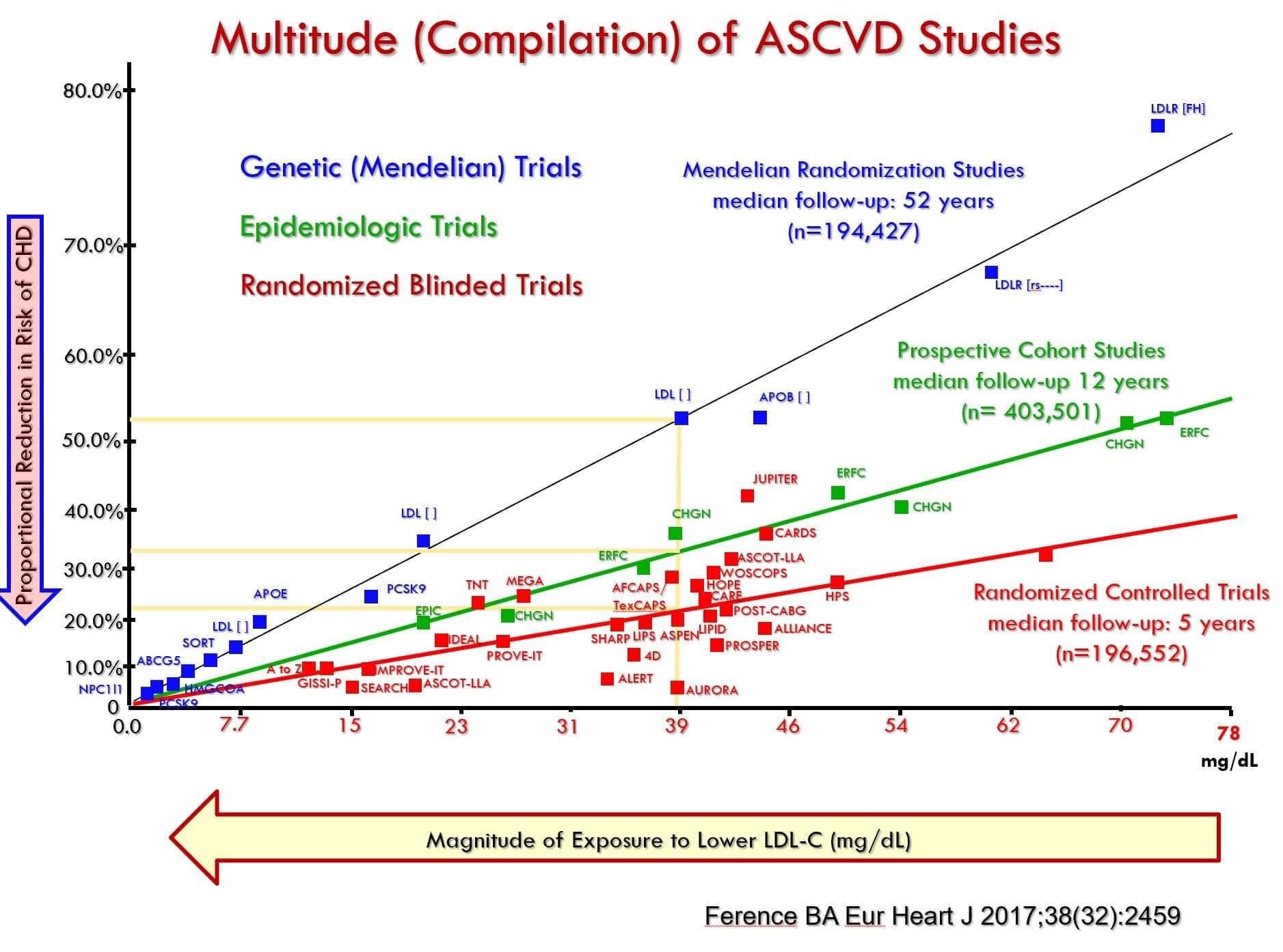
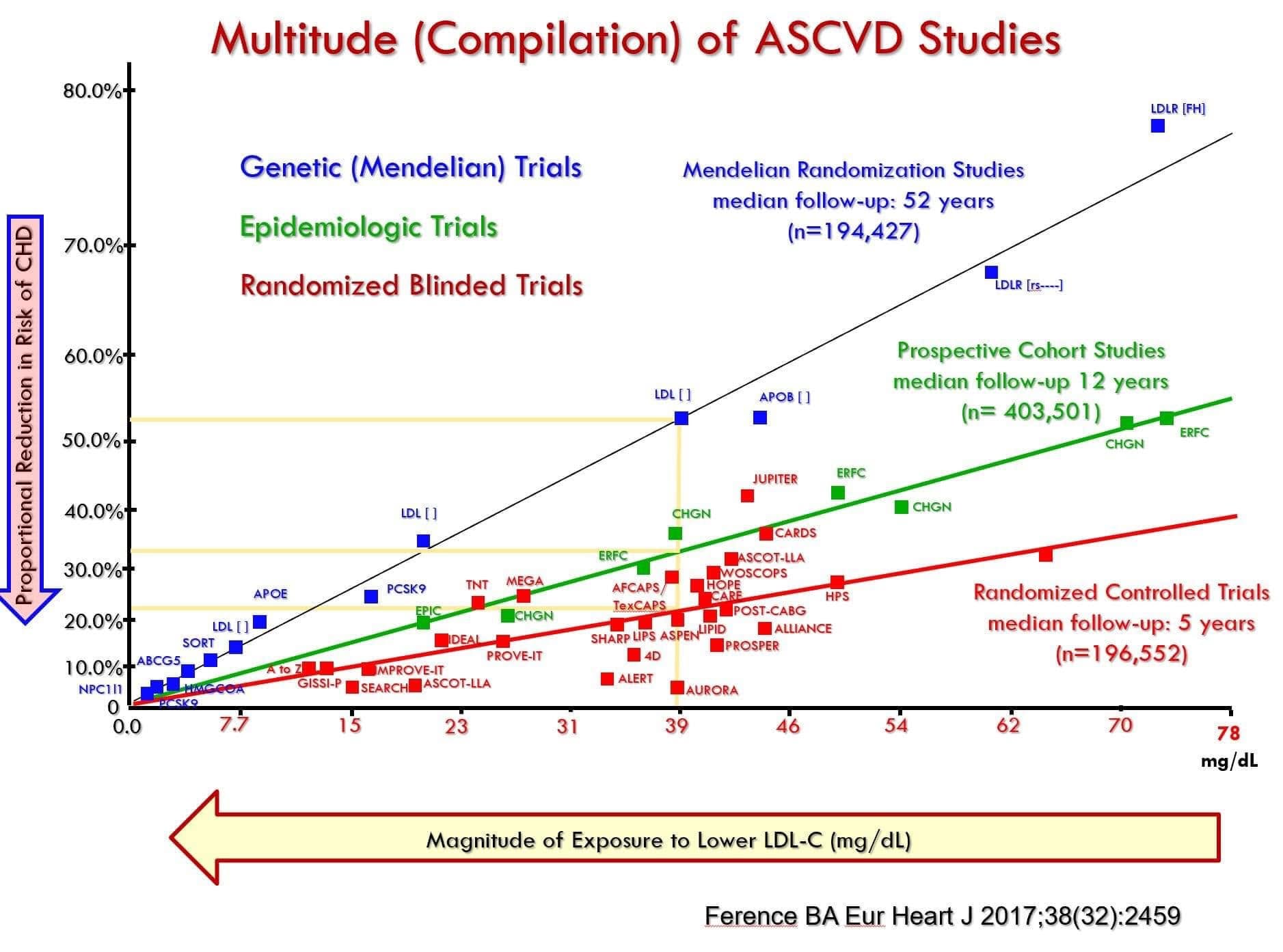
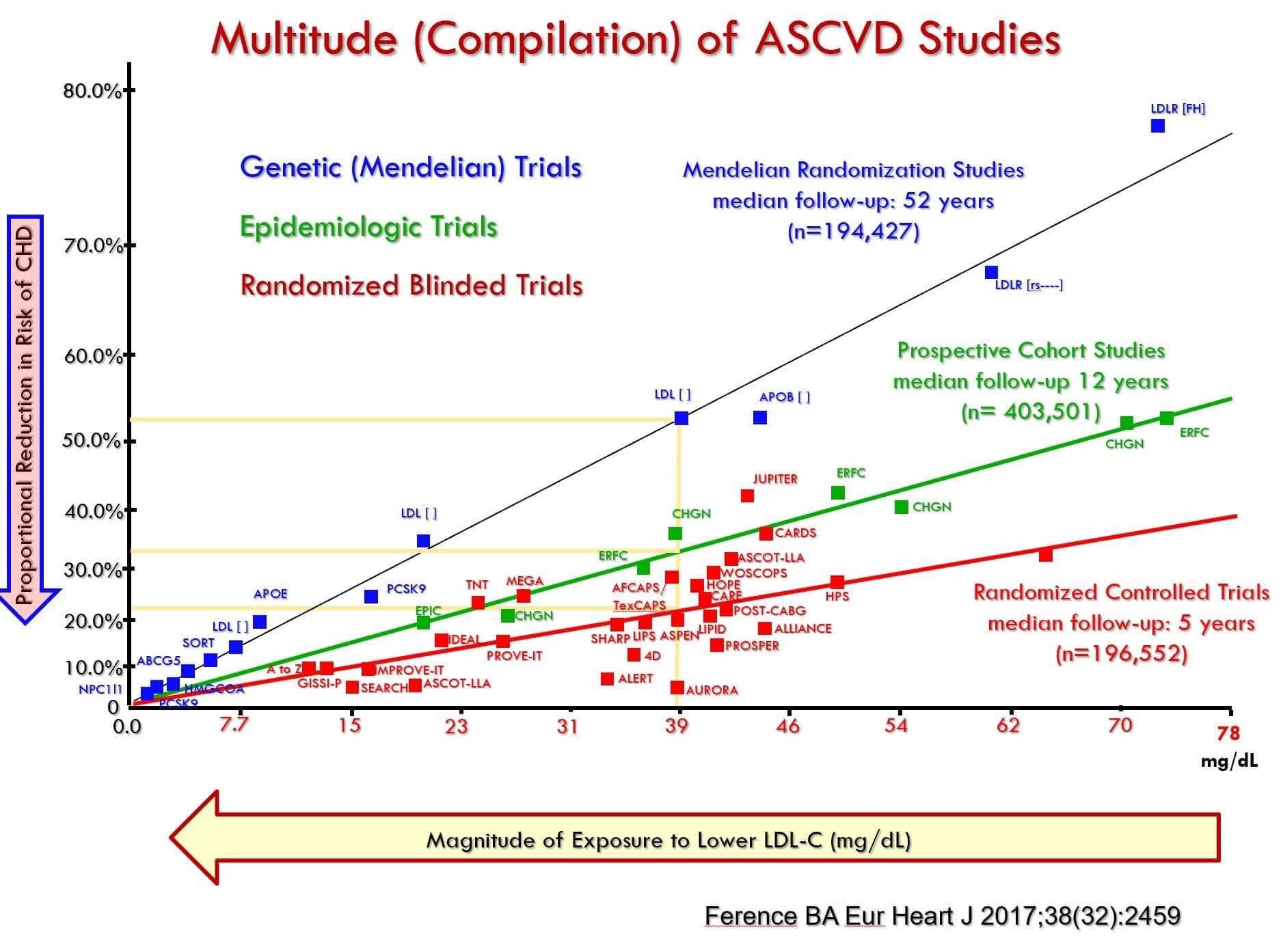
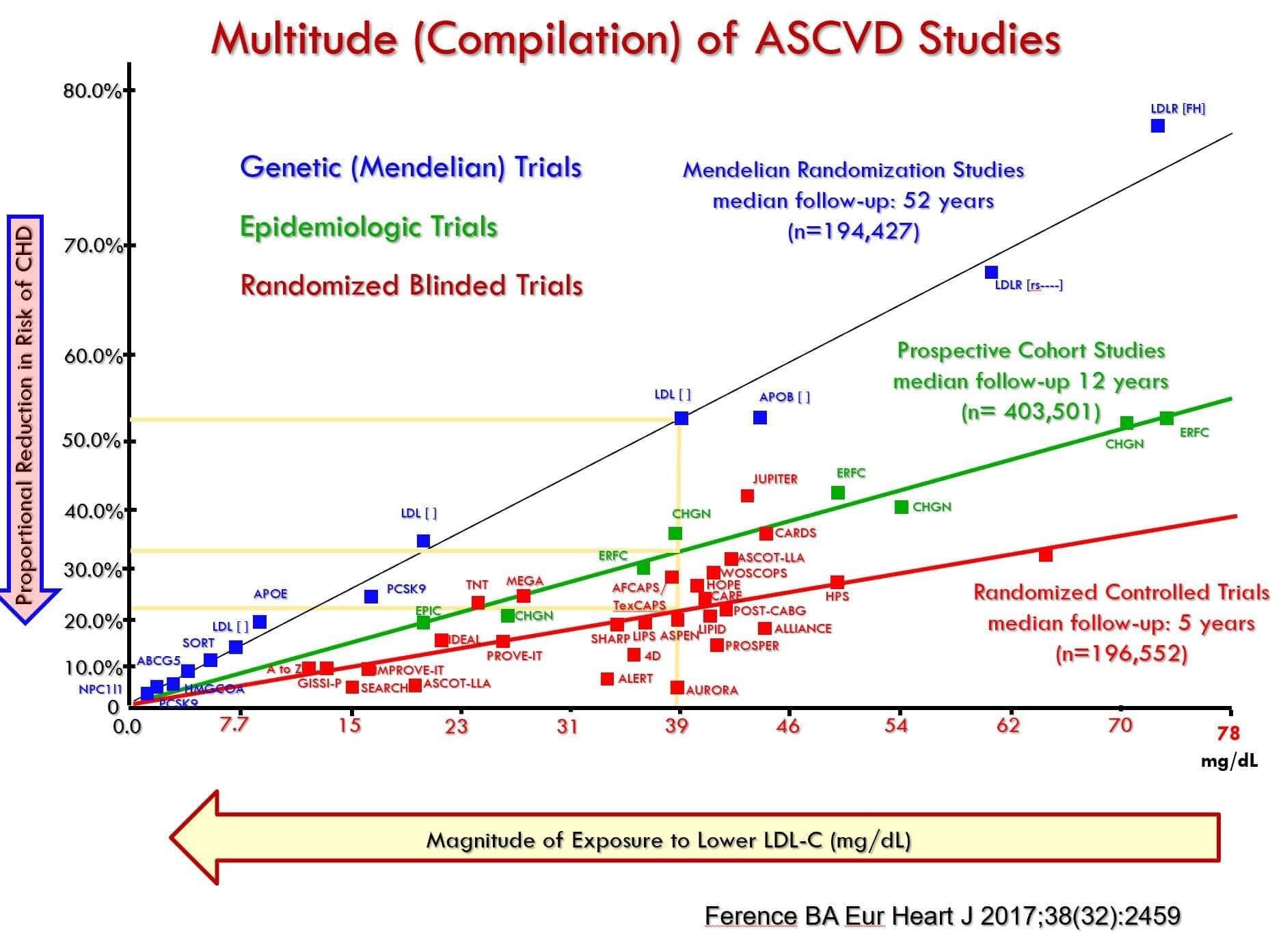
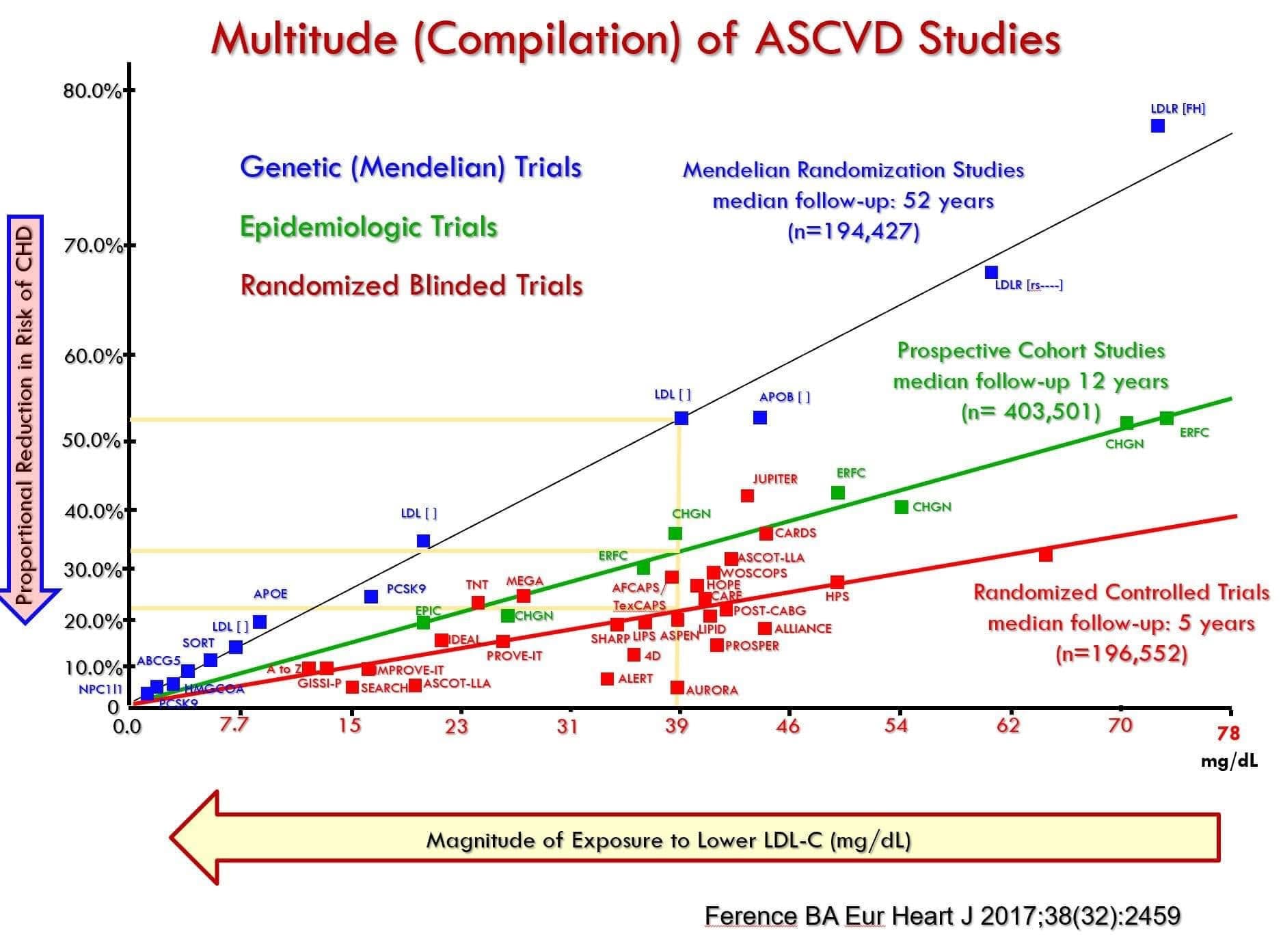
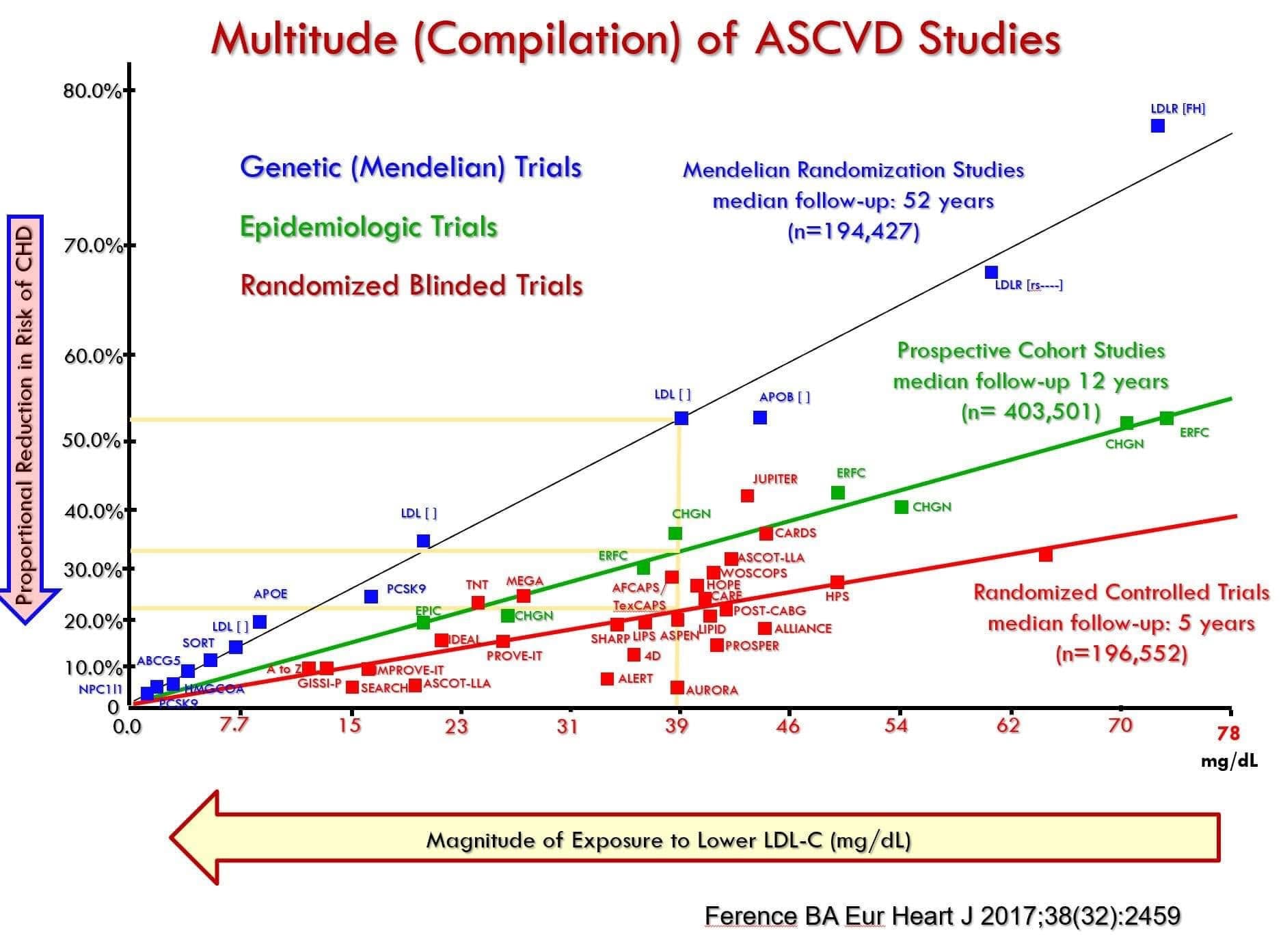
↪ LDL down 39 mg/dL: 20%+ fewer heart attacks in RCTs, 30%+ in cohorts, 50%+ genetically
Randomized controlled trials with statins only run for about 5 years. To understand the risk reduction of statins over longer periods of time, we must look at prospective cohort studies and Mendelian (genetic) randomization studies.
This graph summarizes all of this data in one place.
The yellow lines (vertical/horizontal) on the graph show that reducing your LDL by 39mg/dL— achievable by a very low dose statin— potentially reduces your risk of heart attack (compared to placebo or matched controls) by:
- over 20% after a 5 year period (the red line, from randomized controlled trials).
- over 30% after a 12 year period (the green line, from prospective cohort studies).
- over 50% after a 52 year period (the blue line, from Mendelian randomization studies).
Note that the x-axis represents a change in LDL, not an absolute value of LDL. So the difference between the value of 78mg/dL and 0 mg/dL on the x-axis might correspond to a difference between 178mg/dL and 100mg/dL, for example, or any other combination that represents this difference. The y-axis also represents a percentage change in risk.
—-
How does this translate into absolute risk reduction?
1 in 5 people in the USA will have a heart attack in their lifetimes. So the average American has an absolute risk of 20% of having a heart attack during their entire lives. This is why heart disease is the #1 killer in the USA.
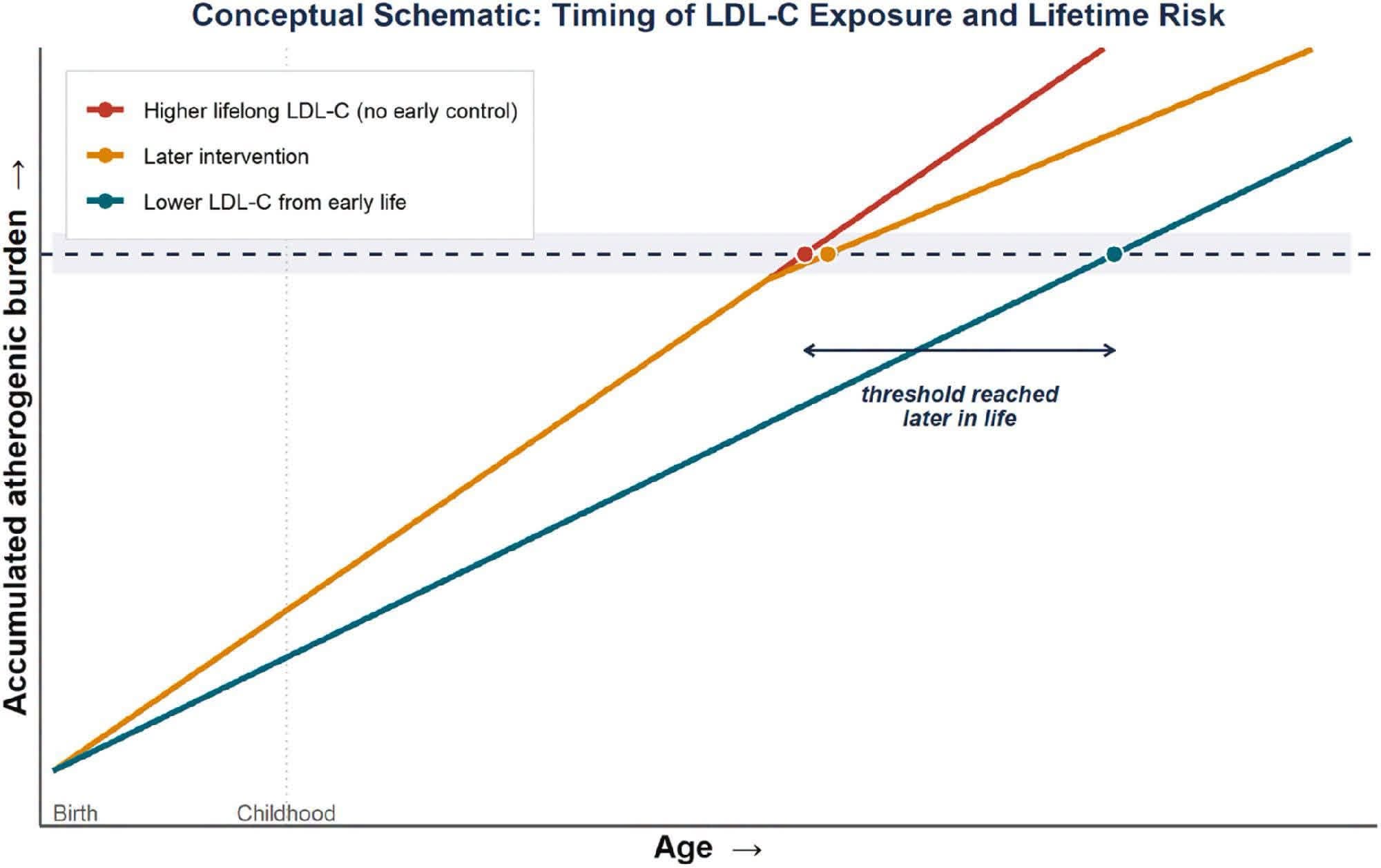
Dropping your LDL by 39mg/L potentially cuts this risk by half as explained above (blue line), if you do it for a long time.
So your absolute risk of a heart attack potentially drops from 20% to 10% over your entire lifetime.
All by just taking a very low dose statin and starting fairly young.
In my case, 10mg of atorvastatin is enough to drop my LDL by around 39 mg/dL. If I stick with this for the rest of my life, I will be potentially dropping my absolute risk of a heart attack from 20% to 10%. Not bad for something that takes me 30 seconds to take each day and causes me zero side effects.
Combine this low dose statin with all the other health interventions that I do, and I am fairly confident that I can get my lifetime absolute risk of a heart attack to near zero.
#statinrctsHD #absoluteriskHD #ldlrctsHD #mendelianrandomizationHD #mrHD #statinsmrHD #ldlmrHD