HD-OPM Archive
Hashtags

#mendelianrandomization

21 posts

A low-dose statin could roughly halve lifetime heart attack risk if taken for decades

Feb 25, 2025 · Louis Nervegna ♥ 29 · 💬 47 Statins

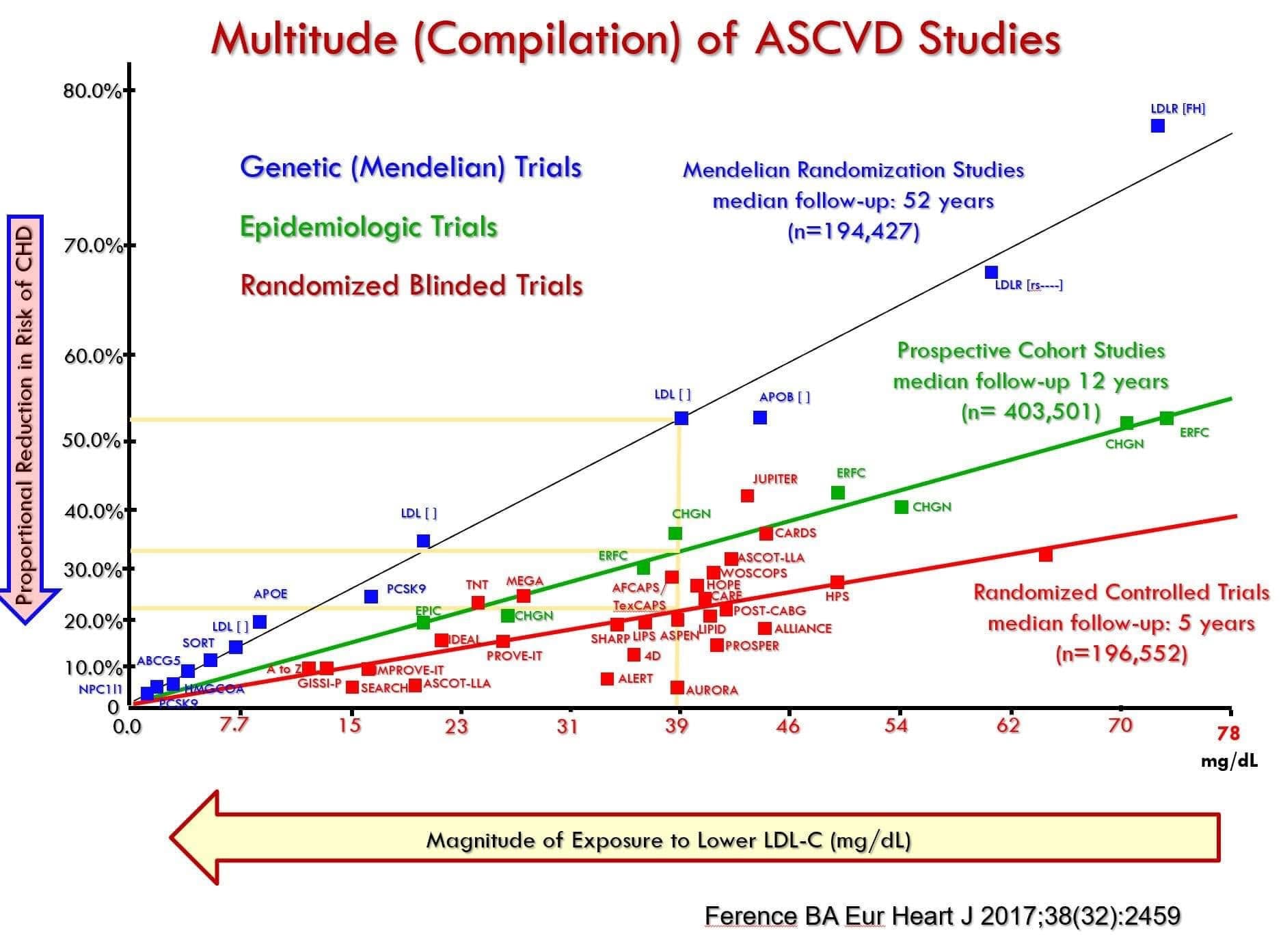
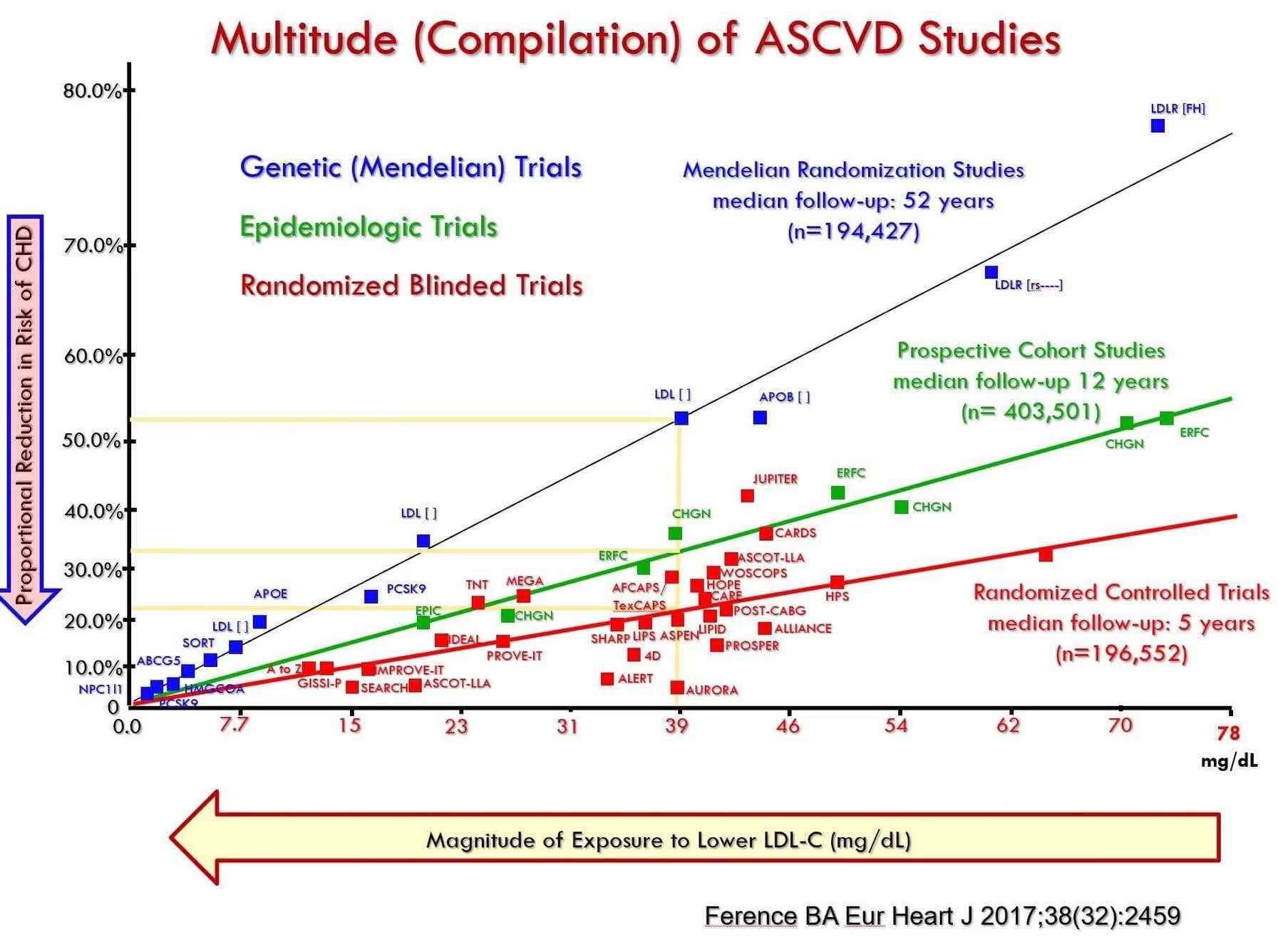
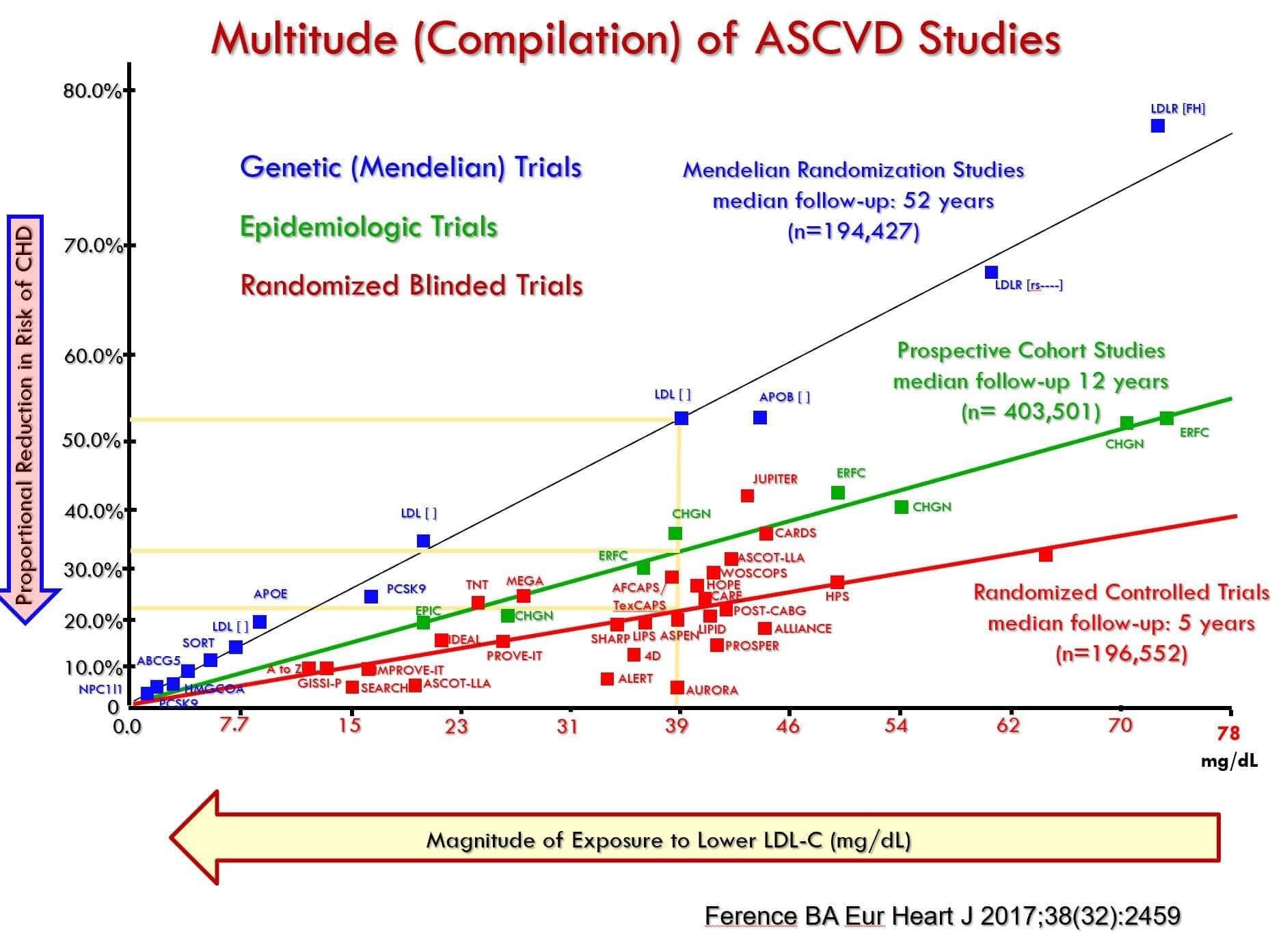
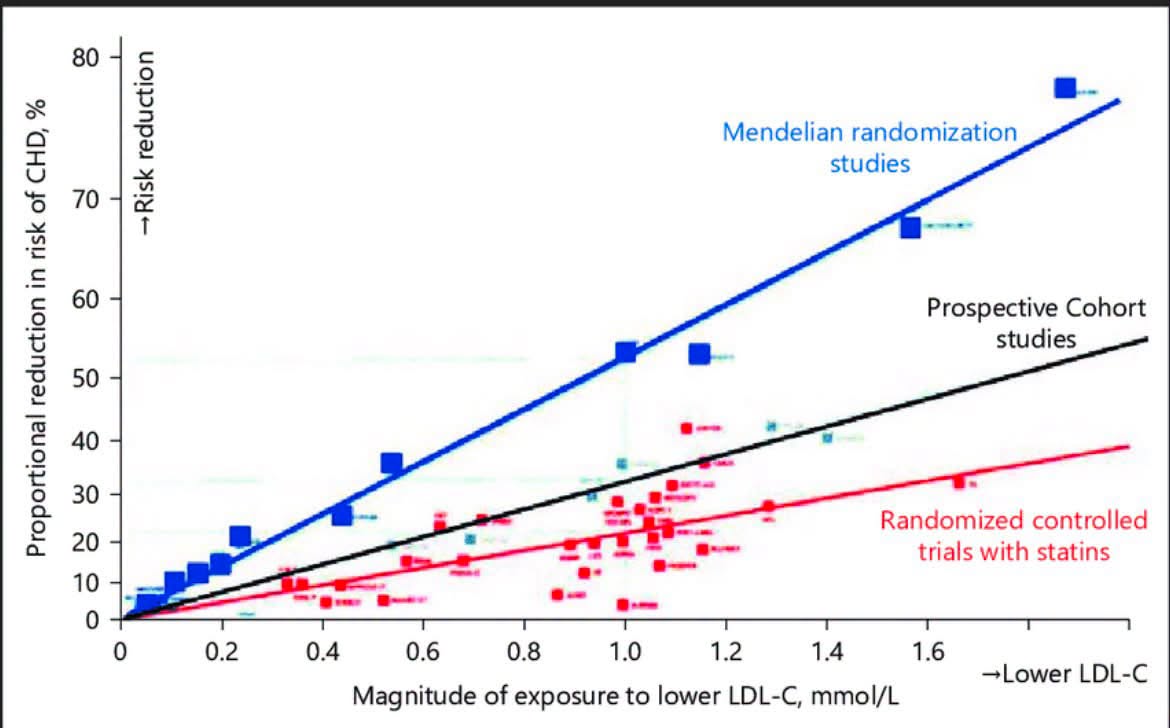
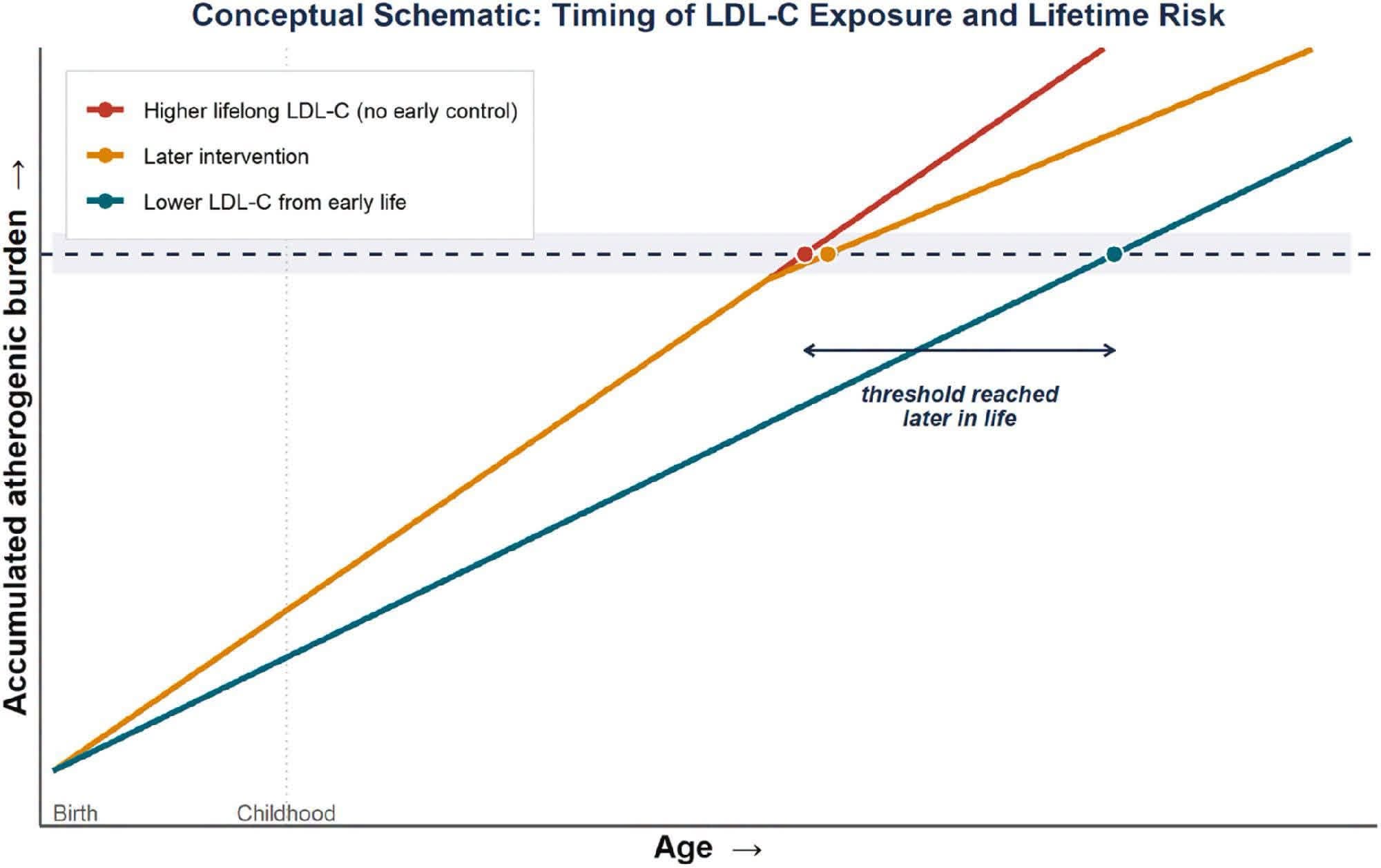
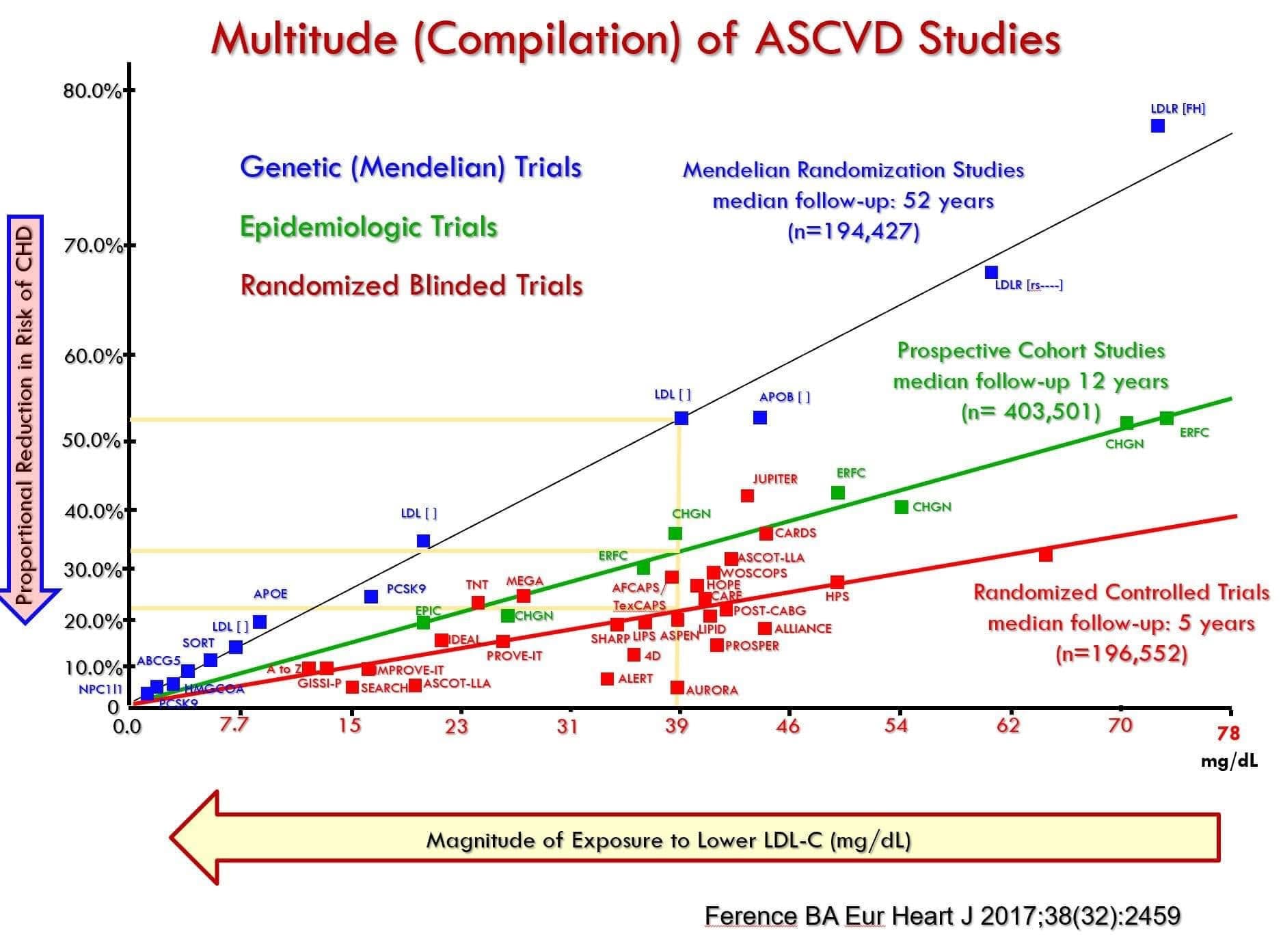
Louis explains a graph combining RCT, cohort and Mendelian randomization data: an LDL reduction of 39 mg/dL (reachable with a very low dose statin) lowers heart attack risk more the longer it is sustained. Translated to absolute risk, a roughly 20% lifetime risk could fall to about 10%, and the rest requires diet, lifestyle and other therapies.
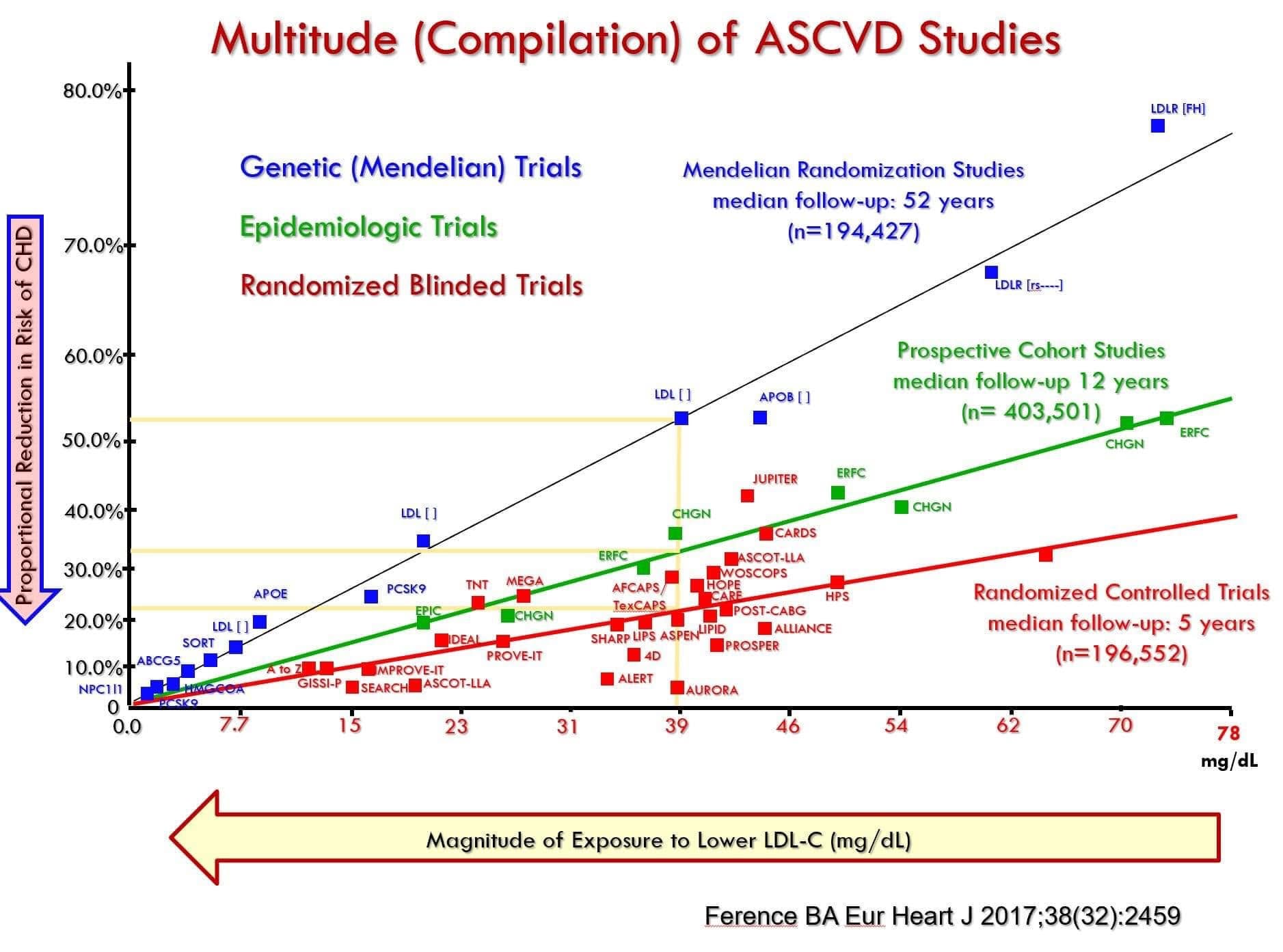
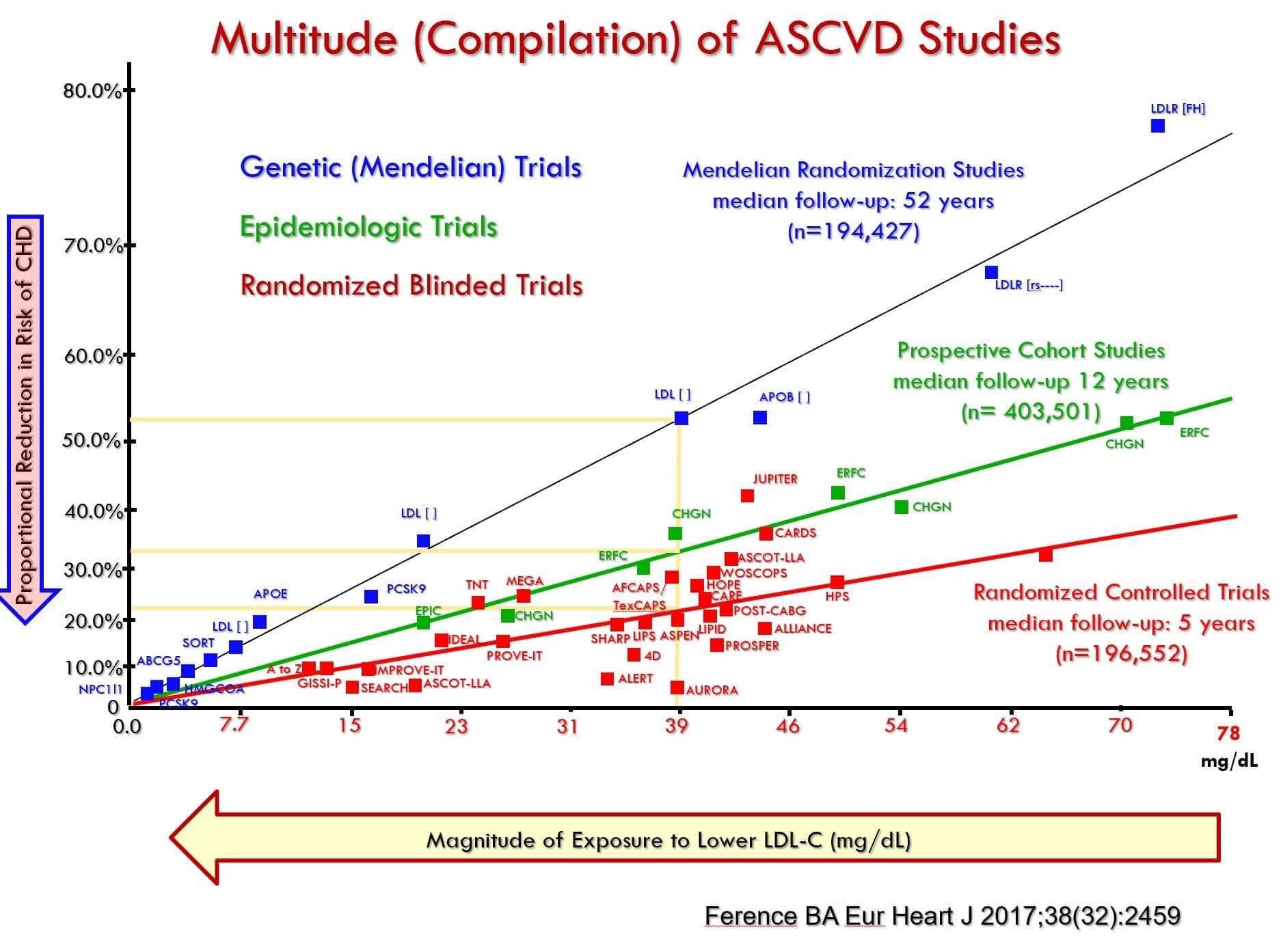
LDL down 39 mg/dL: 20%+ fewer heart attacks in RCTs, 30%+ in cohorts, 50%+ genetically

Dec 20, 2023 · Louis Nervegna ♥ 23 · 💬 43 ↩ 9 LDL, ApoB & lipid panel

Louis presents a graph combining RCTs (5 years), prospective cohorts (12 years) and Mendelian randomization (52 years) to show that the benefit of lowering LDL grows with duration of exposure. A 39 mg/dL reduction, achievable with a very low-dose statin, is associated with larger risk reductions over longer periods. He translates the 50% figure to a lifetime absolute risk falling from 20% to 10%, and describes his own 10 mg atorvastatin. The absolute estimate is his extrapolation.

Statin absolute risk reduction is small over years but can exceed 10% over a lifetime

Nov 10, 2025 · Louis Nervegna ♥ 20 · 💬 25 ↩ 2 Statins

Louis explains that short statin trials show only 1-2% absolute risk reduction because baseline risk over a few years is only 2-5%, the same as diet and exercise trials. Over a lifetime, with a 20% baseline risk of heart attack, cohort and Mendelian randomization data suggest cumulative reductions of 10% or more.

A 1.1-4.7% absolute risk reduction from statins is large against a 20% lifetime risk

Apr 28, 2024 · Louis Nervegna ♥ 14 · 💬 20 ↩ 2 Statins

Louis explains relative versus absolute risk in statin trials. Statins cut absolute heart attack or stroke risk by 1.1% to 4.7% in roughly 5-year RCTs, which is large against a lifetime risk of about 20%, and sustained over decades could lower lifetime risk toward 10%. He shares a graph combining RCTs (over 20% risk reduction after 5 years), prospective cohorts (over 30% at 12 years) and Mendelian randomization (over 50% at 52 years) for a 39 mg/dL LDL reduction.

Mendelian randomization in 1 million people: statin-like genetics cut dementia risk 76-82%

Nov 06, 2025 · Gokhan Can ♥ 11 · 💬 17 Brain health & dementia

Summarises Dr Stanfield's video on a Mendelian randomization study of over a million people. Short RCTs show no cognitive harm or benefit and observational studies suggest protection; genetic variants mimicking lifelong statin and ezetimibe action were linked to 76-82% relative dementia risk reduction, implying long-term benefit missed by short trials. The video also notes treating hearing loss, vision loss and midlife depression.

Mendelian randomization: lifelong lower LDL tracks linearly with lower heart disease risk

Oct 10, 2026 · Louis Nervegna ♥ 13 · 💬 8 LDL, ApoB & lipid panel

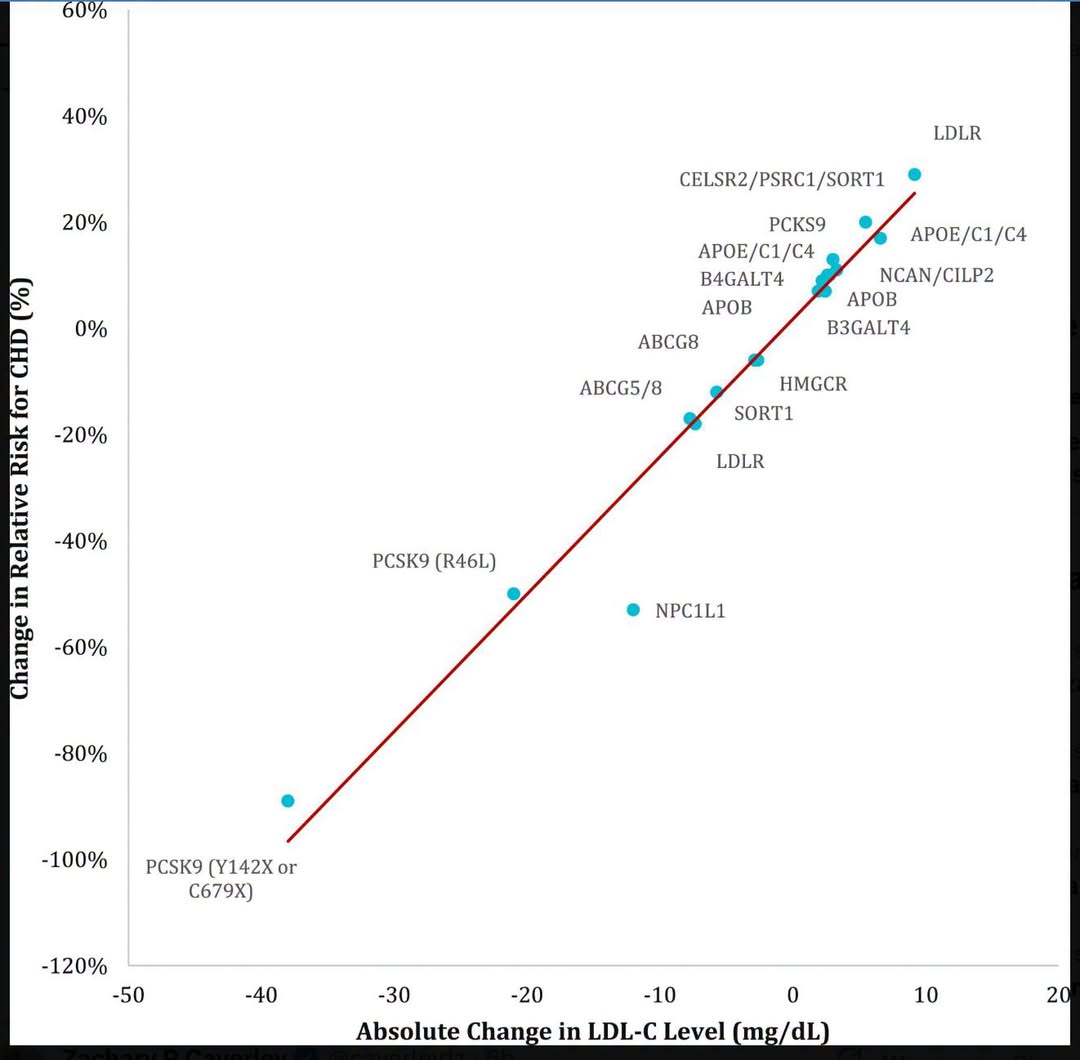
The post explains a chart from a European Atherosclerosis Society consensus statement showing that genetic variants affecting LDL through different pathways (LDLR, PCSK9, APOB, HMGCR, NPC1L1, SORT1, ABCG5/8) change coronary risk in proportion to the LDL change. This matches the linear relationship seen in statin trials. The poster also shows how to convert relative risk reductions into lifetime absolute risk.

Dr. Chong on LDL misinformation, with RCT and Mendelian randomization evidence

Sep 02, 2026 · Louis Nervegna ♥ 10 · 💬 6 Myths, misinformation & controversies

Louis shares a Vital Human post in which Dr. Daniel Chong describes being repeatedly told his LDL science is wrong by people influenced by social media content that exaggerates or misreads evidence. The tags point to statin RCTs and Mendelian randomization as the supporting evidence; the post itself is largely about frustration with misinformation.

Mendelian randomization: BMI, BP, LDL and type 2 diabetes lower odds of longevity

Jan 25, 2025 · Gokhan Can ♥ 5 · 💬 5 LDL, ApoB & lipid panel

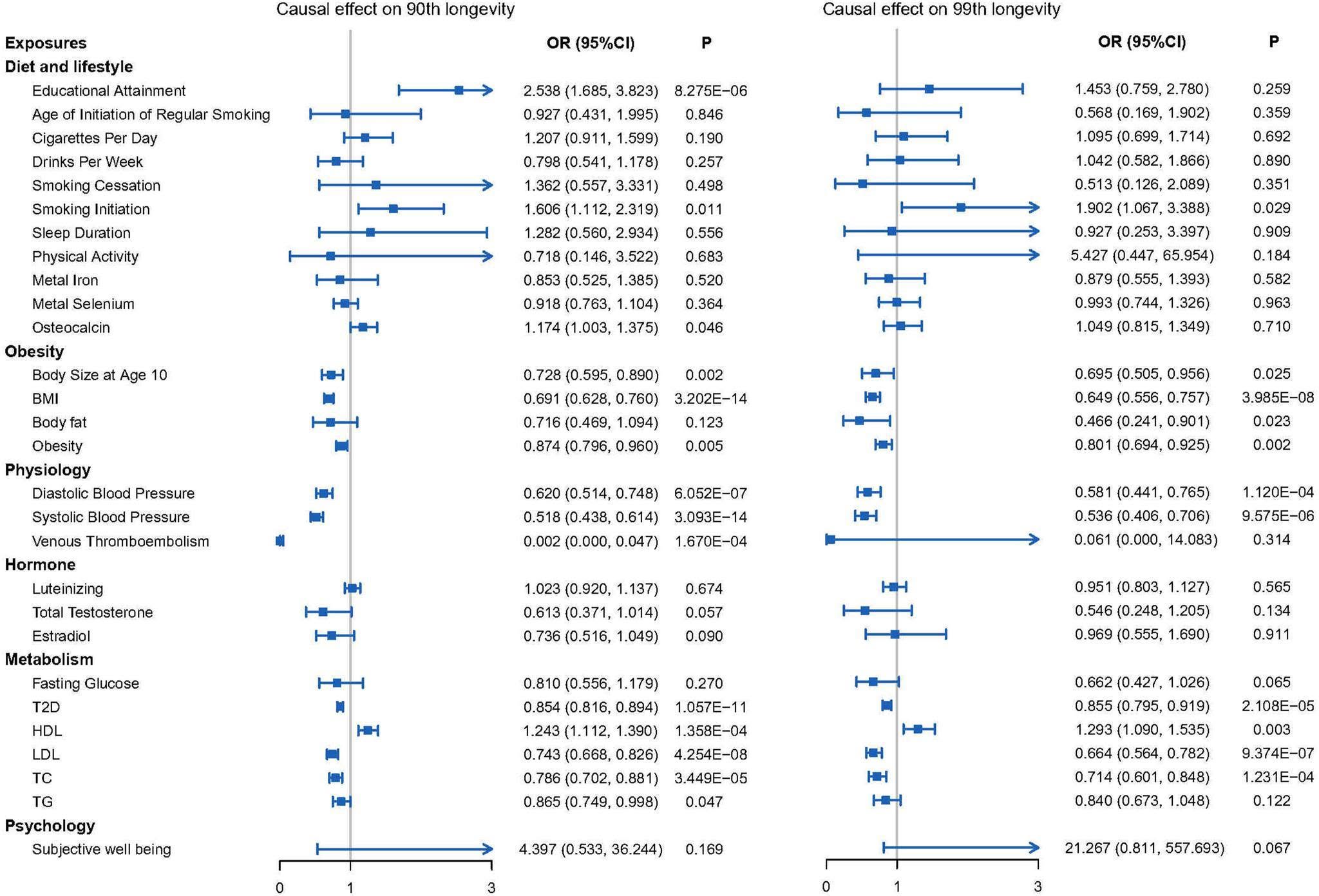
A Mendelian randomization study of 46 modifiable risk factors in people of European ancestry found nine linked to longevity (90+ years) and super-longevity (99+). Higher genetically predicted HDL was associated with greater odds of longevity, while higher BMI, obesity, blood pressure, type 2 diabetes, LDL and total cholesterol were associated with lower odds.

Lifestyle and drug therapy have additive benefits, so prevention should combine both

Dec 10, 2025 · Louis Nervegna ♥ 7 Cardiovascular disease: the big picture

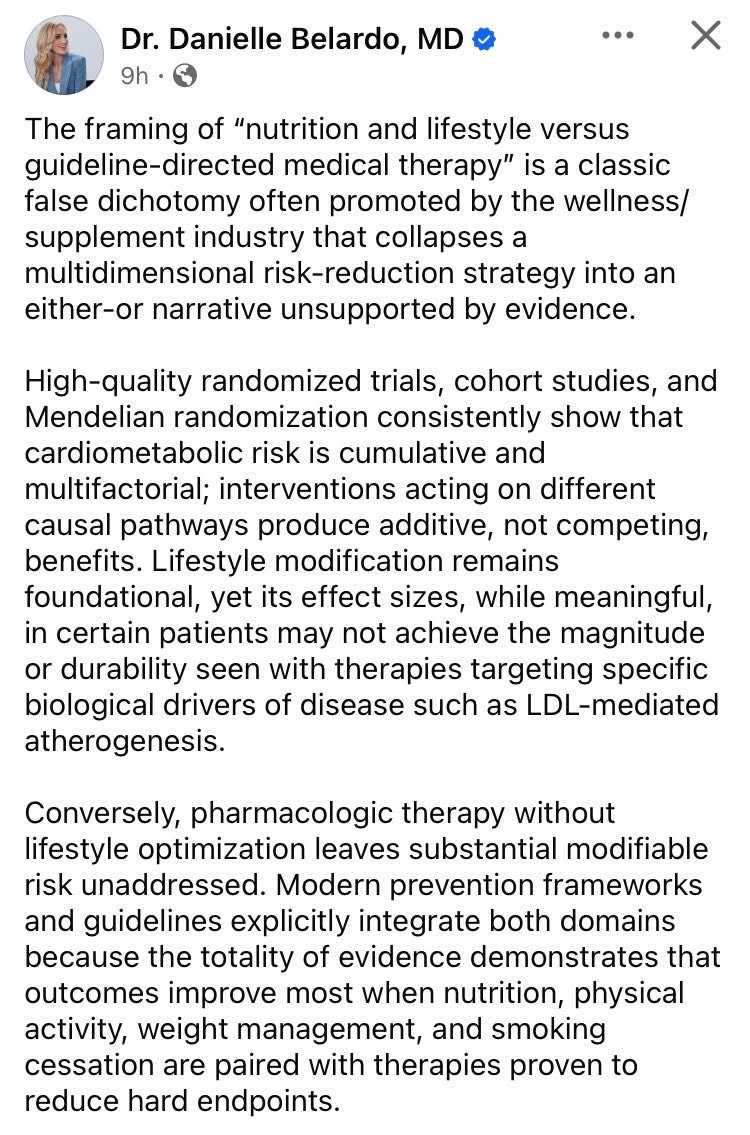
Louis quotes a statement arguing that cardiometabolic risk is cumulative and multifactorial, that interventions on different pathways give additive rather than competing benefits, and that lifestyle remains foundational while drugs targeting LDL-driven atherogenesis can add durable effect. He posts it as a counter to influencers who pit the two against each other.

200+ studies and 2 million participants show LDL drives atherosclerosis dose-dependently

Oct 28, 2026 · Louis Nervegna ♥ 1 LDL, ApoB & lipid panel

A shared post rebuts a claim that LDL research is incomplete and flawed. It cites over 200 prospective cohort, genetic and randomized studies involving over 2 million participants, 20 million person-years and 150,000+ cardiovascular events that consistently show a dose-dependent LDL-ASCVD relationship. It also addresses the U-shaped curve claim and Mendelian randomization.