HD-OPM Archive
Hashtags

#statinrcts

22 posts

A low-dose statin could roughly halve lifetime heart attack risk if taken for decades

Feb 25, 2025 · Louis Nervegna ♥ 29 · 💬 47 Statins

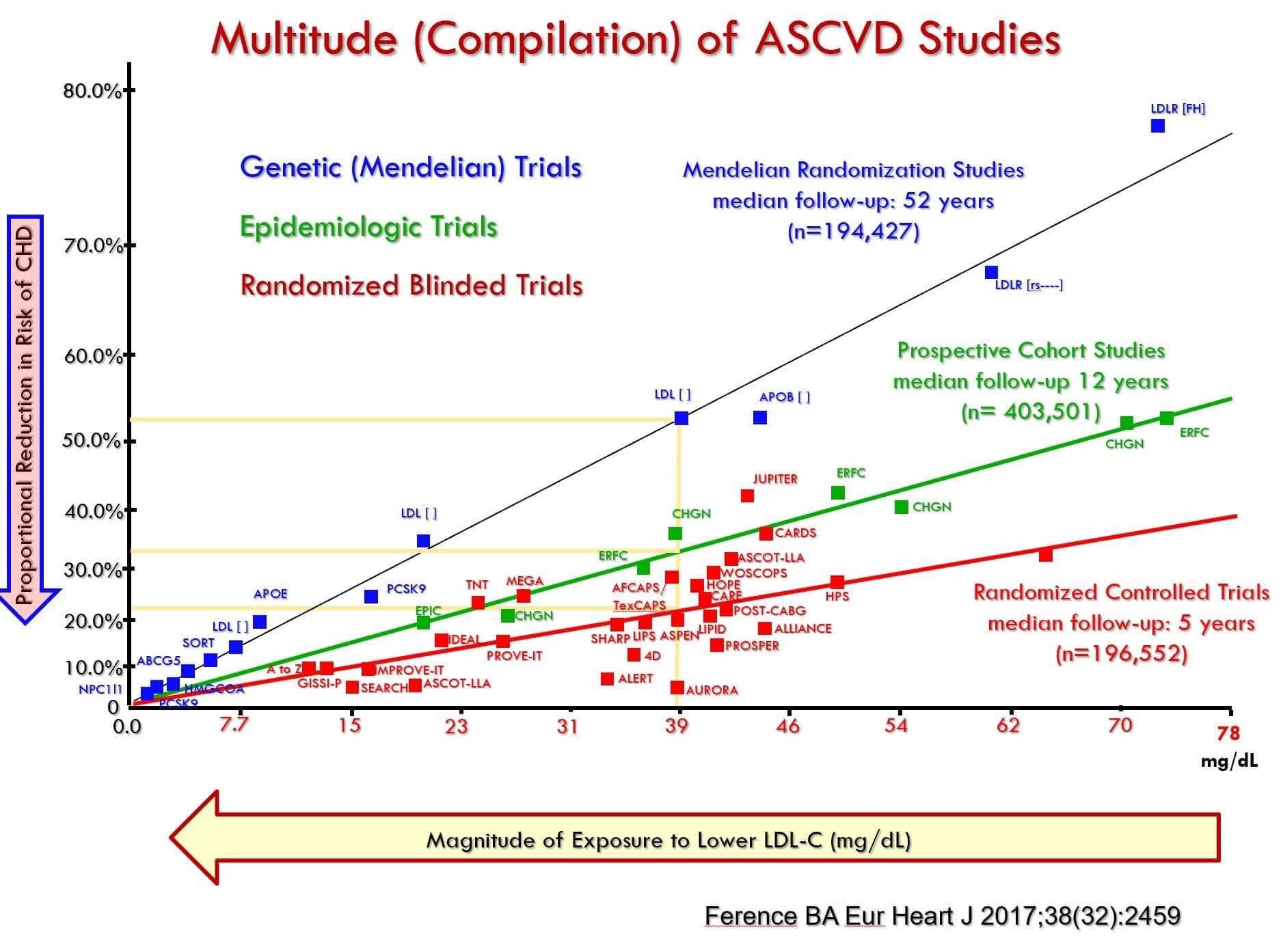
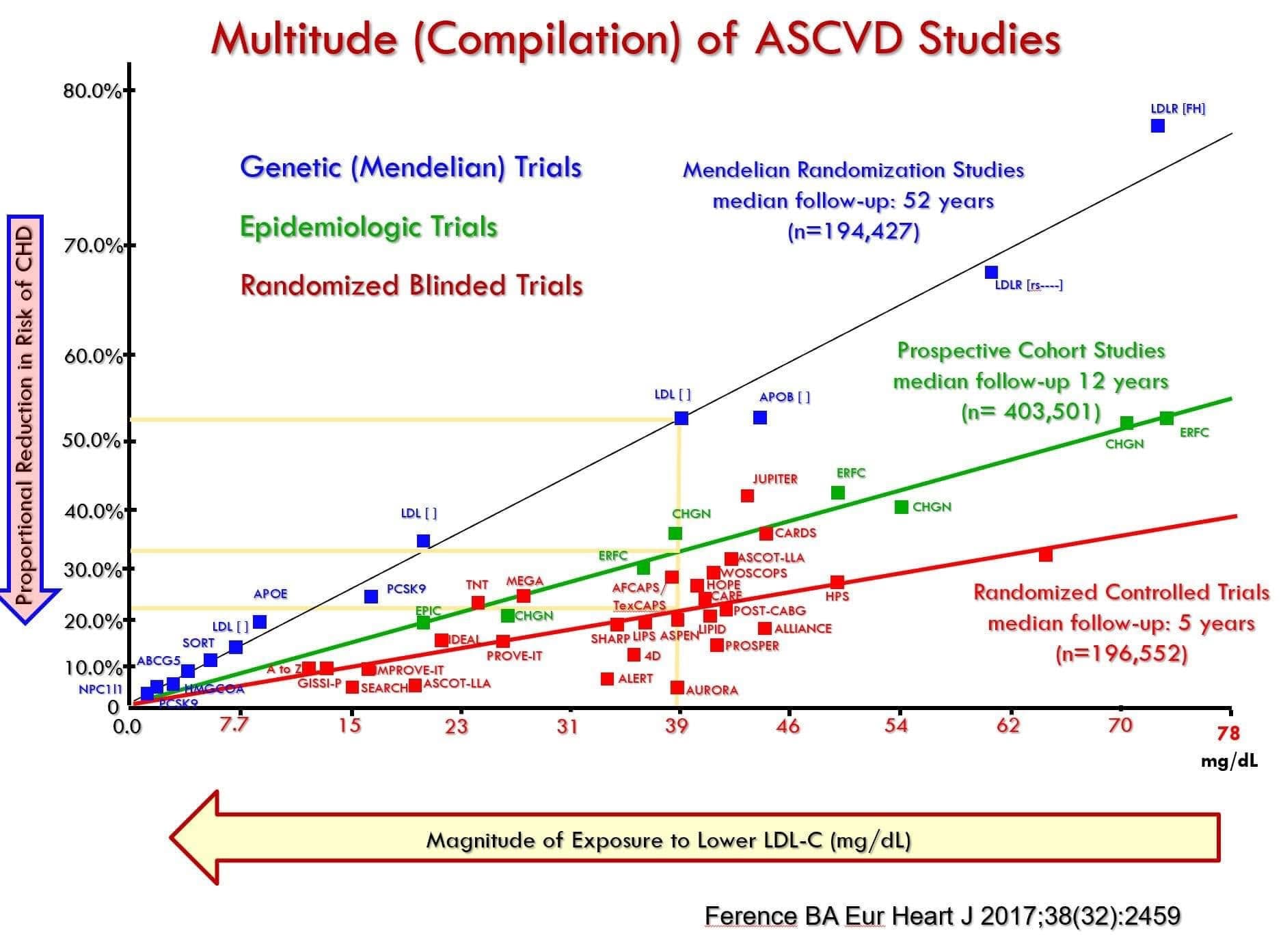
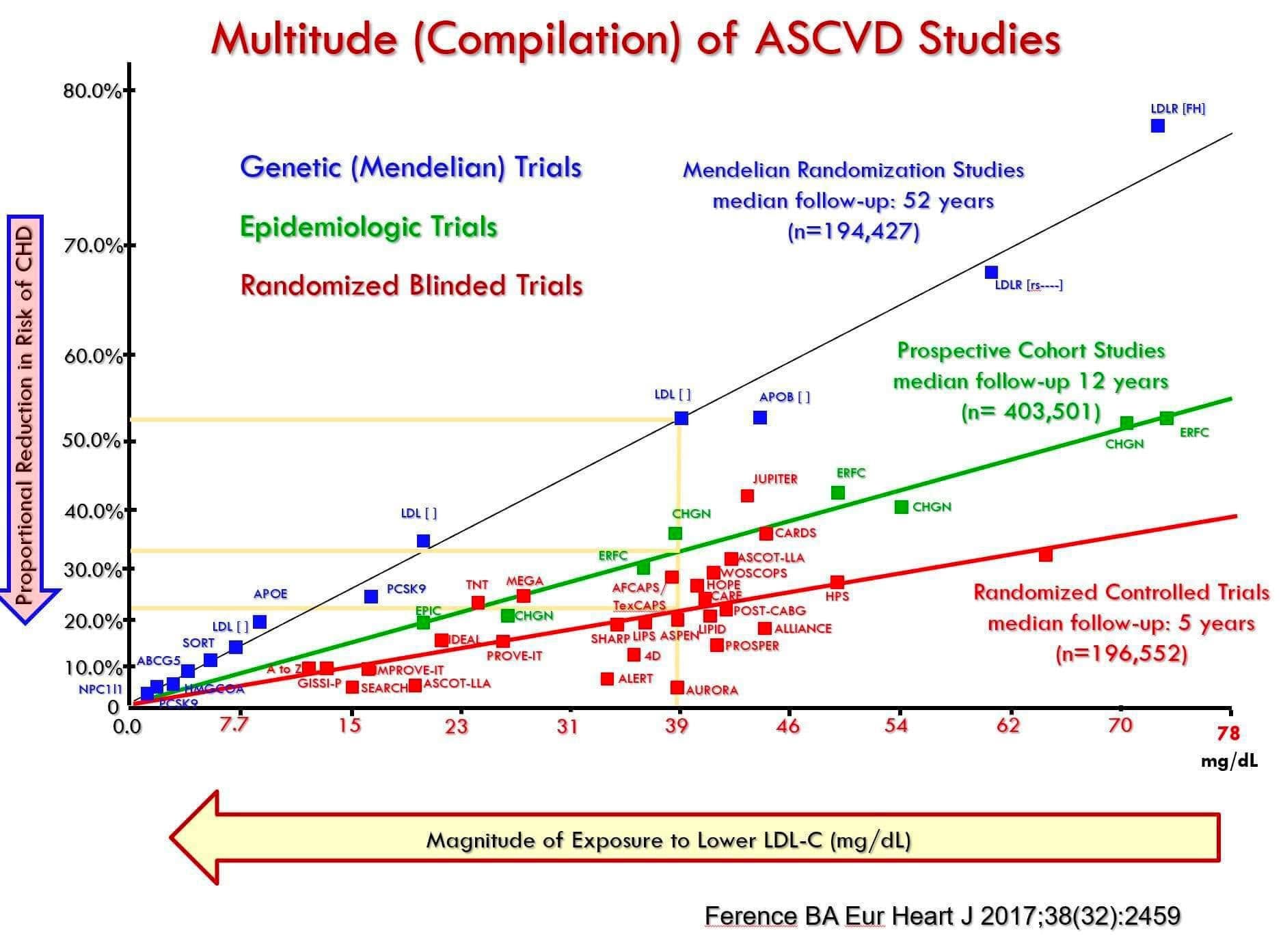
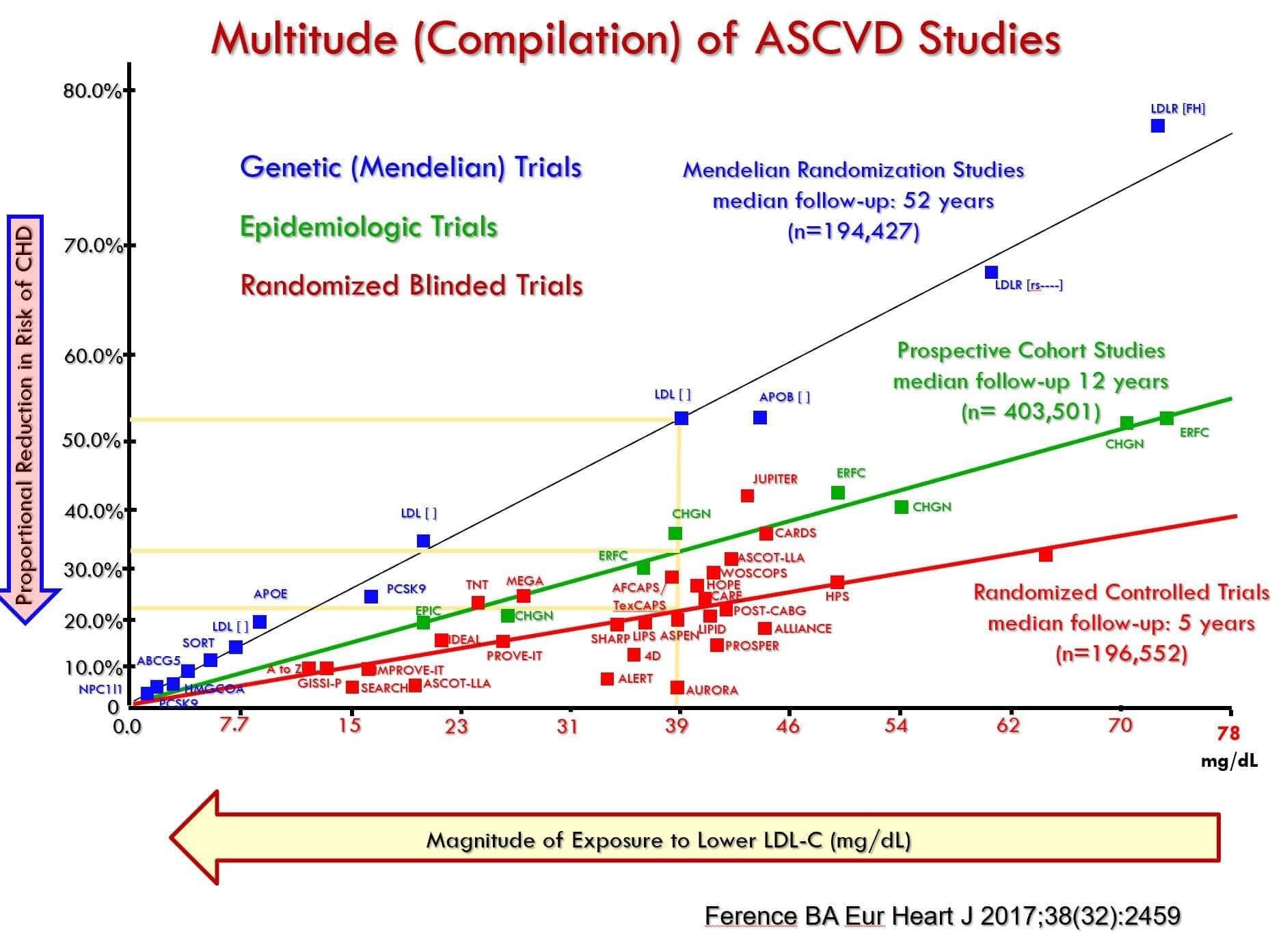
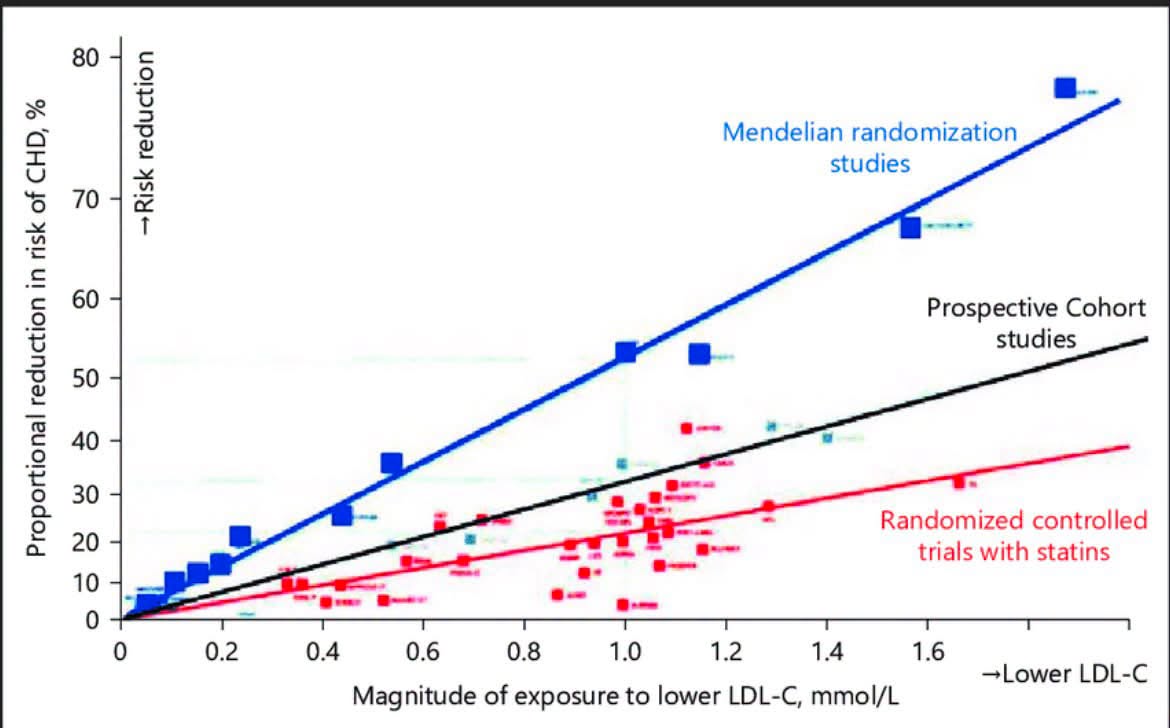
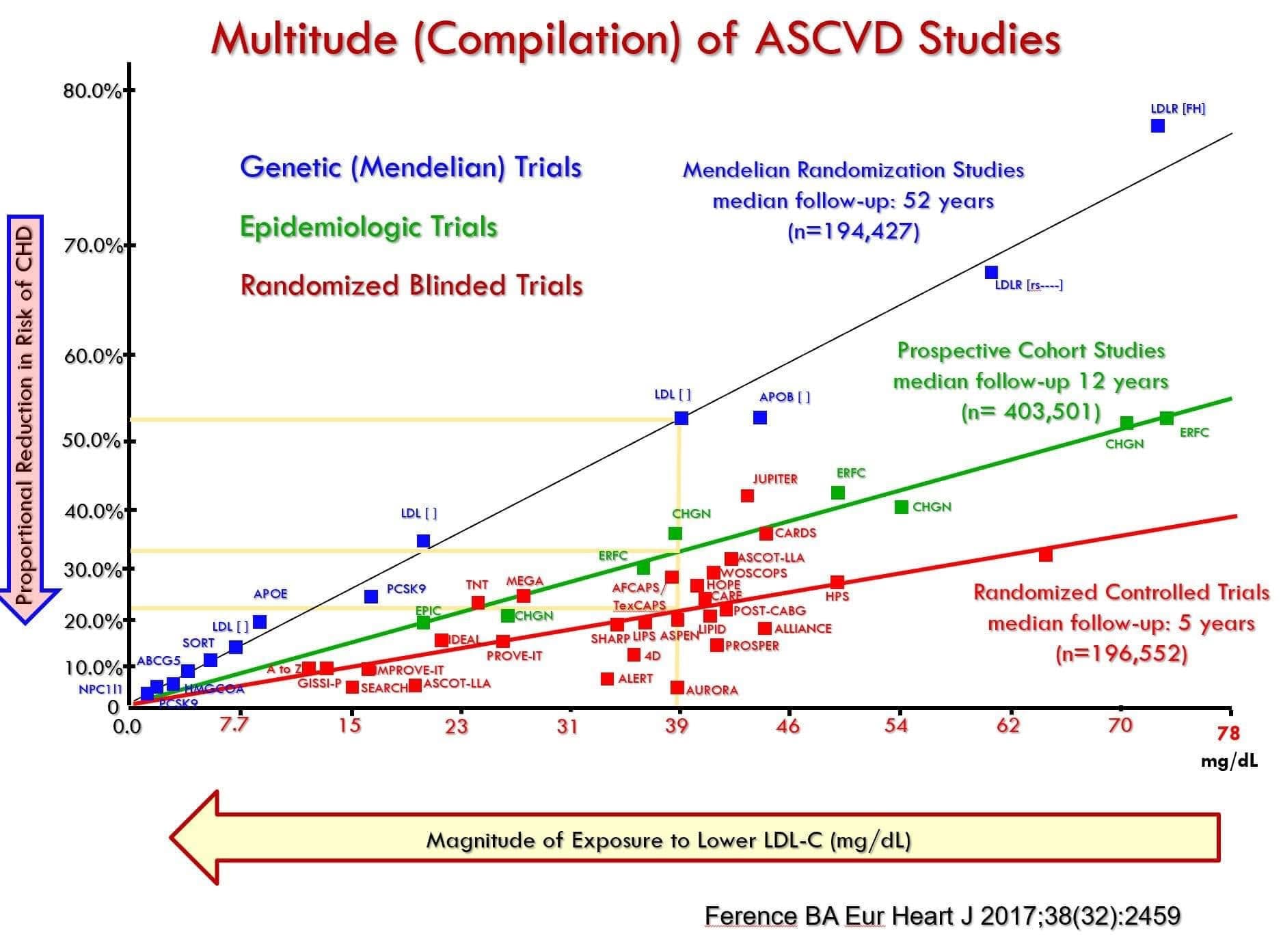
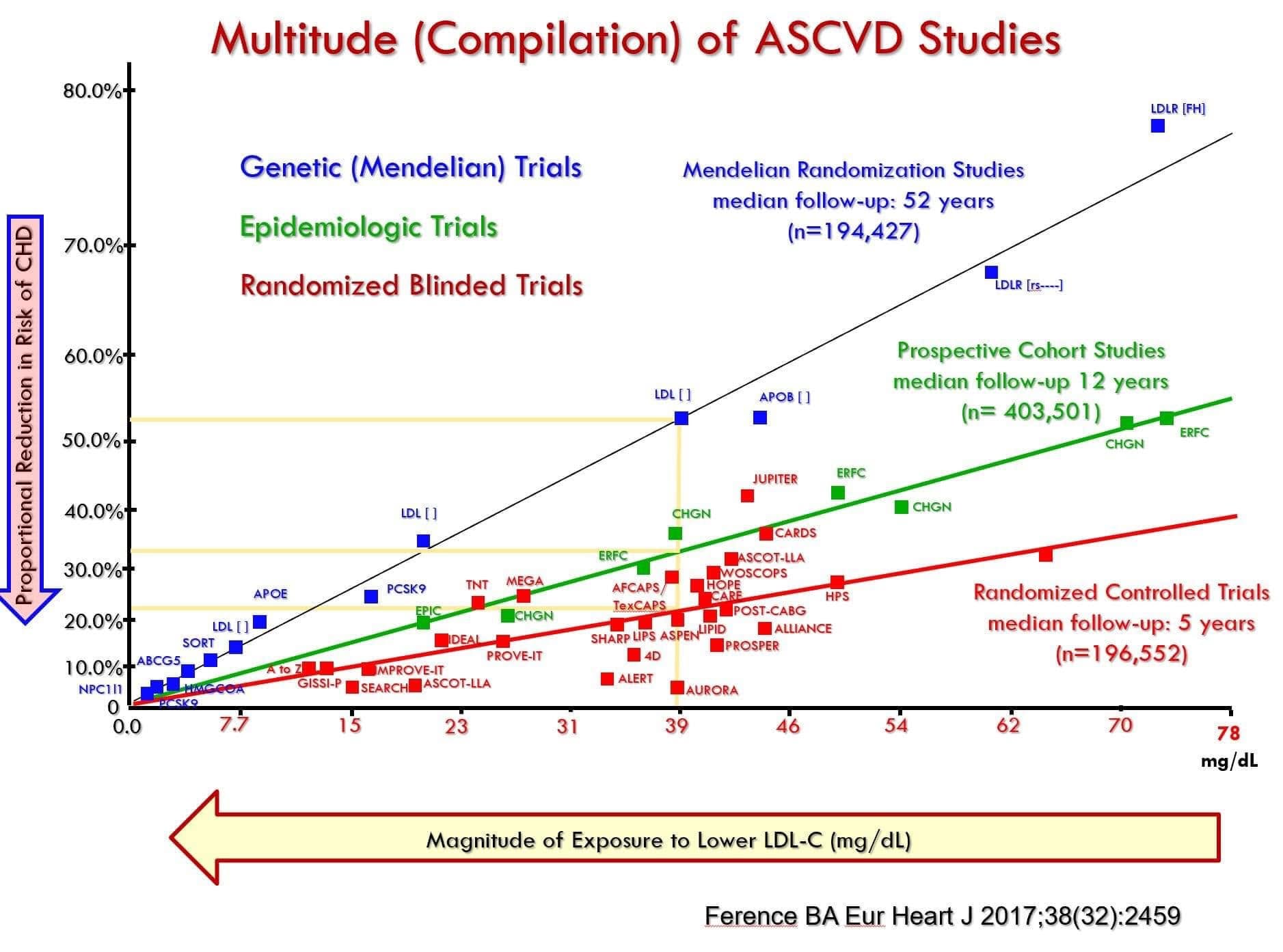
Louis explains a graph combining RCT, cohort and Mendelian randomization data: an LDL reduction of 39 mg/dL (reachable with a very low dose statin) lowers heart attack risk more the longer it is sustained. Translated to absolute risk, a roughly 20% lifetime risk could fall to about 10%, and the rest requires diet, lifestyle and other therapies.
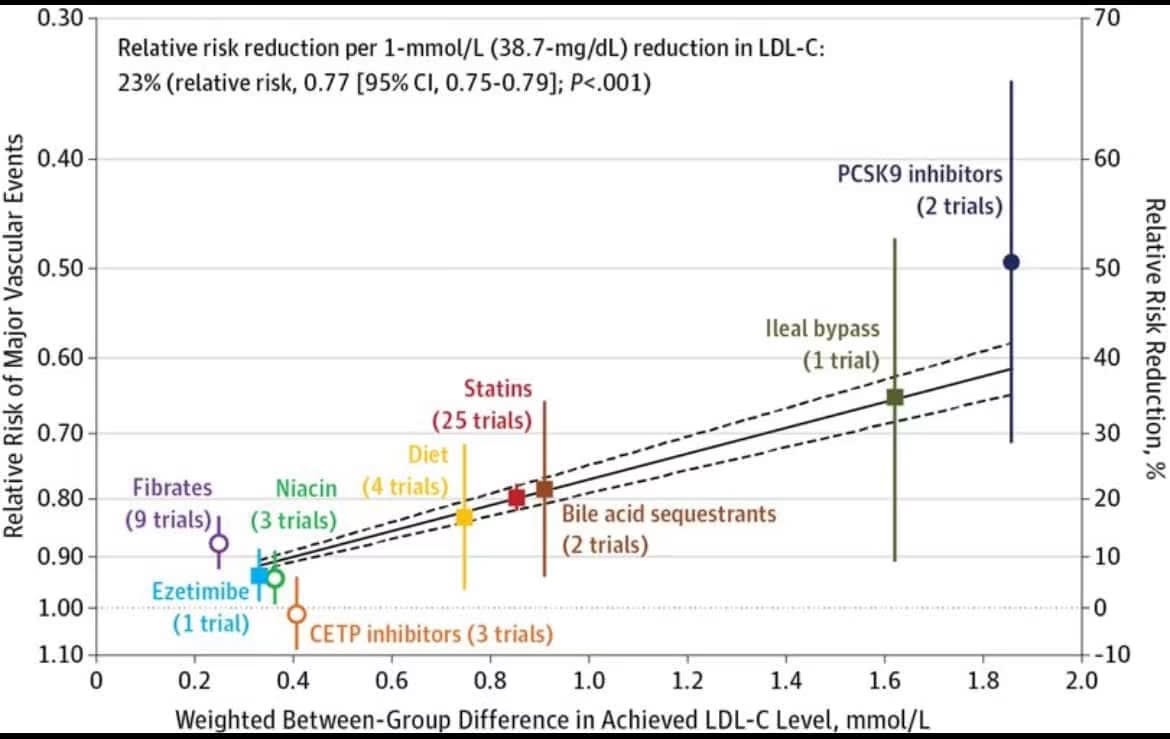
25 statin trials: about 40% fewer heart attacks and strokes per 75 mg/dL LDL drop

Mar 23, 2025 · Louis Nervegna ♥ 37 · 💬 35 Statins

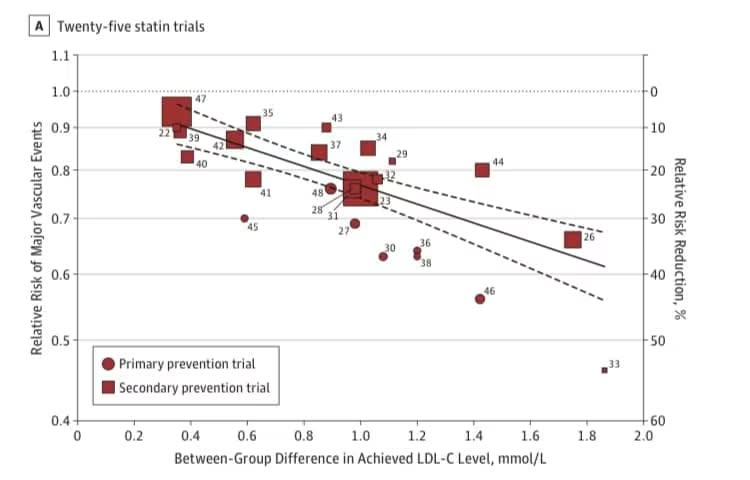
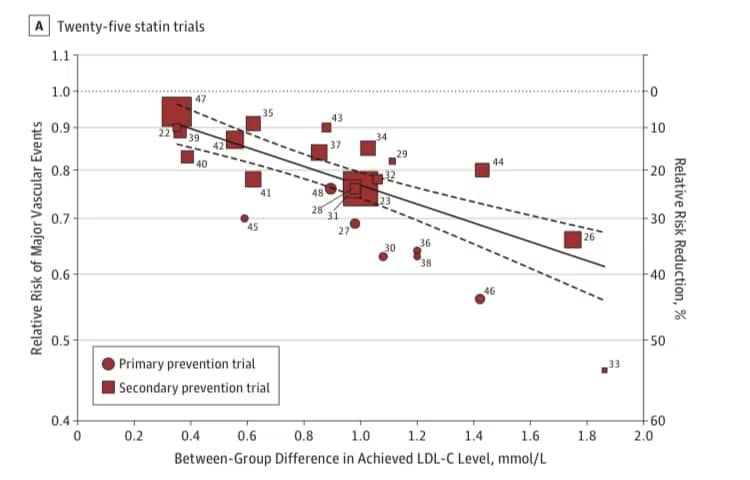
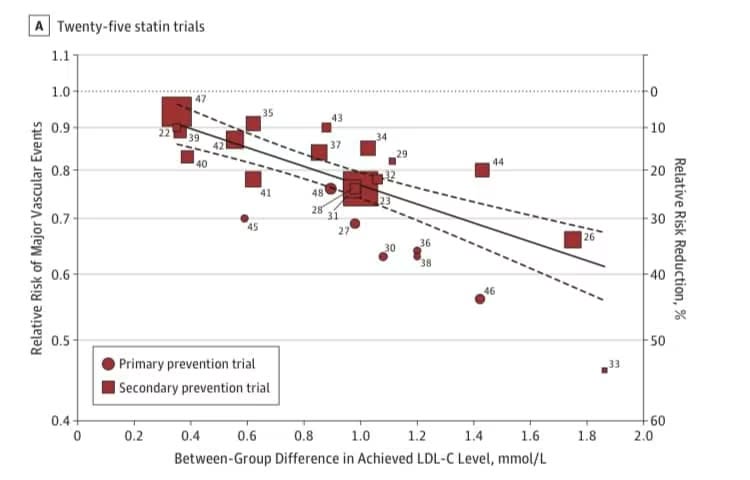
Louis shares a graph of all 25 statin RCTs up to 2016 (excluding those under 6 months or under 50 events), showing about 40% lower MACE per 75 mg/dL LDL reduction, with larger effects in the 7 primary prevention trials. In his own comments he argues calcified plaque is the stable endpoint of soft plaque, and that statins and exercise help by preventing new soft plaque, regressing it and stabilizing the remainder through calcification.

LDL down 39 mg/dL: 20%+ fewer heart attacks in RCTs, 30%+ in cohorts, 50%+ genetically

Dec 20, 2023 · Louis Nervegna ♥ 23 · 💬 43 ↩ 9 LDL, ApoB & lipid panel

Louis presents a graph combining RCTs (5 years), prospective cohorts (12 years) and Mendelian randomization (52 years) to show that the benefit of lowering LDL grows with duration of exposure. A 39 mg/dL reduction, achievable with a very low-dose statin, is associated with larger risk reductions over longer periods. He translates the 50% figure to a lifetime absolute risk falling from 20% to 10%, and describes his own 10 mg atorvastatin. The absolute estimate is his extrapolation.

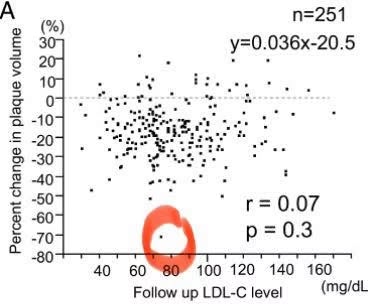
Japan-ACS: pitavastatin and atorvastatin both regressed coronary plaque by about 17-18%

Sep 13, 2025 · Louis Nervegna ♥ 19 · 💬 23 ↩ 21 Plaque, CAC & CT angiography

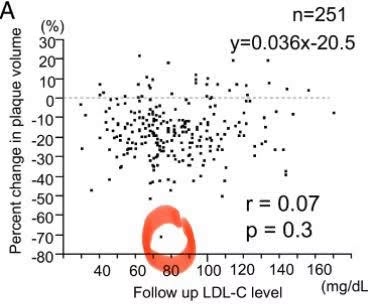
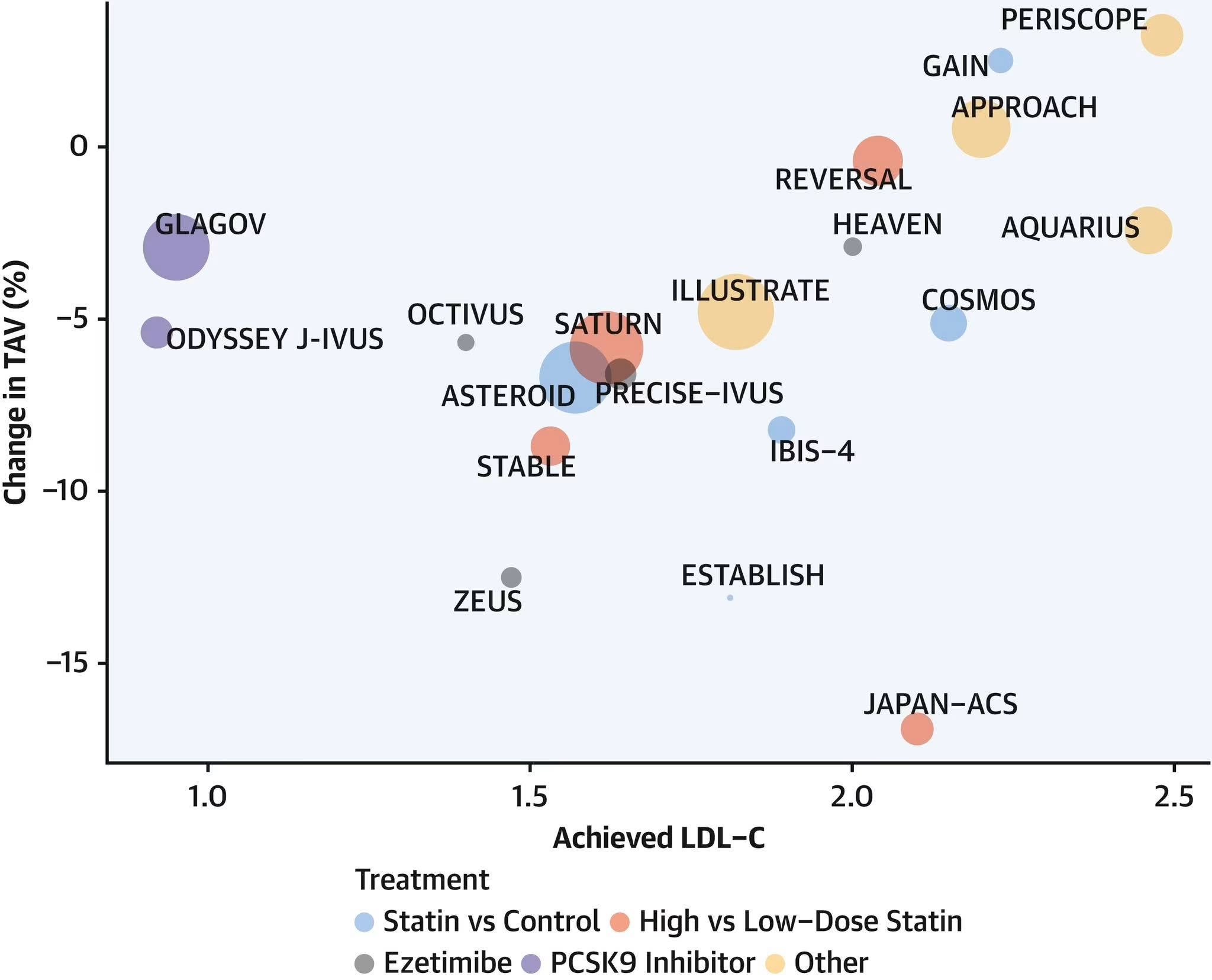
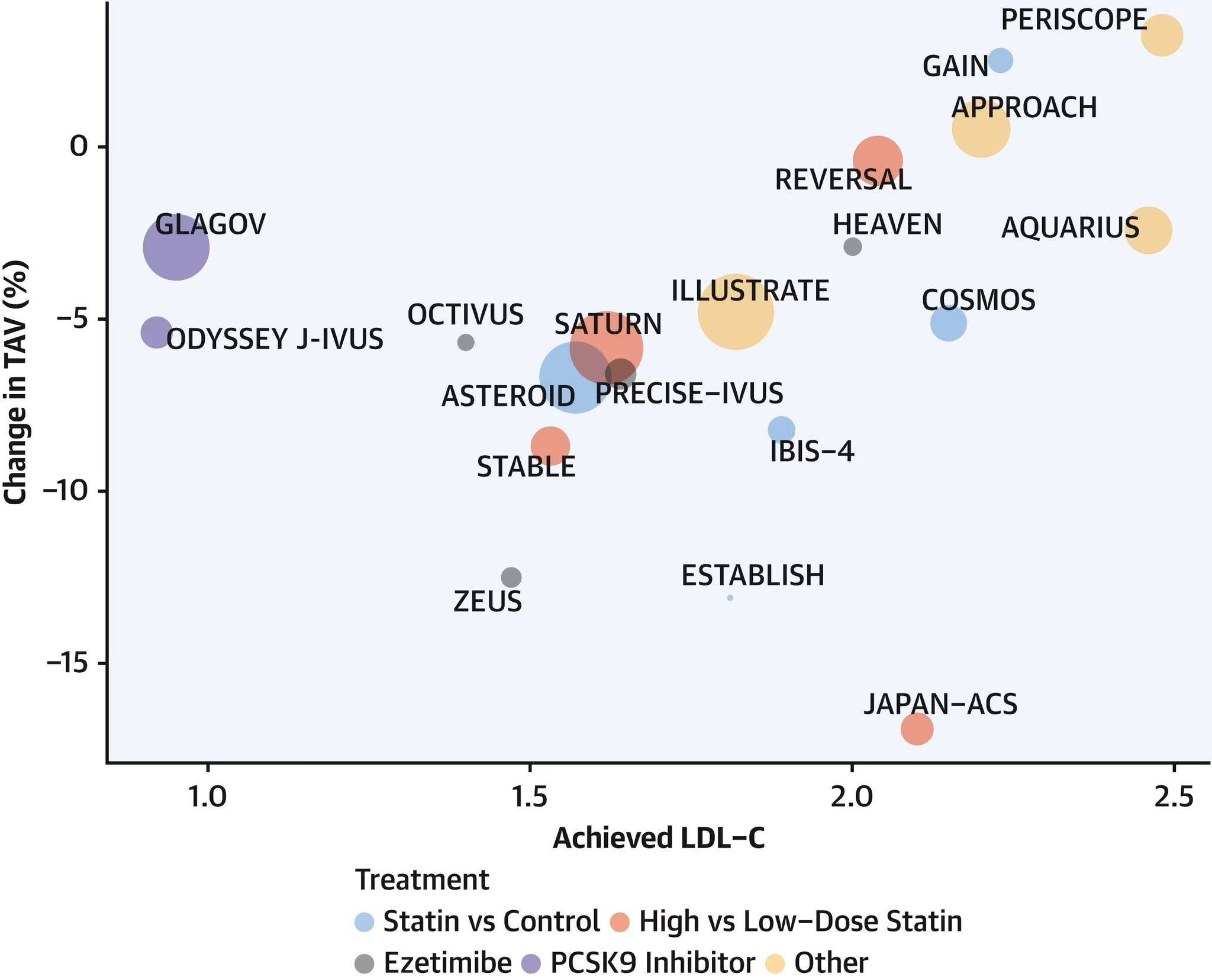
Summary of the Japan-ACS trial, in which over 300 acute coronary syndrome patients were randomized to pitavastatin or atorvastatin and imaged with IVUS. Both statins produced similar, substantial regression of non-culprit plaque volume as LDL fell into the 80s mg/dL, which is one reason statins remain standard care after ACS.

Statin absolute risk reduction is small over years but can exceed 10% over a lifetime

Nov 10, 2025 · Louis Nervegna ♥ 20 · 💬 25 ↩ 2 Statins

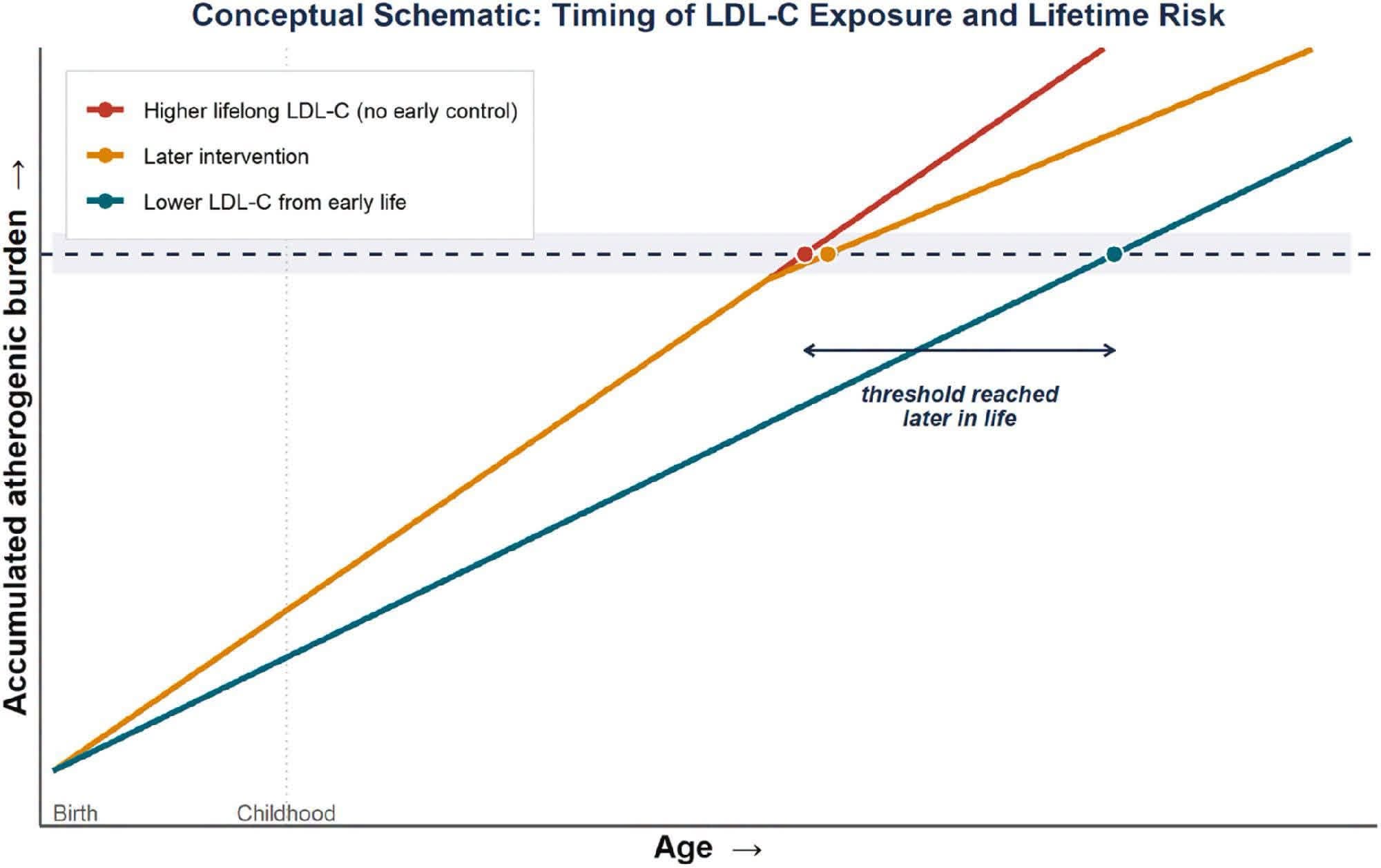
Louis explains that short statin trials show only 1-2% absolute risk reduction because baseline risk over a few years is only 2-5%, the same as diet and exercise trials. Over a lifetime, with a 20% baseline risk of heart attack, cohort and Mendelian randomization data suggest cumulative reductions of 10% or more.

All 25 statin RCTs through 2016 show benefit: about 40% less MACE per 75 mg/dL LDL drop

May 11, 2025 · Louis Nervegna ♥ 25 · 💬 12 Statins

Louis shares a graph of every statin RCT up to 2016 that showed a significant effect on cardiovascular outcomes, excluding trials under 6 months or with under 50 events. On average, a ~75 mg/dL (1.9 mmol/L) LDL reduction cut heart attack and stroke risk about 40% vs placebo, with primary-prevention trials showing even larger reductions than secondary-prevention trials.

A 1.1-4.7% absolute risk reduction from statins is large against a 20% lifetime risk

Apr 28, 2024 · Louis Nervegna ♥ 14 · 💬 20 ↩ 2 Statins

Louis explains relative versus absolute risk in statin trials. Statins cut absolute heart attack or stroke risk by 1.1% to 4.7% in roughly 5-year RCTs, which is large against a lifetime risk of about 20%, and sustained over decades could lower lifetime risk toward 10%. He shares a graph combining RCTs (over 20% risk reduction after 5 years), prospective cohorts (over 30% at 12 years) and Mendelian randomization (over 50% at 52 years) for a 39 mg/dL LDL reduction.

Six RCTs show statins reverse total plaque volume by 5% to 17%

Aug 25, 2026 · Louis Nervegna ♥ 27 · 💬 9 ↩ 1 Plaque, CAC & CT angiography

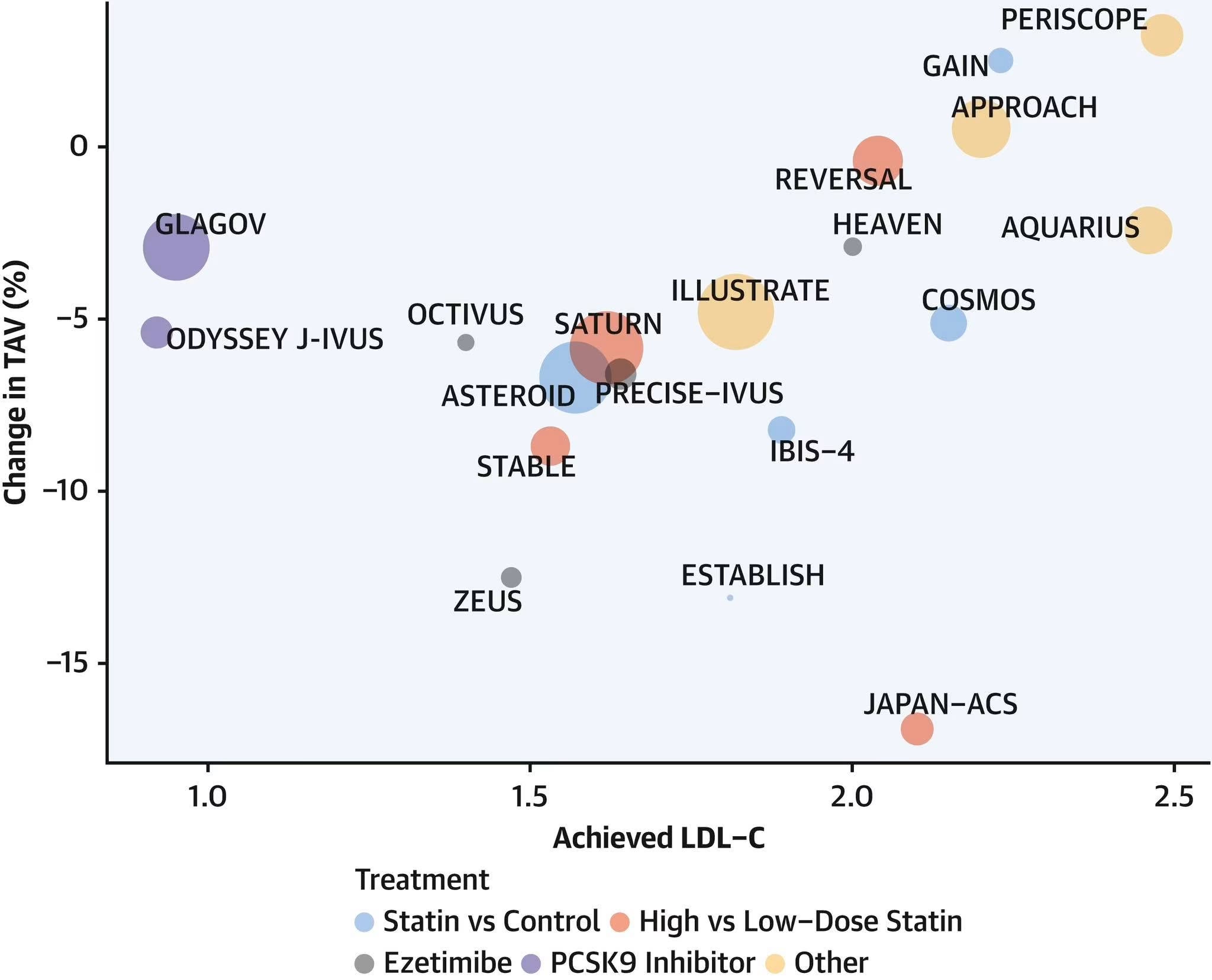
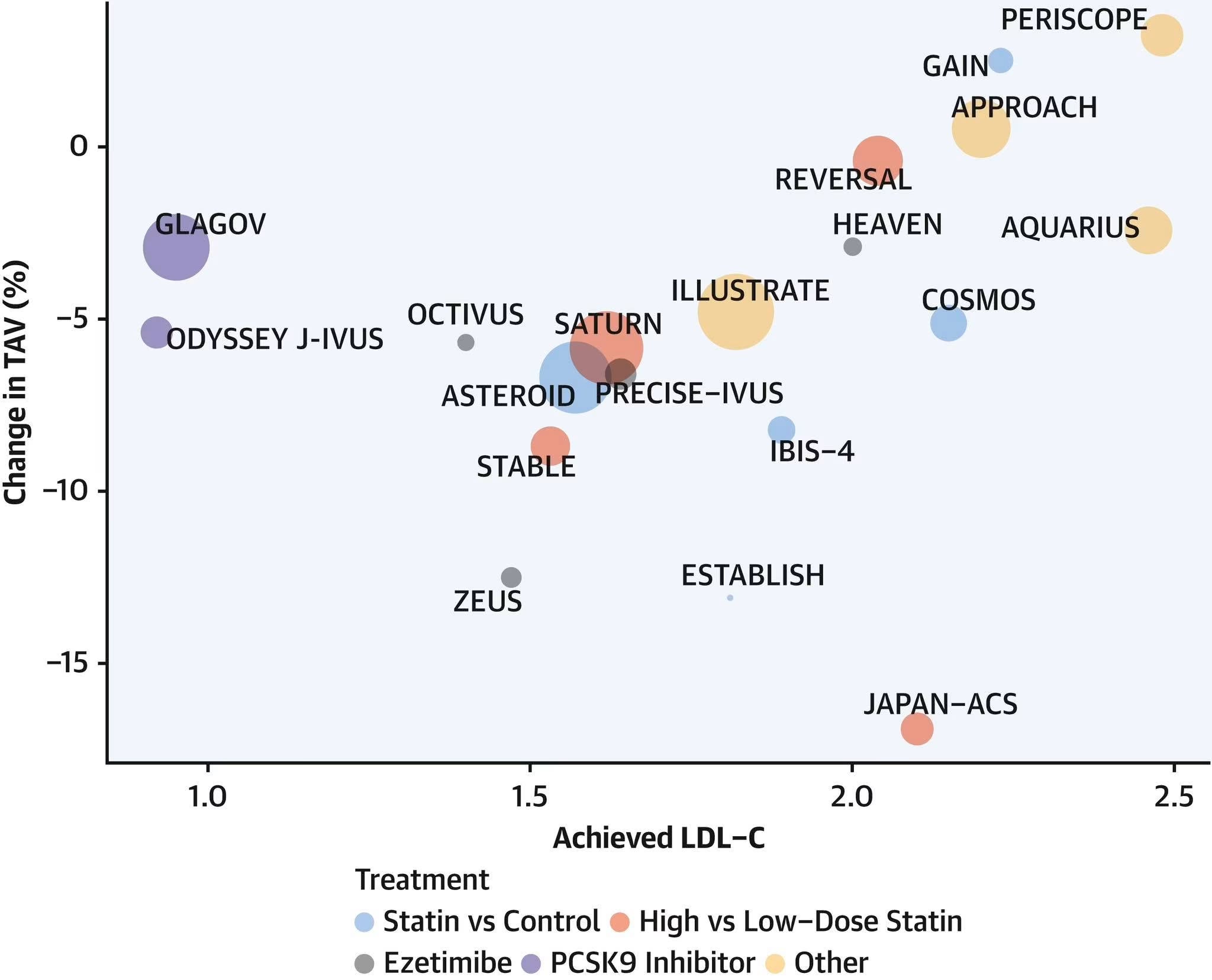
Louis lists six randomized trials showing reversal of total atheroma volume with statins: COSMOS ~5%, SATURN ~5.5%, ASTEROID ~6.5%, IBIS-4 ~7.5%, STABLE ~8%, JAPAN-ACS ~17%. Reversals were measured by CT angiography or IVUS and came from soft rather than calcified plaque. A shared chart relates LDL to TAV change across statin, PCSK9 and ezetimibe trials.

18 large RCTs plus cohort and Mendelian data show a straight-line LDL to heart attack link

Sep 06, 2024 · Louis Nervegna ♥ 15 · 💬 17 ↩ 1 LDL, ApoB & lipid panel

Louis presents a chart of 18 large, long-running RCTs in which lowering LDL reduced heart attack and stroke risk. Prospective cohorts (about 12 years) and Mendelian randomization studies (about 52 years) show the same linear relationship, with steeper slope the longer the exposure. The axes show change in LDL and percentage change in risk, not absolute values.

25 statin RCTs: about 75 mg/dL LDL lowering cut heart attack and stroke roughly 40%

Dec 11, 2024 · Louis Nervegna ♥ 24 · 💬 5 ↩ 9 Statins

Louis presents a graph of 25 statin RCTs through 2016, excluding only very short or small trials. Lowering LDL by about 75 mg/dL reduced MACE by about 40% versus placebo, with larger relative reductions in the 7 primary prevention trials than the 18 secondary prevention ones. More trials since have corroborated this.

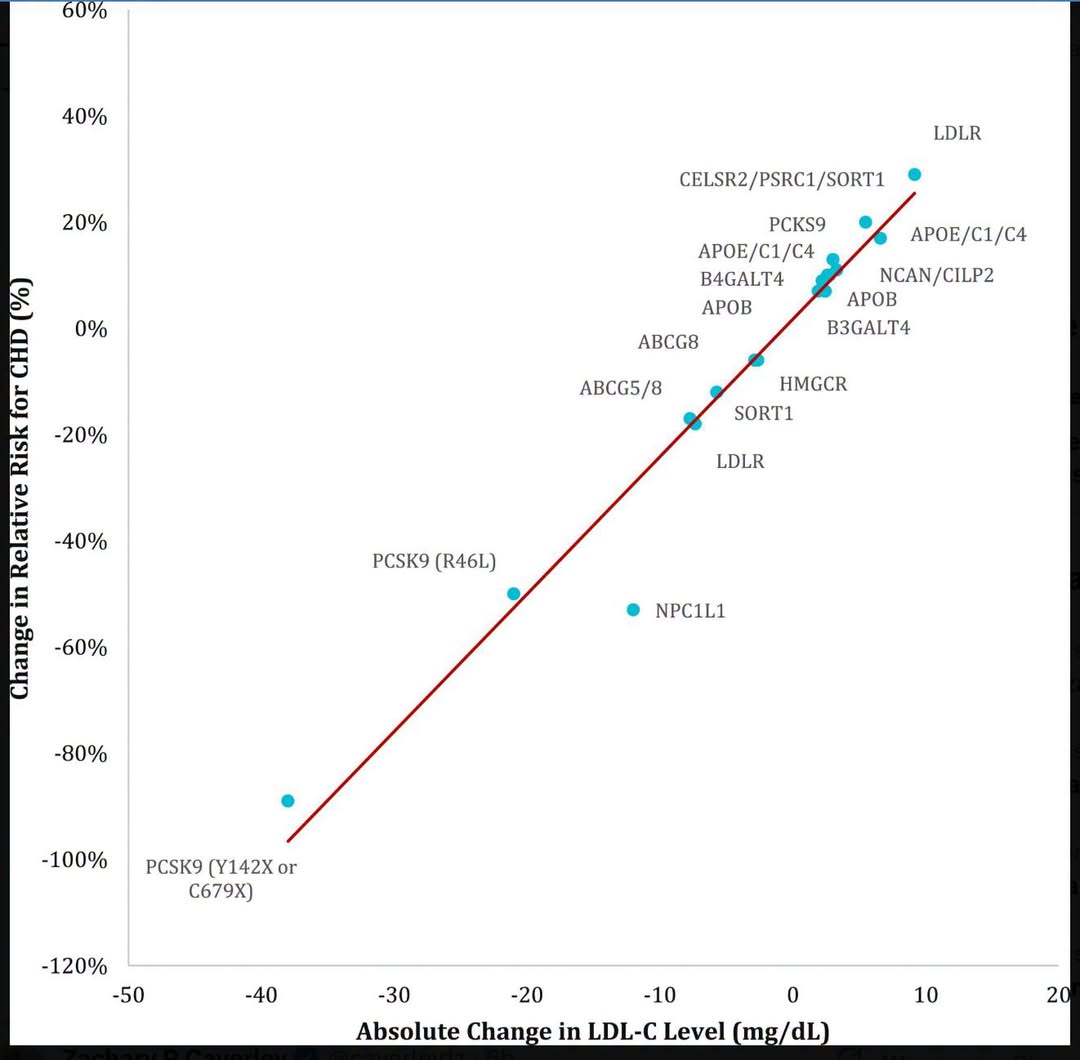
Mendelian randomization: lifelong lower LDL tracks linearly with lower heart disease risk

Oct 10, 2026 · Louis Nervegna ♥ 13 · 💬 8 LDL, ApoB & lipid panel

The post explains a chart from a European Atherosclerosis Society consensus statement showing that genetic variants affecting LDL through different pathways (LDLR, PCSK9, APOB, HMGCR, NPC1L1, SORT1, ABCG5/8) change coronary risk in proportion to the LDL change. This matches the linear relationship seen in statin trials. The poster also shows how to convert relative risk reductions into lifetime absolute risk.

Dr. Chong on LDL misinformation, with RCT and Mendelian randomization evidence

Sep 02, 2026 · Louis Nervegna ♥ 10 · 💬 6 Myths, misinformation & controversies

Louis shares a Vital Human post in which Dr. Daniel Chong describes being repeatedly told his LDL science is wrong by people influenced by social media content that exaggerates or misreads evidence. The tags point to statin RCTs and Mendelian randomization as the supporting evidence; the post itself is largely about frustration with misinformation.

Six statin trials show 5 to 17% total plaque reversal, with the best results at lowest LDL

Oct 31, 2026 · Louis Nervegna ♥ 12 ↩ 1 Plaque, CAC & CT angiography

Louis shares a chart of randomized trials showing plaque reversal with statins, ezetimibe and PCSK9 inhibitors, with total atheroma volume change plotted against LDL-C. Total plaque reversal ranged from about 5% to 17% in six older statin trials, measured by CT angiography or IVUS, and came from soft rather than calcified plaque. The chart suggests total plaque reversal begins once LDL falls below roughly 90 mg/dL.