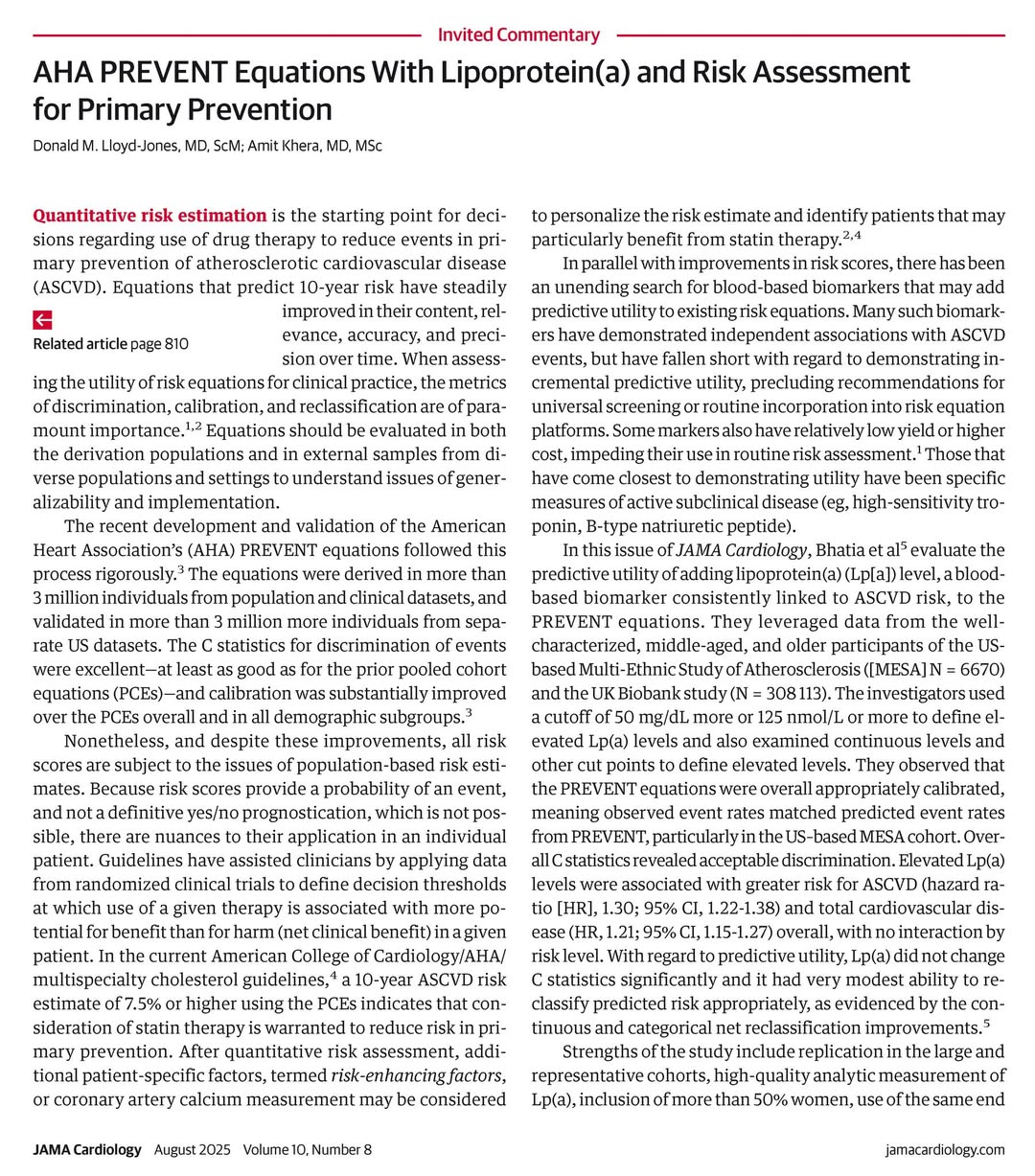
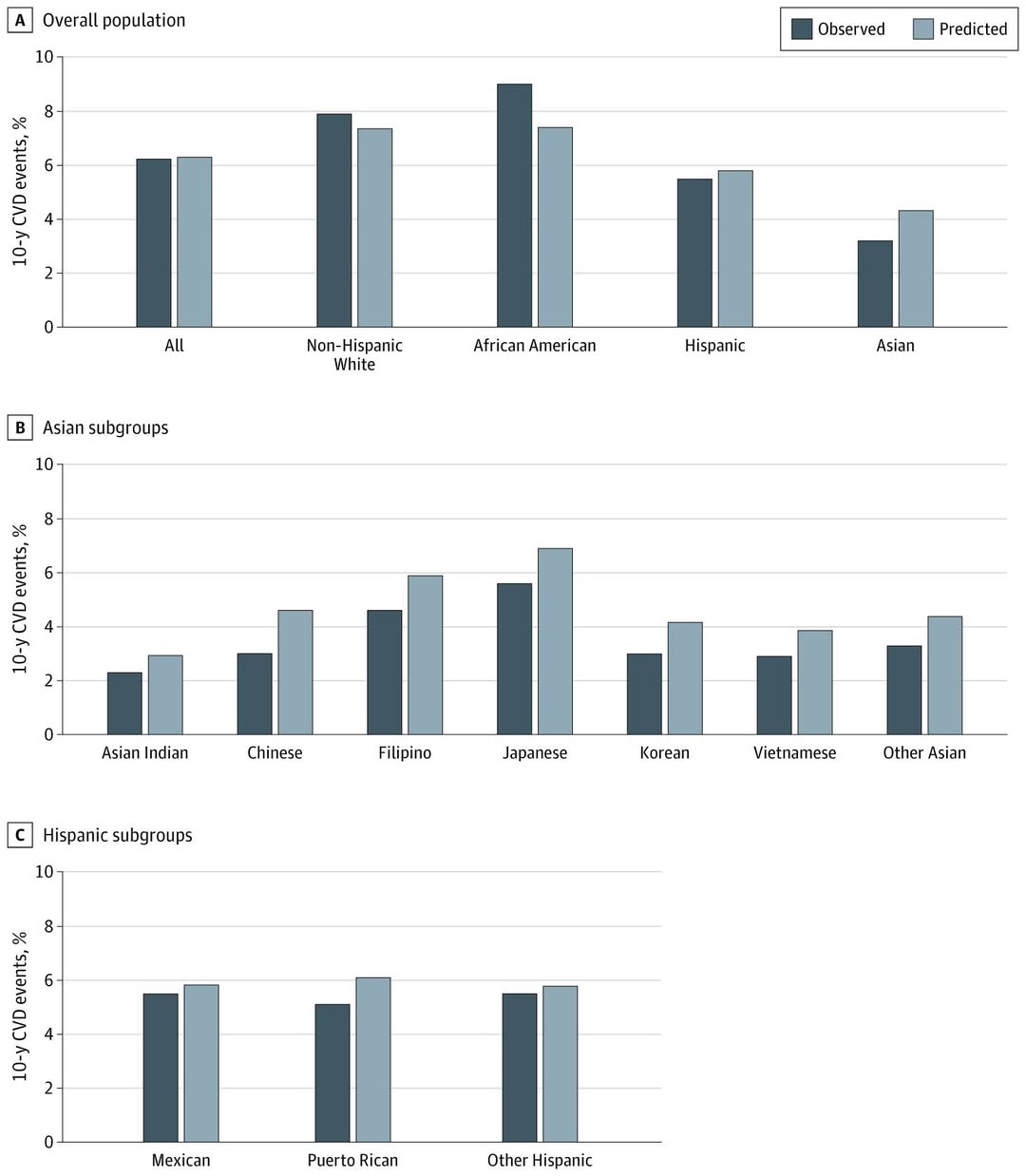
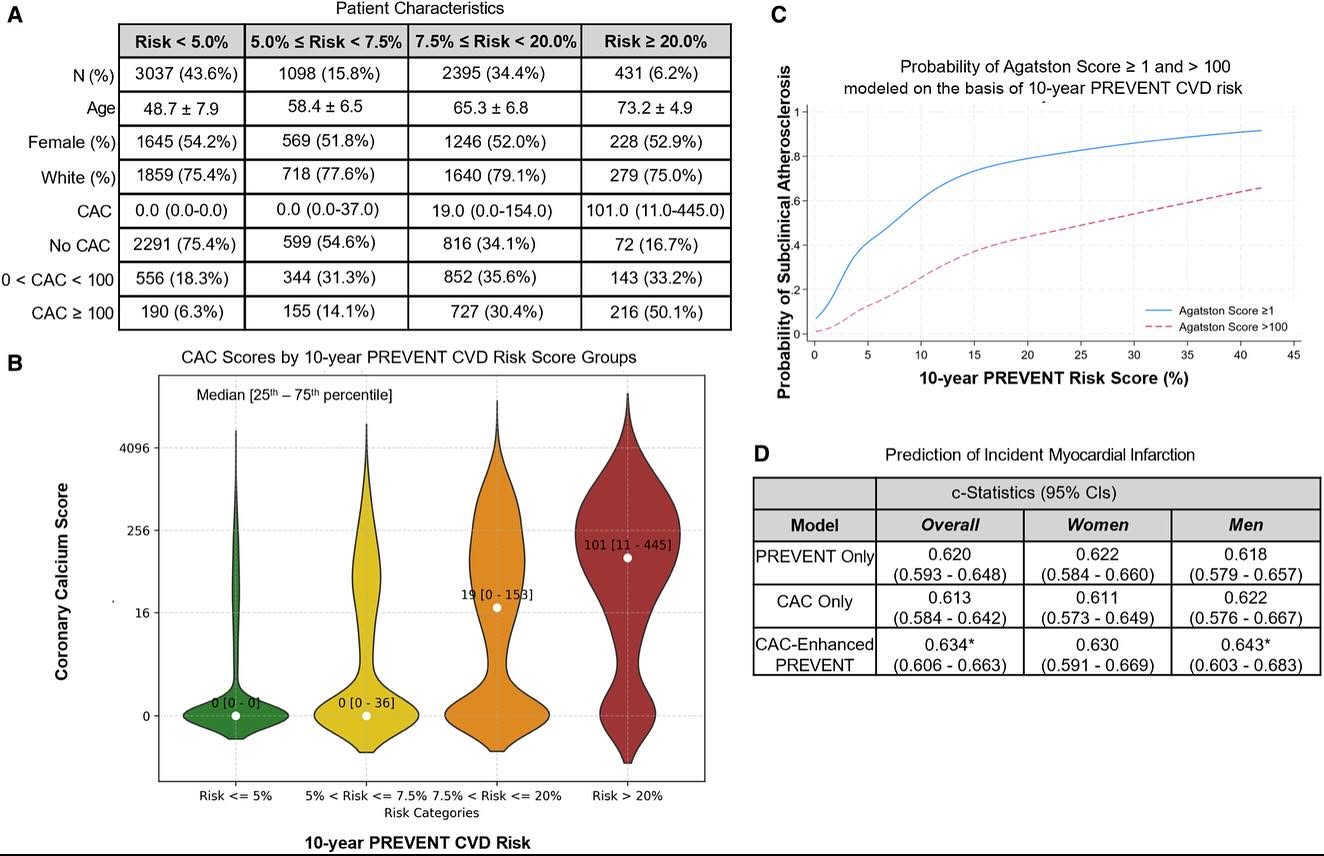
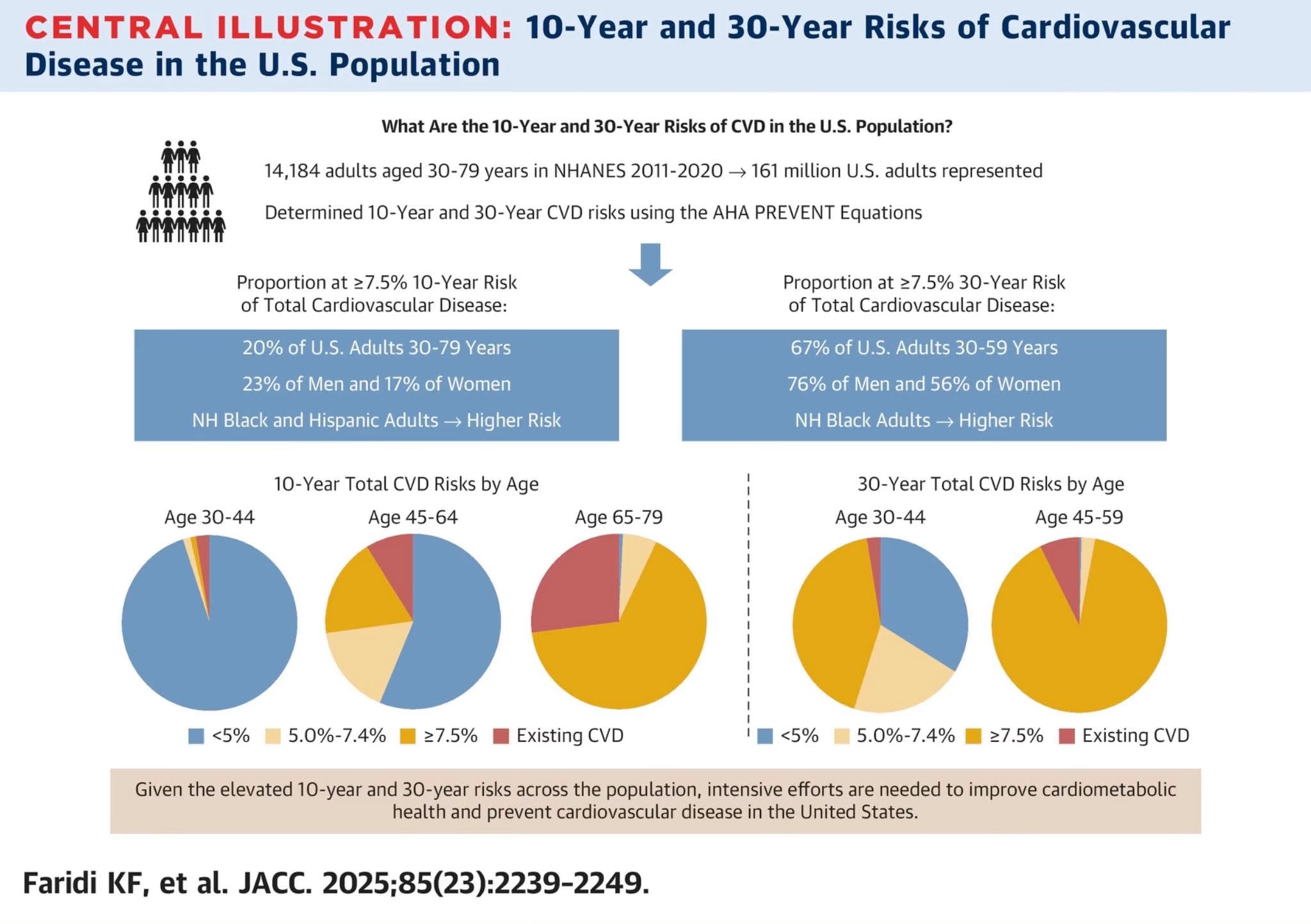
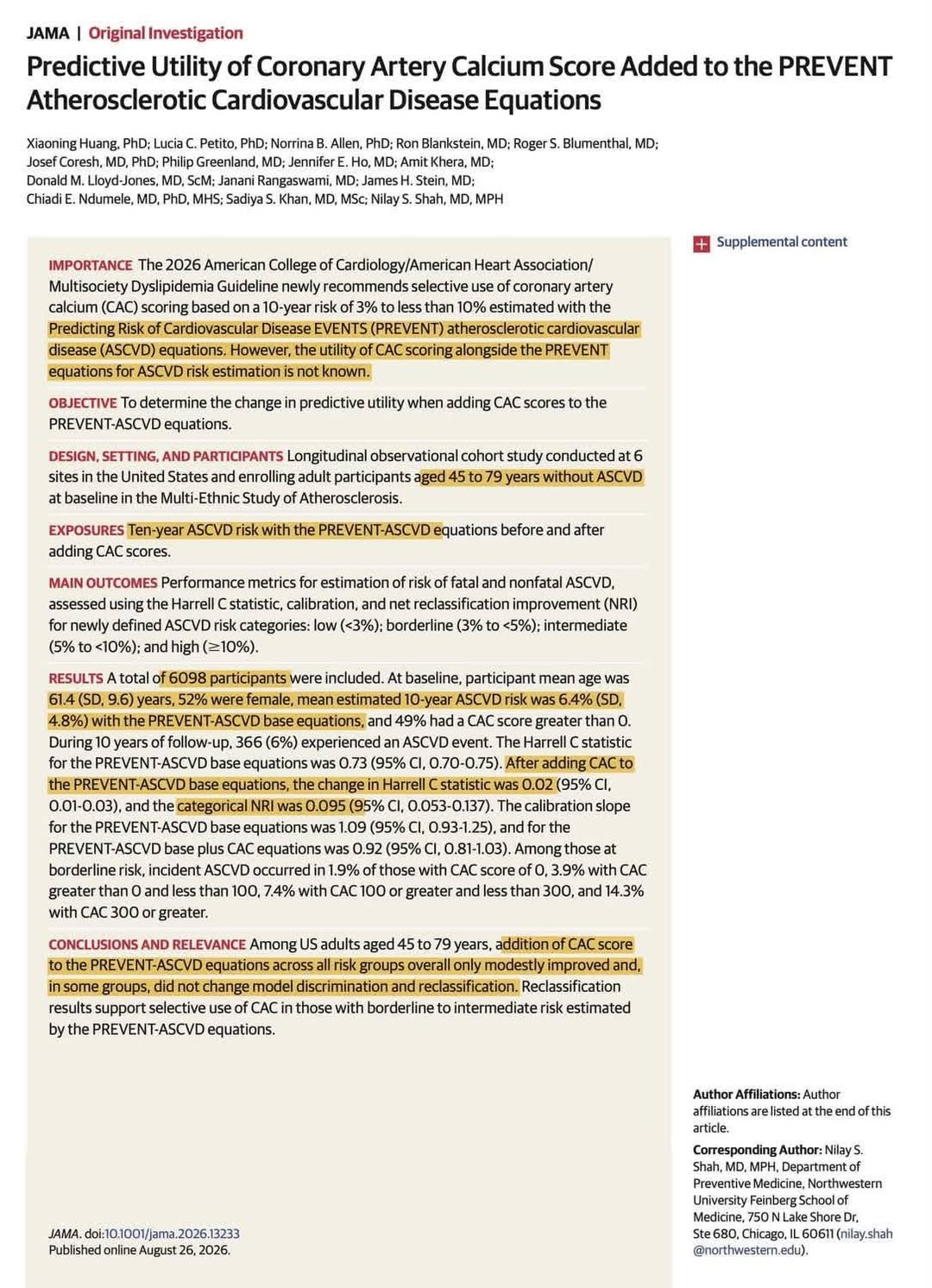
Adding CAC score to the standard AHA risk calculator (the PREVENT equations) only modestly improves accuracy.
You can find this AHA calculator here:
professional.heart.orgGuidelines and statementsprofessional.heart.org↪ AHA PREVENT calculator replaces Pooled Cohort Equations for ages 30-79
For the average person, the existing AHA calculator without CAC is almost as good at predicting risk of major cardiac events like heart attacks and strokes, as when CAC score is also included. The CAC score adds very little.
This hints that CAC score is not a major independent risk factor from the standard risk factors already included in the AHA calculator. It hints that the standard risk factors already do a pretty good job of implicitly accounting for a person’s CAC score without having to explicitly enter it as an additional parameter.
Note that all of this analysis applies to the average person (with a CAC score in the ballpark of what is typical for their age). Everybody is different. Once you know that you have a very high CAC score, you have to assume that you are at high risk, regardless of what the AHA calculator tells you.
Link to journal paper:
Paper · JAMAJAMA articlejamanetwork.comQuoted:
“Among US adults aged 45 to 79 years, addition of CAC score to the PREVENT-ASCVD equations across all risk groups overall only modestly improved and, in some groups, did not change model discrimination and reclassification. Reclassification results support selective use of CAC in those with borderline to intermediate risk estimated by the PREVENT-ASCVD equations.”