Glycation-lowering compounds curb hunger, lower insulin resistance and extend lifespan
Glycation is increasingly suspected to be a hidden driver of obesity, diabetes and accelerated aging. Researchers have found a way to tame it in mice by feeding them a combination of glycation-lowering compounds.
In a study published in Cell Reports, scientists show that a combination of nicotinamide, a-lipoic acid, thiamine, pyridoxamine and piperine (dubbed Gly-Low) curbed hunger, lowered insulin resistance and extended lifespan in mice by reducing advanced glycation end-products (AGEs), sticky plaque-like molecules which are a byproduct of glycation.
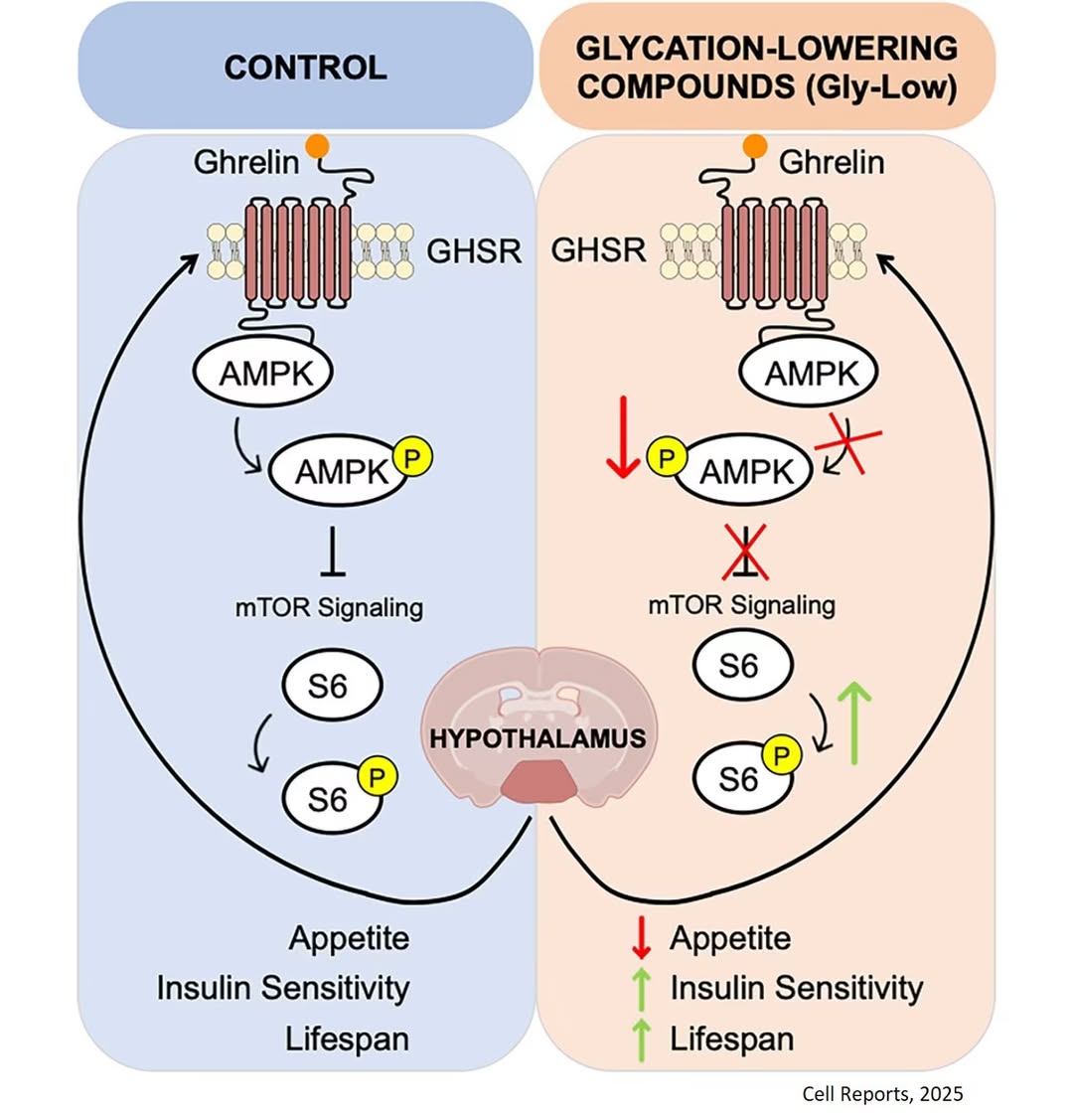
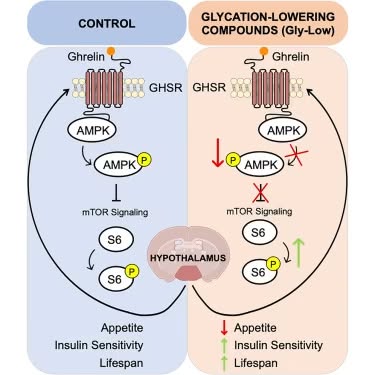
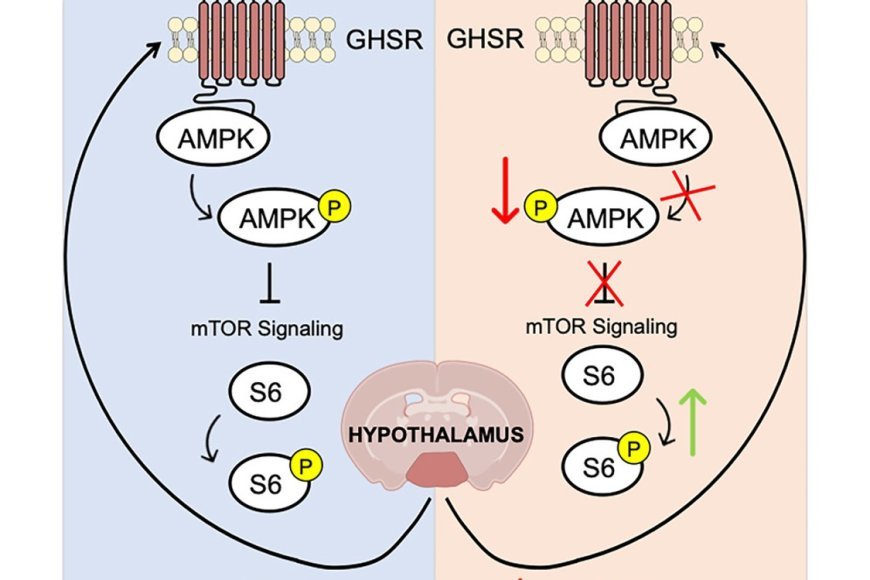
The authors delved into the mechanism by which Gly-Low was impacting normal physiology and feeding behavior in both diabetic and non-diabetic mice. They discovered that the compounds impacted hypothalamic ghrelin signaling (ghrelin is often called the “hunger hormone”), leading to a decrease in feeding behavior and thereby reducing glycation stress and combatting obesity.
They also analyzed the hypothalamic transcriptome of Gly-Low treated mice and found that the combination of compounds changed signaling through the cellular energy sensor AMPK activating the mTOR/S6 pathway in the hypothalamus. “Gly-Low shifted the balance away from ‘feed me’ signals toward satiety,” said the author. “The effect was profound; the mice voluntarily ate less food while maintaining muscle mass. Our data suggest that rather than simple food aversion, the biology of hunger was being rewired.”
The study also showed that treated mice had lower fasting and random blood glucose, better insulin sensitivity and reduced fat accumulation in their livers.
The senior author thinks the most exciting result of the work may be Gly-Low’s efficacy as a late-life intervention. In one set of experiments, treating the mice at 24 months, which is roughly equivalent to a 70-year-old human. The author says the compounds helped the older mice control blood sugar surges and the aging animals had enhanced motor coordination and a longer life; Gly-Low extended their remaining lifespan by nearly 60 percent.
#ScienceMission #sciencenewshighlights
 SciencemissionGlycation-lowering compounds curb hunger, lower insulin resistance and extend lifespansciencemission.com