One of the biggest mistakes that I’ve made in the last 20 years is underestimating the importance that glycation and AGE’s appear to play in the aging process— and in the aging of the cardiovascular system. Pankaj Kapahi’s work at the Buck Institute has changed my mind on this. Below is a post that he made on the subject in another group.
He recently commented in our heart group that he will publish a paper soon that a supplement (called GLYLO) that he developed to target glycation, reduces arterial stiffening and slows aging in the cardiovascular system.
This supplement is proven to extend lifespan of mice by a significant amount, even when given late in life.
Juvify GLYLO - Scientifically formulated Healthy Aging & Weight Management Pill - Reduces Cravings & Menopause Related Weight Gain - Glylo healthy aging weight management pill (juvifyhealth.com)
———-
WHAT IS METHYLGLYOXAL? HOW DOES IT ENHANCE AGES PRODUCTION AND DRIVE AGING AND ALZHEIMER'S DISEASE? WHAT CAN BE DONE TO REDUCE METHYLGLOXAL?
I wanted to share my thoughts about methylglyoxal and advanced glycation Endproducts (AGEs) which remain understudied despite their importance in driving aging and age-related diseases like diabetes and Alzheimer’s. The reason this is critical is that methylglyoxal (MGO) is highly reactive and the major byproduct of glycolysis in every cell. Because of its ability to modify arginines, lysines, DNA, and lipids non-enzymatically - it influences almost all hallmarks of aging negatively including proteostasis, inflammation, senescence, DNA damage, and mitochondrial function.
Despite this evidence, for over 3-4 decades very few labs have worked on it largely because it’s hard to measure except by a few labs who use mass spec-based methods, and the tools to reduce it have been sparse. A major setback in the field was when a clinical trial on aminoguanidine had to be discontinued in humans because of toxicity despite promising animal data.
I was fascinated by this question because of its potential significance and ability to explain the reason why sugar and glycolysis are toxic. Most long-lived interventions like calorie restriction induce an anti-Warburg effect - they switch metabolism from sugar utilization to fat utilization.
In our first study from my lab at the Buck Institute, we found that the TRPA1 channel is a sensor of methylglyoxal and enhances the production of glyoxalases that detoxify methylglyoxal. Unfortunately, with age and hyperglycemia our ability to detoxify methylglyoxal declines.
We also discovered that alpha lipoic acid could activate the TRPA1 channel to activate NRF2 to increase glutathione and glyoxalases to detoxify methylglyoxal.
Then my lab embarked on a screen to enhance the neuronal protection due to lipoic acid and we only chose to go forward with supplements as we wanted a faster path to the clinic and the safety and efficacy of the supplements were much higher than the drug-like compounds. We found that a combination of lipoic acid, nicotinamide, piperine, pyridoxine, and thiamine acted in synergy to reduce methylglyoxal and AGEs. We call this this combination GLYLO as it reduces glycation. We could show that even if each of the components was used at a fifth of the dose it was much more effective in lowering methylglyoxal and AGEs.
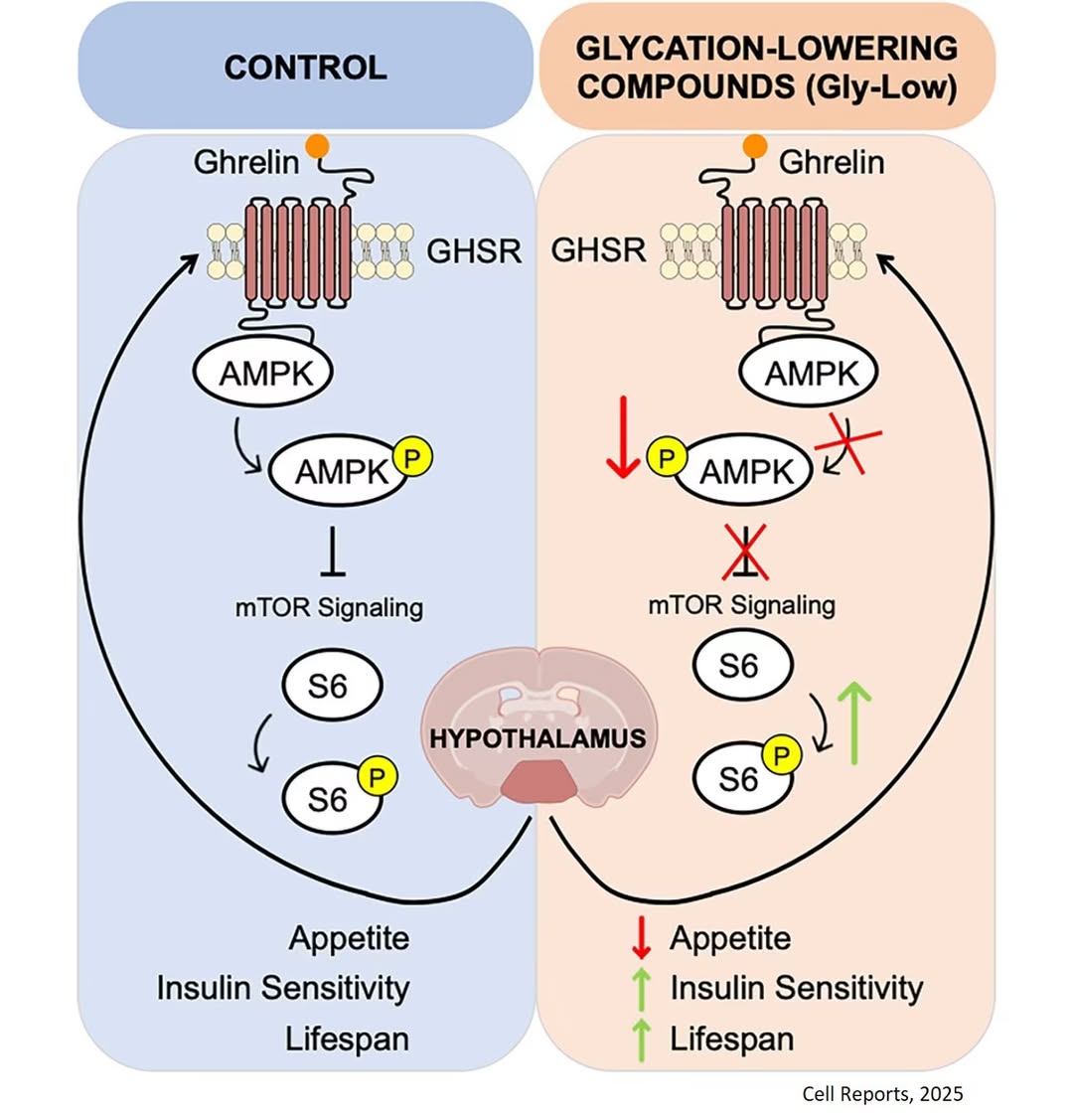
Next, we tried this combination in mice and were surprised to see that not only did this combination extend lifespan even in old mice (starting at 24 months) but it also improved insulin sensitivity and reduced preference and intake of sugar. It also rescued the phenotypes in the leptin receptor-deficient obese mouse
The results of these experiments can be found here.
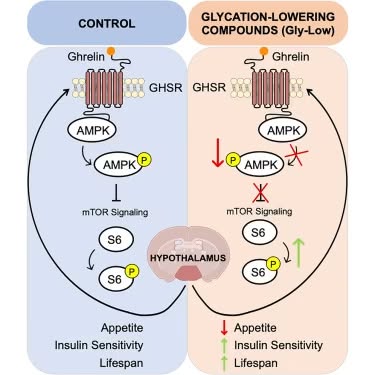
Paper · 2022Glycation-lowering compounds inhibit ghrelin signaling to reduce food intake, lower insulin resistance, and extend lifespanNon-enzymatic reactions in glycolysis lead to the accumulation of methylglyoxal (MGO), a reactive precursor to advanced glycation end-products (AGEs), which has been hypothesized to drive obesity, diabetes and aging-associated pathologies. A combination of nicotinamide, α-lipoic acid, thiamine, pyridoxamine, and piperine (Gly-Low) lowered deleterious effects of glycation by reducing MGO and MGO-derived AGE, MG-H1,…biorxiv.org papers.ssrn.comLink to papers.ssrn.compapers.ssrn.comThis is the review we wrote which covers our early findings and the causal role of AGEs in aging
Paper · Cell Metab · 2018The Role of Advanced Glycation End Products in Aging and Metabolic Diseases: Bridging Association and Causality.Accumulation of advanced glycation end products (AGEs) on nucleotides, lipids, and peptides/proteins are an inevitable component of the aging process in all eukaryotic organisms, including humans. To date, a substantial body of evidence shows that AGEs and their functionally compromised adducts are linked to and perhaps responsible for changes seen during aging and for the development of many age-related…ncbi.nlm.nih.govA podcast describing my thoughts on methylglyoxal and our recent results is here.
...
podcasts.apple.comLink to podcasts.apple.compodcasts.apple.comBased on these results I formed a company called Juvify and a large part of the revenue goes towards supporting research on diabetes and aging at the Buck Institute. We also highly encourage and promote awareness of keeping a healthy lifestyle and I don’t think the supplement alone is the answer to slow aging and age-related diseases.
We have some exciting preliminary data on this combination also improving memory in a model of Alzheimer’s and reversing some of the effects of menopause. We are currently trying to raise money to conduct clinical trials with this combination in humans for improving insulin sensitivity and reducing aging biomarkers.
I have been taking this for over two years along with fasting and rapamycin. It helped me bring my glucose from a prediabetic state to normal and helps reduce cravings and adhere to a better lifestyle.
GLYLO is available at juvifyhealth.com and Amazon and right now there is a 2-for-1 sale on Juvify’s website. (Link to juvifyhealth.com (juvifyhealth.com))
feel free to ask me any questions.
Thanks
Prof. Pankaj Kapahi
#glyloHD #methylglyoxalHD #agesHD #kapahiHD #buckHD #agingHD #longevityHD #glycationHD #nicotinamideHD #lipoicacidHD #vitaminb1HD #vitaminb6HD #piperineHD #bvitaminsHD #vitaminb3HD