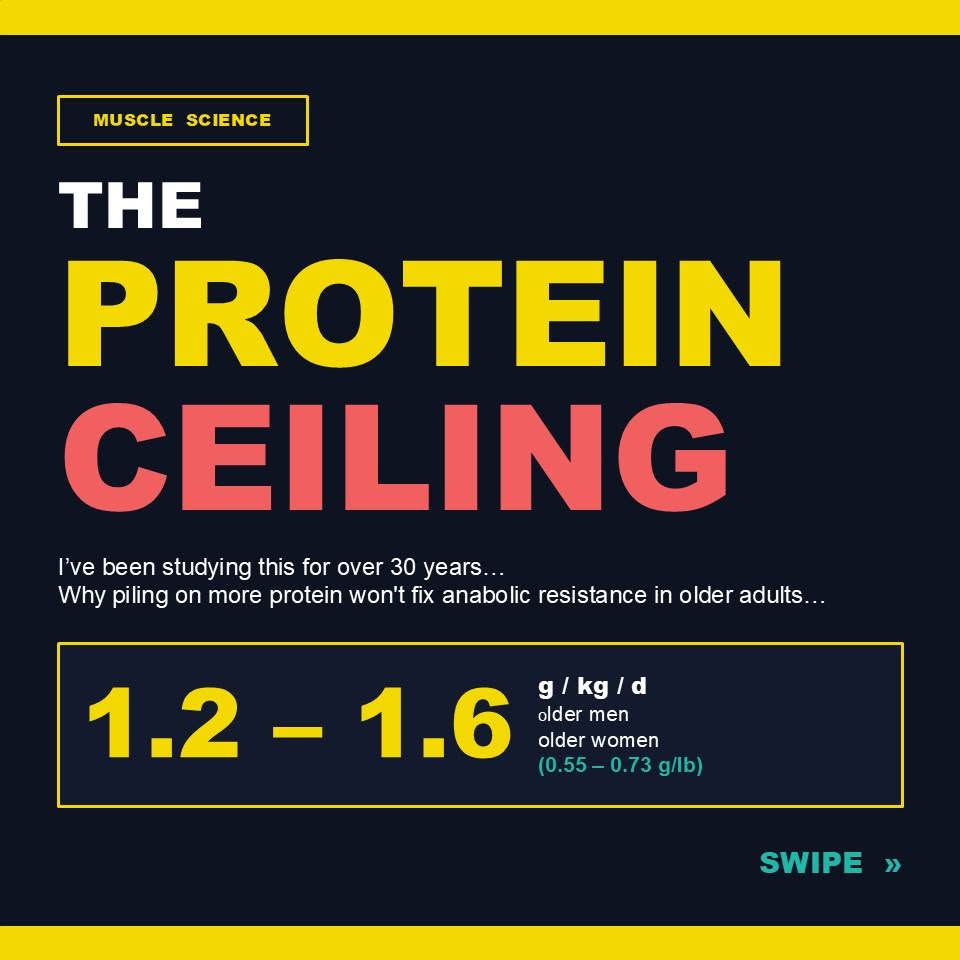
In healthy (non-frail) westerners over the age of 65yo, adding extra high-quality protein to the diet doesn’t do anything to improve standard measures of frailty.
There have been 36 randomized controlled trials on this subject, lasting 8 months on average. They show no benefit at all on markers of frailty.
The reason there is no benefit in all these trials is likely because healthy older westerners already consume well above 1.2g/kg of protein on average— most of it from highly bioavailable animal sources. This is especially true when you subtract excess body fat when doing the calculation, as dieticians are instructed to do. This amount of protein is already more than 50% above the RDA. Adding more does nothing in all these trials.
The trials show that this is true, regardless of whether they engage in regular exercise or not.
There is a benefit only in people who are already frail. This is a case where there actually is credible evidence that extra protein can help.
The research as a whole shows that there is no protein emergency in western countries like the USA, even in older people. It is a manufactured crisis.
Older adults (> 65yo) in the USA consume well over 1.2g/kg of protein per day, on average.
This is especially true when you subtract excess body fat when doing the calculation, as dietitians are trained to do. Nearly 70% of older adults over the age 65 in the USA are classified as either overweight or obese.
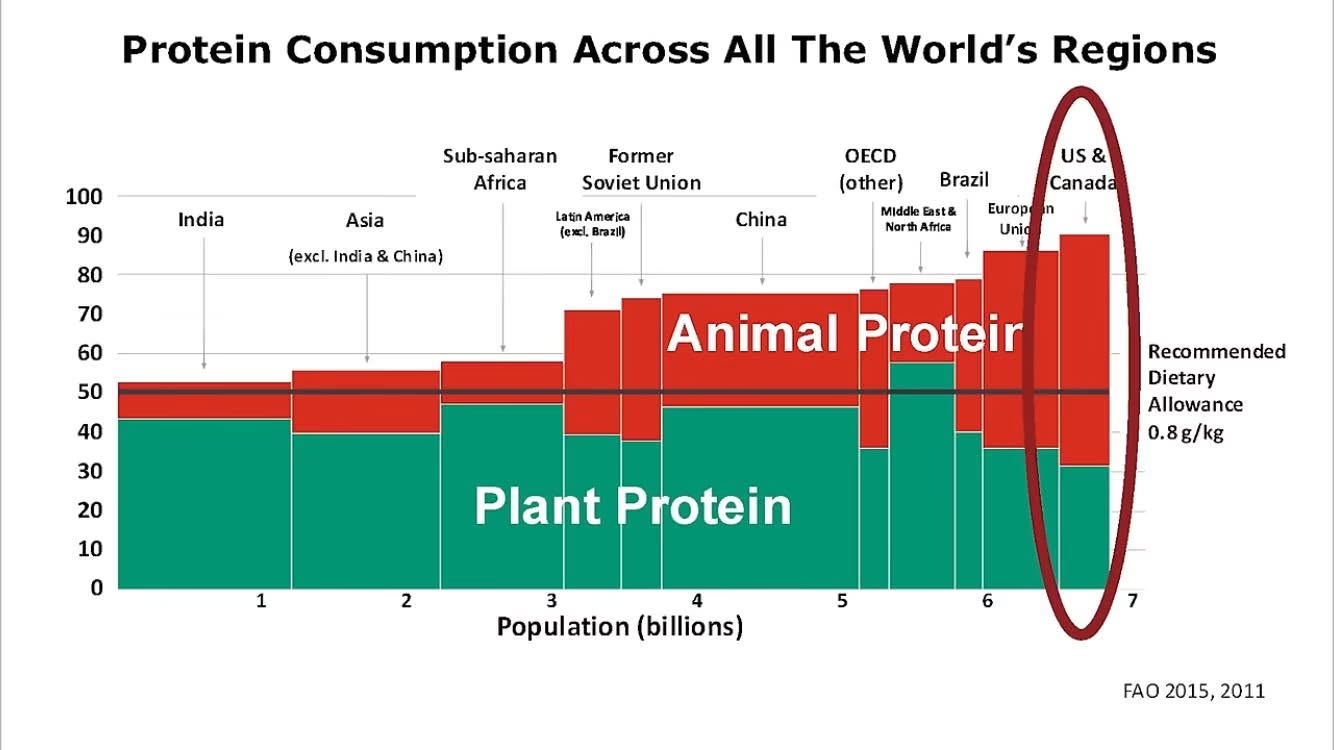
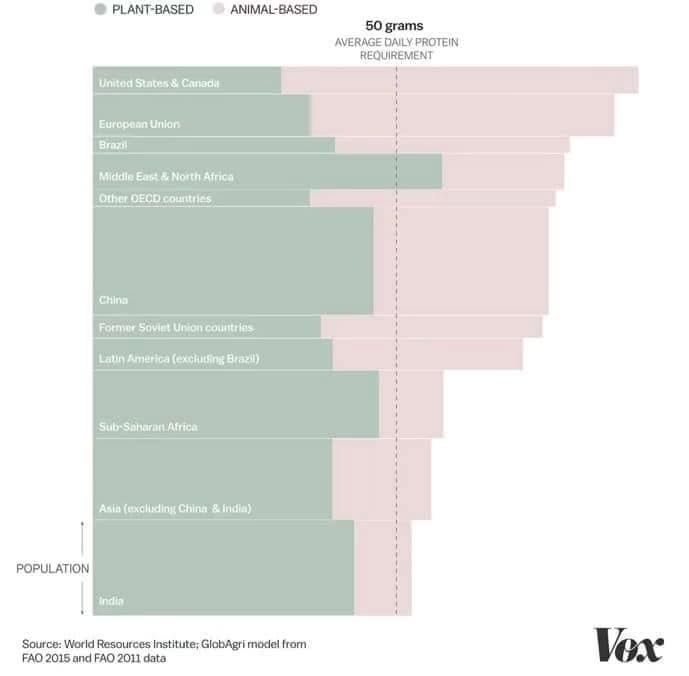
This amount of protein is higher than any other major region of the world, both in terms of total protein and high-quality (animal) protein:
↪ The US leads the world in protein intake, about 1.5 g/kg per day
↪ The US eats more high-quality protein than anywhere, yet heart disease and frailty persist
Is there any proven benefit to healthy (nonfrail) older adults consuming more protein than this?
There have been 36 randomized controlled trials which have rigorously examined this question. They lasted an average of about 8 months, and involved a total of around 1700 healthy (nonfrail) people over the age of 65yo:
“Effects of protein supplementation on lean body mass, muscle strength, and physical performance in nonfrail community-dwelling older adults: a systematic review and meta-analysis”, The American Journal of Clinical Nutrition, Nov. 2018
PaperScienceDirect articlesciencedirect.com
In aggregate, there was NO benefit to additional protein intake seen in these 36 trials, as measured by:
- grip strength
- leg strength
- walking speed
- ability to rise from a chair
- muscle mass,
when compared to controls eating normally.
This held true both in trials where the intervention & control groups engaged in moderate resistance exercise, as well as in trials where they did not. Results between intervention and control groups were identical, in both cases.
The quality of the additional protein also made no difference.
(NOTE that there WERE major benefits seen from resistance exercise, but these were the same whether or not additional protein was consumed.)
The researchers conclude that the likely explanation for these results is that the normal baseline protein intake of older nonfrail adults in these 36 trials was already high enough to begin with from their normal diet. This seems to explain why adding additional protein made no difference.
The researchers also explain that previous studies showing benefits of additional protein consumption in older adults used participants who were unhealthy and frail which likely skewed the results (frail people do seem to benefit from extra protein)— whereas this new analysis included only trials where participants were healthy and nonfrail.
Please keep in mind that the participants in these 36 trials were not athletes. They were just normal healthy people. The exercise regimens were not intense bodybuilding programs. They were just simple resistance exercise programs that a typical older person over the age of 65 would do for general health. The goal was not to study how extra protein consumption affects performance in older athletes and bodybuilders. The goal was to study ordinary healthy (nonfrail) older people.
Quoted:
“Increasing protein intake has been suggested as an effective strategy to ameliorate age-related loss of muscle mass and strength. Current reviews assessing the effect of protein supplementation are strongly influenced by the inclusion of studies with frail older adults.”
“We assessed the effect of protein supplementation on lean body mass, muscle strength, and physical performance in exclusively nonfrail community-dwelling older adults. Moreover, we assessed the superior effects of protein supplementation during concomitant resistance exercise training on muscle characteristics.”
“Data from 36 studies with 1682 participants showed no significant effects of protein supplementation on changes in lean body mass [standardized mean difference (SMD): 0.11; 95% CI: −0.06, 0.28], handgrip strength (SMD: 0.58; 95% CI: −0.08, 1.24), lower extremity muscle strength (SMD: 0.03; 95% CI: −0.20, 0.27), gait speed (SMD: 0.41; 95% CI: −0.04, 0.85), or chair-rise ability (SMD: 0.10; 95%: CI −0.08, 0.28) compared with a control condition in nonfrail community-dwelling older adults. Moreover, no superior effects of protein supplementation were found during concomitant resistance exercise training on muscle characteristics.”
“Protein supplementation in nonfrail community-dwelling older adults does not lead to increases in lean body mass, muscle cross-sectional area, muscle strength, or physical performance compared with control conditions; nor does it exert superior effects when added to resistance exercise training. Habitual protein intakes of most study participants were already sufficient, and protein interventions differed in terms of type of protein, amount, and timing. Future research should clarify what specific protein supplementation protocol is beneficial for nonfrail community-dwelling older adults with low habitual protein intake.”
Reference for video clip:
 ▶Video · YouTube · Miche, PhDDo Older Adults Really Need More Protein? New Scientific StudiesI go over studies on whether getting more protein in your diet actually helps with preserving (and building) muscle mass and strength in older age. Press "show more" to see the study link(s)!youtu.be
#proteinHD #proteinsummaryHD #elderlyHD