HD-OPM Archive
Topics › Protein

More protein without resistance training did not improve muscle in older adults

Louis Nervegna · Apr 05, 2026 · ♥ 5 reactions · 6 comments · original Facebook post
ProteinExercise & fitness
AI summary & key facts

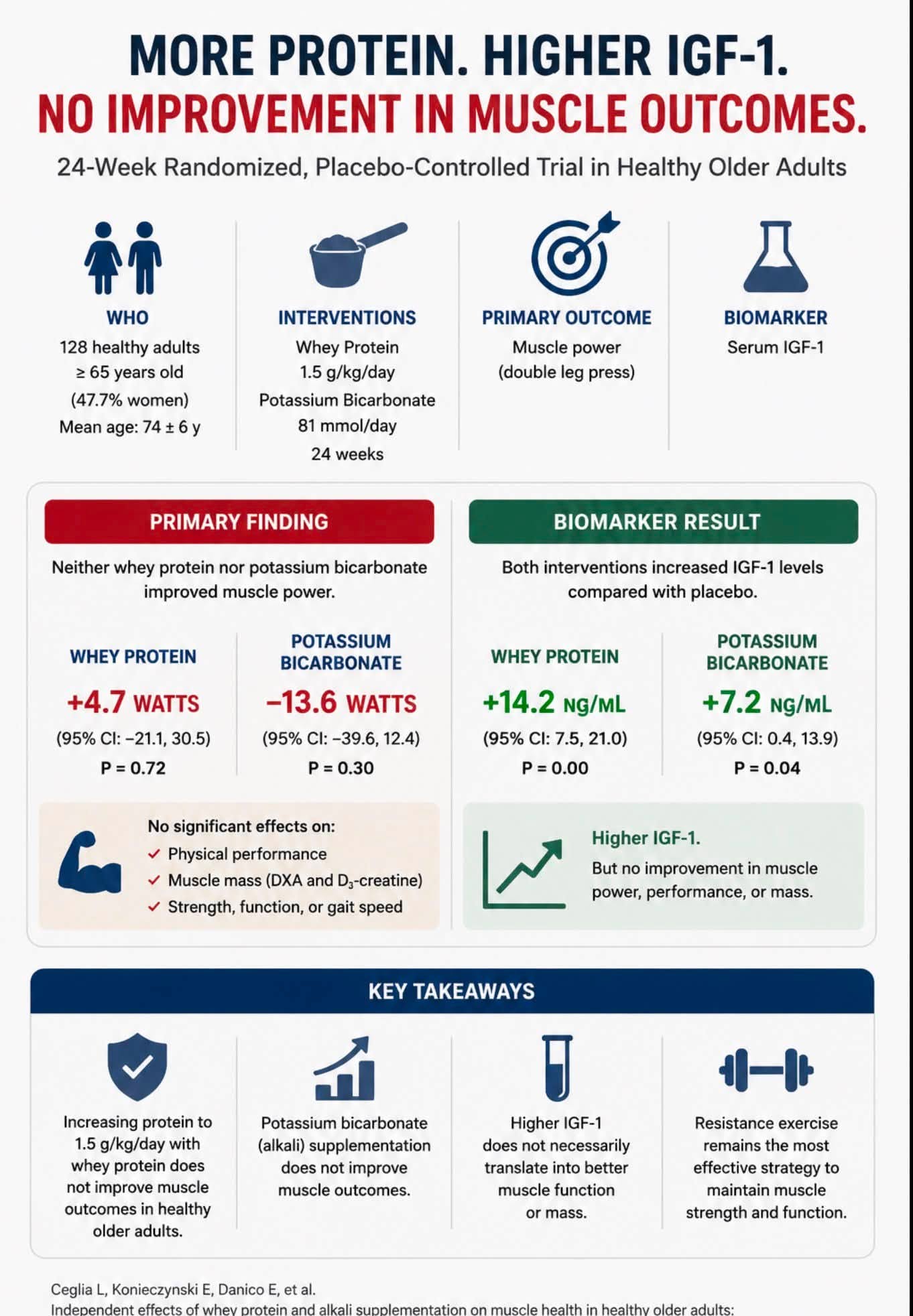
In a 24-week factorial RCT of healthy older adults, increasing protein from about 0.85 to 1.5 g/kg/day with whey, with or without potassium bicarbonate, did not improve muscle power, physical performance or mass, though IGF-1 rose. Louis adds it to evidence that extra protein alone does not build muscle.

Add this to the massive pile of studies that shows increasing protein consumption above the RDA does absolutely nothing to improve muscle strength, muscle mass, power, or performance— in the absence of resistance training.

A review of those studies can be found here: ↪ Meta-analysis of 69 RCTs: protein strength gains plateau at 1.5 g/kg and need lifting.

This study again shows it is true, even in OLDER adults, as multiple other studies have also demonstrated: facebook.com/share/v/1B47Wxg9yx.

But what increasing protein consumption from 0.85g/kg (~RDA) to 1.5g/kg clearly did do in this study is raise circulating levels of IGF1.

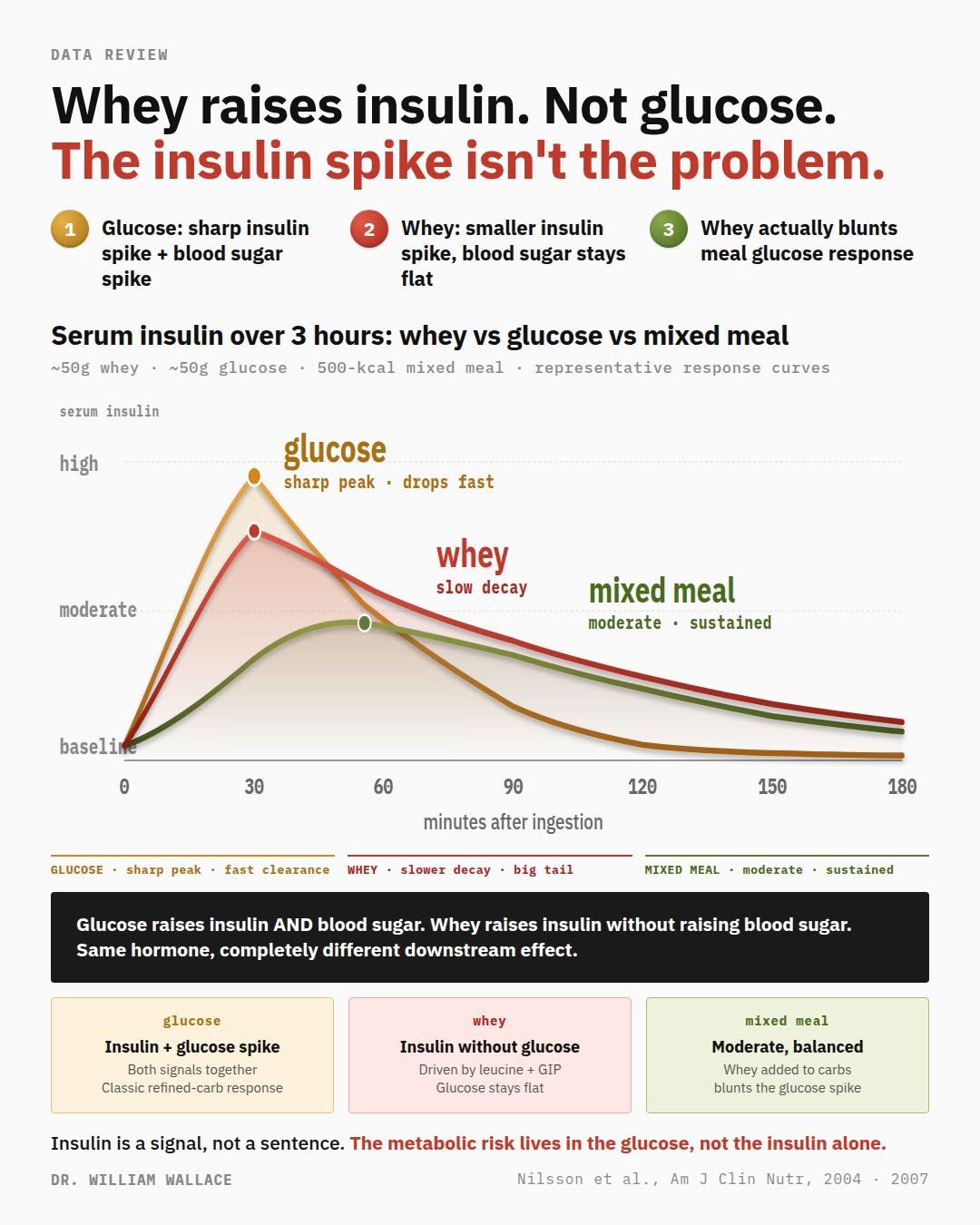
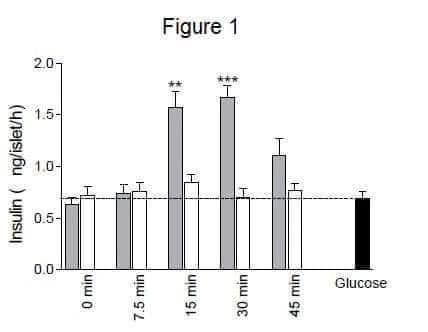
In this case, the study used whey protein (WP), which is particularly potent at raising IGF1, due its strong insulinogenic effect: ↪ Willett shares concern that whey powders may raise long-term risk via insulin/IGF1/mTOR.

High levels of IGF1 have been repeatedly linked to increased cancer risk in humans in large prospective cohort studies. Humans with genetically low IGF1 almost never get cancer (Laron Syndrone): ↪ Laron syndrome, with lifelong low IGF-1 and mTOR, shows low cancer, diabetes and CVD risk. And genetic interventions to lower IGF1 consistently extend lifespan in mice and other animal models. The longest lived lab mouse on record (5 years) was an IGF1 knockout.

Link to the full study mentioned in this post:

Paper · The American Journal of Clinical Nutrition · 2026Independent effects of whey protein and alkali supplementation on muscle health in healthy older adults: factorial randomized controlled trialsciencedirect.com

Quoted:

“In healthy free-living older adults reporting a protein intake at the current recommended daily allowance, neither increasing protein to 1.5 g/kg/d with WP [whey protein] nor adding a KHCO3 supplement for 24 wk improved measures of muscle power, physical performance, or muscle mass despite achieving higher circulating IGF-1 levels.”
#proteinHD #igf1HD #wheyHD #elderlyHD

Research cited

Shared from SuppVersity · original post

Disappointing: "In healthy free-living older adults reporting a protein intake at the current recommended daily allowance, neither increasing protein to 1.5 g/kg/d with WP nor adding a KHCO3 supplement for 24 wk improved measures of muscle power, physical performance, or muscle mass despite achieving higher circulating IGF-1 levels."

Speaking of the higher IGF-1 levels, this may be due to insulinogenic effects of the 45–55 g/day whey the guys needed to get to 1.5g/kg (from ~0.85g/kg).

Also, the rationale of the scientists that they have to add the potassium #bicarbonate as a buffer for the sulfur-containing amino acids in protein which would be "acidogenic and contribute to the body’s acid load during metabolism", is at least questionable in view of the fact that grains and co. are the major contributors to Average Joe's net acid load.

🤔 what i s beyond "at least questionable" is the assumption that YOU WOULD SEE SIGNIFICANT GAINS WITHOUT TRAINING? That's a joke, right?

@suppversity | Ceglia, L., Konieczynski, E., Danico, E., Trinquart, L., Koethe, B., Xiang, Q., ... & Dawson-Hughes, B. (2026). Independent effects of whey protein and alkali supplementation on muscle health in healthy older adults: factorial randomized controlled trial. The American Journal of Clinical Nutrition, 101257.

← newer: Plasma p-tau217 predicts dementia: 3x per SD, 7x top vs bottolder: Magnesium is required for insulin receptor signaling and GLU →