Some commentary on a recent observational study from China tracking red meat consumption in the elderly:
First, a caveat -
This was a case-control study. These are low on the evidence hierarchy in medicine: ↪ Evidence hierarchy: RCTs and long prospective cohorts sit at the top. None of this may actually be causal. Even the association might not be real.
The study showed that in frail underweight people over 80yo, red meat consumption was associated with a small reduction in mortality. There was no reduction seen in normal weight individuals of the same age.
A similar association with lower mortality was seen in people of the same age who did not consume red meat, but instead consumed fish, eggs, or dairy.
Links to full study, and press coverage:
Paper · The American Journal of Clinical Nutrition · 2026Vegetarian diet and likelihood of becoming centenarians in Chinese adults aged 80 y or older: a nested case-control studysciencedirect.com ScienceDailyStudy finds vegetarians over 80 less likely to reach 100Avoiding meat might slightly lower the odds of reaching 100 — but only for frail, underweight seniors. In very old age, staying strong and maintaining muscle matters more than long-term disease prevention. Older adults who included fish, eggs, or dairy were just as likely to become centenarians as meat eaters, suggesting that key nutrients may make the…sciencedaily.com
Quoted:
“Avoiding meat might slightly lower the odds of reaching 100 — but only for frail, underweight seniors. In very old age, staying strong and maintaining muscle matters more than long-term disease prevention. Older adults who included fish, eggs, or dairy were just as likely to become centenarians as meat eaters, suggesting that key nutrients may make the difference. The takeaway: nutrition needs change dramatically with age.”
“Non-meat eaters over 80 were less likely to reach 100 — but only if they were underweight. In later life, getting enough protein and key nutrients may matter more than sticking strictly to a plant-based diet.”
What might explain this association?
(assuming it is real)
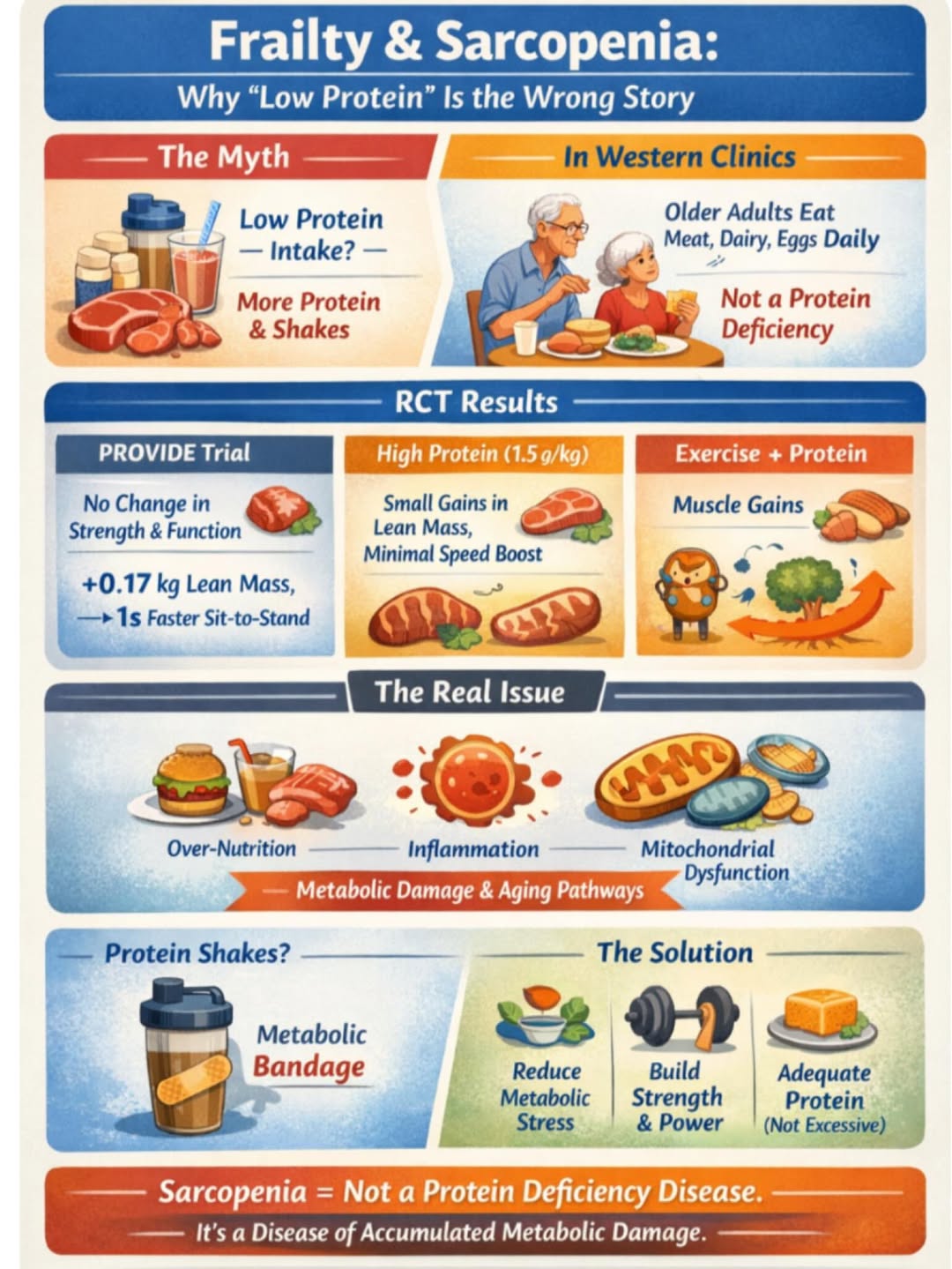
In old people (e.g. >80yo) who are experiencing frailty and sarcopenia, IGF1 levels often drop excessively low. This contributes to wasting and weakness, which increases mortality. Being chronically underweight at this age is a proxy for this occurring. Red meat is very effective at raising IGF1. So are fish, eggs, and dairy. This is a case where red meat might actually be beneficial. There is some biological plausibility here.
For the rest of us, high IGF1 probably causes more harm than good.
This video clip makes an excellent point:
The diet that is best for preventing disease for the majority of our lives is not necessarily the best diet for keeping us alive when we get very old. In old age, the strategy changes from prevention to palliation.
#redmeatHD #igf1HD #elderlyHD #geriatricsHD #frailtyHD #sarcopeniaHD #proteinHD