Your muscles clear glucose in two different ways after a meal.
Most people only use one.
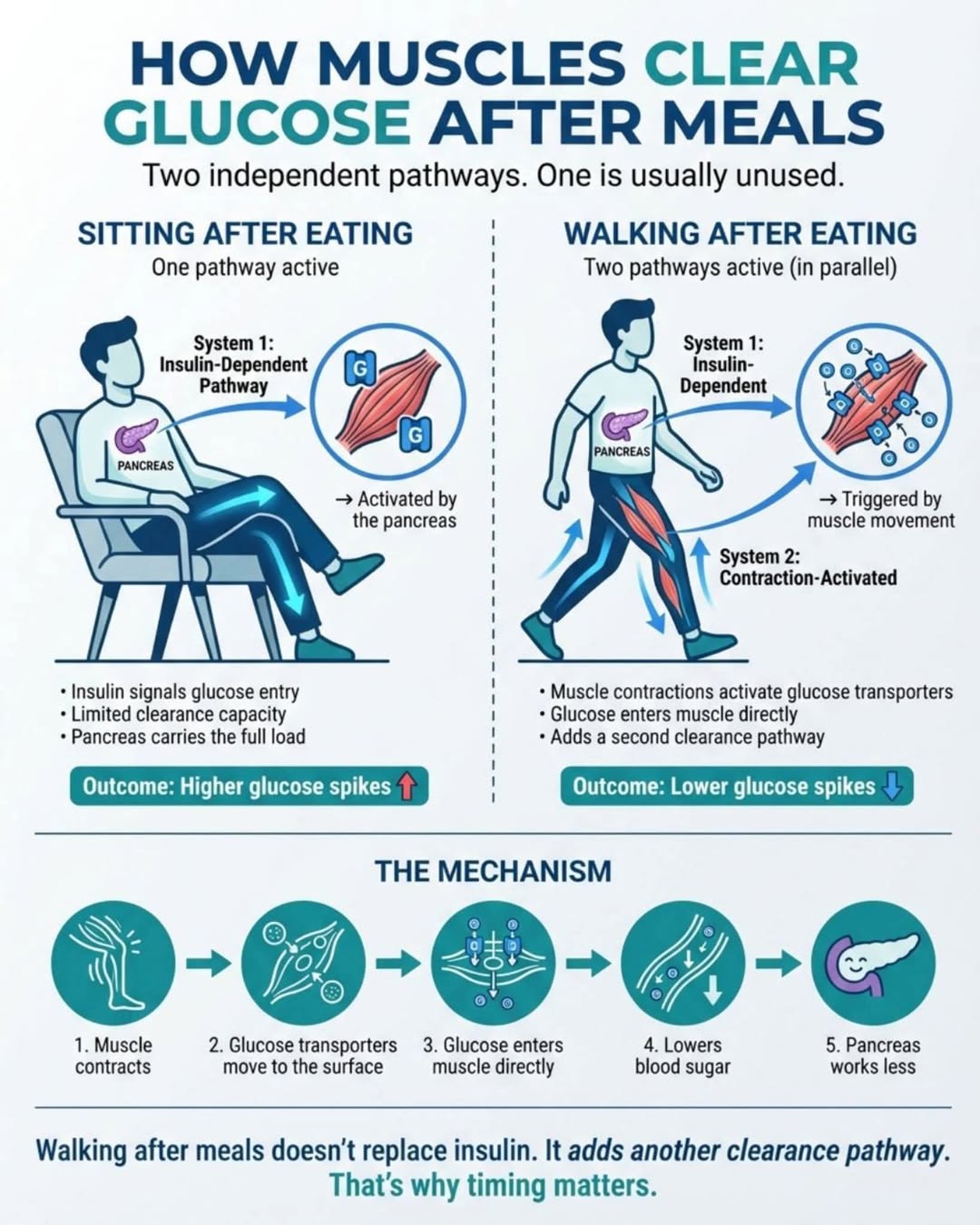
When you sit after eating, glucose disposal depends almost entirely on insulin signaling from the pancreas. That pathway works, but it has limited capacity, which is why post-meal glucose spikes are higher and longer.
When you move after eating, even lightly, a second pathway turns on in parallel.
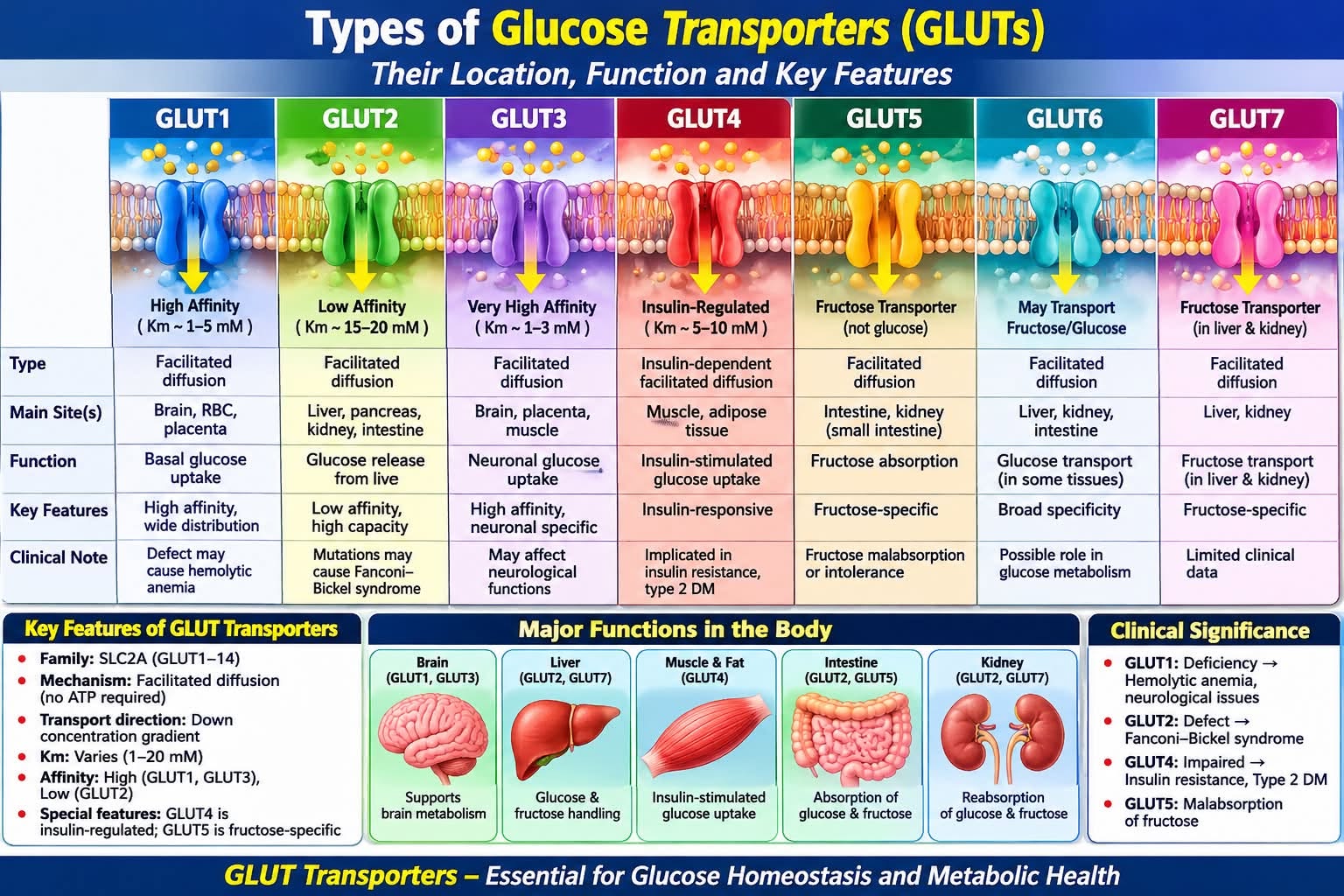
Muscle contraction independently activates glucose transporters (GLUT4), allowing glucose to enter muscle without waiting for insulin. The result is faster clearance, lower peaks, and less strain on the pancreas.
What’s happening under the hood:
- Muscle contraction triggers GLUT4 translocation
- Glucose enters muscle directly
- Blood glucose falls more quickly
- Insulin demand is reduced, not replaced
This isn’t about burning calories or “earning” food. It’s about using the physiology you already have. Walking after meals doesn’t override insulin. It adds another clearance pathway.
That’s why timing matters.