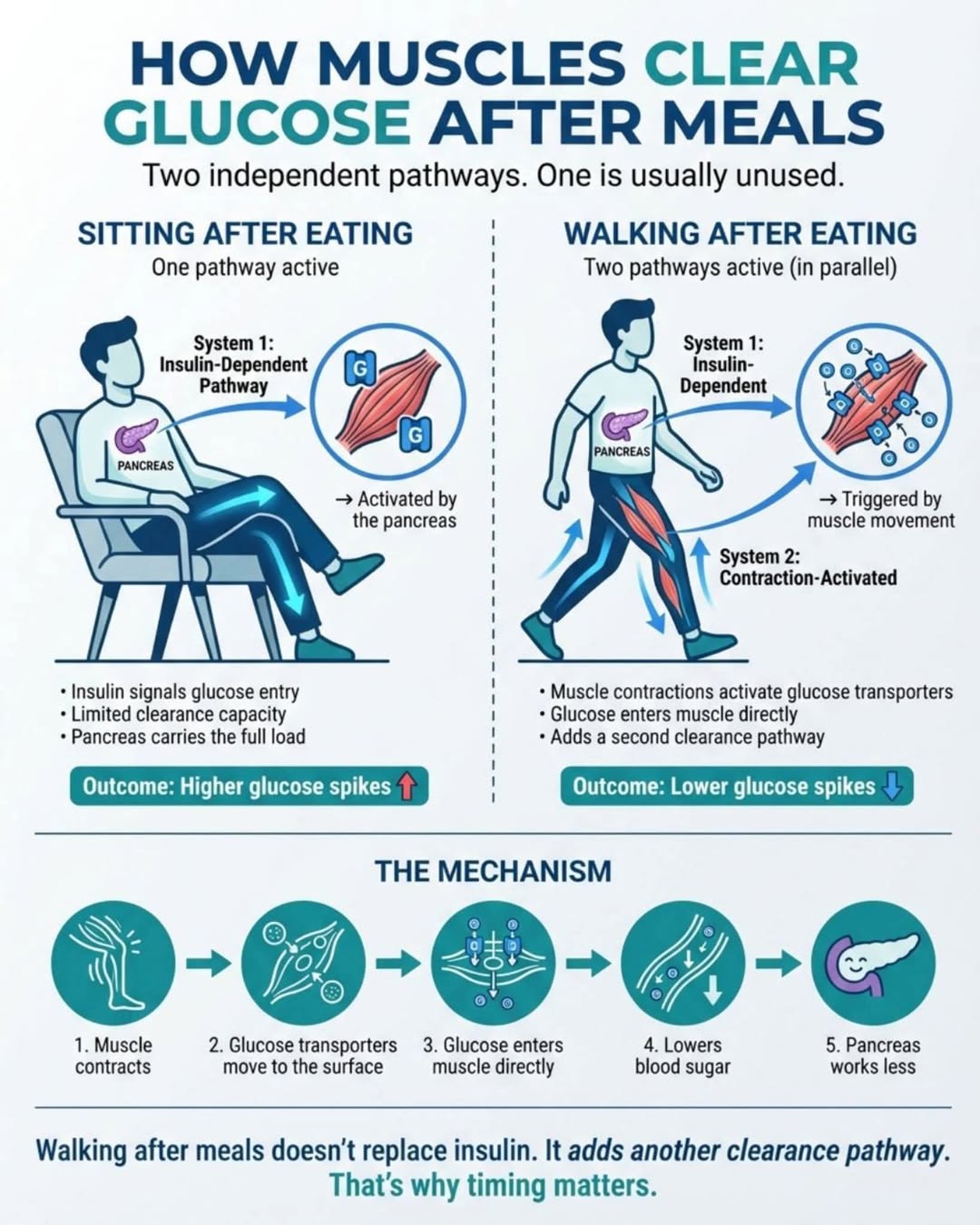
H/T Matthew Laye for sharing this really important study that can help engage in a simple and healthy lifelong habit to lower postprandial glucose spike.
I dont think any drug is as good as this hack!
The study shows beautifully that simply standing for 30 minutes, walking for 30 minutes or doing bodyweight exercise like squats- 10x3
Right after the meal ( not before or much after) is the best way to lower the glucose spike significantly. Worth even combining these 3 for stronger effects.
This is follow up to my earliest post where I saw my dad lower his Hba1c by brisk walking after meals for 3 months from 6.0 to 5.5
Just if you are wondering why - one likely mechanism is that glucose transporters in the muscles become more active lowering glucose in the blood.
I think long term studies of such interventions could be really interesting in studying how this could improve attention, lower cancer risk and cognitive decline with age…and perhaps many other things.
Here is the abstract
The optimal timing between meal ingestion and simple physical activity for improving blood glucose control is unknown. This study compared the effects of physical activity on postprandial interstitial glucose responses when the activity was conducted either immediately before, immediately after, or 30 min after breakfast. Forty-eight adults were randomized to three separate physical activity interventions: standing still (for 30 min), walking (for 30 min), and bodyweight exercises (3 sets of 10 squats, 10 push-ups, 10 lunges, 10 sit-ups). In each intervention, 16 participants completed four trials (A to D) during which a 500 kcal mixed nutrient liquid breakfast meal was consumed. Interstitial glucose responses were recorded using continuous glucose monitoring for 2 h after the meal. The activity was completed either after the glucose monitoring period (trial A; control) or immediately before (trial 😎, immediately after (trial C), or 30 min after (trial D) the breakfast. Mean, coefficient of variance (CV), and area under the curve (AUC) for glucose were calculated and compared between the four trials. Walking and bodyweight exercises immediately after the meal improved mean, CV, and AUC glucose (P ≤ 0.05 vs. control), while standing immediately after the meal only improved AUC glucose (P ≤ 0.05 vs. control) and nearly improved mean glucose (P = 0.06). Mean, CV, and AUC glucose were not affected by standing, walking, or bodyweight exercise conducted immediately before, or 30 min after the meal (all P > 0.05 vs. control). Energy intake (diet records) and energy expenditure (Actigraph) were consistent throughout the studies and did not influence the findings. Low- to moderate-intensity activity should be implemented soon after eating to improve glucose control following breakfast. The type of activity appears less important than the timing. These findings will help optimize exercise-meal timing in general health guidelines. ClinicalTrials.gov Identifier: NCT03730727.