"Longevity" is crowded with bold claims, so it helps to ask a plain question: what has actually been shown in people? In the group's posts the honest answer is that very few interventions have long, randomized human trials showing lower mortality. A larger set has encouraging human data on surrogate markers such as epigenetic clocks, and a very large set has dramatic results in mice, worms or monkeys that have not yet been tested in humans.
This article sorts the posts along that gradient. Gokhan Can, one of the group's admins, proposed a simple ranking in a post: prefer interventions that lowered all-cause mortality in long human randomized trials, or are associated with longer human life; then those that extended mouse lifespan with supporting short human trials or retrospective data; then treat out-of-range biomarkers; and finally track your own response (N=1). The ideal intervention checks all four boxes.1 The sections below follow that spirit, and also relay admin opinions, which are labelled as opinions.
One reason the group cares: Louis Nervegna, the other admin, notes that age is the biggest risk factor for heart disease, about ten times larger than almost any other, so a cardiologist who focuses on slowing the underlying aging processes "gets it".23 The idea behind geroscience is that aging mechanisms are malleable and that targeting them could delay many chronic diseases at once.2 Editorialists in a COSMOS commentary describe the same "geroscience hypothesis" as interventions that slow cellular-level aging to delay or prevent chronic disease and extend healthspan (years lived in good health).4
How "aging" is measured, and why it matters
You cannot run a trial that waits for people to die. An ARPA-H program called PROSPR has awarded $144 million to seven teams to prepare the first phase 3 trials of aging interventions, because the field lacks a validated biomarker that regulators will accept as an endpoint, the way blood pressure became a stand-in for cardiovascular outcomes. One Buck Institute team is building a composite aging score to forecast 20-year outcomes. The three drugs slated for testing are rapamycin, an SGLT2 inhibitor and semaglutide.9
Meanwhile researchers use epigenetic clocks, which estimate biological age from DNA methylation (chemical tags on DNA that change predictably with age). The COSMOS editorialists say clocks such as GrimAge and DunedinPACE reliably predict healthspan and lifespan in observational studies, but that data on slowing them only bring the field "one step closer" to evidence.4 Louis notes there is an ongoing debate about how well the cellular clock reflects the whole organism.11 Other aging signals are also being mapped: a Cell proteomics study of 516 samples from 13 tissues found a step change around age 50, with blood vessels among the earliest tissues to show aging signatures.12
Where human evidence is strongest
Diet patterns
The Mediterranean and DASH diets are the patterns that, according to Louis summarizing an npj Aging review, slow aging the most by new biological-age metrics. The review reports that long-term adherence to plant-rich patterns such as the Mediterranean, AHEI and DASH diets can up to double the odds of aging healthily, preserving cognitive, physical and mental function.10 A small University of Sydney trial of 104 adults aged 65-75 found that three of four diets lowered estimated biological age (a score from 20 biomarkers including cholesterol, insulin and C-reactive protein) after just four weeks. The strongest result was for an omnivorous diet of 28-29% fat, 14% protein and 53% carbohydrate; the group eating the high-fat omnivorous diet, closest to their usual diet, did not change. Whether the changes matter long-term is unanswered.13
The posts also recount the traditional diet from Ancel and Margaret Keys' 1975 book: extra virgin olive oil as the main fat, abundant vegetables, legumes, whole grains and nuts, fish, little red meat and wine in moderation. Louis says 3 of the 18 scientists in the Seven Countries research group who adopted it lived to 100, and calls the odds by chance about 1 in 10 billion. This is a striking anecdote, not a trial.14
Fiber
Gokhan's long summary argues fiber is an underrated longevity tool. It cites a WHO-commissioned meta-analysis (Reynolds et al., 2019; 185 prospective studies and 58 trials) in which 25-29 g/day was associated with 15-30% lower all-cause mortality and 16-24% lower incidence of coronary heart disease, type 2 diabetes and colorectal cancer, with further benefit per extra 8 g/day. A 2025 NHANES analysis suggested diminishing returns beyond about 30 g/day, and in adults with metabolic syndrome a threshold of 22 g/day was linked to 20% lower all-cause and 39% lower cardiovascular mortality. Proposed mechanisms include butyrate-driven epigenetic effects and a stronger gut barrier.5 These are observational associations.
A basic multivitamin and cocoa (COSMOS)
COSMOS, a Harvard randomized trial, tested a standard RDA-level multivitamin (Centrum Silver), not a megadose. In 958 healthy participants (average age 70), the multivitamin group had slowing in all five epigenetic clocks versus placebo, statistically significant for the two clocks that predict mortality, equal to about four months less biological aging over two years, with larger effects in people who started biologically older.6 Louis adds that the same trial previously showed slower cognitive decline (he cites 60% over three years).6 The editorialists' caveat is explicit: uncertainties remain.4
Louis also cites the COSMOS cocoa supplement as having cut cardiovascular mortality by almost 30%, and a TwinsUK/KORA observational study of over 1,600 people linked blood theobromine to slower epigenetic aging. The researchers warned against treating chocolate as a longevity shortcut.15
Coffee
A Nurses' Health Study analysis of over 47,000 women followed for 30 years found that those drinking one to three cups of caffeinated coffee per day in their 50s were more likely to reach older age free of major chronic disease with good cognitive, physical and mental health.16
Exercise: real but smaller than often claimed
Louis argues that the observational exercise-longevity literature is confounded by genes and by sick people exercising less. In a 30-year Finnish twin study of about 22,000 participants, exercise improved healthy aging but conferred at most about 7% lower mortality; comparing identical twins shrank the benefit, and excluding people with early cardiovascular disease nearly erased the longevity effect. Both sedentary and very active people showed faster biological aging markers, a U-shaped pattern.7
Other posts point to benefits for muscle and brain: sarcopenia affects half of people over 80, and Cuervo's lab found muscle chaperone-mediated autophagy (a cellular clean-up process) declines with age and is boosted by exercise and fasting in animals.17 Both heavy and moderate resistance training slowed MRI-measured brain aging in older adults.18
A bone drug with a mortality surprise
A once-yearly infusion of zoledronic acid after hip fracture reduced new fractures by 35% and deaths from any cause by 28% in a trial reported in the New England Journal of Medicine, according to a quoted Substack article; Louis reads the evidence as growing that bisphosphonates may slow aging, though extension beyond fracture patients is speculative.19
Drugs under the longevity spotlight
Metformin
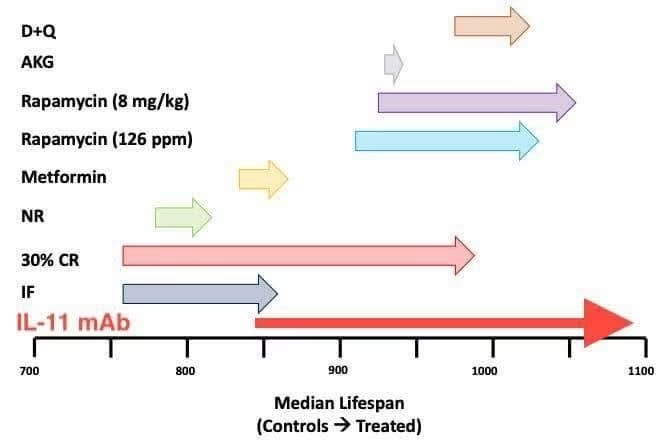
Louis lists six benefits of metformin shown in randomized trials of non-diabetics (long Covid risk, Covid outcomes, periodontal disease, muscle loss, knee osteoarthritis pain, oral pre-cancerous lesions) and argues aging is the shared risk factor. The planned TAME trial aims to test whether metformin slows aging in humans.20 In a 40-month Cell study of male cynomolgus monkeys, metformin slowed pan-tissue aging clocks, with about a 6-year regression in brain aging, preserved brain structure and better cognition, partly through Nrf2 activation. Only males were studied.212223 Louis calculated that the monkey dose (20 mg/kg) scales to roughly 450 mg for a 70 kg person, about a quarter of a typical diabetic dose.24 Louis has taken metformin for nearly 15 years; the study was small and human benefit is unproven.22
GLP-1 drugs and SGLT2 inhibitors
A Nature Biotechnology editorial reports Novo Nordisk and Eli Lilly speakers proposing that GLP-1 drugs might be the first longevity drugs, given benefits across heart attack, stroke, heart failure, kidney and liver disease, though evidence for people without metabolic disease is lacking.25 In a 2026 Nature study, elderly female mice given semaglutide lived about 12% longer. Louis thinks the main mechanism is almost certainly calorie restriction, and a shared summary cautions these were inbred female mice and that rapid weight loss could reduce muscle in older people.2627 SGLT2 inhibitors cause daily glucose loss in urine and may reduce heart disease, cancer and dementia risk, but most evidence comes from people with diabetes; one physician in a shared post takes one off-label, and Louis speculates the class might slow aging itself.28
Statins and the mitochondrial "stress" idea
Louis argues that statins mildly stress mitochondria and activate the longevity-linked AMPK pathway, citing a 2006 Circulation study, much like metformin. The extension to lifespan benefit is his interpretation.29 Gokhan shares a systematic review of cardiometabolic drugs repurposed to extend lifespan in animals and says he takes several himself.30
Promising in animals, not yet in people
Many of the most dramatic numbers come from mice.
- IL-11 blockade. A Nature study showed 22-25% median lifespan extension in male and female mice even when started late. The first patient was dosed with an IL-11 antibody (9MW3811), backed by Calico, in late 2025.831
- Isoleucine restriction. Cutting this amino acid by two-thirds extended male HET3 mouse lifespan by 33% and female by 7%, with leaner bodies and less cancer; authors caution that simply eating less protein is not the answer. Louis suggests whole plant protein is naturally lower in isoleucine.3233
- Insulin signaling in B cells. Reducing it extended median mouse lifespan about 36%.34
- Circulation. Restoring VEGF signaling extended old-mouse lifespan 45%; Gokhan speculates about walking and similar measures in people.35
- Glycation lowering. The Buck Institute's Gly-Low mix (nicotinamide, thiamine, pyridoxamine, alpha lipoic acid, piperine) extended mouse lifespan and reduced appetite and body fat.3637
- Alpha-ketoglutarate (AKG). Extended worm lifespan by about 50% and healthspan in mice; human cardiovascular evidence is limited, and Gokhan notes he uses it.38
- Vitamin C and iron. A 40-month monkey study found vitamin C (30 mg/kg/day) reduced "ferro-aging" signatures by inhibiting ACSL4. Louis suggests keeping ferritin toward the low-normal end if there is no iron deficiency.3940
Taurine: a cautionary tale
A 2023 Columbia study suggested taurine deficiency drives aging; Louis stressed taurine might be an intervention and that it appears reasonably safe.41 A 2025 NIA study challenged the premise, finding taurine levels do not decline with age, and a 2026 Yale paper proposes taurine may rise as a defense against inflammaging. Supplement trials are planned but not done.42
Hormones, IGF1 and the reproduction trade-off
Louis argues strongly that high sex hormone or growth-axis levels are not anti-aging. Lowering IGF1 consistently extends lifespan in rodents; a growth hormone receptor knockout mouse lived almost five years versus about 2.5.43 Barzilai argues centenarians owe their longevity largely to genes lowering insulin/IGF1 signaling; in his comments, women with the lowest IGF1 lived twice as long as those with the highest.44 Louis links this to tall people's shorter lives and cancer risk and to chronically high insulin, and advises avoiding refined starch and sugar, but these are his interpretations.454647 Sabatini, quoted by Louis, thinks limiting amino acids and insulin lowers mTOR, roughly 18 hours of fasting may inhibit mTORC1, and a little more protein probably helps older people's muscle, stressing nobody has all the answers.48 A shared review argues that "more protein, more mTOR, more muscle" is oversimplified.49
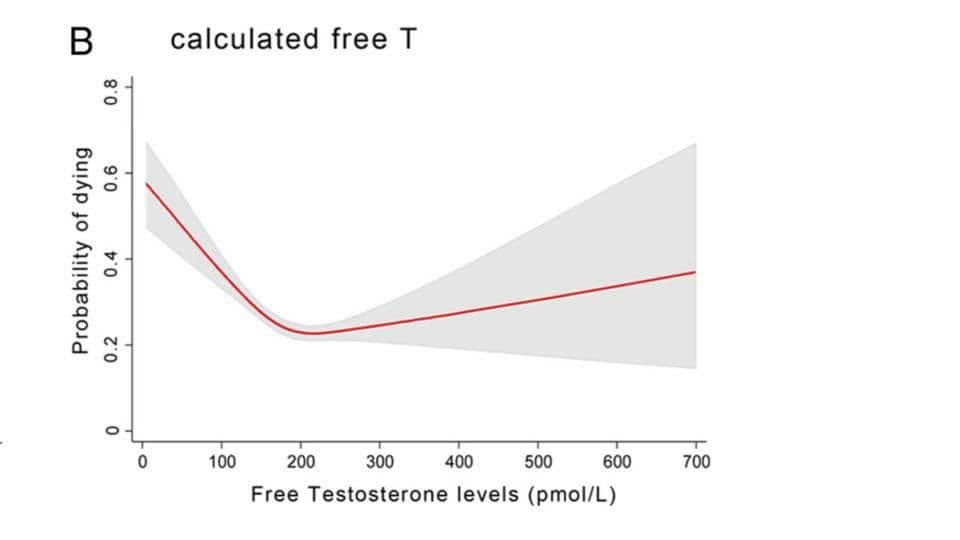
On testosterone, Louis says the only proven benefit is treating diagnosed hypogonadism. In 3,690 men aged 70-92, mortality showed an inverse U-shape with risk rising above an optimal level, and neutering adult male mice extended life by over 30% in a preprint.5051
A Nature analysis found sterilization and contraception extended lifespan 10-20% across 117 vertebrate species, which Louis connects to the trade-off between reproduction and longevity.52 Ovarian aging, meanwhile, may track lifespan and early menopause is a heart disease risk factor.53 For growth hormone, the TRIIM trial reversed epigenetic age by 2.5 years, which Louis considers small and offset by long-term risks.43
Nuances, controversies and things to be skeptical about
- Surrogates are not outcomes. Whole-blood NAD+ does not change with age or lifestyle; nicotinamide riboside raises it, but that does not prove benefit.54
- Anecdotes. Horvath reportedly cut his epigenetic age by 4 years in nine months with diet, a higher statin dose, supplements and nightly walks; it is one person.11 Gokhan's personal "metabolite cocktail" is likewise an experiment, and he suspects he overdosed two ingredients.55
- Commercial hype. Louis criticizes a startup's blood-rejuvenating drug combination, noting the underlying science is real but the evidence so far is anecdotes and a pay-to-play trial.56
- Observational supplements. Glucosamine was linked to 33% lower mortality in a US cohort and 15% fewer cardiovascular events in UK Biobank, but these are observational and Louis says RCT proof is lacking.57
- Mechanisms. A Nature Communications study links a decline in the membrane lipid phosphatidylcholine to mitochondrial aging, hinting that adequate dietary choline might prevent some of it; this is mechanistic, not a trial result.58
- Hard limits. Irreversible somatic mutations may set an upper bound on lifespan, and no technology reverses them.59 Low genetic risk for coronary disease is linked to multigenerational longevity.60
What this means for you
- Build on the best-supported habits: a Mediterranean or DASH style diet, plenty of fiber and regular exercise.5710
- Treat mouse and monkey findings as hypotheses. Gokhan's framework puts long human trials first.1
- The group's admins suggest discussing hormones, metformin, SGLT2 inhibitors or GLP-1 drugs with a doctor rather than self-treating for longevity.202850
- Watch for results from COSMOS follow-ups, TAME and PROSPR.6920
Frequently asked questions
Is there a drug proven to extend human lifespan?
Not according to these posts; the first phase 3 aging trials are still being prepared.920
Does a multivitamin slow aging?
In COSMOS it slowed epigenetic clocks by about four months over two years, but editorialists say uncertainties remain.46
Is exercise still worth it?
Yes, for healthy aging, but twin data suggest its mortality benefit is smaller than raw observational numbers imply.7
Should older men take testosterone to live longer?
Louis says no credible study shows longevity benefit beyond treating hypogonadism.5051
Are GLP-1 drugs longevity drugs?
Possibly, but so far the lifespan evidence is in mice and may mainly reflect calorie restriction.2526