Another nice explanation of the pharmacokinetics of vitamin C.
This post is a followup to a previous post on the pharmacokinetics of vitamin C: ↪ Vitamin C pharmacokinetics: Levine's PNAS study shows absorption detail behind dosing.
Note that these numbers are in healthy people. Infections and other forms of stress raise the level at which saturation occurs.
There is a chart most people carry in their head about vitamin C: the more you take, the more your body has. A 1000 mg tablet must do more than a 200 mg one, because it is five times the dose. That is not how the body treats it.
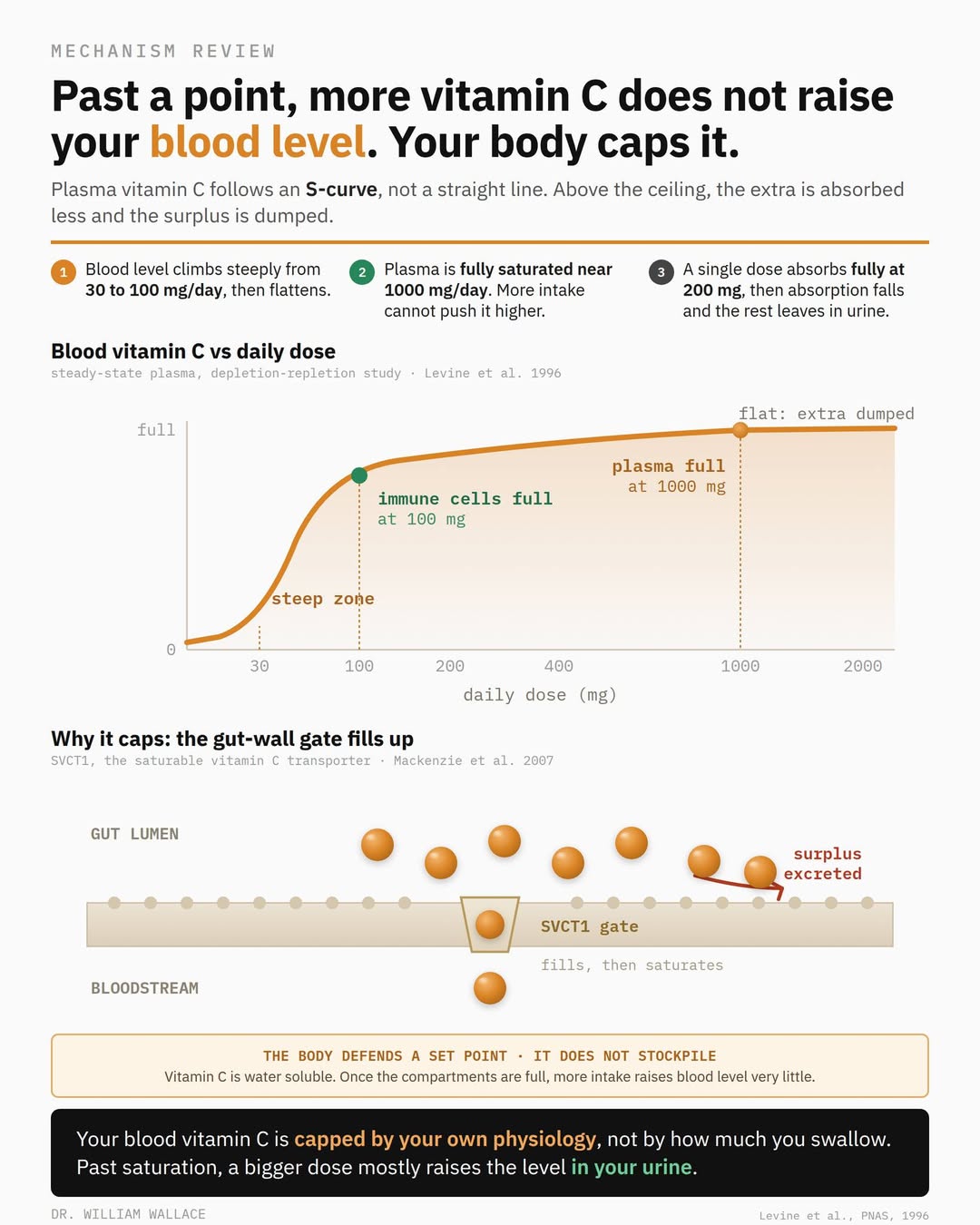
Your blood vitamin C does not climb in a straight line with your dose. It follows an S-curve. It rises steeply at first, then bends, then flattens into a ceiling that more intake cannot push past.
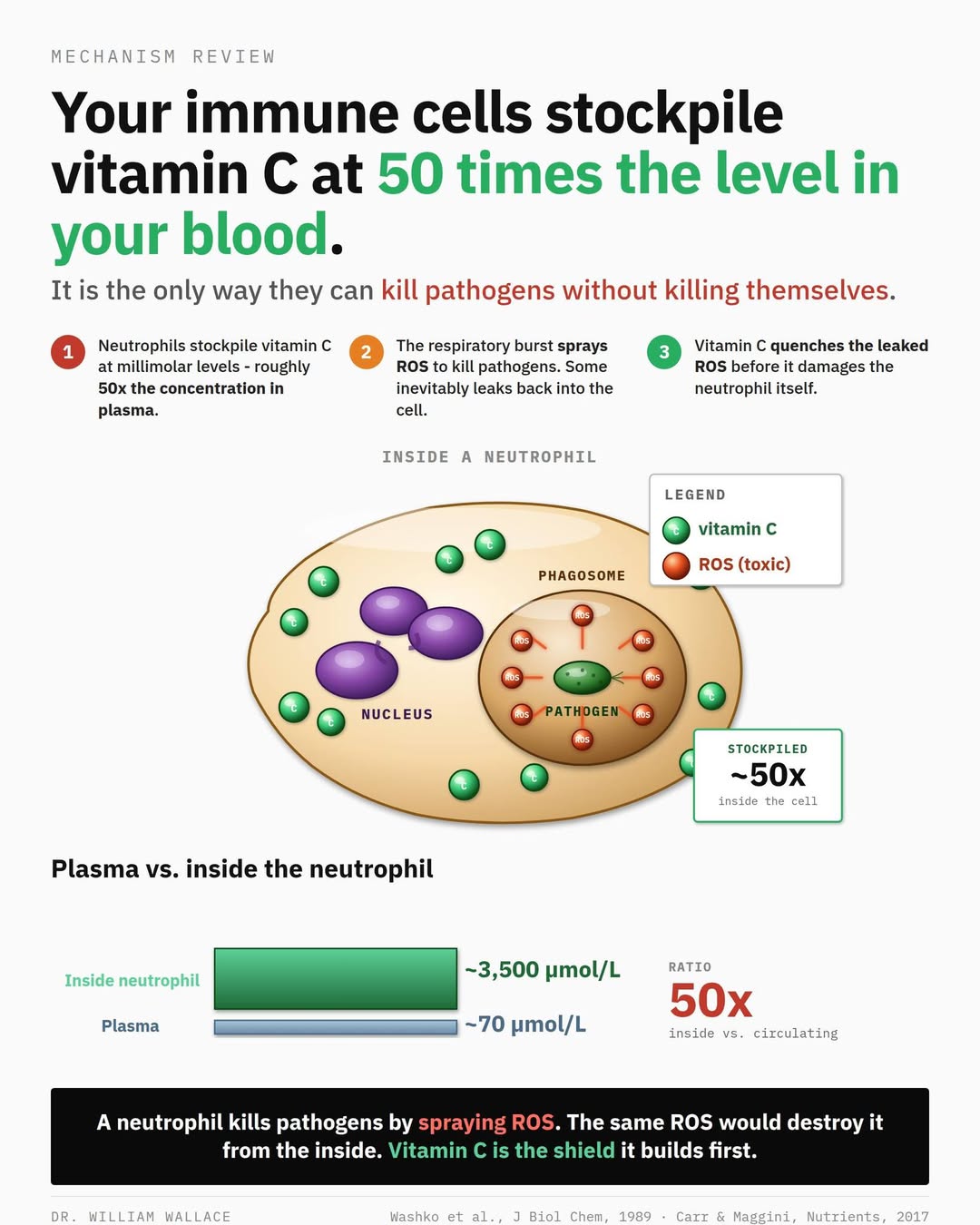
A landmark study walked through this dose by dose. Seven healthy volunteers lived in a hospital for months on a controlled vitamin C diet, and researchers measured their blood and tissue levels at doses from 30 to 2500 mg per day. The steep part of the curve happened between 30 and 100 mg. Your immune cells filled up at 100 mg and held a concentration about 14 times higher than blood. Blood plasma reached complete saturation at 1000 mg. Past that, more vitamin C could not raise the level any further.
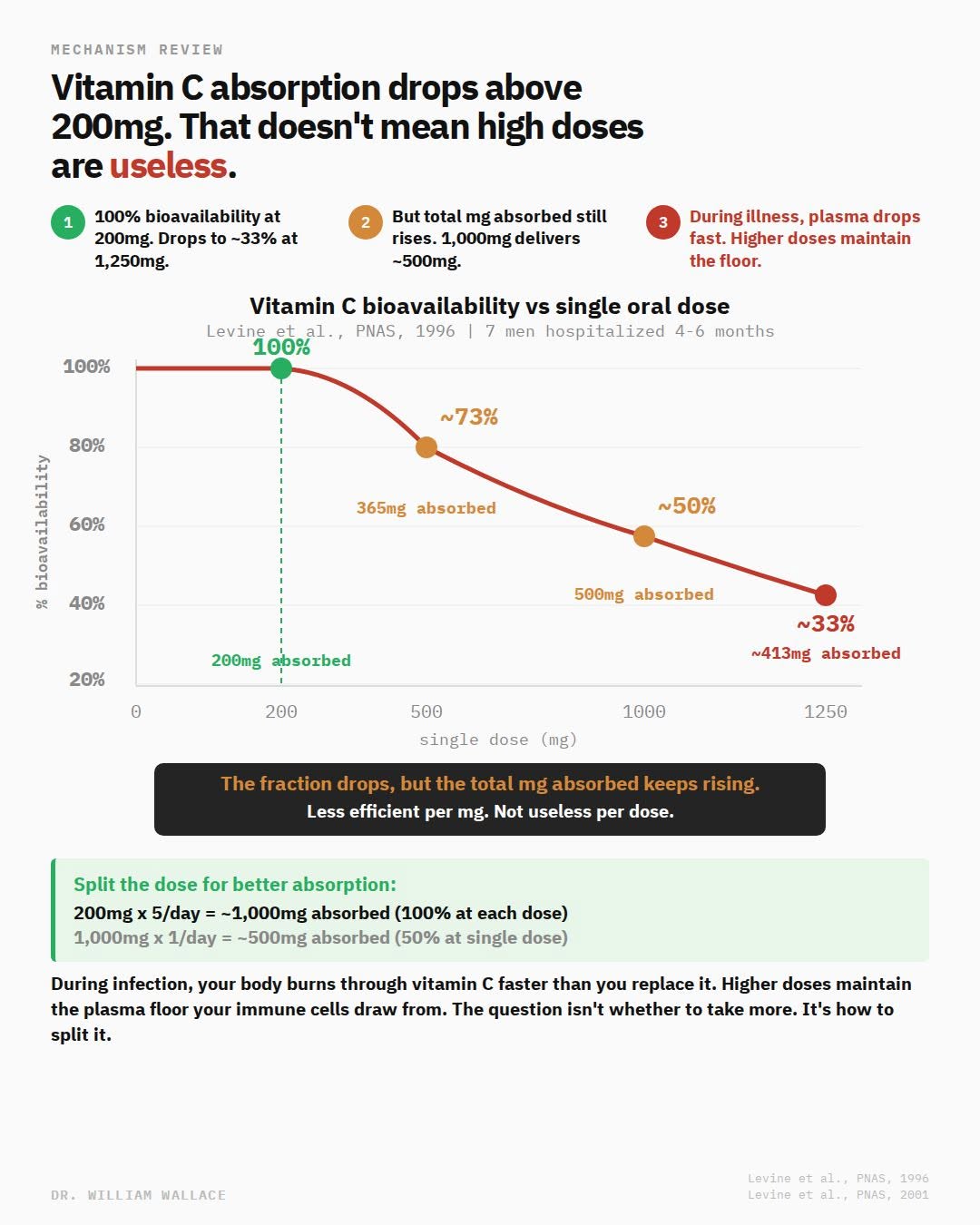
There is a second ceiling on a single dose. Absorption is complete at 200 mg taken at once. At 500 mg and above, the fraction your body absorbs starts to fall, and the surplus that does get in is excreted. The body absorbs a smaller and smaller percentage of a bigger and bigger dose.
The reason is a transporter in your gut wall called SVCT1. It is the gate vitamin C uses to cross from your intestine into your blood, and it is saturable. It moves vitamin C at a fixed maximum rate. Below that rate, it keeps up and most of what you swallow gets through. Above it, the gate is maxed out, the surplus stays in the gut, and it leaves the body. The gate does not work harder because you took more.
A few honest qualifiers. These are daily steady-state numbers from seven people on a tightly controlled diet, which is exactly the design you want for this question but a small group. The gut transporter is one of several saturable steps. Saturation of tissue uptake and kidney reabsorption also shape the plateau, so the gut gate is the cleanest way to picture it, not the whole story. And none of this is an argument against vitamin C. It is an argument about dose.
Here is the part that reaches your wallet. Once you are past a few hundred milligrams a day, your blood and your cells are already near full. The extra 800 mg in a 1000 mg tablet does very little your body had not already gotten from a fraction of the dose. The researchers concluded that daily doses above 400 mg have no evident value. The bigger number on the label is real. The bigger effect mostly is not. Past the ceiling, a megadose largely raises the vitamin C level in your urine.
Levine et al., Proc Natl Acad Sci U S A, 1996 Mackenzie et al., Am J Physiol Cell Physiol, 2007 Graumlich et al., Pharm Res, 1997