HD-OPM Archive
Topics › Brain health & dementia

Even 1-3 eggs per month tied to 17% lower Alzheimer's risk in the Adventist Health Study

Louis Nervegna · Jun 02, 2026 · ♥ 18 reactions · 1 comments · original Facebook post
Brain health & dementiaMeat, eggs & dairy
AI summary & key facts

Louis corrects a shared claim: in the Adventist Health Study analysis, eggs eaten only 1-3 times per month were associated with 17% lower Alzheimer's risk, and nuts and legumes gave the same reduction in a substitution analysis. So daily eggs are not required.

He’s quoting recent results from the Adventists Health Study here.

A few corrections to what he says:

  1. You don’t need to eat eggs daily. Just 1-3 per month was associated with a 17% lower risk of Alzheimer’s in the study he is referencing. It doesn’t take a lot to potentially see a major benefit. See this post: ↪ Adventist cohort: 1-3 eggs a month tied to 17% lower Alzheimer's risk, 5+ a week 27%.
  1. In the substitution analysis, the same reduction in Alzheimer’s risk was seen from nuts and legumes as for eggs. They worked just as well in this same study. See this post: facebook.com/share/v/1Fkm6LX43E.

#eggsHD #alzheimersHD #bredesenHD #nutsHD #legumesHD

Research cited

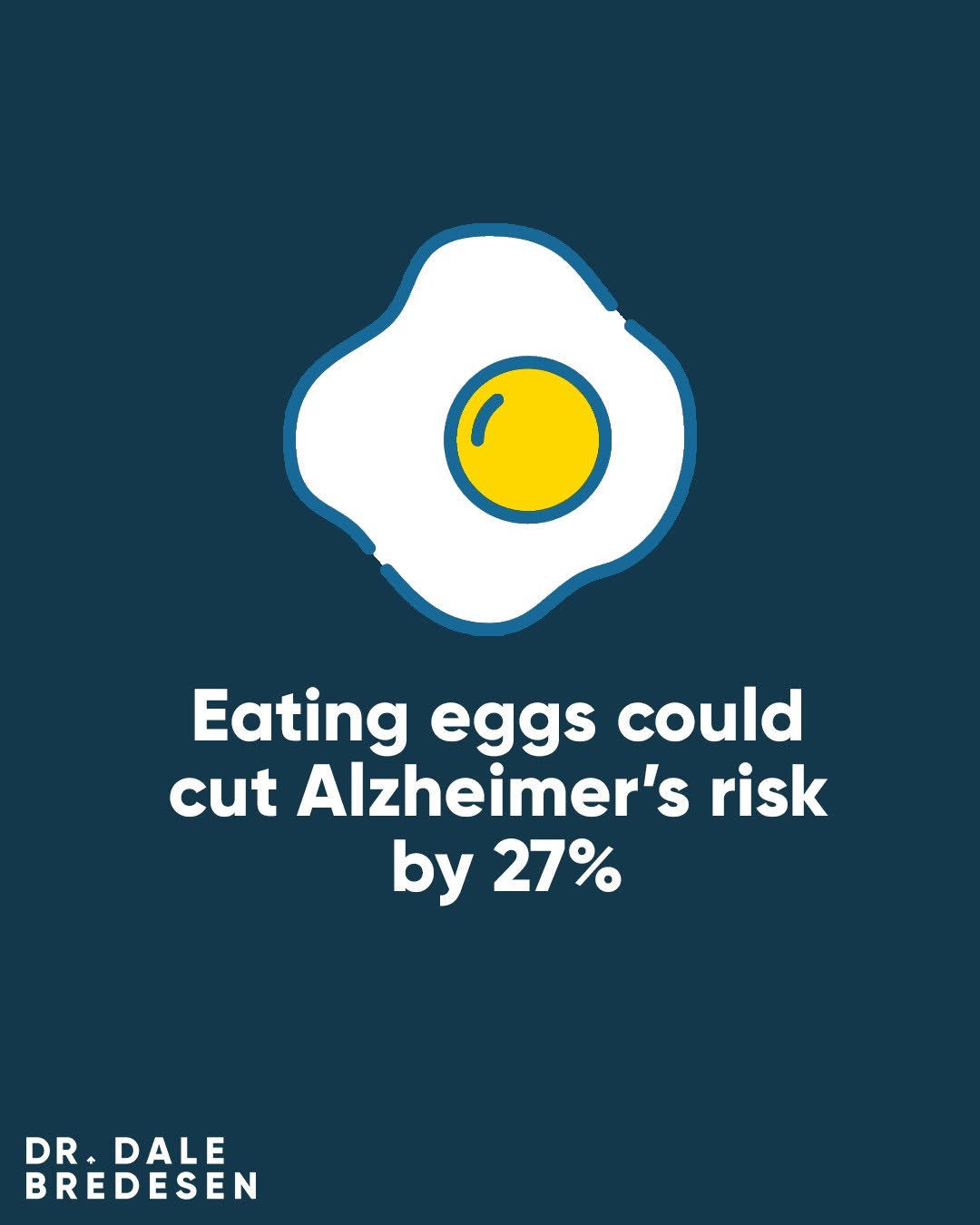
The key neurotransmitter for memory, which is reduced in Alzheimer’s, is acetylcholine, and we need dietary (or supplemental) choline to produce it, but both American women and men get about 150mg too little choline each day. So it may come as little surprise that one of the very best sources of choline—eggs—which are a staple of the KetoFLEX 12/3 diet, are associated with a significantly lower risk of developing Alzheimer’s disease when consumed daily or nearly daily. (If possible, get pastured eggs with high omega-3 and no antibiotics.) More proof that simple brain-healthy actions can have profound effects. Eating eggs could cut Alzheimer’s risk by 27% (ScienceDaily)

No photo description available.
← newer: Age is a far stronger heart disease risk factor than cholestolder: Vitamin C blood levels follow an S-curve and plateau, with s →