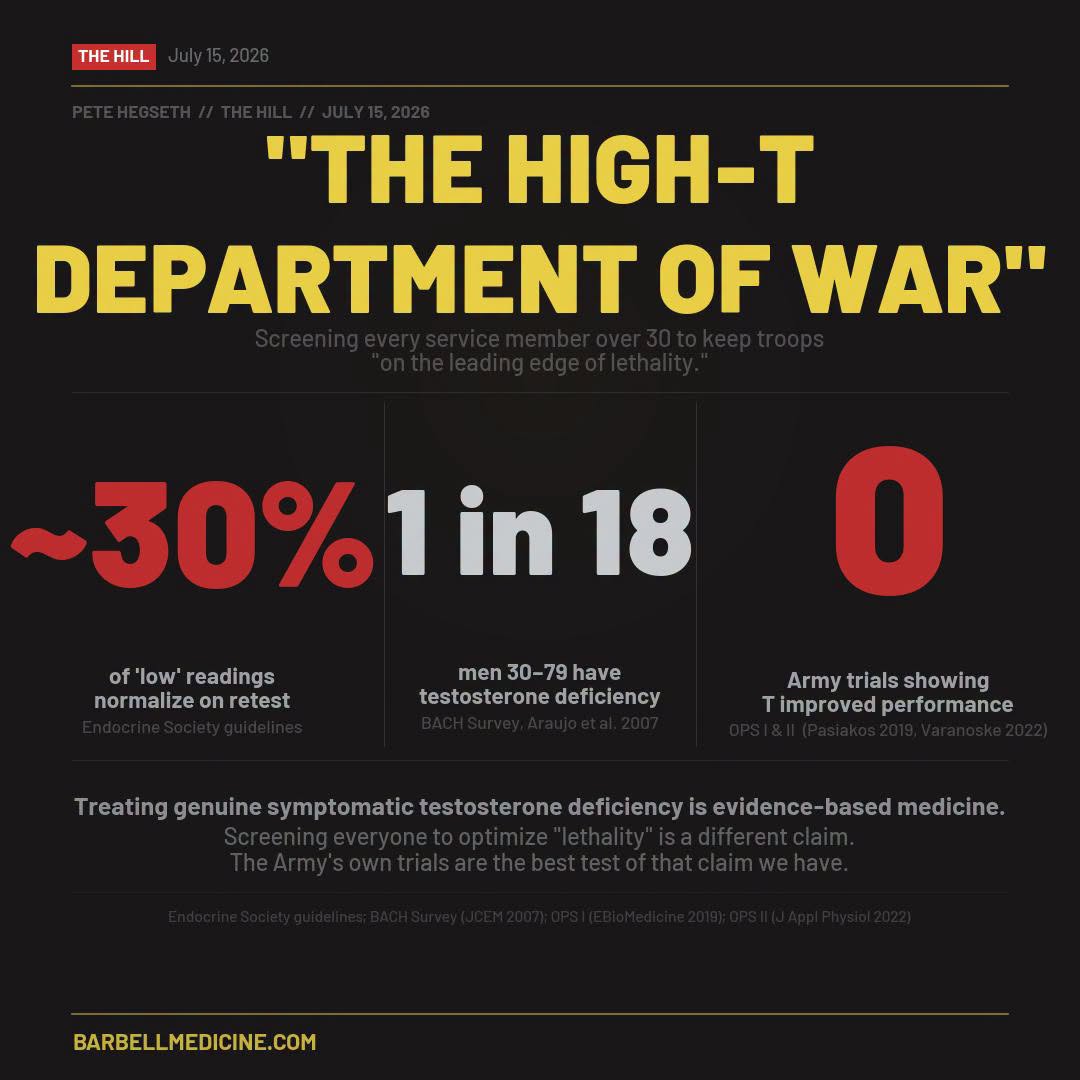
Stunningly, the study revealed that many men are not even being given a basic PSA test to screen for possible prostate cancer before being rushed a testosterone prescription. Let alone meeting all the other prescribing guidelines.
That’s the level of incompetence and greed which is involved here.
Link to article:
 MedscapeTestosterone Prescribing Often Ignores GuidelinesOnly 12% of patients prescribed testosterone underwent appropriate diagnostic testing, and overprescribing was common in a single-center US study.medscape.com
Quoted:
Only a small proportion of men prescribed testosterone therapy received recommended diagnostic testing for androgen deficiency, and many received testosterone therapy despite contraindications, a single-center study showed.
Testosterone prescriptions have quadrupled in the last three decades in the United States, despite stable rates of hypogonadism diagnoses, a pattern consistent with overuse and potentially inappropriate prescribing,” lead author Maria Papaleontiou, MD, associate professor in the Division of Metabolism, Endocrinology and Diabetes, University of Michigan, Ann Arbor, told Medscape Medical News.
The study results suggest a need to increase use of guidelines to ensure safe testosterone prescribing, Papaleontiou said. “Improving guideline-concordant testosterone prescribing has clear public health relevance because testosterone therapy is increasingly utilized for common, nonspecific symptoms, and initiation without appropriate diagnostic evaluation may expose patients to avoidable risks without providing clinical benefit,” she added.
Quoted:
Testosterone-related content on social platforms has significantly increased over the last several years. Testosterone has been coined as the ‘fountain of youth’ to optimize performance through enhancing muscle and improving energy levels in social media, and direct-to-consumer advertising, coupled with dedicated ‘low T’ clinics, availability of patient-friendly testosterone gels and patches, and ambiguity in guidelines about treatment of age-related decline in testosterone levels, probably all drive the trend of increased patient requests for testosterone,” Papaleontiou said.
Asked to comment, session moderator Channa Jayasena, MD, PhD, professor of reproductive endocrinology and andrology at Imperial College London in the United Kingdom, also expressed concern about overprescribing.
“This is a problem of our time in that there's a worldwide explosion of prescribing, often from private providers and increasingly from very corporate entities with reduced clinician involvement,” he told Medscape Medical News. “Even in an orthodox, traditional setting, there are examples of things not being done as they should.”