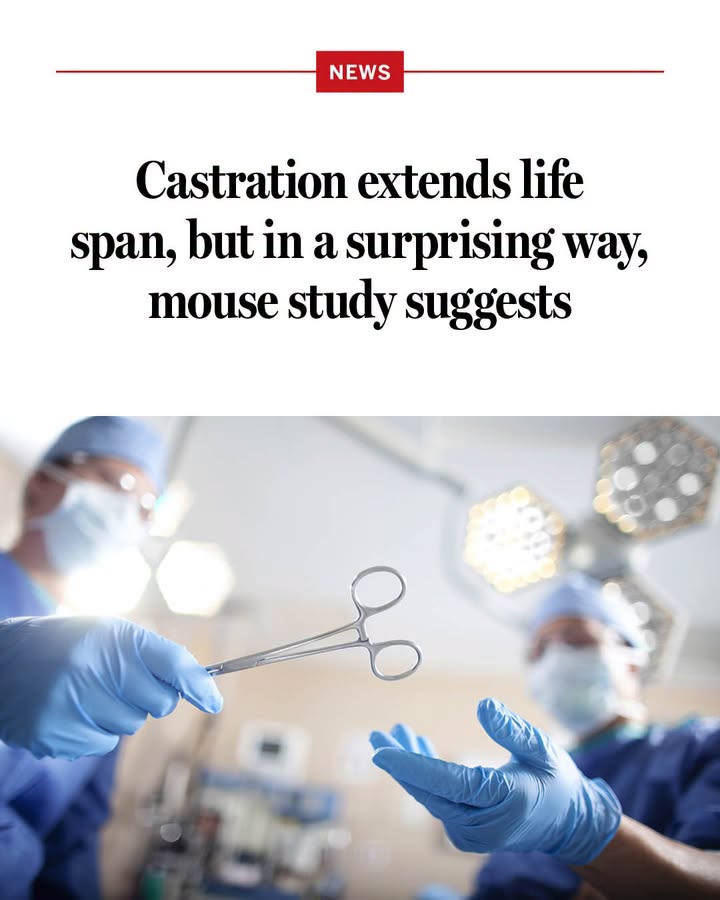
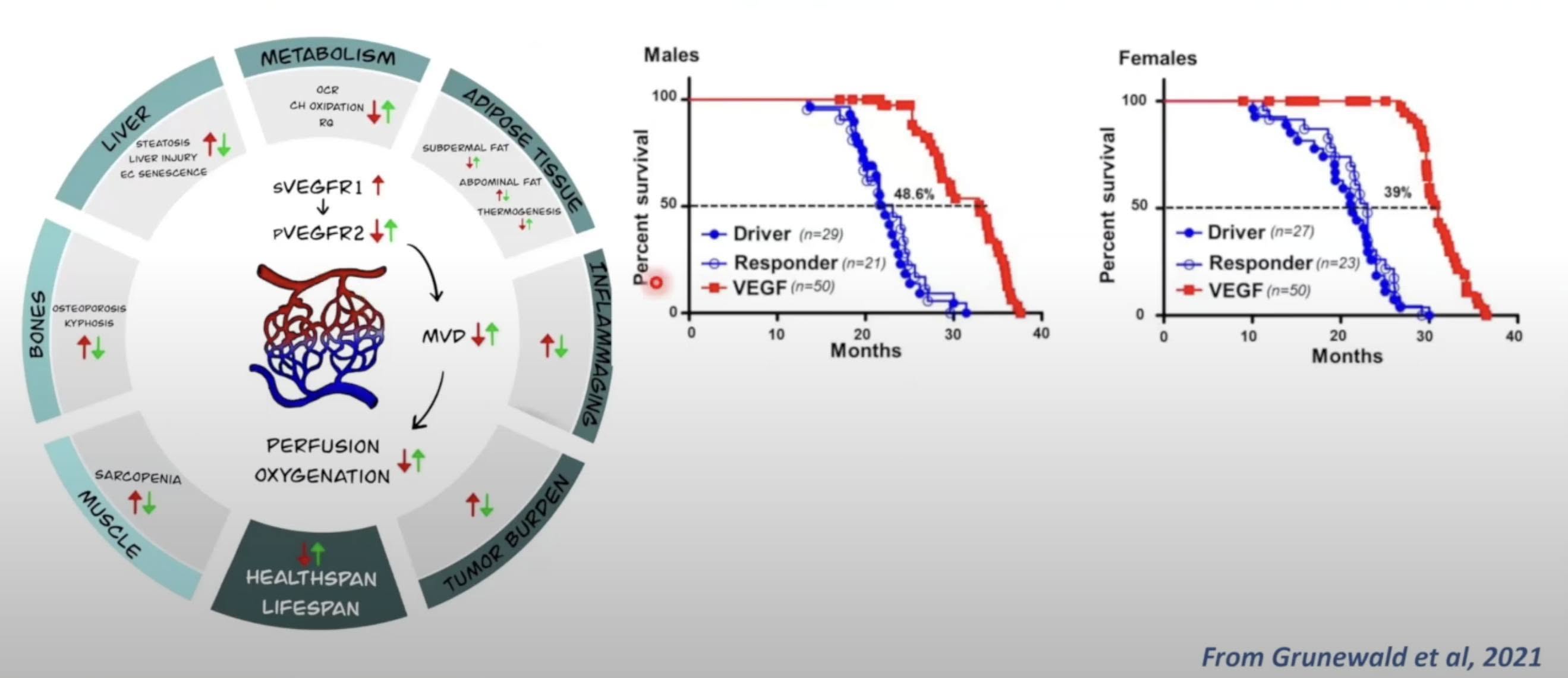
Neutering adult male mice extends their lifespan by over 30%.
Farmers have known this for a long time. Neutering male farm animals, e.g. sheep, makes them live longer. It is true for dogs, as well.
The mice in this study were neutered at the human equivalent of 30yo.
Obviously this is not an option for humans.
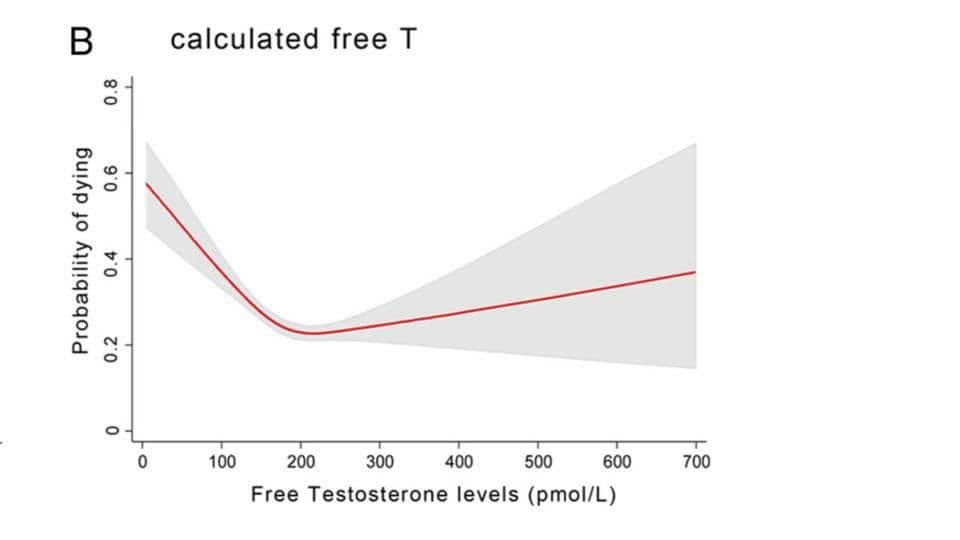
But it seriously calls into question the dubious claims that jacking up testosterone of older men to levels of a 20 year old is “anti-aging”. You should be extremely suspicious of that claim. The best evidence in mammals shows the opposite.
There is no randomized trial that has ever shown raising testosterone levels of healthy men without hypogonadism lowers risk for any disease. The trials showing benefits have been solely in men with clinically diagnosed hypogonadism.
Testosterone is known to accelerate plaque progression in older men. This was proven in a well-done randomized trial conducted by a principal investigator (Mathew Budoff) who is considered a world-class expert in using CT-angiography to conduct cardiology trials on various interventions:
↪ Testosterone therapy accelerated soft plaque growth by 41 mm3 in older men in a 2017 RCT
Link to journal paper (preprint):
biorxiv.orgLink to biorxiv.orgbiorxiv.orgMy note:
What is particularly striking about this study is that neutering mice well into adulthood extended lifespan more than neutering them during childhood or directly after puberty. A number of geroscientists have argued that the geroprotective benefits of lower testosterone in mice likely occur mostly during development, as opposed to adulthood. This study proves these people wrong. It appears to be the opposite.
Quoted:
If scientists can uncover the mechanism behind this surprising result, they might be able to devise treatments that deliver the benefits of castration without any bodily sacrifices. “This is an important step in understanding why there are sex differences in life span,” says Ashley Webb, a molecular neuroscientist who studies brain aging at the Buck Institute for Research on Aging and wasn’t connected to the study. The research is solid, she adds. “I trust the work.”
Humans are one of the many species in which females significantly outlive males. In the United States, the survival gap between men and women is 6 years. Men are also more susceptible to almost all age-related diseases, including cancer and heart disease. (They are more likely to die from aging-independent causes such as suicide, murder, and accidents, but the life span disparity persists when researchers correct for such differences.) The female longevity advantage “is one of the most robust features of human biology,” says biogerontologist Steve Austad of the University of Alabama at Birmingham.
The reason behind it is not clear, but some compelling evidence indicates males are betrayed by their testes. A 1969 study of people with intellectual disabilities in a mental institution who had been involuntarily castrated suggests removing the organs can add more than a decade to life. And a 2025 analysis of data for 22 vertebrate species found a consistent longevity boost from castration.
Delving deeper into that effect with lab mice has proved difficult, however, because life span difference varies across strains—and in some lines, males outlive females. But in a 2023 study, biogerontologist James Nelson of the University of Texas Health Science Center at San Antonio and colleagues took advantage of a mouse strain in which females boast a reliable longevity advantage comparable to what’s seen in humans. When they castrated the males before puberty, the animals survived about as long as females, suggesting the testes were somehow shortening life.
For the new study, Nelson, his graduate student Laurence Maeyens, and their colleagues wanted to nail down when the testes’ apparently harmful effects begin. The scientists castrated male mice from the same strain before puberty, shortly after puberty, or when they were 240-day-old adults—roughly equivalent to 30-year-old humans. All three groups lived longer than males used as controls that had undergone mock operations and retained their testes.
However, mice that were neutered as adults gained the most. The procedure stretched their lives by about 33%, compared with 19% and 26% increases, respectively, for the animals fixed before or after puberty. The researchers were taken aback, Maeyens says. “It became evident quite fast that this was something new and unexpected and exciting.”
Austad notes that the older mice benefited almost immediately from removal of their testes. None of them died for more than a year after the procedure—a “pretty striking” change given that the mortality rate for mice of this age is normally climbing, he says. That the mice castrated as adults lived longer suggests the testes become detrimental late in life, whereas their presence early on offers a longevity benefit, the study’s authors argue.
In light of the results, “I am convinced that castration late in life causes a robust increase in survival,” says Michael Garratt, an evolutionary biologist who studies aging at the University of Otago and was not involved in the study. The study “raises a provocative hypothesis” about when the testes become harmful, Austad adds, but the authors need more evidence to confirm it.
Discovering the reason for the survival difference could foster the development of “castration mimetics” that replicate the aging benefits of testicle removal and that would be effective even for older people. But scientists caution that it’s way too early to try to extend these findings to humans. Still, the study has already made a real-world impact. Maeyens recently opted to have his 4-year-old dog neutered. The results of this research “factored in the decision,” he says.