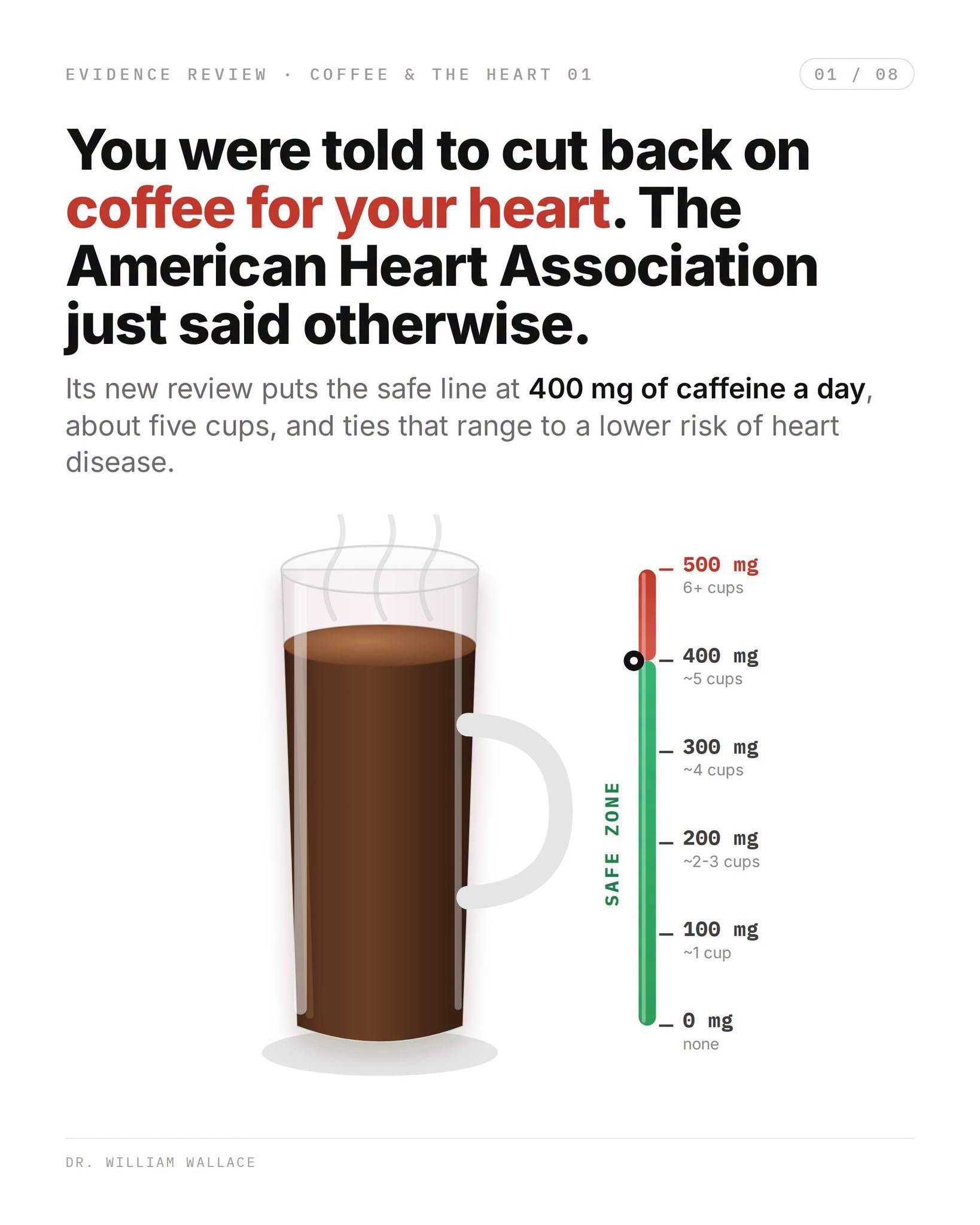
☕ Up to 5 cups of coffee a day may actually be good for your health.
That’s the conclusion of a new American Heart Association Scientific Statement reviewing the evidence on caffeine and caffeine-containing beverages.
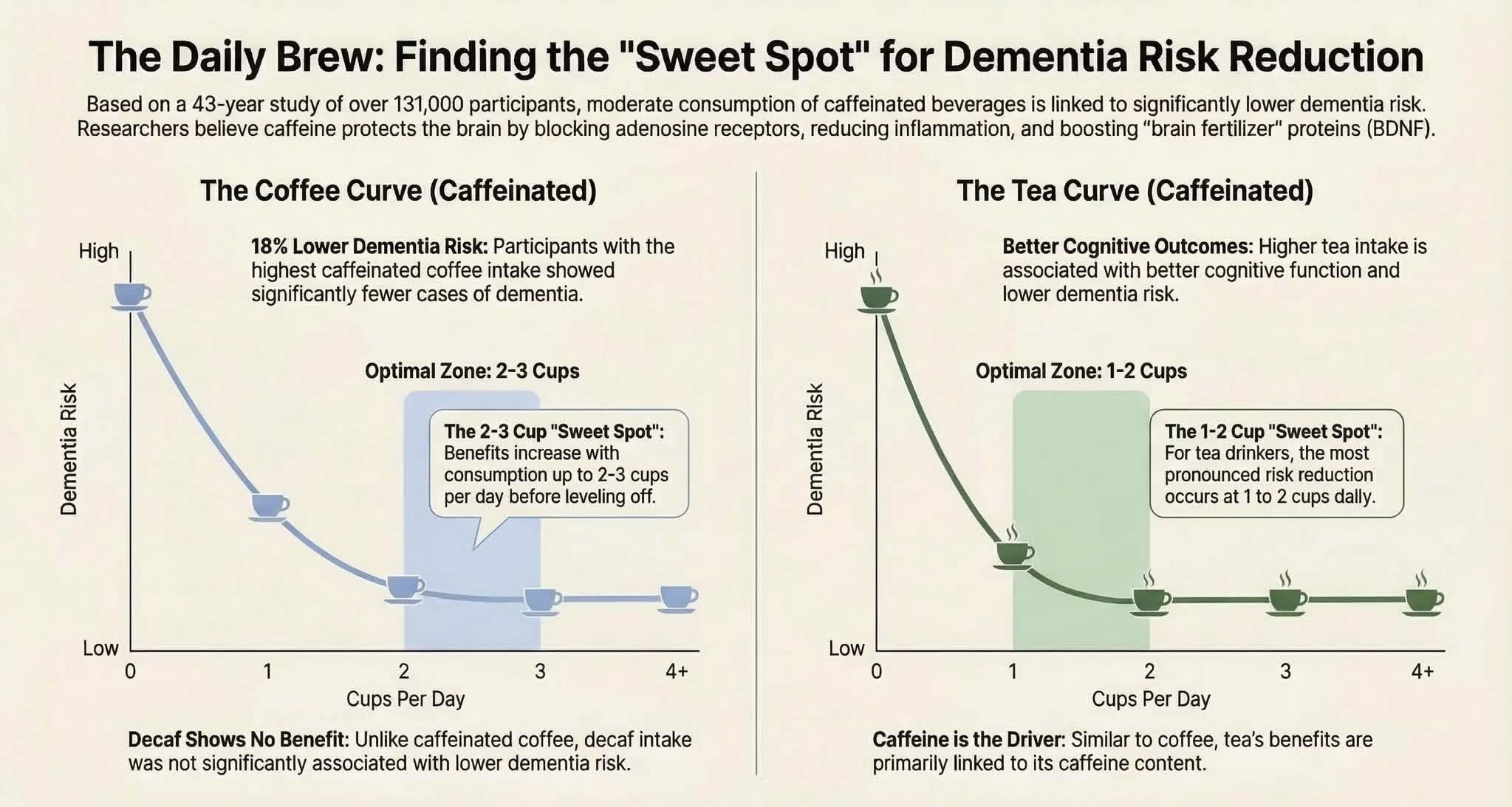
For coffee, the research consistently links regular consumption with lower risks of type 2 diabetes, coronary artery disease, heart failure, stroke, and atrial fibrillation. The greatest benefits were generally seen with 2–4 cups per day, with benefits often extending up to 5 cups daily!
Tea was also associated with improved health outcomes.
Energy drinks and caffeine supplements are a different story. While moderate intakes can be well tolerated, very high doses can cause temporary increases in blood pressure and irregular heart rhythms, especially in people who aren’t habitual caffeine consumers. It’s also worth noting that regulations around the caffeine content of energy drinks varies considerably. For example, energy drinks in Canada are capped at 180 mg of caffeine, whereas energy drinks in the U.S. commonly contain 300 mg per serving.
Context matters too. The effects of caffeine vary between individuals based on genetics, and coffee and tea naturally contain numerous phytochemicals that may contribute to their health benefits.
The bottom line? For most people, drinking a few cups of coffee or tea each day isn’t just safe, it may actually be one of the healthier habits in your routine.
Reference:
Paper · Circulation · 2026Caffeine and Cardiovascular Disease: A Scientific Statement From the American Heart AssociationCaffeine is one of the most commonly consumed drugs in the world. It is found in various naturally occurring substances and can be ingested in a synthetically derived pure form. The majority of human subject–based research is observational and has focused on beverages and foods that contain caffeine. The relationships between caffeine and cardiovascular risk factors and diseases are complex, exhibiting heterogeneity…ahajournals.org
#coffee #caffeine #tea #coffeelovers #nutrition