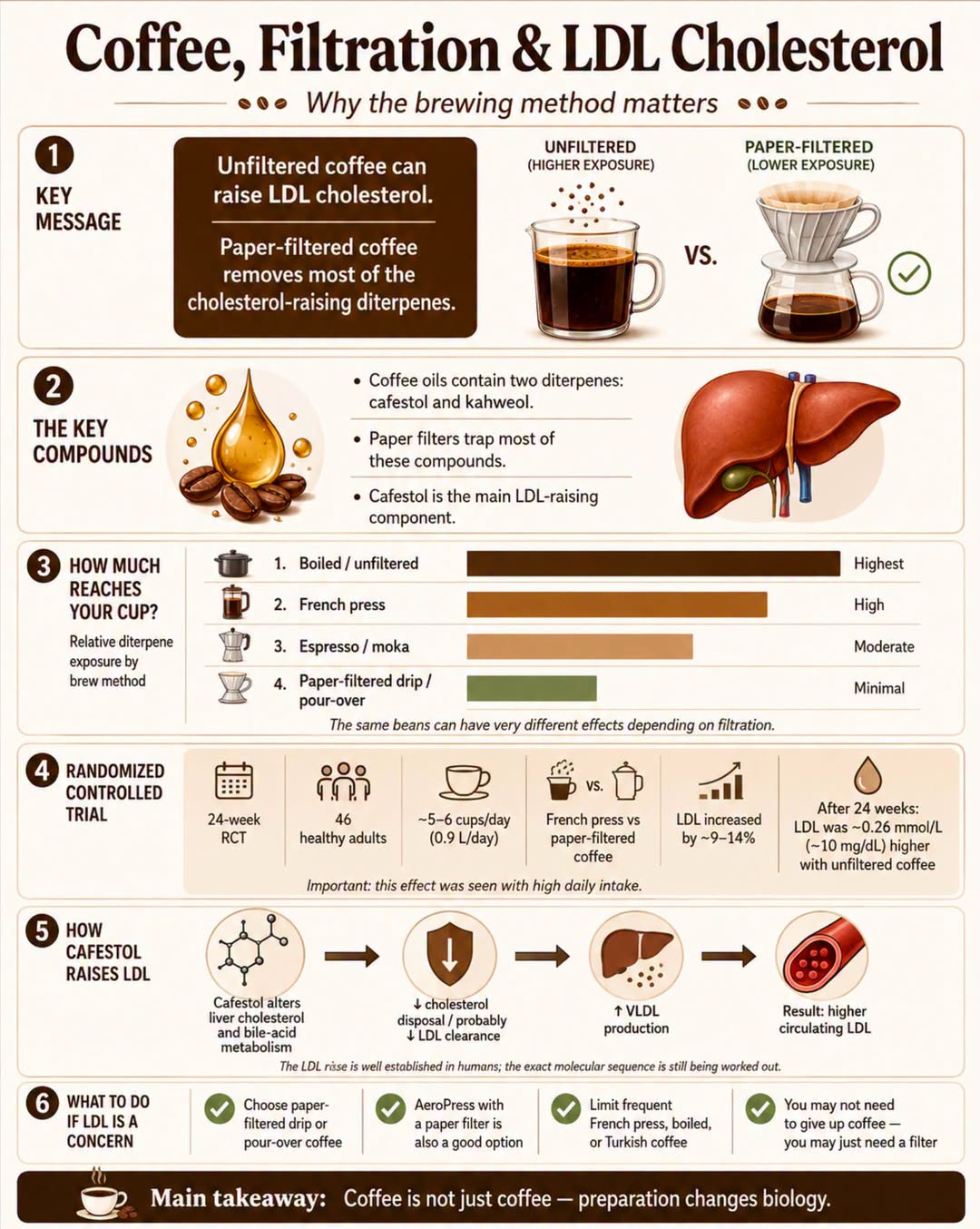
A nice explanation of why unfiltered coffee modestly raises LDL.
#coffeeHD #diterpenesHD #cafestolHD #kahweolHD
Coffee may be good for you—but how you brew it matters.
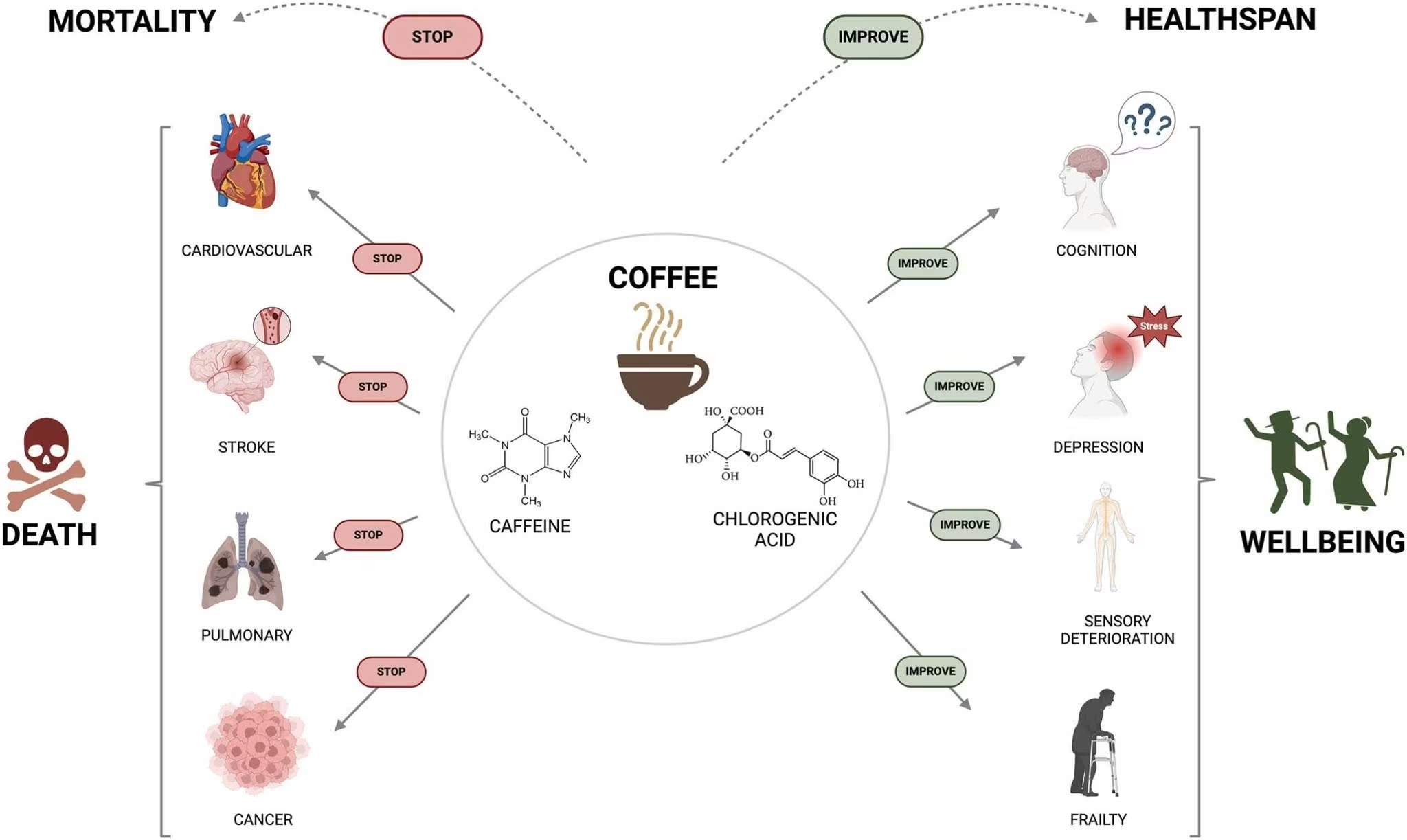
Large epidemiological studies consistently associate moderate coffee consumption with lower all-cause mortality and lower risk of several chronic diseases.
But coffee also contains two diterpenes, cafestol and kahweol, that can raise LDL cholesterol.
This is not just an observational association.
In a 24-week randomized controlled trial, 46 healthy adults were assigned to drink about 0.9 L/day—roughly 5–6 cups—of French-press coffee or paper-filtered coffee.
The result?
Unfiltered coffee increased LDL cholesterol by roughly 9–14%.
After 24 weeks, LDL was about 0.26 mmol/L higher, equivalent to approximately 10 mg/dL, in the unfiltered-coffee group compared with the paper-filtered group.
Why?
The main culprit is cafestol.
Cafestol alters hepatic cholesterol and bile-acid metabolism. It appears to reduce the liver’s disposal of cholesterol and may also reduce LDL clearance, while increasing VLDL production. The net effect is more cholesterol-rich particles circulating in the blood.
The exact molecular sequence is still being worked out, but the LDL-raising effect in humans is well established.
Brewing method determines how much cafestol reaches your cup.
French press, boiled coffee, Turkish coffee, moka and espresso retain more diterpenes.
Paper filtration removes most of them.
So two coffees made from the same beans can have very different effects on blood lipids.
This also helps explain an apparent paradox in the coffee literature.
Coffee contains hundreds of bioactive compounds and is repeatedly associated with favorable long-term health outcomes. At the same time, regularly drinking large amounts of unfiltered coffee can raise LDL through a biologically plausible and experimentally demonstrated pathway.
So the right question is not:
“Is coffee healthy or unhealthy?”
It is:
What coffee, how much, and how is it prepared?
If your LDL is elevated and you drink several cups of unfiltered coffee every day, switching to paper-filtered coffee is one of the simplest evidence-based changes you can make.
You may not need to give up coffee.
You may just need to change the filter.