Does menopausal hormone therapy reduce the risk of dementia?
#hrtHD #menopauseHD #dementiaHD #alzheimersHD
A study just came out that the menopause influencers are using to tell women that hormone therapy protects your brain and prevents dementia. The study doesn't show that, at least not for most women. The benefit mostly disappeared in the women who went through menopause naturally. It only held up in the group who'd had their ovaries surgically removed. Not that being wrong has ever slowed down a profitable grift.
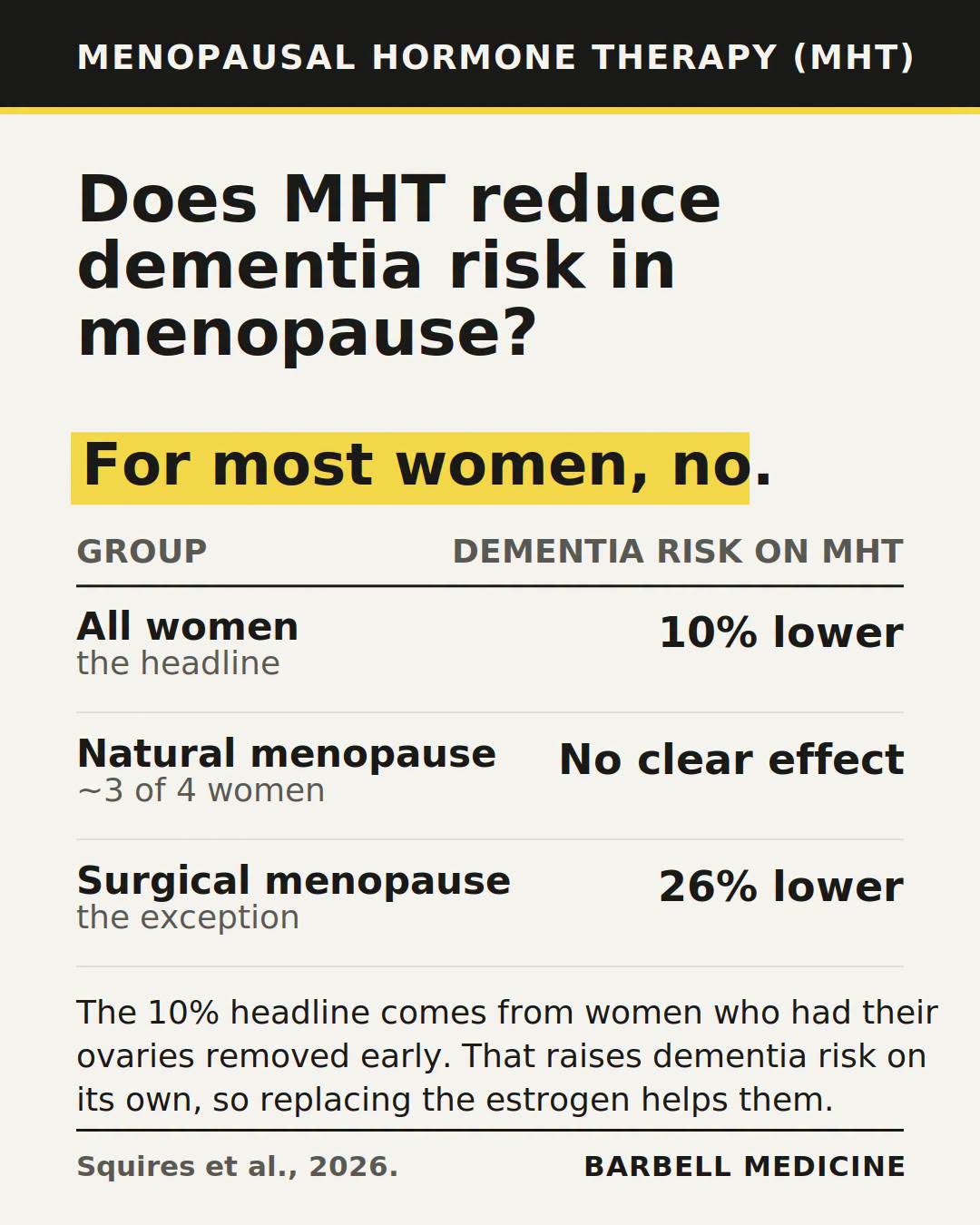
Researchers followed about 183,000 women. The ones on hormone therapy were about 10% less likely to be diagnosed with dementia. Then they split the women by how they reached menopause. In the ones who went through it naturally, about three-quarters of the group, hormone therapy didn't reliably help. The whole effect came from the smaller group who'd had their ovaries surgically removed.
Still, even the surgical group doesn't support the headline. When a younger woman's ovaries are removed, her estrogen drops decades before it naturally would, which raises her dementia risk on its own. Giving those women hormones until the normal age of menopause offsets the risk the surgery created. It doesn't tell you anything about dementia risk in a 51-year-old who went through menopause on schedule.
A single study is almost never the full answer anyway. A recent meta-analysis of ten studies, in over a million women, found hormone therapy had no reliable effect on dementia in either direction. Not protection, not harm. It also tested the idea that there's a window around menopause where hormones protect the brain, and found no effect there either.
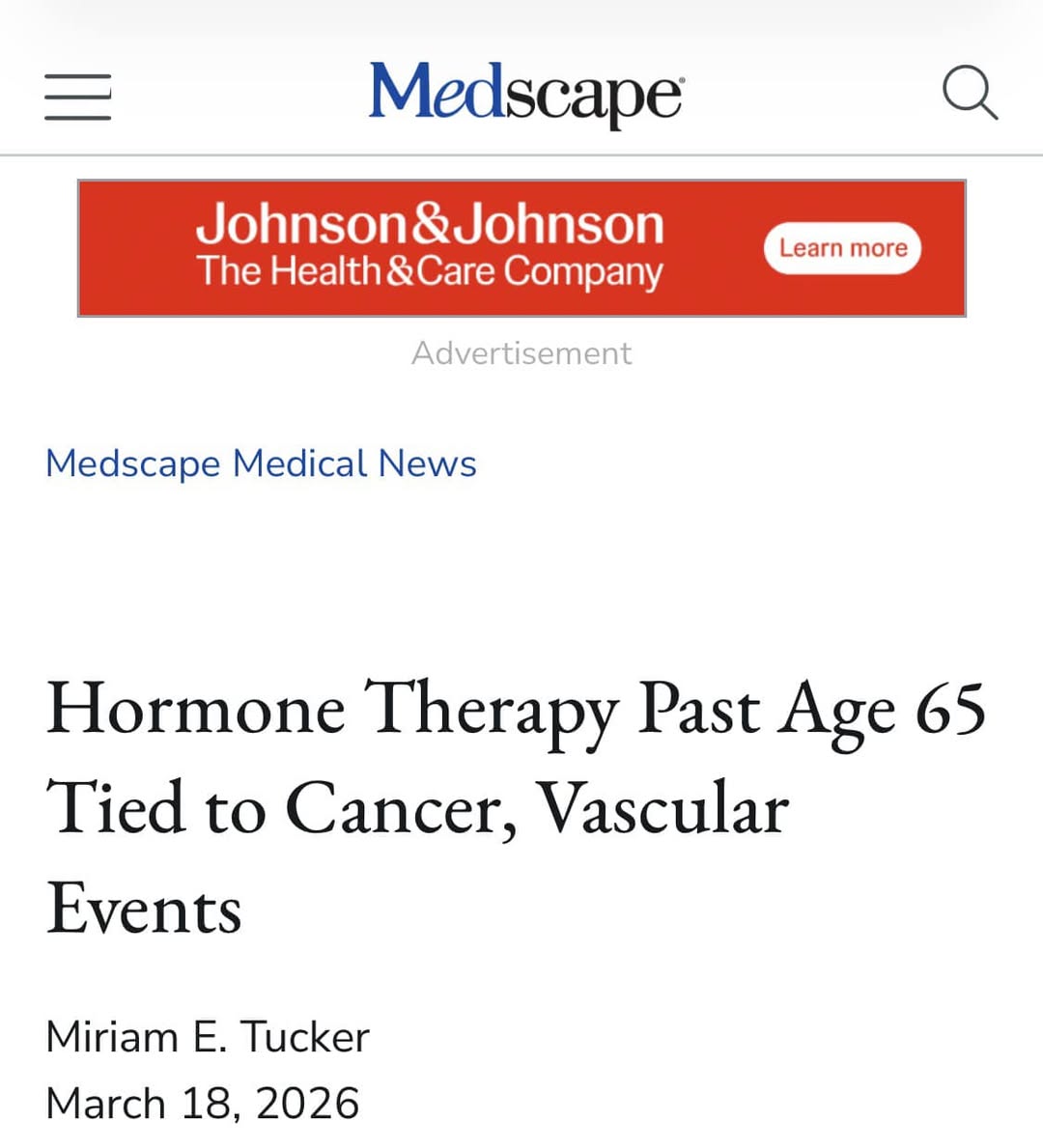
I think a lot of the current overclaiming is really an overcorrection to older data that got misread the same way. The WHI Memory Study found combined hormone therapy roughly doubled the risk of dementia. It’s another impressive headline, but the study was performed in women 65 and older, who started the hormones two decades after their last period, into a brain that had already aged twenty years without estrogen. And "doubled" was about 23 extra cases per 10,000 women a year. This also has nothing to do with a 51-year-old starting therapy for hot flashes.
So what drives a woman's risk of dementia? The modifiable risk factors aren't sexy: blood pressure and vascular health, fitness, hearing, sleep, depression, education, staying active. Menopause isn't on it, though that's not to say menopause doesn't affect cognitive function. The brain fog that many women experience during the transition, the trouble with word-finding, the sense that thoughts come slower, is mostly related to poor sleep. Hot flashes and a real increase in sleep apnea around this age are the main culprits. Fix the sleep, with hormones or without, and a CPAP if needed, and the fog lifts.
To me, there are two recurring problems in this space. One is that many women who would benefit from hormonal therapy are not getting it due to a number of problems with physician attitudes, experience, and patient access. The second is that many influencers and clinics who stand to profit from acquiring more patients promote menopausal hormonal therapy as a panacea. Both are problematic, but not unique. We see the same thing with men and TRT. Hormone therapy can be very useful for both, when it's prescribed for the right reasons. Right now it's both under- and over-prescribed.
So if you're a perimenopausal woman, what do you actually do with this? Social media is a misinformation minefield, especially when there's something to sell on the back end. Based on current evidence, if you're having hot flashes, night sweats, poor sleep, and/or vaginal dryness and pain with sex, hormone therapy is worth a conversation with a physician.
The evidence also favors starting therapy relatively close to menopause, within about ten years of your last period or before age sixty. Women who start in that window tend to have a more favorable risk profile than women who start much later. You can still start after that, but the risk:benefit analysis changes. Some histories call for more caution and an individualized conversation: breast cancer, a prior blood clot, a recent heart attack or stroke, active liver disease. And any bleeding after your final period should always be checked out before you start anything.
But for dementia, the evidence that hormone therapy helps just isn’t there. Hormone therapy is a genuinely useful treatment with a real list of indications and a real list of cautions. Working with an experienced physician can help you determine if it’s the right fit for you. No influencer required.