Vitamin K2 is often discussed in cardiovascular health because vitamin K is required to activate matrix Gla protein, one of the proteins involved in regulating vascular calcification. A new randomized trial provides direct human evidence that this pathway may have a measurable effect on coronary calcium progression.
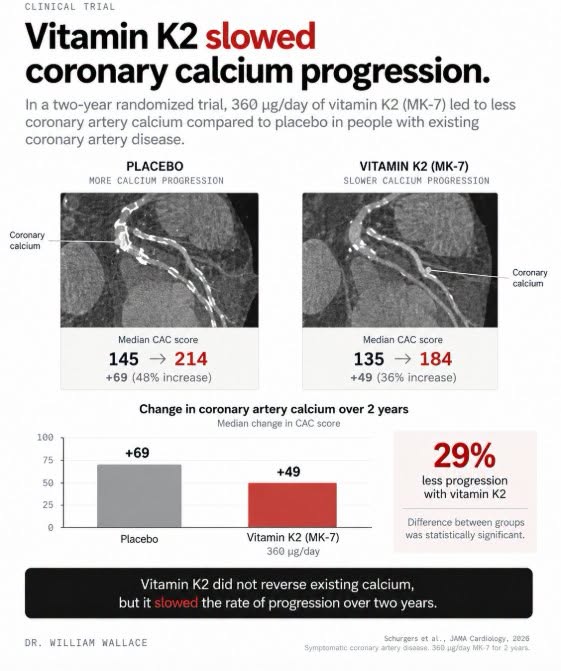
Researchers randomized 180 adults with symptomatic coronary artery disease and existing coronary calcium to 360 µg/day of menaquinone-7 (MK-7) or placebo for two years. Coronary calcium increased in both groups, but progression was significantly slower with MK-7. Median CAC score increased by 69 Agatston units with placebo versus 49 with MK-7. Using those median changes descriptively, that is about a 29% smaller increase in the MK-7 group.
The important distinction is that vitamin K2 did not remove existing calcium. The signal was slower progression over time.
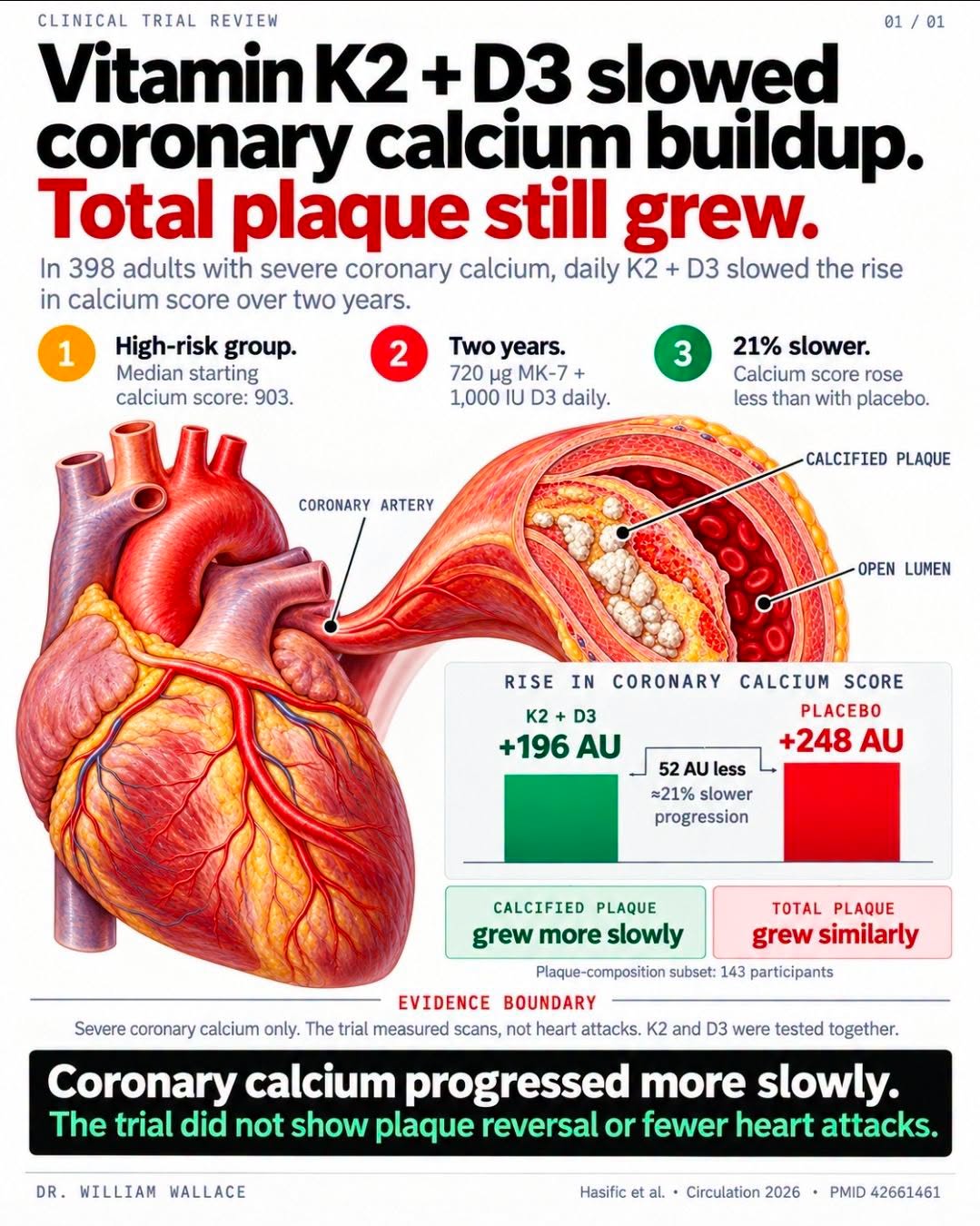
And coronary calcium is still a surrogate marker. This trial was not designed to show fewer heart attacks, strokes, or deaths, and the authors specifically note that the clinical meaning of the slower calcification remains uncertain. A larger outcomes trial would be needed before MK-7 could be considered established cardiovascular therapy.
So the finding is promising. Two years of MK-7 altered the trajectory of coronary calcification in people who already had coronary artery disease.
Reference:
Vossen LM, et al. JAMA Cardiol. 2026;11(8):719-726. PMID: 42268593. DOI: 10.1001/jamacardio.2026.1279.