HD-OPM Archive
Topics › How to read research

Randomized trials and prospective cohorts top the evidence hierarchy

Louis Nervegna · Sep 18, 2026 · ♥ 18 reactions · 2 comments · original Facebook post
How to read research
AI summary & key facts

The poster explains that randomized controlled trials can prove causality and prospective cohort studies track long-term outcomes, so the two together are the best evidence. He warns that people often cite lower-level studies to refute higher-level ones and urges readers to ask where a study sits on the hierarchy.

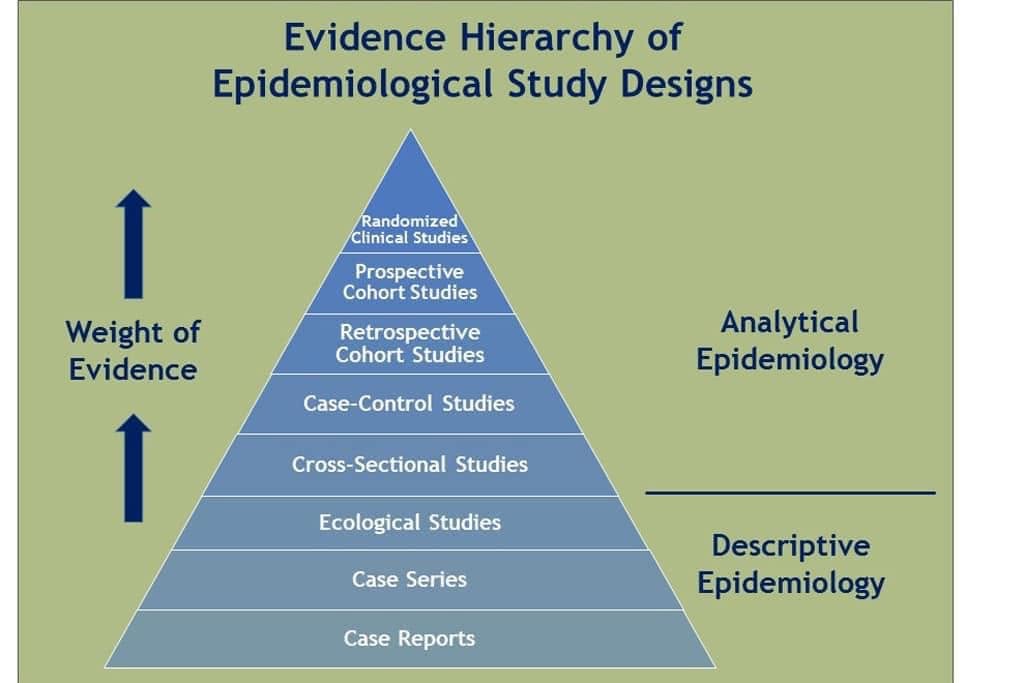
A reminder that randomized controlled trials and prospective cohort studies are at the top of the evidence hierarchy in medicine.

Randomized controlled trials can prove causality.

Prospective cohort studies can look at what happens over very long periods of time, e.g. 30 years.

A combination of both is best. This gives us information about causality plus information about the long term.

This is the kind of quality evidence that you should demand before making any important health or medical decision.
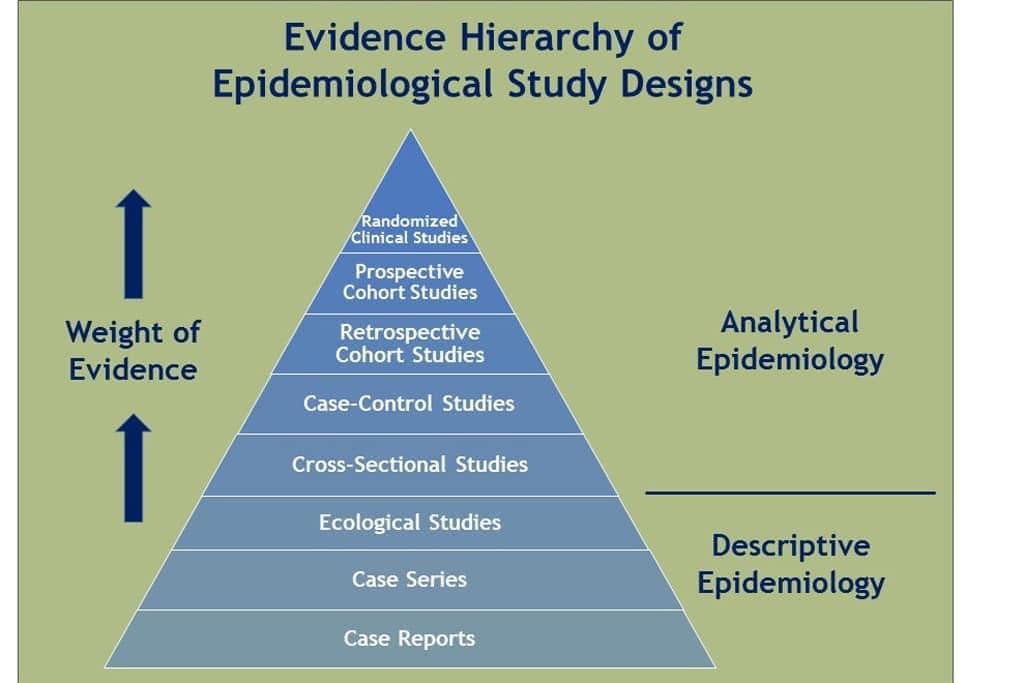
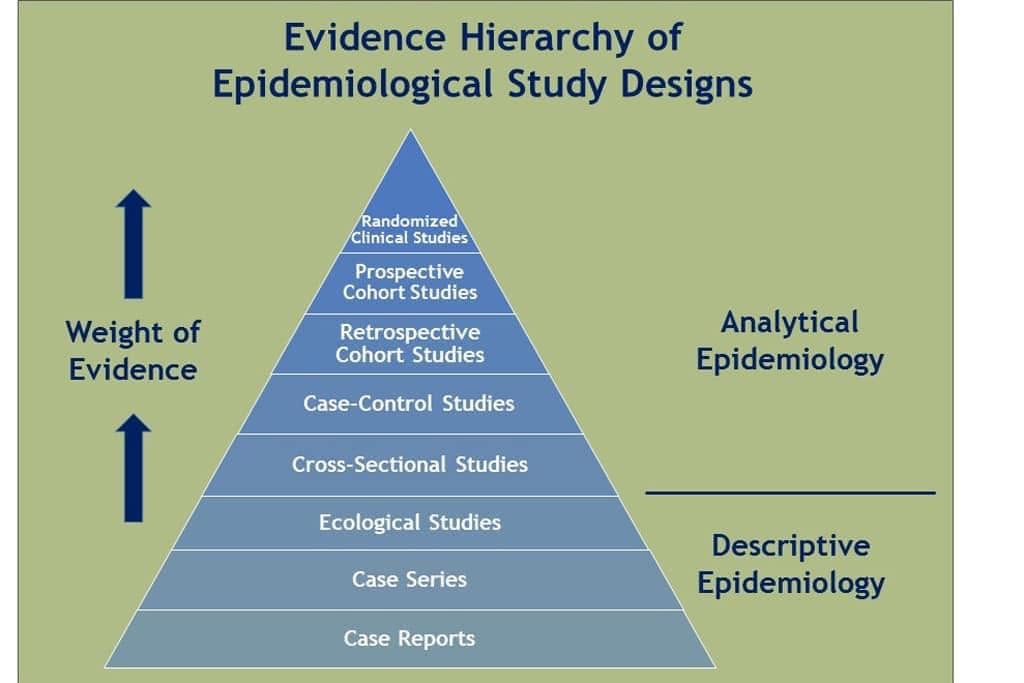
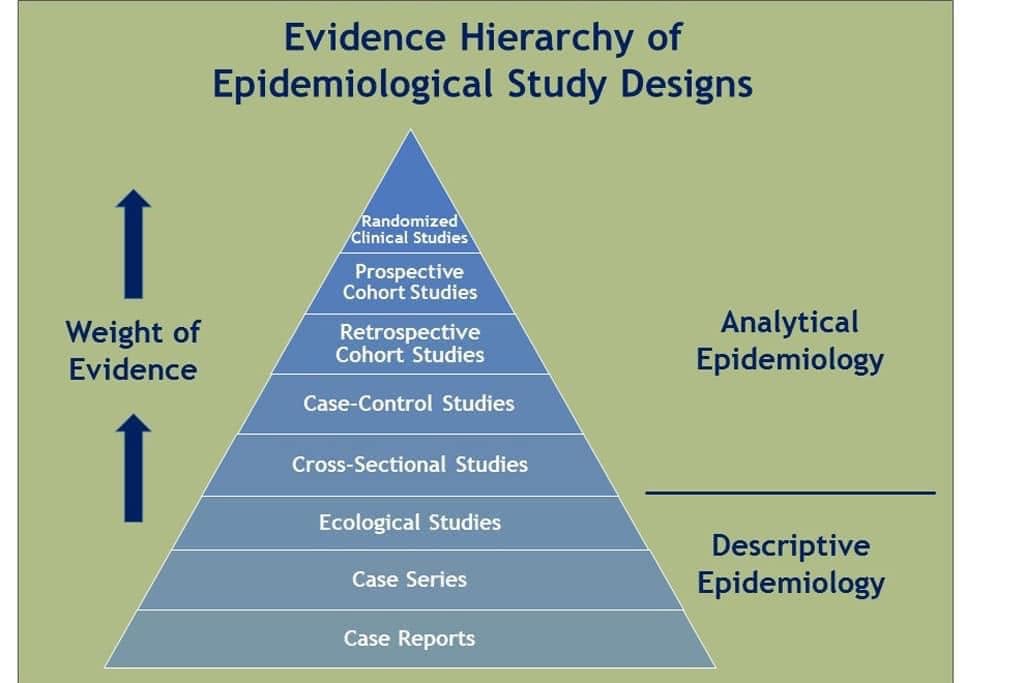
Everyone reading medical studies should understand this hierarchy of evidence.

A common technique used by quacks and charlatans— or people who just don’t know what they are talking about— is to cite studies from the bottom of this hierarchy to try to refute studies at the top.

This technique is used all the time in health groups on Facebook. The first question you should ask when you see someone post a study is: Where on this hierarchy does the study fall?

#evidenceHD #ecologicalHD

No photo description available.
← newer: CaRi-Heart AI on CT angiograms measures coronary inflammatioolder: Reliable medical knowledge doesn't require RCTs: smoking and →