Two large cardiovascular trials just delivered a surprising result.
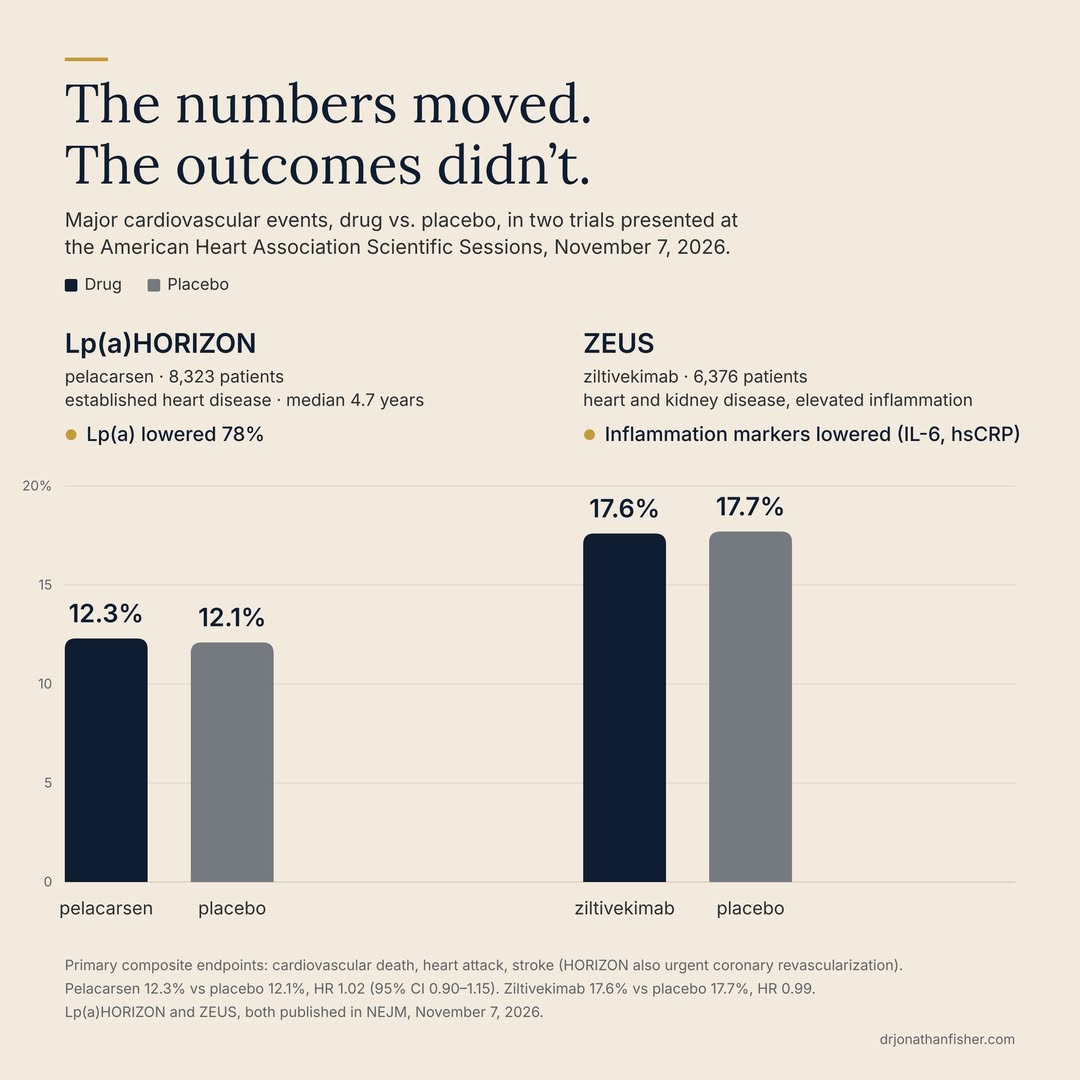
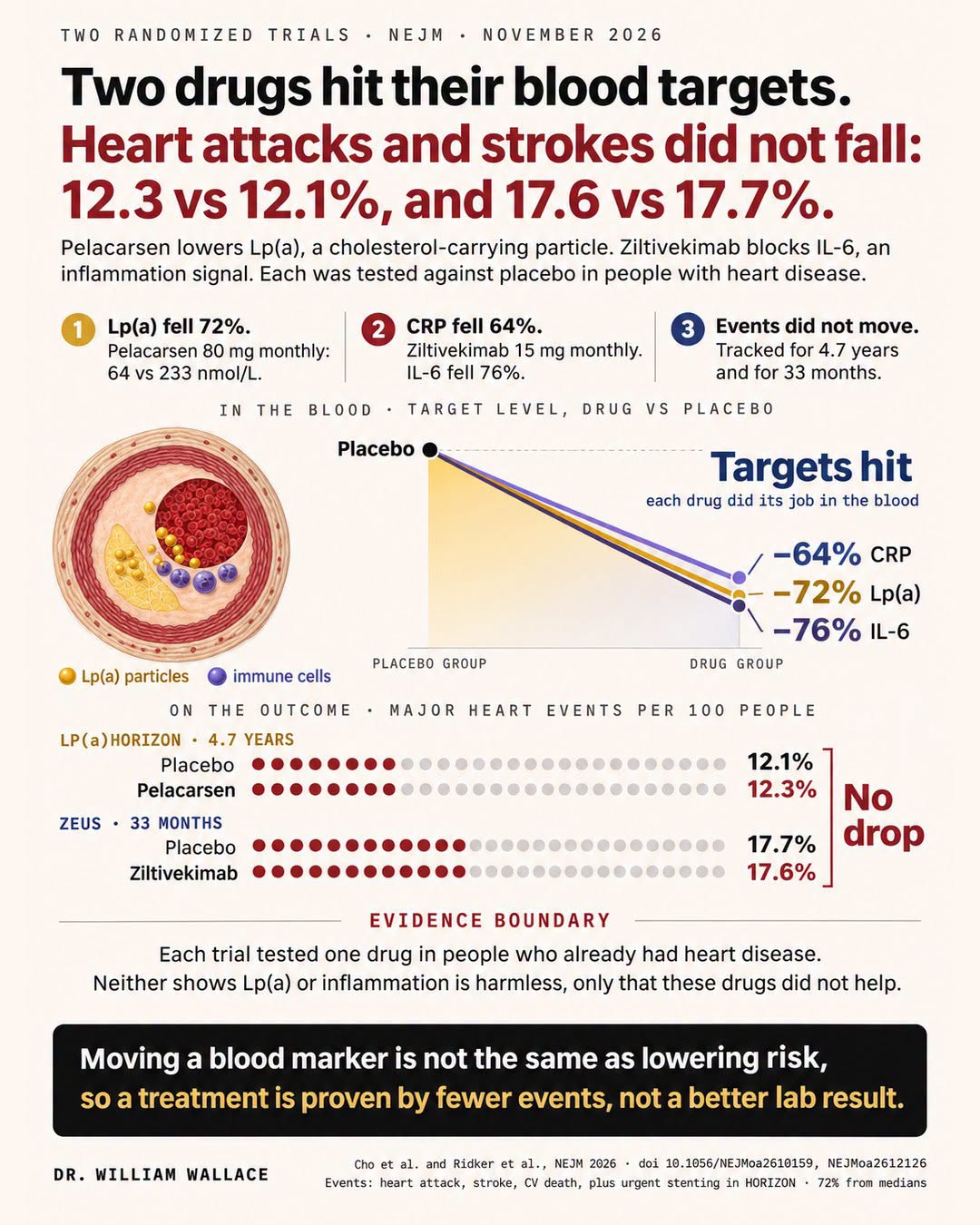
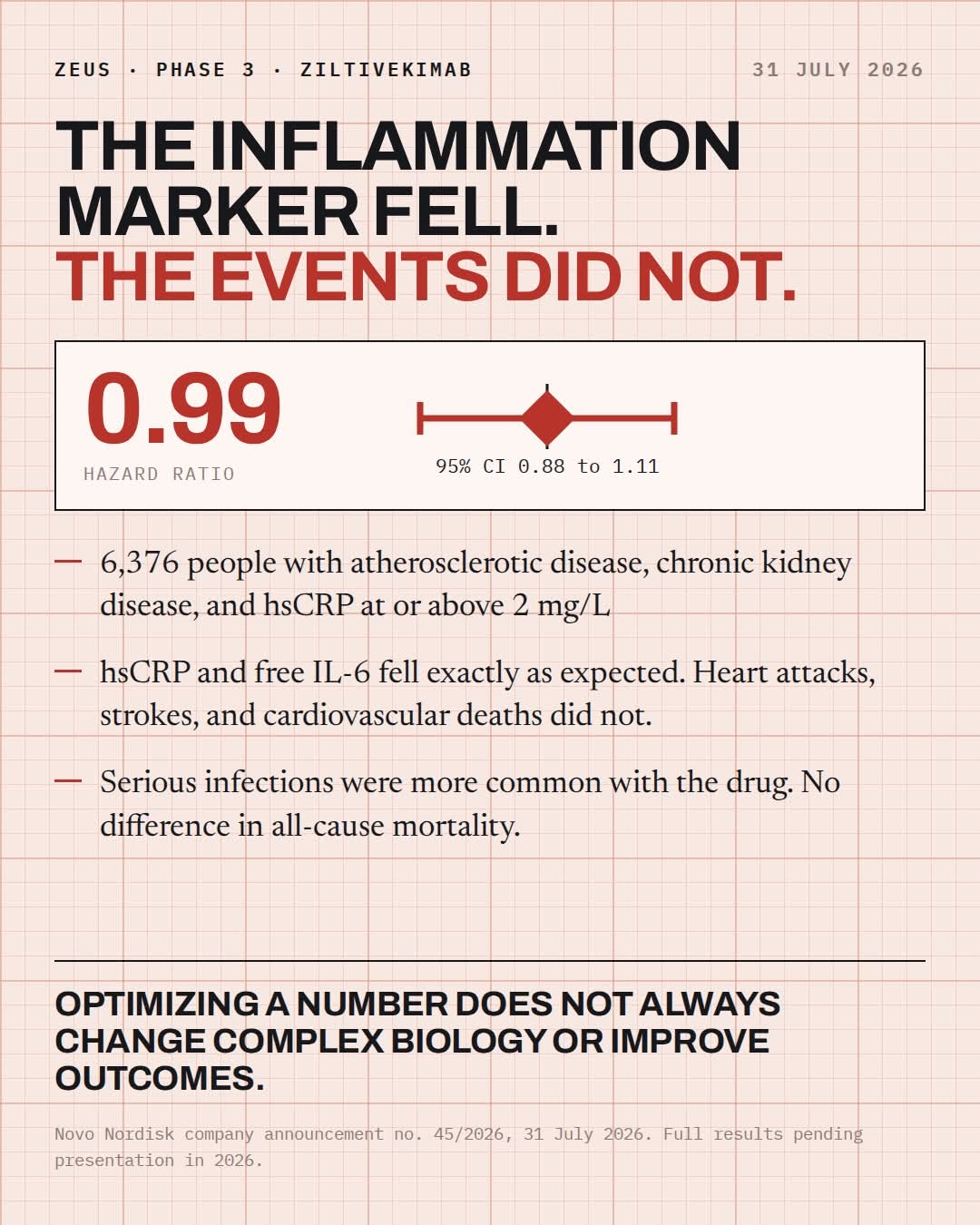
One drug lowered an inherited cardiovascular risk factor Lp(a) by nearly 80%. Another sharply reduced inflammation.
Yet in both trials, heart attacks, strokes, and cardiovascular deaths occurred at virtually the same rate as with placebo.
The findings, presented this weekend at the American Heart Association’s scientific meeting, offer an important reminder:
Just because we can measure something, and even change it, doesn’t mean doing so will improve our health.
The significance of the underlying risk factors hasn’t changed . These particular drugs, in people who already had heart disease, didn’t deliver the expected benefit.
And there’s something I deeply appreciate about this news that doesn’t get the headlines: the process that led to them and the transparency around sharing “negative” results.
Science tests its own assumptions, publishes disappointing findings, and revises its understanding when the evidence demands it.
Recently, I met someone who was skeptical of statins despite having coronary plaque and elevated risk of heart attack, yet was taking 15 different supplements. They weren’t asking my opinion; they were describing how they approach their health. They were working hard at it, with the information that had reached them.
It struck me how selectively we sometimes apply skepticism.
These experimental drugs were put through rigorous trials measuring actual health outcomes. Many supplements marketed for health and longevity have never faced comparable scrutiny.
I’m not against supplements, and I welcome people questioning their doctors, me included. What I’m against is untested claims sold with the confidence of proven ones.
Medical science gets things wrong. Its willingness to say so and change course is what makes it trustworthy. In an era of sophisticated health testing, supplements, and promises of biological optimization, we need that humility.
We should apply the same standards of evidence to the supplements and treatments we’re eager to embrace as we do to the medicines we’re reluctant to take.
#epistemichumility #cardiology #science #healthcare