HD-OPM Archive
Topics › Mediterranean, DASH, MIND & plant-forward diets

Joel Fuhrman defends lectins as hormetic, beneficial plant compounds

Louis Nervegna · Oct 05, 2026 · ♥ 12 reactions · 2 comments · original Facebook post
Mediterranean, DASH, MIND & plant-forward dietsMyths, misinformation & controversies
AI summary & key facts

The poster agrees with a claim that low doses of lectins in whole plant foods are hormetic and protective, particularly against cancer, and that cooking reduces the dose further. The shared text adds that beans' lectins slow carbohydrate breakdown and that undercooked beans are the only real risk. No studies are cited.

He’s right. Lectins are hormetic in low doses. Their very mild toxicity turns on defensive pathways that are protective, particularly against cancer. That’s how hormesis works.

This is one of several mechanisms by which they provide benefit.

Large amounts are not good, but the tiny quantities found naturally in most whole plant foods are beneficial for the average person. Cooking lowers the amount even further, ensuring the dose is very low.

It’s worth googling the word “hormesis” to understand what it means. Many compounds found in plants are hormetic. They are poisons in large concentrated doses— but beneficial via hormesis in the tiny doses found naturally in whole foods.
#lectinsHD #legumesHD #tomatoesHD #mushroomsHD #hormesisHD

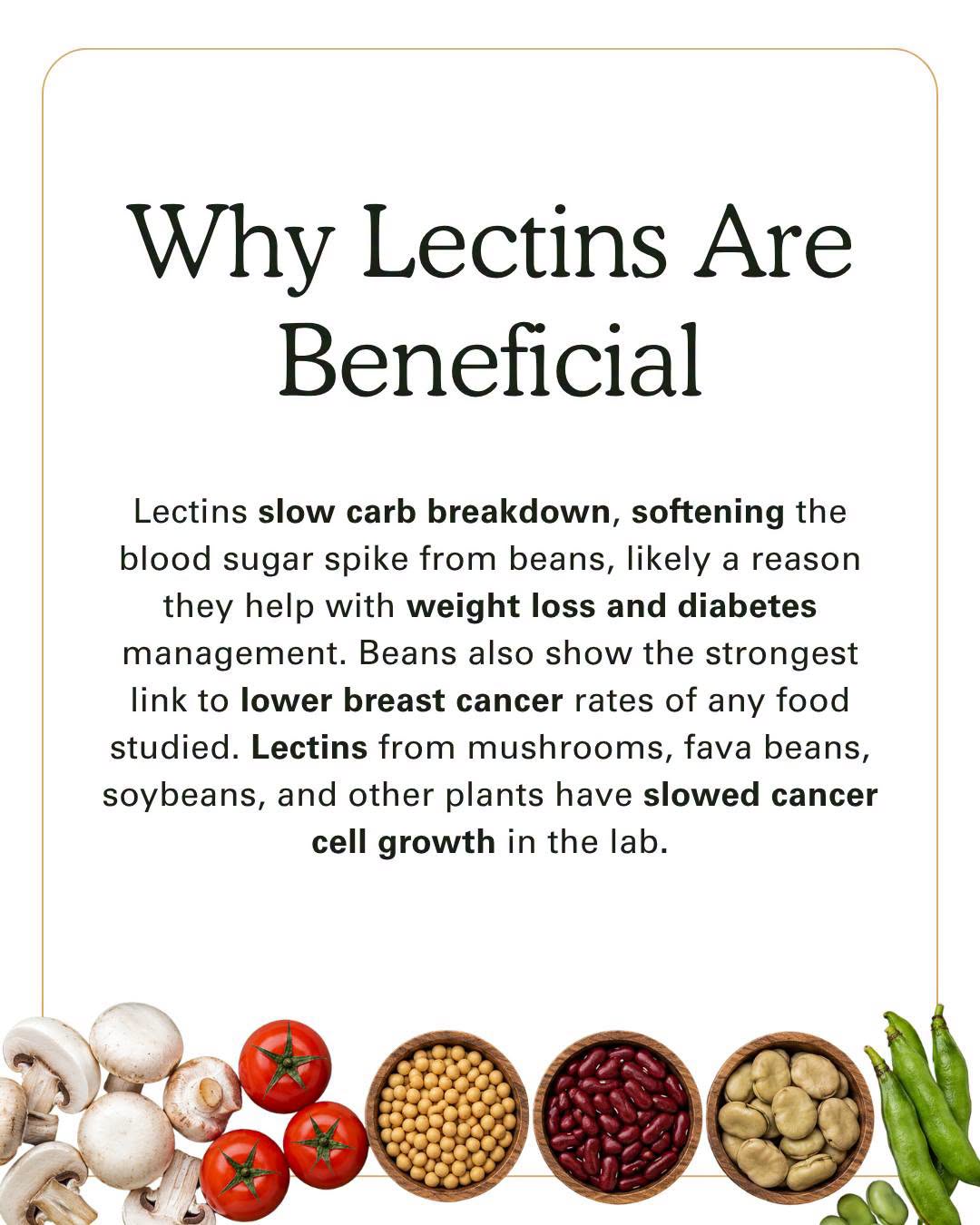
Some believe that lectins are dangerous and encourage you to skip beans, tomatoes, and other plant foods because of it. The research doesn't back that up. Research suggests lectins in beans slow carbohydrate breakdown, likely one reason why beans support weight loss and better blood sugar control. Plus, many plant food lectins have anti-cancer properties. The one real risk of lectins, undercooked beans, disappears the moment you cook them adequately. Learn more and get the real story on lectins: The real story on lectins (drfuhrman.com)

May be an image of baked beans and text
← newer: FoundMyFitness video on vitamin D, dementia and APOE4older: Heart podcast on the LoDoCo2 imaging substudy of colchicine →