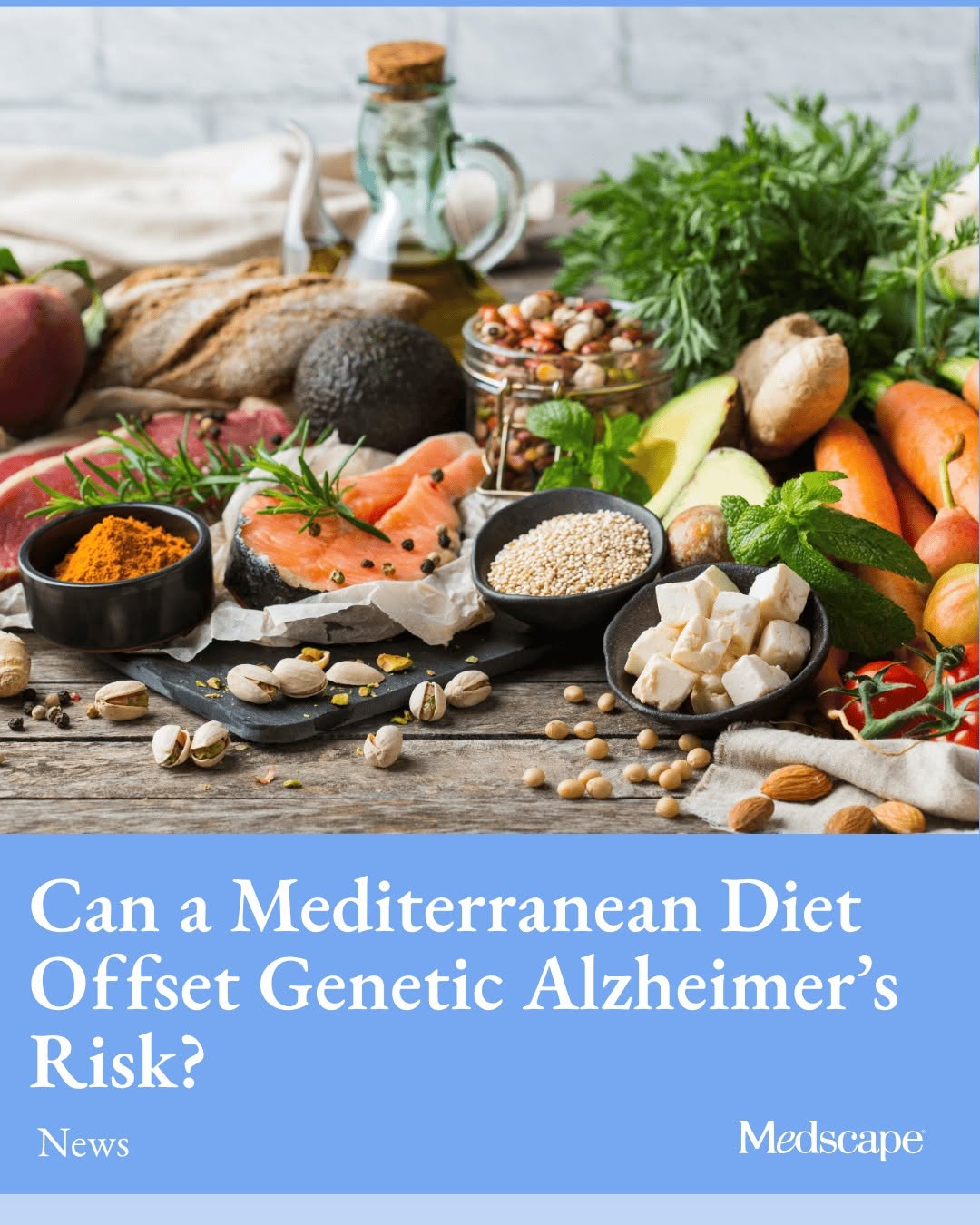
Diet likely has a major effect on Alzheimer’s disease in the earlier stages.
Dean Ornish proved this in a small randomized trial run at MGH hospital in Boston.
MGH is planning a larger trial to continue this promising research.
Quoted from the original post:
The suicide rate in the first month after an Alzheimer's diagnosis is seven times higher than normal. Dan Buettner says it's because the diagnosis strips away hope: "get your affairs in order, it's only going to get worse."
But @deanornishmd research tells a different story. The same lifestyle changes proven to reverse heart disease also lower the amyloid A-beta 42/40 ratio in the brain, and they do it more effectively than drugs because they work through multiple mechanisms at once, not just one.
The results from his study, measured by Clinical Global Impression of Change: after 20 weeks, 71% of participants stopped declining or improved. After 40 weeks, that number rose to 83%.
This is what we mean when we say longevity isn't about a single habit or a pill. It's a holistic ecosystem, diet, movement, stress, connection, and it can change outcomes even after a diagnosis most people assume is a death sentence.
That's hope, backed by data.