Lp(a) alone increases risk of dying from heart disease.
Even if you have ZERO other risk factors, your chances of dying from heart disease go up significantly with high Lp(a).
Your risk of dying of CVD goes up 16% for every 50mg/dL increase in Lp(a). This is independent of any other risk factors that you might have.
Quoted:
“Even in patients at low risk of ASCVD according to traditional ASCVD risk scores, very high Lp(a) levels above 180 mg/dl can result in markedly increased ASCVD risk. In primary prevention, every 50 mg/dl Lp(a) increase translates to a hazard ratio of 1.16 for CVD mortality alone [16].”
——
Let’s do the math:
Suppose you have an Lp(a) of 250mg/dL.
Your risk of dying of heart disease therefore goes up by 16% x 5 = 80%.
You risk of dying of CVD nearly doubles, compared to a matched person with near zero Lp(a).
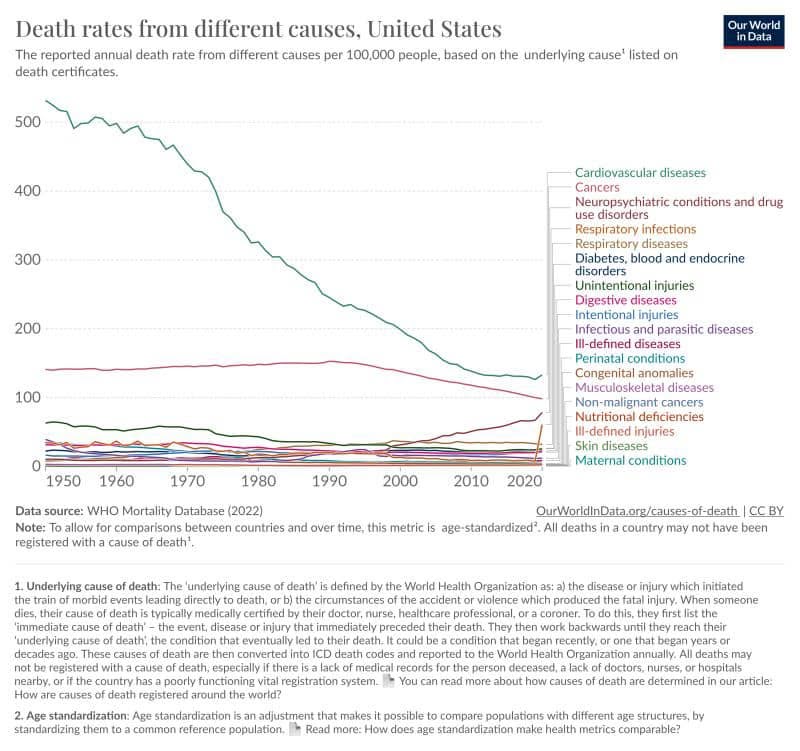
For the average American, lifetime risk of dying of heart disease is about 20%. That goes up to 36% in the case that I’m describing. (An increase of 80%.)
——
.
ncbi.nlm.nih.govLink to ncbi.nlm.nih.govncbi.nlm.nih.gov