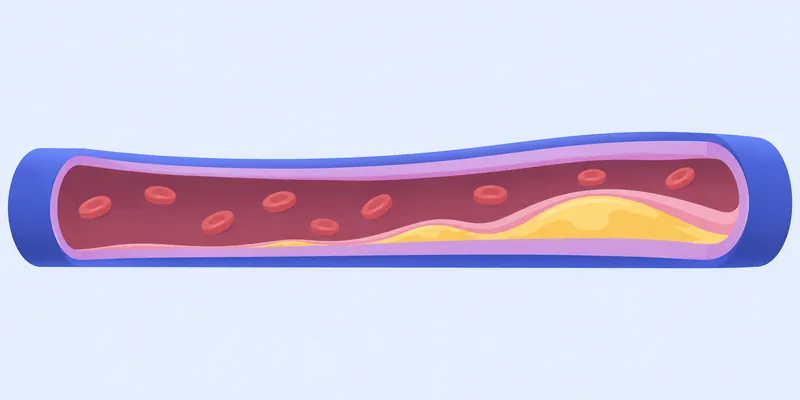
The short answer from the group's posts is that prevention is a sequence, not a single trick. First you measure your risk, then you lower the biggest drivers (atherogenic cholesterol particles, blood pressure, blood sugar, inflammation), then you build a diet, activity and body-composition routine you can keep, and finally you add medication where the numbers justify it. Lifestyle and drugs are treated as partners. One statement Louis Nervegna posted argues that cardiometabolic risk is cumulative and multifactorial, and that interventions acting on different causal pathways give additive, not competing, benefits1.
This article turns that sequence into a checklist. It summarizes what group members posted and the research they cited, and is not personal medical advice. Admin opinions are attributed, and mixed evidence is flagged. The group's admins recommend discussing any plan, especially medication, with your own doctor.
Some encouraging context: Louis notes that the US age-standardized CVD death rate has fallen about 75% since 1950, so at the same age the annual risk of dying from cardiovascular disease is about a quarter of what it was, thanks to surgery, drugs, prevention and emergency response2.
Step 1: Know your starting risk
Understand what you cannot change
Louis makes the point that age is by far the largest risk factor. Using hazard ratios from the SCORE O.P. model for people over 65, he works out that a hazard ratio of 1.16 per year of age compounds to about 19.5 times higher risk of coronary death between ages 65 and 85. For comparison, the same table gives diabetes about 2.3 times, smoking about 1.88 times, a systolic blood pressure 40 mmHg higher about 1.31 times, and total cholesterol 40 mg/dL higher about 1.13 times8. (The post writes 19.5x as "19,500%", a mislabel. He used the numbers for women and says men are similar8.)
The practical reading is not that the other factors do not matter. They are the ones you can change, and Louis suggests targeting as many of the dozens of possible modifiable risk factors as reasonable, while recognizing some are far better proven than others9. A weaker example: a 2024 cohort news item linked constipation to more major adverse cardiac events, which Louis offered as one more possible risk factor10.
Use a risk calculator, and know its limits
For people aged 30 to 79 without known cardiovascular disease, Louis shares the AHA's PREVENT calculator. It replaces the 2013 Pooled Cohort Equations, uses newer and more diverse data, accounts for kidney and metabolic disease, and gives 10-year and 30-year risk of both atherosclerotic cardiovascular disease (ASCVD) and heart failure7. He warns that it is for primary prevention only: if you have had a heart attack or stroke, have significant atherosclerosis or have a high calcium score, it will underestimate your risk7.
Ten-year estimates can hide long-term risk. In the NEJM Women's Health Study analysis, hs-CRP, LDL and lipoprotein(a) each predicted 30-year events, and the authors support extending prevention beyond 10-year estimates11. A modeling study Gokhan Can summarized found that starting lipid lowering at ages 40 to 49 in people with high cholesterol could lower projected 30-year risk from 17% to 6-12%, compared with 13-15% remaining if treatment waited 10 to 20 years12.
Get the baseline labs and one imaging test
Gokhan shares the list of tests he personally gets, noting it is not exhaustive6:
- Lipid panel (total cholesterol, LDL, HDL, triglycerides), which he calls the cornerstone of risk assessment6.
- ApoB, which counts the total number of atherogenic (plaque-forming) particles and may predict risk better than LDL alone, especially in metabolic syndrome or diabetes6.
- Lp(a), a genetic variant of LDL that can be high even when cholesterol looks normal, particularly important with a family history of early heart disease6.
- hs-CRP, a marker of inflammation that predicts events independently of cholesterol6.
- Glucose markers: fasting glucose, HbA1c, fasting insulin and calculated HOMA-IR (some people use an oral glucose tolerance test instead of insulin)6.
- A basic metabolic panel, complete blood count, TSH, vitamin D and hormones6.
- Imaging: one of a coronary artery calcium (CAC) score or a carotid plaque ultrasound should be sufficient6.
- Tracking: keep results with dates in a spreadsheet, along with drugs and supplements and their doses, so trends and correlations become visible6.
Each of these has its own evidence. The Women's Health Study found top-versus-bottom quintile hazard ratios of 1.70 for hs-CRP, 1.36 for LDL and 1.33 for Lp(a), each contributing independently11. For Lp(a), Louis cites a review saying that in primary prevention every 50 mg/dL increase corresponds to a hazard ratio of 1.16 for CVD mortality, and that levels above 180 mg/dL markedly raise risk even in people who look low-risk by traditional scores. The linear extrapolation in his worked example (about 80% higher risk at 250 mg/dL) is his own illustration13. There is a nuance: in the MESA cohort, high Lp(a) raised risk only when hsCRP was 2 mg/L or higher, in lower-risk people averaging age 62, so it is unclear whether this applies to younger or higher-risk people14.
Show data
| Hazard ratio | 95% CI | |
|---|---|---|
| hs-CRP (inflammation) | 1.70 | – |
| LDL cholesterol | 1.36 | – |
| Lp(a) | 1.33 | – |
On inflammation, a 2025 ACC Scientific Statement describes the link between inflammation and ASCVD as no longer exploratory but clinically actionable, highlights hsCRP as a key marker, and reports that in people with known CVD hsCRP is at least as predictive of future events as LDL even on statins15. Gokhan's summary says it calls for universal hsCRP screening alongside cholesterol, with thresholds of under 1, 1 to 3 and over 3 mg/L for lower, average and higher relative risk16.
Decide how much to rely on a calcium scan
A CAC scan is where the group is most divided in emphasis. Gokhan has noted that a CAC above 300 is risk-equivalent to prior ASCVD, so such a person could be considered for secondary-prevention-style treatment17. Louis and Gokhan have shared an integrative cardiologist's step-by-step guide on what to do after a score above zero1819.
Against this, Louis highlighted two 2026 randomized trials. A Danish trial of about 30,000 men found no reduction in death, heart attack or stroke at seven years from CAC screening, with more serious bleeding, and a US trial of nearly 6,000 people (CorCal Outcomes) found event rates identical to care guided by a risk calculator. The shared commentary adds that the US Preventive Services Task Force does not recommend CAC for routine risk assessment, and that cardiology guidelines give it one job: informing a statin decision when risk is borderline20. Louis's summary: a wake-up call for some, but for the average person it does not seem to change outcomes20.
If you do track CAC over time, note that a rising score on treatment is not necessarily failure. Gokhan explains that the Agatston score multiplies area by a stepwise density factor from 1 to 4, and statins tend to convert soft, lipid-rich plaque (which does not show on a CAC scan) into denser calcified plaque, so the score can rise while rupture risk falls21. Louis recommends that article for anyone tracking CAC22.
Step 2: Lower atherogenic particles
The group's central claim about prevention is that lowering LDL cholesterol (and ApoB) is the strongest drug-or-diet lever on plaque. Gokhan's summary of a 2019 JACC review reports that in imaging studies plaques that progressed before rupture carried a 28-fold higher likelihood of an acute coronary event, that plaque progression stops when LDL falls below about 70 mg/dL, that regression generally needs levels lower still (below about 60 mg/dL), and that in the PESA cohort people with LDL below 60 mg/dL had no atherosclerosis3. A separate shared review says exercise combined with aggressive LDL control targeting below 70 mg/dL gives additive plaque benefit23.
Diet alone is not always enough, and the group is open about that. Gokhan notes that for some people saturated fat from fatty animal foods raises cholesterol markedly, which is why monitoring markers matters more than any single diet label24. Drug options that appear in the posts include:
- Statins. Louis cites outcome trials showing statins, alone or with a PCSK9 inhibitor, lower heart attacks and strokes in people with high Lp(a)25. Statins also lowered hsCRP by about 1 mg/L in a 2022 meta-analysis of 26 randomized trials, roughly 50% for someone starting at 2 mg/L26. For people with APOE4, Louis recommends an article arguing the best case for statins is vascular prevention rather than Alzheimer's treatment, with careful individual discussion27.
- Ezetimibe and other add-ons. In a meta-analysis of 15 randomized trials (123,785 patients) that Gokhan summarized, adding ezetimibe, bempedoic acid or a PCSK9 inhibitor to statins cut cardiovascular events 19% (OR 0.81) compared with statins alone, but did not improve all-cause mortality (OR 0.99)28. In a study of 264 STEMI patients, rosuvastatin 40 mg plus ezetimibe reached an LDL below 55 mg/dL in 90% versus 47.9% on rosuvastatin alone28.
- Bempedoic acid in 4,206 statin-intolerant primary prevention patients cut the primary composite outcome by 30% (HR 0.70) and all-cause mortality by 27%, with more gout and gallstones and higher creatinine, uric acid and liver enzymes29.
- PCSK9 inhibitors. Louis argues no randomized trial shows PCSK9 inhibitor monotherapy lowers heart attacks, strokes or CVD death, that guidelines reserve it as a backup when first-line therapy fails or is not tolerated, and that the HORIZON trial lowered Lp(a) massively with no effect on major adverse cardiovascular events. He suggests anyone taking one mainly to lower Lp(a) revisit that choice with their doctor25.
Show data
| Odds ratio (log scale) | 95% CI | |
|---|---|---|
| *Cardiovascular events | 0.81 | – |
| Death from any cause | 0.99 | – |
On timing, the 30-year modeling study suggests the question for many people is when to start rather than whether12. The Bale and Doneen protocol Gokhan describes combines lifestyle counseling, regular testing, statin-based lipid control often with ezetimibe or niacin, a systolic blood pressure goal under 120, low-dose aspirin for secondary prevention and high-risk individuals, insulin sensitizers and anti-inflammatories. In their 2016 community-clinic cohort, maximum carotid intima-media thickness fell 52.7% and lipid-rich plaque fell 78.4% within two years30. This was an observational cohort, not a randomized trial, and the aggressive blood pressure target is that clinic's approach rather than a general rule30.
Step 3: Eat a traditional Mediterranean or DASH-style diet
If there is one lifestyle pillar with the strongest trial evidence in the posts, it is diet pattern. Several professional bodies converge:
- The ESC/EAPC scientific statement concludes diet is a primary factor in prevention and treatment; plant-based, whole-food patterns lower risk; ultraprocessed food (including processed meat), red meat, salt, sugar and saturated fat raise it; Mediterranean, DASH and vegetarian diets reduce risk, with no extra benefit from a pure vegan diet; and high potassium is beneficial while high sodium is harmful31.
- A 2026 ACC Scientific Statement stresses overall dietary pattern over single nutrients: emphasize vegetables, fruits, nuts and seeds, legumes, whole grains, fish and unsaturated fats; limit ultraprocessed foods, sugary drinks, refined grains, excess sodium, red and processed meat, alcohol, and saturated and trans fat32. Louis notes this is virtually identical to the diet recommended in the group32.
- A September 2025 JACC: CardioOncology review says major guidelines recommend predominantly whole-food plant-based eating, and counts Mediterranean and DASH as plant-forward patterns33. The AHA's own guidance emphasizes fruits and vegetables, whole grains, mostly plant proteins and fish, minimally processed foods, little added sugar and salt, and limited or no alcohol34.
The randomized evidence the admins lean on:
- PREDIMED (about 7,500 people, primary prevention): the main composite of heart attack, stroke or cardiovascular death fell 30% with the olive-oil group and 28% with the nut group after 5 years versus an AHA-style control diet, mostly in people already taking statins and other drugs4. A separate PREDIMED analysis linked the highest olive oil intake to 48% lower cardiovascular mortality, with each extra 10 g a day (about a tablespoon) tied to 10% lower CVD risk and 7% lower CV mortality35.
- CORDIOPREV (1,002 coronary patients): the Mediterranean diet reduced carotid thickness at 5 and 7 years while a low-fat diet did not, and was associated with about 25% fewer recurrent major events over 7 years, even on statins with average LDL below 90 mg/dL3637.
- Lyon Diet Heart Study: in people with a prior heart attack, Louis reports about 70% fewer cardiovascular events and about 70% lower all-cause death over 2.5 years, emphasizing canola and olive oil and an ALA-fortified canola margarine instead of butter38.
Practical details come from Gokhan's do's and don'ts: at least five servings of fruit and vegetables a day, mainly whole grains with white bread, regular pasta and potatoes treated like desserts, olive oil, nuts and fatty fish, regular legumes, red meat only a few times a month, and minimal butter and cream39. Gokhan also proposed an HD-OPM food pyramid inspired by Mediterranean principles40, and Louis shared the MIND diet, a Mediterranean-DASH hybrid, as a pattern neurologists recommend for brain health41.
Where the evidence is less tidy
- In the MeMeMe trial of 1,442 people with metabolic syndrome, metformin cut type 2 diabetes by 80% (92% with a Mediterranean diet), but the diet alone did not outperform placebo for the combined outcome, which Gokhan calls a surprising failure possibly due to adherence42.
- A Harvard analysis Louis shared concludes that macronutrient quality matters more than the carbohydrate-to-fat ratio, so both low-carb and low-fat diets can be heart-healthy if rich in quality plant foods43. Gokhan says no one can name a single best diet, with Mediterranean first for the average person and individualized low-carb or low-fat vegan options for people with insulin resistance24.
- Louis argues Esselstyn's "cure" angiogram overstates diet's effect, because the baseline image followed a heart attack and the later opening reflects natural healing too44.
Step 4: Move every day
The posts describe a ladder of activity, starting from very low thresholds.
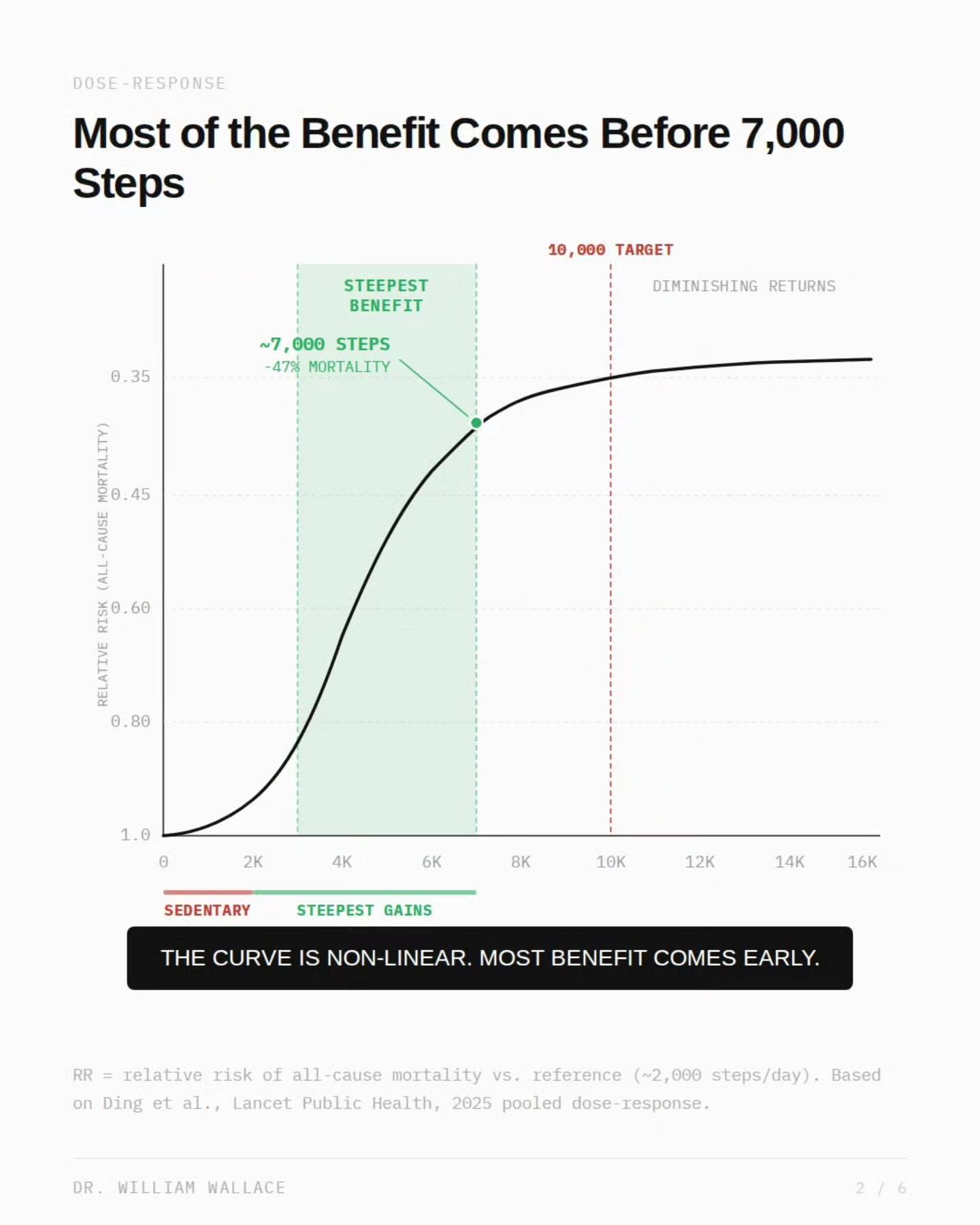
- Walking. A 2025 Lancet Public Health meta-analysis found that 7,000 steps a day versus 2,000 was linked to 47% lower all-cause mortality, 25% lower CVD incidence and 47% lower CVD mortality, with some benefit visible by 4,000 steps545. Louis adds that most of the mortality benefit occurs below 7,000 steps46. A 2023 meta-analysis of 17 studies and 226,889 adults linked each extra 1,000 steps to 15% lower all-cause death and each extra 500 steps to 7% lower CVD death47. These are observational associations.
- Resistance training. The AHA's 2023 scientific statement concludes resistance training, alone or with aerobic exercise, is safe and effective for improving cardiovascular risk factors in adults with and without CVD48. Louis adds that resistance exercise is the best way to prevent sarcopenia, the loss of muscle strength and mass, which is associated with faster CVD progression and higher mortality49.
- Higher-intensity work. The ACC inflammation statement endorses at least 150 minutes a week of exercise15. Louis shared a two-year trial by Benjamin Levine in sedentary 50-year-olds, who trained 5 to 6 hours a week and made their hearts structurally younger, using Norwegian 4x4 intervals (4 minutes at about 85-95% of maximum heart rate, 3 minutes recovery, four times) plus endurance and twice-weekly strength sessions50. Gokhan's write-up describes this as reversing about 20 years of cardiac aging51. A shared review reports that exercise, including HIIT, reduces plaque burden on top of LDL lowering, though very high volumes may raise calcification23.
Step 5: Weight, metabolic health and the rest
- Weight. The AHA describes BMI as a screening tool and suggests small steps like moving more and sitting less if risk is moderate or high52. In Gokhan's 2023 additions to the Bale-Doneen protocol, semaglutide or tirzepatide are suggested for weight loss if behavioral counseling fails30.
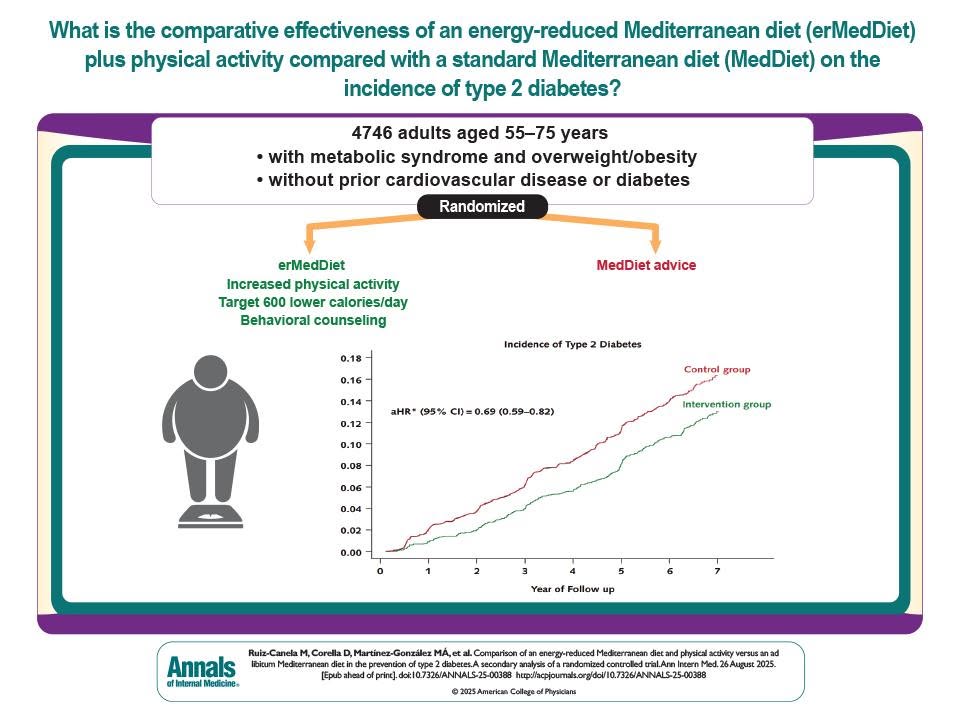
- Blood sugar. Diabetes and insulin resistance are significant risk factors even when glucose is only mildly elevated6. Gokhan shared an article reporting that liver disease plus type 2 diabetes multiplies cardiovascular risk53. In PREDIMED-Reus, the Mediterranean diet with olive oil or nuts reduced diabetes incidence by 52% after 4 years, and adding exercise and calorie limitation lowered diabetes risk a further 31%4.
- Alcohol, coffee and supplements. The ESC statement says about one unit of alcohol a day may not be unfavorable, moderate coffee is not associated with increased risk, and there is no convincing evidence that vitamin or mineral supplements protect against CVD31. The AHA's guidance, by contrast, says limited or preferably no alcohol34. A 2026 BMJ review of nearly 154,000 people found little meaningful benefit of calcium and vitamin D supplements for fractures and falls54. Louis argues iron supplements are generally a bad idea in healthy people with low-normal ferritin and no symptoms, but advises seeing a doctor to find a cause and treat true deficiency55. Rhonda Patrick's keynote, summarized by Gokhan, suggests testing and correcting vitamin D (she cites 40-60 ng/mL as optimal) and omega-3 status; this is her view rather than a trial result56.
- Aspirin. In an ASPREE subgroup analysis, aspirin was tied to about 70% lower dementia risk in people with high genetic platelet-count scores, but major bleeding doubled in that group and the authors say the result needs confirmation57.
What this means for you
- Start with measurement: a lipid panel, ApoB, Lp(a), hs-CRP, glucose markers and one imaging test, tracked over time6.
- Use a risk calculator such as PREVENT if you have no known CVD, and remember it underestimates risk if you have a high calcium score or prior events7.
- The group's admins recommend discussing LDL goals and medication with a doctor. The cited review says progression stops below about 70 mg/dL and regression generally needs lower3.
- Build the diet around Mediterranean or DASH principles, where randomized evidence is strongest43132.
- Walk daily and add resistance training. Even 4,000 to 7,000 steps shows large associations548.
- Treat lifestyle and drugs as additive, not rivals1.
- Be cautious with scans and supplements that lack outcome evidence2031.
Frequently asked questions
Do I need a CAC scan?
It depends. Gokhan lists it as one imaging option6, and a score above 300 is considered risk-equivalent to prior ASCVD17. However, two 2026 randomized trials found that scanning did not change outcomes for average-risk people20. Talk with your doctor.
My calcium score went up on a statin. Is that bad?
Not necessarily. The Agatston formula rewards denser plaque, and statins convert soft plaque to calcified plaque, so scores can rise even as rupture risk falls21.
How many steps should I aim for?
Meta-analyses cited in the group show benefits from about 4,000 steps, large gains by 7,000, and continued gains beyond54647.
Is diet or medication more important?
The admins say both. Mediterranean diets lowered events even in people already on statins436, and drug add-ons lowered them further128.
Which diet is best?
The Mediterranean and DASH patterns have the best evidence, per the ESC statement31, though Gokhan notes optimal diets vary and that reaching healthy weight, markers and blood pressure matters more than the label24.