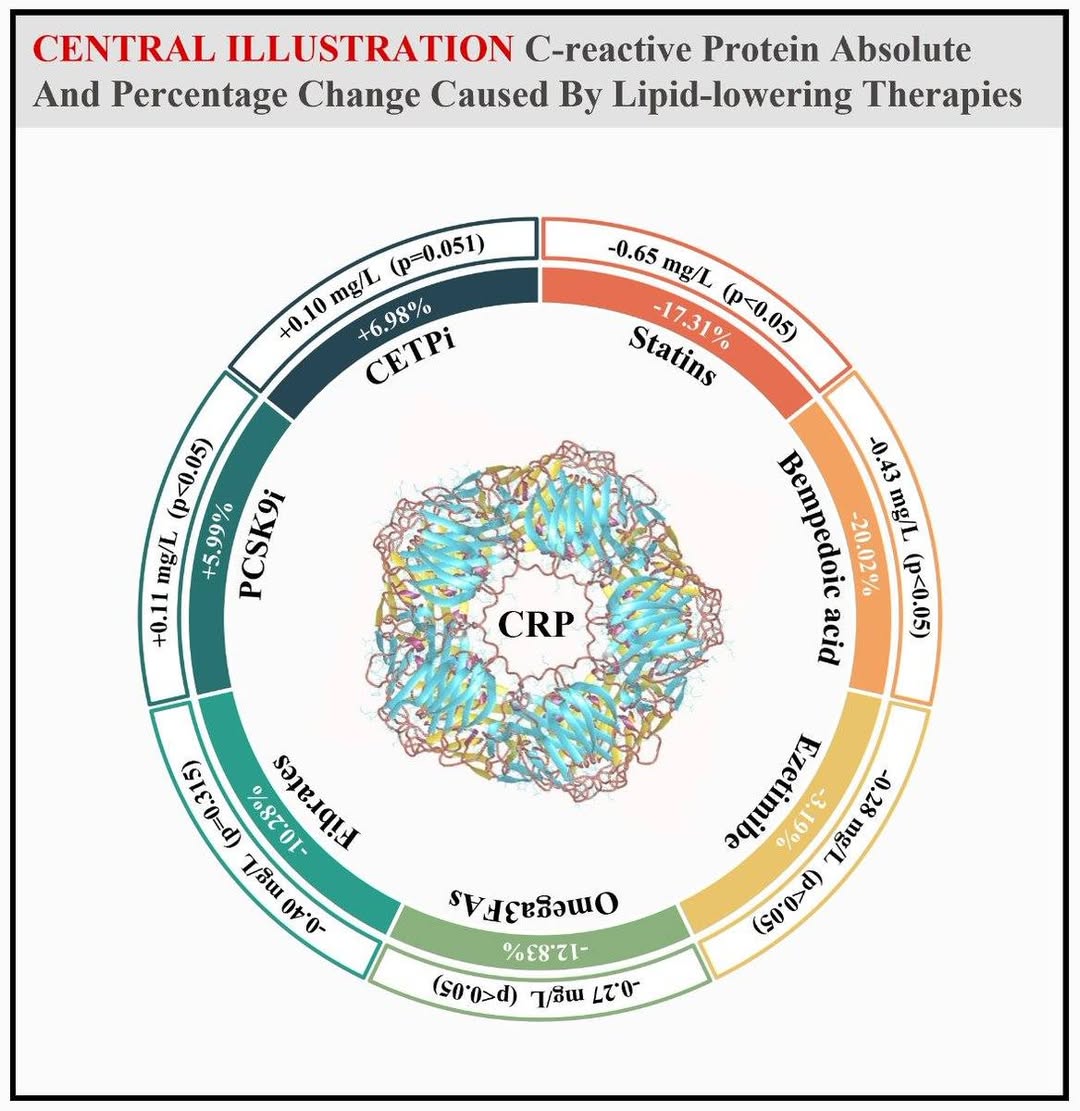
For many people with CVD, statins reduce hsCRP by 50% or more.

In a meta-analysis of 26 randomized controlled trials published in 2022, statins reduced hsCRP in patients with CVD by about 1 mg/L, and reduced CRP by about 3 mg/L.
For someone with an hsCRP of 2mg/L (a typical value on the high-end of normal), this translates into a 50% reduction.
Quoted from the paper:
“26 studies were identified (3010 patients and 2968 controls) for hs-CRP and 20 studies (3026 patients and 2968 controls) for CRP. Statins reduced the serum levels of hs-CRP (WMD = −0.97 mg/L; 95% CI: -1.26 to -0.68 mg/L; P < 0.001) and CRP (WMD = −3.05 mg/L; 95% CI: -4.86 to -1.25 mg/L; P < 0.001) in patients with CVDs. Statins decreased the serum levels of hs-CRP in patients receiving both high-intensity and moderate/low-intensity treatments with these drugs. In addition, the duration of treatment longer than 10 weeks decreased hs-CRP levels.”
Paper · Mediators of Inflammation · 2022Effect of Statins on Serum level of hs-CRP and CRP in Patients with Cardiovascular Diseases: A Systematic Review and Meta-Analysis of Randomized Controlled TrialsBackground. Several studies have reported that statins have anti-inflammatory effects. Nevertheless, results of clinical trials concerning the effect of statins on the levels of C-reactive protein (CRP) and high-sensitivity CRP (hs-CRP) have been inconsistent. Therefore, we performed a systematic review and meta-analysis of randomized clinical trials (RCTs) evaluating the effect of statins on CRP and hs-CRP levels…onlinelibrary.wiley.com#statinsHD #statinscrpHD #inflammationHD #crpHD #statinspleiotropyHD #statinsinflammationHD