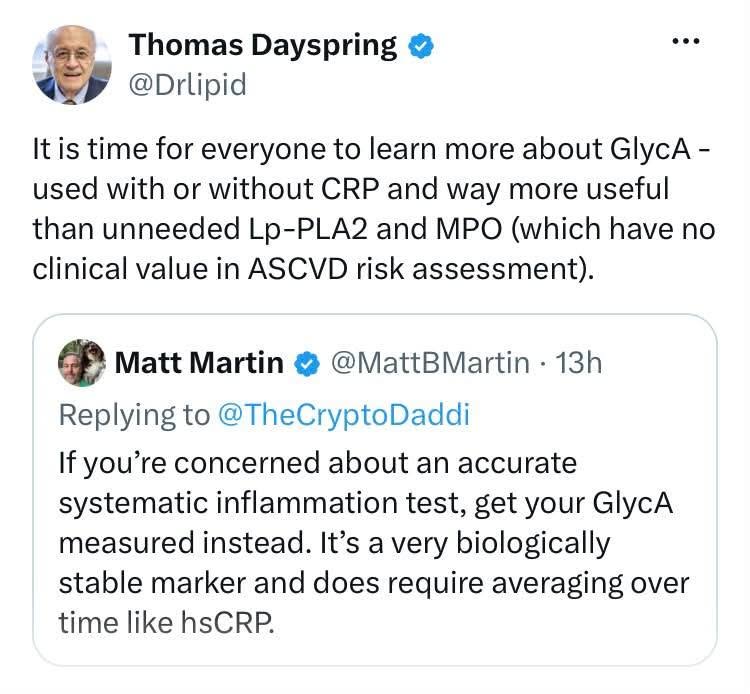
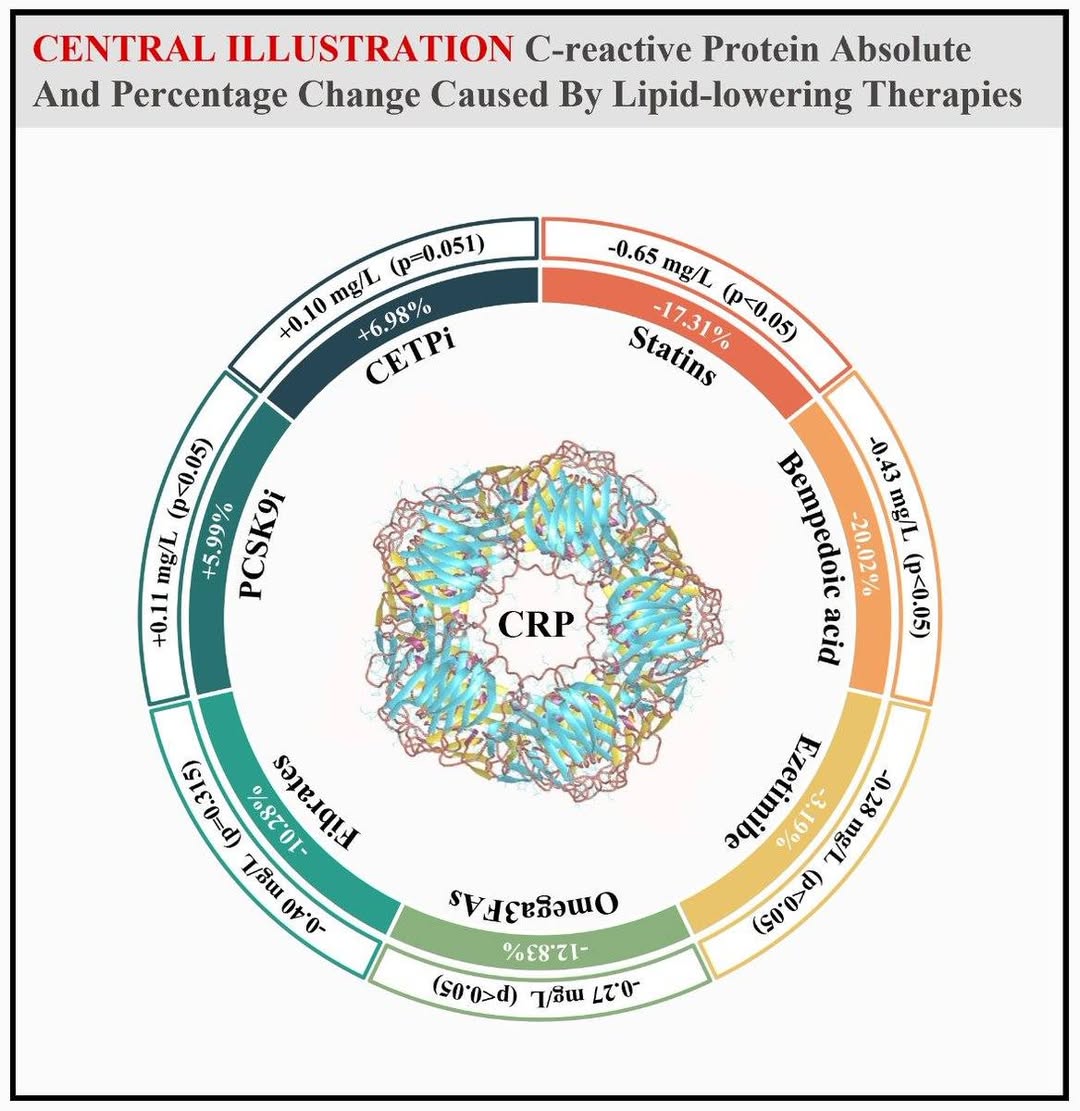
Statins lower Lp-Pla2
(Statins + ezetimibe lower it even more.)
Lp-Pla2 is a marker of inflammatory processes inside atherosclerotic plaques.
Unlike hsCRP which measures systemic inflammation throughout the entire body, Lp-Pla2 is specific to plaque.
It is now recognized as a risk factor for CVD.
Quoted:
“One of the key factors in the development of atherosclerosis is a chronic systemic inflammation with local specific manifestations in the intima of the vessels. Inflammation plays a major role in the genesis and progression of atherosclerotic plaques, its evolution in the vulnerable plaque rupture and loosening tire [1]. In recent years, lipoprotein-associated phospholipase A2 (Lp-PLA2), which is a marker of intravascular inflammation, has attracted the attention of scientists. Numerous studies have demonstrated the role of Lp-PLA2 as a risk factor for cardiovascular disease and a direct participant in the development and progression of atherosclerosis.”
“Information that hypolipidemic drugs, particularly statins, reduce the level of Lp-PLA2 suggests that Lp-PLA2 can be considered as a target for the therapy action to suppress inflammatory processes and achieve stabilization of atherosclerotic plaque formation [22]. It has been shown that statins – pravastatin, atorvastatin, rosuvastatin and simvastatin – significantly lowered Lp-PLA2 levels [22], [23], [24], [25], [26], [27], [28], [29], [30], [31], [32], [33], [34], [35], but is it possible for combination therapy: ezetimibe with lower doses of statins? As a powerful lipid-lowering effect of the combination of ezetimibe and a statin is known, our aim was to evaluate the possibility of reducing the intravascular inflammation using combination therapy with a lower dose of the statin.”
“Using the classic risk factors cannot account for all cases of coronary events in patients with normal lipid profile [17]. That is why, the FDA approved a definition Lp-PLA2 as a screening test that predicts a patient's risk for future CHD events.”
“The ability to influence on intravascular inflammation (Lp-PLA2) as well as on non-specific inflammation (hs-CRP) relates to the pleiotropic effects of statins, and it is realized, sometimes, regardless of the lipid-lowering effect of statins.”
“Lp-PLA2 is associated mainly with low-density lipoproteins (LDL), whereas a small proportion of circulating enzyme is also associated with high-density lipoproteins (HDL) and lipoprotein-a.”
“Increased Lp-PLA2 testifies not only to coronary artery disease [6], but also can further define prognosis and the risk of vascular complications [6], [7], [8], [9], [10], [11], [12], [13], [14], [15], [16]. Lp-PLA2 reflects the presence and intensity of intravascular inflammation, the marker of which it is.”
“Combined treatment with ezetimibe and simvastatin led to significantly greater declines in Lp-PLA2 and lipid profile compared with treatment only with simvastatin (P < 0.05). Combination therapy with ezetimibe and simvastatin 20 mg/day proved to be as effective as monotherapy with simvastatin 80 mg/day on the effect on Lp-PLA2 mass level and lipids (P < 0.05).”
PaperScienceDirect articlesciencedirect.com#lppla2HD #statinsHD #statinslppla2HD #inflammationHD #crpHD #statinspleiotropyHD #ezetimibeHD #mpoHD