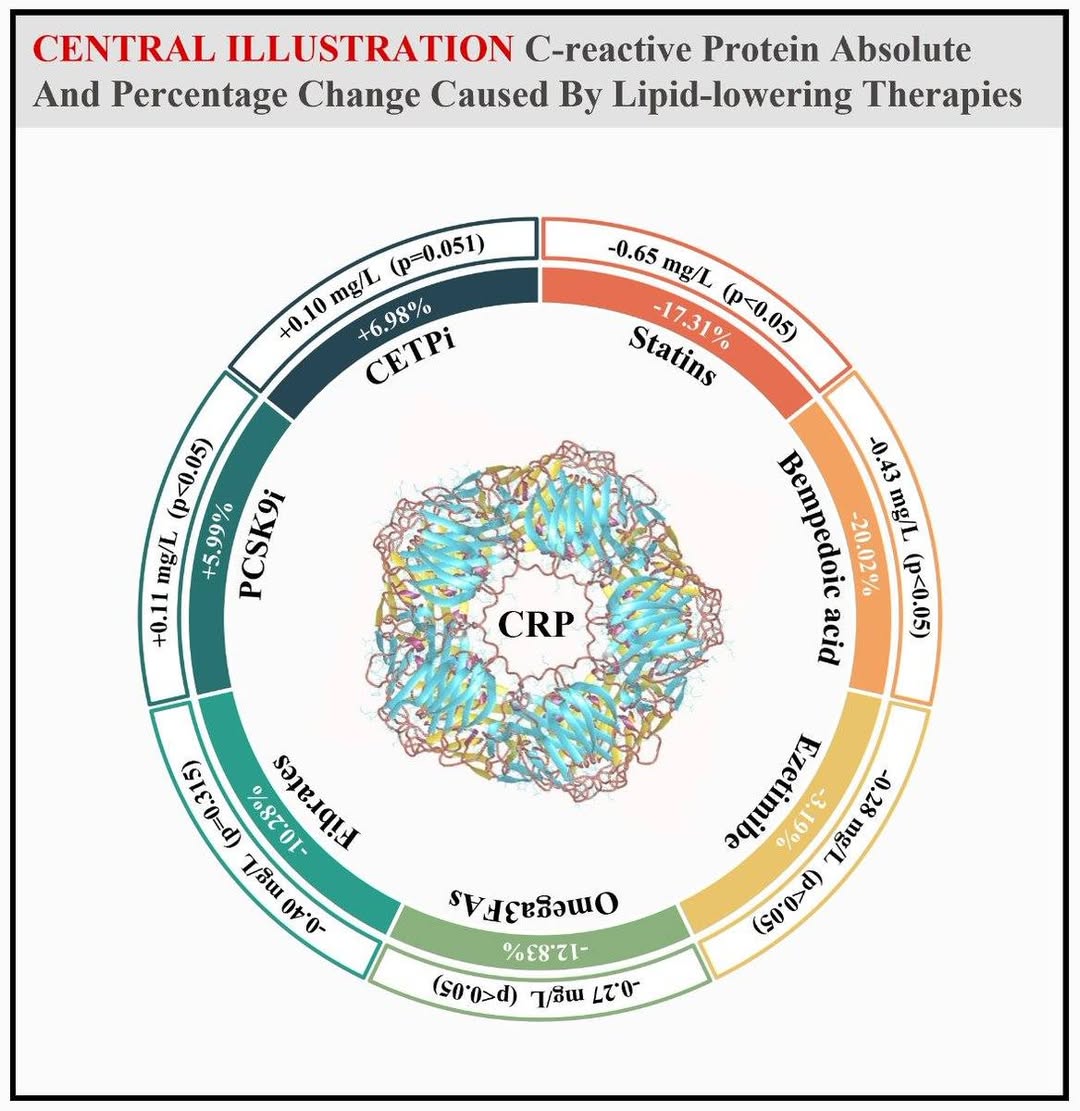
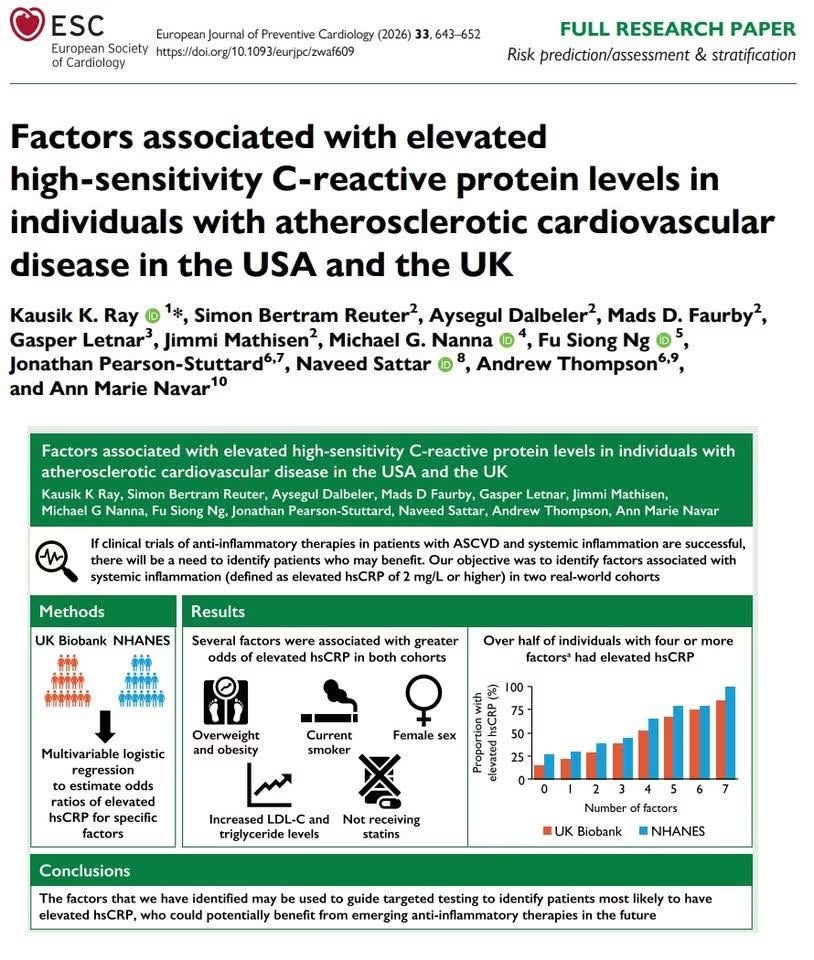
10 clinical trials have shown in aggregate that statins dramatically lower inflammation in the walls of arteries, as measured by PET-CT scans.
The effect is dose-dependent. High doses work better for suppressing arterial inflammation than low-to-moderate doses.
Paper · J Inflamm (Lond) · 2024Effect of statins on arterial wall inflammation as assessed by 18F-FDG PET CT: an updated systematic review and meta-analysis.Conclusion: Treatment with statins suppressed arterial wall inflammation as shown by using 18 F-FDG PET-CT.journal-inflammation.biomedcentral.comQuoted:
“Pathogenesis of atherosclerosis is largely mediated by inflammatory process. Statins are lipid-lowering drugs which also have anti-inflammatory effects. 18 fluorine radiolabeled fluorodeoxyglucose (18 F-FDG) positron emission tomography-computed tomography (PET-CT) is considered to be a good indicator of arterial wall inflammation. Therefore, in this meta-analysis the role of statins on inflammatory process in the artery wall was evaluated using this method since its actual validity for this purpose is not yet well established.”
“ Findings of 10 clinical trials involving 373 subjects showed a remarkable reduction of arterial wall 18 F-FDG uptake [indicative of lower inflammation] according to target-to-background ratio (TBR) index after treatment with statins.
Subgroup analysis showed a significant decrease in TBR with high-intensity and non-significant reduction of TBR with low-to-moderate-intensity statin therapy.”
“Conclusion- Treatment with statins suppressed arterial wall inflammation as shown by using 18 F-FDG PET-CT.”
(Thank you to Mike Glynn for posting this paper in the comments of another post.)
#statinsHD #inflammationHD #statinscrpHD #statinsinflammationHD #crpHD #petscanHD